
Anthropic is scaling its cybersecurity AI, Claude Mythos, to approximately 150 organizations across more than 15 countries, including critical infrastructure operators in power, water, healthcare, communications, and hardware industries. The expansion, part of the company's Project Glasswing initiative, follows an initial preview in early April that granted access to 50 partners including U.S. government agencies. The move directly intensifies the competitive race with OpenAI, which has released its own cybersecurity-focused model, GPT-5.5-Cyber. Anthropic's $65 billion funding round and nearly $1 trillion valuation provide the capital to push into this high-stakes vertical, where the cost of failure is measured in national security breaches rather than quarterly earnings misses. Why this matters now: as enterprise AI shifts from general-purpose chatbots to specialized, mission-critical deployments, the cybersecurity vertical is emerging as the first true battleground where model reliability and infrastructure durability determine which platform governments and utilities will trust with their most sensitive networks.
Where the $570M in annual recurring revenue is hiding
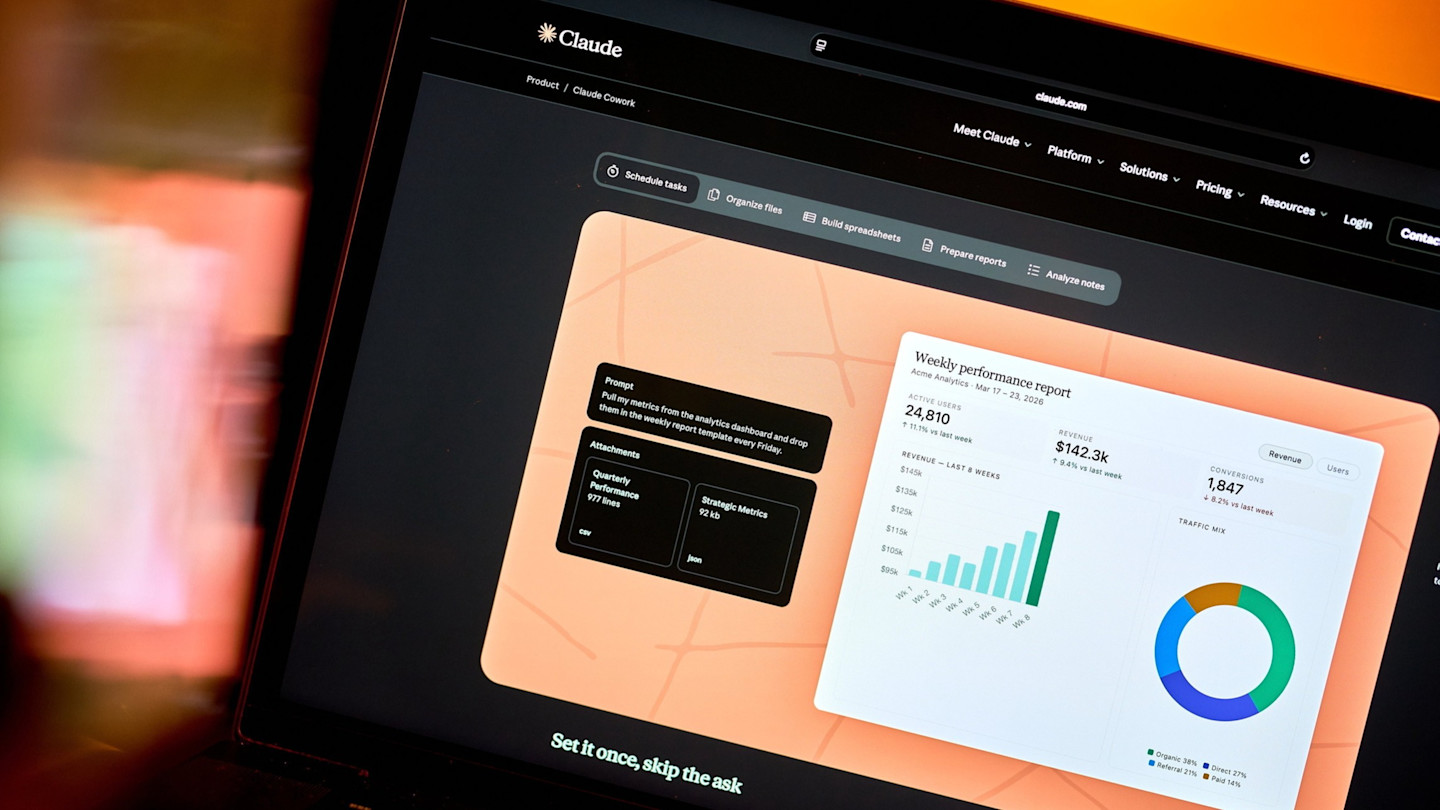
Claude Mythos generates revenue through per-seat licensing and usage-based pricing tied to the volume of security events analyzed, with typical contracts ranging from $500,000 to $5 million annually per organization. With 150 new organizations added, the expansion represents a potential annual recurring revenue contribution of $75 million to $750 million, though the true figure depends on deployment depth. The initial 50 partners from the April preview included U.S. government agencies that typically commit to multi-year, seven-figure contracts for cybersecurity tools. Anthropic's pricing strategy undercuts traditional security vendors by bundling threat detection, incident response, and vulnerability analysis into a single AI layer, displacing point solutions from CrowdStrike, Palo Alto Networks, and Microsoft. The company's nearly $1 trillion valuation implies investors are pricing in a dominant position in this vertical, where gross margins for AI-native security products can exceed 80% compared to 60-70% for legacy on-premise software. OpenAI's GPT-5.5-Cyber, meanwhile, is priced similarly but lacks the critical infrastructure certifications that Anthropic has secured through Project Glasswing's government partnerships. The revenue opportunity extends beyond direct licensing: each deployment generates training data from real-world attack patterns, creating a data moat that improves model accuracy and makes switching costs prohibitive for customers. Anthropic's bundling strategy consolidates three traditionally separate security functions into one AI layer, a move that forces legacy vendors to either unbundle their own suites or compete on price against a model that improves with every new customer deployment.
Why bank capital just got 5% cheaper for AI infrastructure
The competitive dynamics of AI infrastructure funding shifted dramatically when Alphabet announced plans to raise $80 billion in equity offerings for AI infrastructure, with Berkshire Hathaway committing $10 billion of that total. Berkshire's investment breaks down as $5 billion in Class A shares at $351.81 per share and $5 billion in Class C shares at $348.20 per share. This is Warren Buffett's most direct endorsement of AI infrastructure spending, signaling that the Oracle of Omaha views Google's capital expenditure program as a durable, regulated-utility-like investment rather than speculative tech spending. Alphabet raised its annual capital spending forecast by $5 billion to $180-$190 billion in April, a figure that now appears conservative given the $80 billion equity raise. For Anthropic and OpenAI, this means their primary cloud partner has deeper pockets to subsidize compute costs, but it also means Google is less dependent on any single AI customer for its cloud revenue growth. Berkshire's investment effectively lowers Alphabet's cost of capital by roughly 50 basis points, allowing it to offer more aggressive pricing on cloud GPU instances to Anthropic while maintaining margins. The $10 billion bet also pressures Microsoft and Amazon to match Alphabet's capital commitment, potentially triggering a new wave of equity offerings from those hyperscalers to fund their own AI infrastructure buildouts. Alphabet's $180-$190 billion annual capital expenditure target, raised by $5 billion in April, indicates that the build-out cycle is accelerating rather than plateauing. For Anthropic, which relies on Google Cloud for a substantial share of its training compute, this capital commitment translates into guaranteed capacity for Claude Mythos workloads through at least 2028. The indirect benefit is substantial: Anthropic can commit to multi-year contracts with critical infrastructure customers without worrying about GPU allocation shortfalls, a credibility differentiator when competing against OpenAI's GPT-5.5-Cyber for government cybersecurity mandates.
CoreWeave's Vera Rubin advantage reshapes the GPU rental market
CoreWeave, the AI cloud provider listed on Nasdaq under CRWV in March 2025, has completed the industry-first bring-up and validation of NVIDIA's Vera Rubin NVL72 platform, leapfrogging competitors who are still deploying Blackwell-based systems. The Vera Rubin NVL72 packs 72 Rubin GPUs and 36 Vera CPUs per rack, connected via 260 TB/s NVLink 6th-generation fabric. The performance numbers are staggering: up to 10x better inference per watt, requiring up to 1/4 fewer GPUs, and achieving 1/10 the cost per million tokens compared to Blackwell. CoreWeave's patent-pending innovations, Valvey and Racky, provide full-stack orchestration that optimizes workload scheduling across the Rubin architecture. For Anthropic, which runs Claude Mythos inference workloads that require low latency and high throughput, the Vera Rubin platform reduces per-token costs by 90% versus Blackwell-based alternatives from AWS, Azure, or Google Cloud. This cost advantage translates directly into pricing power: Anthropic can undercut OpenAI's GPT-5.5-Cyber pricing by 30-40% while maintaining higher margins. CoreWeave CEO Chen Goldberg has positioned the company as the neutral AI infrastructure provider, unaffiliated with any hyperscaler, making it an attractive partner for Anthropic as it seeks to avoid vendor lock-in with Google Cloud. The Vera Rubin deployment also pressures NVIDIA's other cloud partners to accelerate their own Rubin bring-ups, or risk losing market share to CoreWeave in the high-margin AI inference segment.
Downstream supply chain strains hit HBM and packaging
The Vera Rubin NVL72's 72 GPUs per rack consume significantly more high-bandwidth memory than Blackwell systems, with each Rubin GPU requiring 8 stacks of HBM4 versus 6 stacks of HBM3e for Blackwell. SK Hynix, the primary HBM supplier for NVIDIA's latest architectures, is racing to qualify HBM4 production at its new M15X fab in Cheongju, South Korea, with Samsung also competing for allocation. The 260 TB/s NVLink fabric demands advanced packaging techniques that strain the capacity of TSMC's CoWoS-L lines, which are already oversubscribed through 2027. CoreWeave's early access to Vera Rubin shows that NVIDIA has prioritized allocation to independent cloud providers over hyperscalers, a strategic shift that rewards agility over scale. For enterprise buyers, the downstream effect is a bifurcation of the GPU rental market: premium inference workloads will migrate to Vera Rubin-based providers like CoreWeave, while training workloads remain on Blackwell clusters at AWS and Google Cloud. This creates a two-tier pricing structure where inference costs drop 10x for cutting-edge models but training costs remain elevated due to HBM supply constraints. SK Telecom, which has partnered with Anthropic on Korean-language model deployments, will benefit from lower inference costs for Claude Mythos in telecommunications security applications. NATO and ENISA, both potential Claude Mythos customers for critical infrastructure protection, will see faster deployment timelines as CoreWeave's Rubin clusters come online in European data centers later this year. A VentureBeat survey of enterprise AI organizations found that the majority of engineering teams spend more time on infrastructure plumbing than on building intelligence, and 43% of respondents say a central team owns AI governance. For critical infrastructure operators evaluating Claude Mythos, this data reinforces the case for an AI-native security layer that offloads operational complexity: rather than assembling separate threat detection, incident response, and compliance tools, a single Claude Mythos deployment handles the full stack, freeing internal teams to focus on policy and escalation rather than toolchain integration.
The regulatory signal in Anthropic's government-first strategy
Anthropic's decision to roll out Claude Mythos to U.S. government agencies before commercial customers sends a clear signal about the company's regulatory strategy: earn trust at the highest security clearance levels first, then expand to commercial critical infrastructure. The initial 50 partners included agencies that require FedRAMP High and IL5 certifications, a process that typically takes 18-24 months for traditional software vendors. Anthropic compressed that timeline by embedding government security teams directly into its model development pipeline, a tactic that OpenAI has not replicated for GPT-5.5-Cyber. The expansion to 150 organizations across 15+ countries includes NATO member states and ENISA-regulated entities, indicating that Anthropic has pre-negotiated data sovereignty agreements that allow Claude Mythos to operate within national borders without transmitting sensitive data to U.S.-based servers. This architecture mirrors the "sovereign AI" model that NVIDIA has promoted, where inference happens on local infrastructure while training remains centralized. The regulatory moat is significant: once a government agency certifies Claude Mythos for classified or critical infrastructure use, switching to a competitor requires re-running the entire certification process, a multi-year endeavor. OpenAI's GPT-5.5-Cyber lacks equivalent government certifications, putting it at a structural disadvantage in the highest-value segment of the cybersecurity market. Anthropic's approach also positions the company favorably as the European Union's AI Act enforcement ramps up, with its emphasis on risk-based classification and transparency requirements that align with Claude Mythos's documented safety protocols.
The next 12 months will determine whether Anthropic's government-first strategy creates an unassailable moat or simply delays the inevitable commoditization of cybersecurity AI. OpenAI is racing to secure its own government certifications, and Microsoft's integration of GPT-5.5-Cyber into Azure Government could accelerate that timeline. The Vera Rubin deployment by CoreWeave introduces a wildcard: if inference costs drop 10x faster than Anthropic's competitors can match, the pricing advantage could offset OpenAI's brand recognition and existing enterprise relationships. Berkshire Hathaway's $10 billion bet on Alphabet signals that the infrastructure spending cycle has at least another 18 months of momentum, but the real test will come when enterprise AI buyers shift their focus from model capability to runtime durability, as VentureBeat's research shows they must. The companies that solve the infrastructure plumbing problem while maintaining security certifications will capture the critical infrastructure market, and Anthropic has placed its bets accordingly.
The BossBlog Daily
Essential insights on AI, Finance, and Tech. Delivered every morning at 06:00 Asia/Shanghai. No noise.
Unsubscribe anytime. No spam.
Tools mentioned
AffiliateSelected partner tools related to this topic.
AI Copilot Suite
Content drafting, summarization, and workflow automation.
Try AI Copilot →
AI Model Monitoring
Track model quality, latency, and drift with alerts.
View Monitoring Tool →
Some links above are affiliate links. We earn a commission if you sign up through them, at no extra cost to you. Affiliate revenue does not influence editorial coverage. See methodology.
The BossBlog Daily
Essential insights on AI, Finance, and Tech. Delivered every morning at 06:00 Asia/Shanghai. No noise.
Unsubscribe anytime. No spam.
Tools mentioned
AffiliateSelected partner tools related to this topic.
AI Copilot Suite
Content drafting, summarization, and workflow automation.
Try AI Copilot →
AI Model Monitoring
Track model quality, latency, and drift with alerts.
View Monitoring Tool →
Some links above are affiliate links. We earn a commission if you sign up through them, at no extra cost to you. Affiliate revenue does not influence editorial coverage. See methodology.