
Anthropic pulled its two most advanced AI models, Claude Fable 5 and Claude Mythos 5, from global availability on June 15, just three days after their launch, following a direct order from the US government to restrict access for foreign nationals. The company chose to block all public access, including for employees and paying enterprise customers, rather than attempt a partial geographic or identity-based restriction. The move sent a shockwave through the enterprise AI market, where Snowflake and other platform customers had already begun integrating the models into production workflows. Canadian Prime Minister Mark Carney publicly called for diversification of AI supply chains in response, framing the incident as a wake-up call for nations dependent on US-controlled frontier models. The order, issued under the Biden-era export control framework expanded by President Trump’s December 2025 AI initiative, signals that the US government is now willing to enforce extraterritorial restrictions on the most capable AI systems. For enterprises, the sudden disappearance of a state-of-the-art model mid-deployment creates immediate operational risk and forces a hard reassessment of reliance on any single US-based AI lab. This is the first time a major AI company has taken a flagship model completely offline in response to a government directive, and it will not be the last.
Global Shutdown: How Anthropic Enforced the Export Order
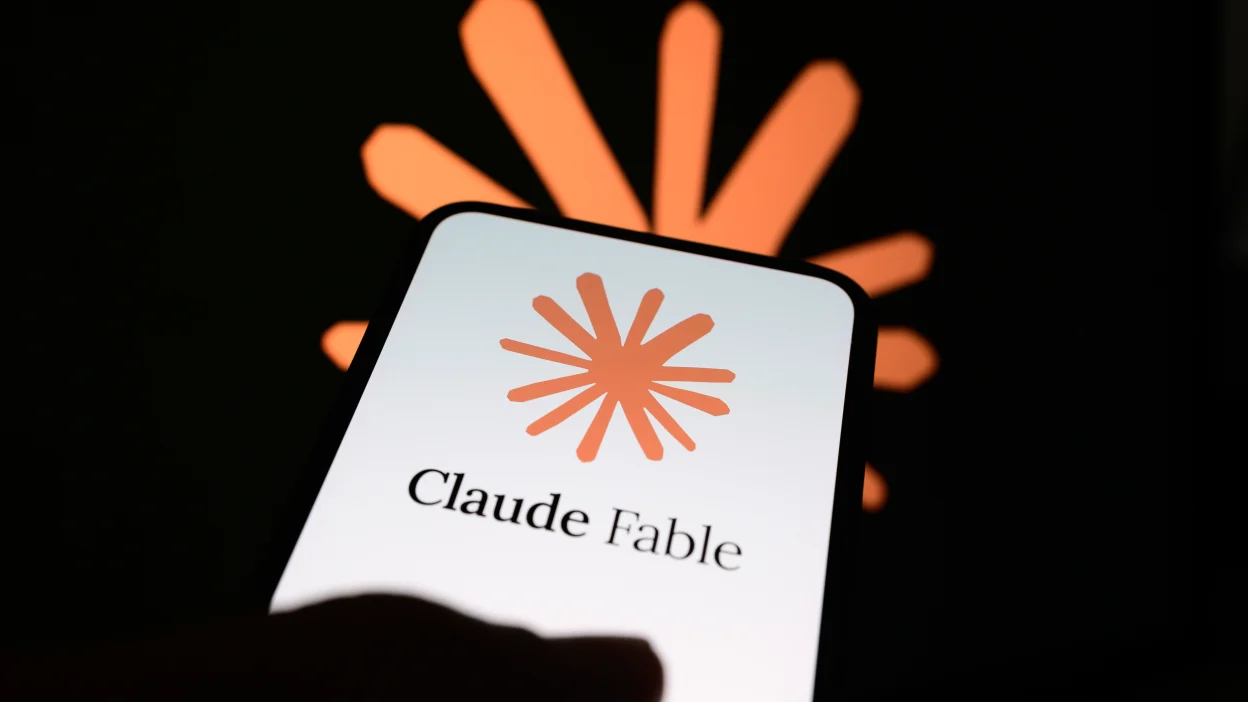
The US government’s directive targeted foreign national access to Claude Fable 5 and Mythos 5, but Anthropic’s response was absolute: it shut down all public endpoints globally. The company did not carve out exceptions for US-based customers, enterprise partners, or even its own employees. The models, which represented Anthropic’s most capable reasoning and creative-generation systems, were removed from all API endpoints, web interfaces, and enterprise deployment channels. Other Anthropic models, such as Opus 4.8, remain operational and unaffected. The decision to block global access rather than implement a technical filter reflects the legal and operational risk that Anthropic’s leadership, including president Daniela Amodei, judged as unacceptable. The order invoked the International Emergency Economic Powers Act and the Export Administration Regulations, which the Trump administration expanded in December 2025 to cover advanced AI model weights and inference capabilities. The speed of enforcement, a government order followed by Anthropic’s compliance within hours, demonstrates that the regulatory machinery for AI export controls is now fully operational. For enterprises that had already deployed Claude Fable 5 and Mythos 5 in production, the sudden cutoff created an immediate crisis: applications built on these models stopped functioning, and no migration path to a comparable model exists today. The total shutdown, rather than a targeted filter, forced every customer to confront the reality that US export law now governs access to frontier AI regardless of the user’s location.
The $30 Billion SpaceX-Google Deal Reshapes AI Infrastructure

While Anthropic’s models went dark, a separate but related development in AI infrastructure is reshaping the competitive landscape. SpaceX and Google have finalized a massive AI infrastructure deal worth approximately $30 billion over 32 months, under which SpaceX leases AI compute capacity to Google at a rate of $920 million per month. The arrangement flips the traditional relationship: SpaceX, through its Colossus data centers, becomes Google’s cloud provider rather than the other way around. This deal builds on a long-standing relationship: Google invested $900 million in SpaceX in 2015, acquiring roughly 4.9% of the company. Alphabet’s stake in SpaceX is now valued at over $100 billion, making it one of the most successful venture investments in history. The infrastructure deal gives Google access to massive compute clusters for training and inference, reducing its dependence on traditional cloud vendors and chip suppliers. For SpaceX, the revenue stream from the Google contract provides a stable, high-margin business line that complements its launch and Starlink operations. The deal also signals that AI infrastructure is becoming a strategic asset class, where ownership of physical compute capacity, not just access, determines competitive advantage. Gwynne Shotwell, SpaceX’s president, has positioned the company as a serious player in AI infrastructure, challenging the dominance of Amazon Web Services, Microsoft Azure, and Google Cloud itself.
OpenAI’s IPO Filing and Legal Troubles Create a Contrast
OpenAI’s confidential IPO filing, combined with a widening investigation by state attorneys general, presents a stark contrast to Anthropic’s regulatory compliance posture. OpenAI CEO Sam Altman publicly apologized for the company’s failure to alert law enforcement about a mass shooting suspect’s ChatGPT account, an incident that has drawn scrutiny from multiple state attorneys general. The investigation adds to the legal and regulatory headwinds facing OpenAI as it prepares for its public market debut. The company filed confidentially to go public, a move that will subject it to SEC disclosure requirements and quarterly earnings scrutiny for the first time. The timing of the IPO, amid the export control crackdown on Anthropic’s models, creates an awkward dynamic: OpenAI’s GPT models fall under the same regulatory framework, and the company faces the same class of export control risk that just materialized for Anthropic. The IPO will also force OpenAI to disclose details about its relationship with Microsoft, its revenue concentration, and its reliance on foreign markets, all of which are now risk factors in light of the Anthropic precedent. The contrast between Anthropic’s immediate compliance and OpenAI’s ongoing legal battles highlights the different risk tolerances and governance structures at the two leading AI labs. OpenAI’s IPO will test whether public markets are willing to price in the regulatory risk that just materialized for Anthropic.
Employee Liquidity and Talent Retention at AI Labs
The employee share cash-out phenomenon at OpenAI and Anthropic has reached $14 billion in total, with OpenAI alone facilitating over $9 billion in employee share sales through tender offers. This massive liquidity event has created a class of newly wealthy AI researchers and engineers, but it also introduces talent retention risk. Employees who have cashed out millions of dollars in shares have less financial incentive to stay, particularly if their models face regulatory headwinds or if the company’s growth trajectory slows. At Anthropic, the sudden removal of Fable 5 and Mythos 5 from the market reduces the company’s near-term revenue-generating potential and compresses the valuation ceiling for future tender offers. The export order also limits the addressable market for Anthropic’s most advanced models, directly constraining the company’s long-term revenue ceiling. For OpenAI, the IPO creates another liquidity event for employees, but the ongoing legal investigations and the Anthropic export-control precedent represent concrete risk factors that will weigh on the IPO valuation and SEC disclosure requirements. The $14 billion in employee cash-outs represents a significant wealth transfer from investors to employees, but it raises a structural question: whether remaining equity incentives are sufficient to retain researchers when the models they build can be pulled offline by government order. The regulatory risk compounds the retention challenge because researchers at established labs now face the prospect that years of work on a frontier model disappear from the market overnight. That dynamic shifts the calculus toward startups operating below the regulatory threshold, academic research that produces open weights, or labs in jurisdictions that have not yet enacted comparable export controls. The talent market, like the model market, is fragmenting along regulatory lines.
The Policy Signal and What It Means for Enterprise AI
The US government’s decision to order Anthropic to restrict access to Claude Fable 5 and Mythos 5 is a clear signal that the era of unrestricted AI model availability is over. The December 2025 AI initiative signed by President Trump created the legal framework for export controls on advanced AI, and the Anthropic order is the first enforcement action under that framework. The order targets not just the model weights but also the inference capability, meaning that even cloud-based access to the models is restricted. For enterprise customers, this creates a new category of supply chain risk: a model that is available today can be removed tomorrow, with no warning and no recourse. Enterprises that rely on a single AI vendor for their most critical workflows now face a concentration risk similar to the single-cloud dependency that many companies have spent years trying to reduce. The Canadian Prime Minister’s call for diversification reflects a growing recognition among allied nations that US-controlled AI models are now subject to unilateral restrictions that no service-level agreement or enterprise contract can override. The immediate effect will be increased demand for open-source models, non-US AI labs, and on-premise deployment options. The longer-term effect will be a fragmentation of the global AI market into regulatory blocs, with the US, EU, China, and other regions each enforcing their own rules on model availability and data sovereignty.
The Anthropic export order is a watershed moment for the AI industry, but it is only the beginning of a much larger structural shift. The US government has demonstrated that it will use export controls to restrict access to frontier AI models, and the next target is any lab, including OpenAI, Google DeepMind, or Meta, that releases a model deemed too capable for unrestricted use. The $30 billion SpaceX-Google deal shows that AI infrastructure is becoming a strategic national asset, and the companies that control physical compute capacity will have decisive leverage over those that only control model development. The employee cash-out phenomenon at OpenAI and Anthropic suggests that the talent market will remain fluid, with top researchers following the money and the regulatory environment. For enterprises, the lesson is clear: build AI systems that are model-agnostic, deployable on-premise, and resilient to sudden regulatory changes. The era of plug-and-play frontier AI is over. The companies that build model-agnostic, vendor-diversified AI infrastructure today will be the ones that survive the coming regulatory storm intact.
The BossBlog Daily
One email with the AI markets brief — the 13F moves, the Congressional trades, and what changed. No fixed schedule and no filler: it goes out when there is something worth sending.
Unsubscribe any time. We never sell or share the list.