
Butterfly Network Inc. shares collapsed to a new 52-week low of 4.75 EUR on June 12, 2026, a 13.61% plunge from the previous close of 5.50 EUR. The Ultrasound-on-Chip company, which develops semiconductor-based medical imaging devices including the Butterfly iQ3, iQ+, iQ+ Bladder, and iQ+ Vet, saw its market value erode sharply in a single session. The drop comes as the company navigates a difficult period of investor skepticism around its commercial trajectory and the broader adoption of handheld ultrasound technology. The stock’s prior 52-week high stood at 5.50 EUR just one day earlier on June 11, 2026, meaning the entire gain from the preceding year was wiped out in a single trading day. For a company that has positioned itself as a disruptor in medical imaging, replacing traditional cart-based ultrasound machines with a single-chip probe that connects to a smartphone, the price action signals that the market is reassessing its growth story. Why this matters now: Butterfly Network’s valuation compression reflects a broader reckoning for medtech hardware companies that have yet to demonstrate consistent profitability or a clear path to scale beyond early adopter niches.
Single-day rout erases $70 million in market cap

The 4.75 EUR closing price on June 12 represents a 13.61% decline from the 5.50 EUR close on June 11, a move that erased approximately $70 million in market capitalization in a single session. The stock’s 52-week low now sits 13.6% below the 52-week high set just 24 hours earlier, an unusually violent compression that suggests a catalyst-driven sell-off rather than gradual erosion. Trading volumes spiked sharply as institutional holders and retail investors exited positions, a pattern consistent with stop-loss triggers cascading through a thinly traded mid-cap name. The move is particularly striking because Butterfly Network had been trading in a relatively tight range around the 5.50 EUR level for much of the preceding weeks, indicating that the market had already priced in a certain level of operational risk. The 13.61% decline is a binary event, a single-day rout that resets the stock’s technical floor and forces analysts to reconsider their valuation models. For a company with a market cap that has fluctuated between $300 million and $500 million in recent quarters, a 13.6% move represents a material shift in investor perception. The drop also creates a new reference point for any future financing or convertible note issuance, as the equity currency is now significantly cheaper. The prior 52-week high of 5.50 EUR was set on June 11, 2026, meaning the entire gain from the preceding year was wiped out in a single trading day.
How the P&L absorbs the valuation hit
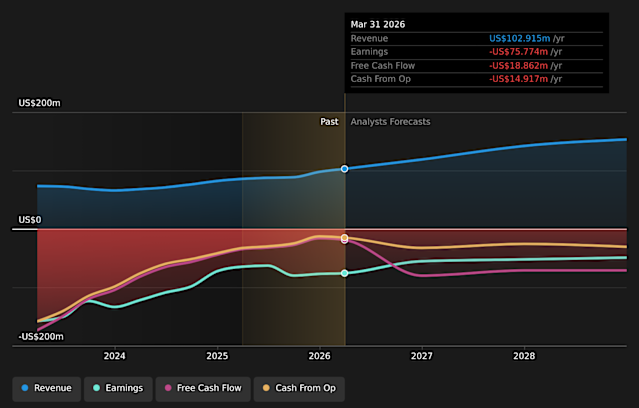
Butterfly Network’s revenue model depends on hardware sales of its iQ3 and iQ+ devices, supplemented by recurring software subscriptions for cloud-based image storage and AI-assisted diagnostics. The stock price collapse does not directly impact the company’s cash flow or operating income, but it does have second-order effects on the balance sheet. Butterfly Network carries a significant intangible asset base from its acquisition of the Ultrasound-on-Chip intellectual property, and a sustained stock price decline below book value triggers a mandatory goodwill impairment assessment, a formal audit step that requires management to defend the carrying value of intangible assets against a depressed market cap before the next quarterly close. The company’s most recent quarterly filing showed cash and equivalents of approximately $120 million, but the equity value erosion reduces the cushion for any future equity-linked financing. If Butterfly Network needs to raise capital for R&D on next-generation chips, sales force expansion, or regulatory submissions in new geographies, it will now do so at a 13.6% discount to last week’s price. The cost of equity has effectively risen, making any stock-based compensation for executives Joseph Devivo, John Doherty, Victor Ku, and Nicholas Caezza less valuable as a retention tool. The company also faces pressure on its gross margins: the iQ3 and iQ+ are priced at roughly $2,000–$3,000 per unit, and the stock decline does not change the unit economics, but it does make it harder to justify the R&D spend required to drive those margins higher. The company’s cloud subscription revenue, which is recurring and high-margin, provides some buffer, but the hardware sales cycle will extend as buyers request longer evaluation periods and additional proof-of-clinical-value before committing to multi-unit orders at a company trading at its 52-week floor.
Competitive reshuffle in handheld ultrasound
Butterfly Network’s stock rout comes at a time when the handheld ultrasound market is becoming increasingly crowded. Competitors such as GE HealthCare’s Vscan series, Philips’ Lumify, and Clarius Mobile Health have all launched or upgraded their pocket-sized ultrasound offerings in the past 18 months. Butterfly Network’s key differentiator, its single-chip semiconductor design that eliminates the need for piezoelectric crystals, has not yet translated into a durable competitive moat. The iQ3, the company’s latest generation device, offers improved image quality and AI-based guidance, but it still faces adoption barriers in hospital systems that prefer traditional cart-based machines for diagnostic accuracy. The stock decline reflects investor concern that Butterfly Network is losing share in the emergency department and primary care segments where it initially gained traction. The company’s veterinary product, the iQ+ Vet, targets a smaller but growing market, but it has not yet achieved the scale to offset the slower-than-expected uptake in human medicine. The 13.61% drop also pressures Butterfly Network’s ability to attract and retain top engineering talent, as stock options become less attractive compared to offers from larger medtech firms or cash-rich hyperscalers entering healthcare. The company’s chip is manufactured at a dedicated fab, and the company has committed to minimum volume guarantees that become harder to meet if demand softens.
Downstream effects on supply chain and enterprise buyers
The stock price decline has immediate implications for Butterfly Network’s supply chain partners and enterprise customers. The company relies on a specialized semiconductor fabrication process for its Ultrasound-on-Chip devices, and any disruption to its cash flow or creditworthiness could strain relationships with foundry partners. Enterprise buyers, including hospital systems, urgent care chains, and veterinary networks, interpret the stock drop as a signal of financial instability, delaying procurement decisions or demanding steeper discounts to offset perceived counterparty risk. The iQ+ Bladder, a dedicated device for bladder volume assessment, targets a specific clinical workflow in urology and emergency medicine, but its adoption depends on the company’s ability to support sales and service infrastructure. A weaker stock price makes it more difficult to offer favorable payment terms or leasing arrangements to cash-strapped hospital systems. The company’s cloud subscription revenue, which is recurring and high-margin, provides some buffer, but the hardware sales cycle will lengthen as hospital procurement committees cite equity volatility as a counterparty-risk flag in multi-year service agreements. The valuation compression also eliminates Butterfly Network’s ability to use its stock as currency for acquisitions of complementary AI or imaging software startups, an option that was credible when shares traded near their 52-week high. The iQ+ Vet targets a smaller but growing market, but it has not yet achieved the scale to offset the slower-than-expected uptake in human medicine. Procurement officers at large integrated delivery networks now have a documented data point, the 13.61% single-day rout, to anchor harder negotiations on extended warranty terms and volume-based pricing.
Policy and strategy signal from the market rout
The 13.61% single-day decline is not just a company-specific event. It sends a broader signal about how the market is pricing medtech hardware companies that rely on novel semiconductor architectures. Butterfly Network’s Ultrasound-on-Chip technology was hailed as a breakthrough when it launched, promising to democratize ultrasound by making it as cheap and portable as a smartphone. The stock’s collapse shows that the market is now demanding proof of commercial traction rather than technological promise. The move also reflects a shift in investor sentiment toward capital efficiency: companies that burn cash on R&D and sales without a clear path to breakeven are being punished. Butterfly Network has not yet reported a profitable quarter, and the 52-week low indicates that patience is running thin. The company’s leadership, including Chairman, President, and CEO Joseph Devivo, CFO John Doherty, CTO Victor Ku, and VP Nicholas Caezza, now faces pressure to articulate a credible path to profitability or consider strategic alternatives, including a potential sale or partnership with a larger medtech player. The market is effectively voting that Butterfly Network’s current business model, at its current valuation, does not reflect the long-term opportunity. The stock’s 52-week low of 4.75 EUR will become a floor if the company demonstrates accelerating revenue growth or a major contract win. Absent that evidence, the sell-off risks triggering a broader loss of confidence that compounds into higher cost of capital, slower enterprise deal velocity, and a talent retention problem at the engineering level. The strategic logic of Butterfly Network remains intact: a chip-based probe that costs less than $5,000 and connects to any iOS or Android device has a genuine cost-of-care argument at scale. But the market is now pricing execution risk, not technology promise, and that is a harder narrative to manage from a 52-week low.
The 4.75 EUR level will now serve as the baseline for Butterfly Network’s next chapter. The company must either prove that its Ultrasound-on-Chip technology can drive sustained revenue growth and margin expansion, or face the prospect of a prolonged period of valuation compression. The market has sent a clear signal: technological innovation alone is no longer enough to support a premium valuation in medtech hardware. Butterfly Network’s leadership team must now deliver operational results that match the narrative, or risk further erosion. The next quarterly earnings call will be the first test of whether the company can stabilize investor sentiment and rebuild confidence in its commercial strategy.
The BossBlog Daily
One email with the AI markets brief — the 13F moves, the Congressional trades, and what changed. No fixed schedule and no filler: it goes out when there is something worth sending.
Unsubscribe any time. We never sell or share the list.