
New York Federal Reserve President John C. Williams declared on Friday that the central bank's current interest rate stance is appropriate, even as the Personal Consumption Expenditures price index hovers near 4% and core inflation remains above 3%. Speaking at a monetary policy conference, Williams acknowledged that inflation will stay elevated in the coming months due to energy shocks stemming from the Middle East war and lingering tariff effects, but he expects price pressures to ease as those temporary factors fade. The federal funds rate target range sits at 3.5% to 3.75%, a level Williams described as "in the right place given the outlook." His remarks come as the Fed faces its most consequential policy split in years: Governor Michelle Bowman has publicly warned against hiking rates to combat what she calls temporary energy price inflation, while other officials, including Minneapolis Fed President Neel Kashkari, signal that a rate increase could become necessary if the conflict drives persistent price pressures. Financial markets now price in a possible rate hike by year-end, according to fed funds futures data. The divergence between the Fed's patient camp and its hawkish wing matters because it creates real uncertainty for corporate borrowers, bank loan officers, and asset managers who must position portfolios for either outcome. The wrong bet carries billions in P&L consequences.
Where the 3.5%-3.75% Rate Floor Stands
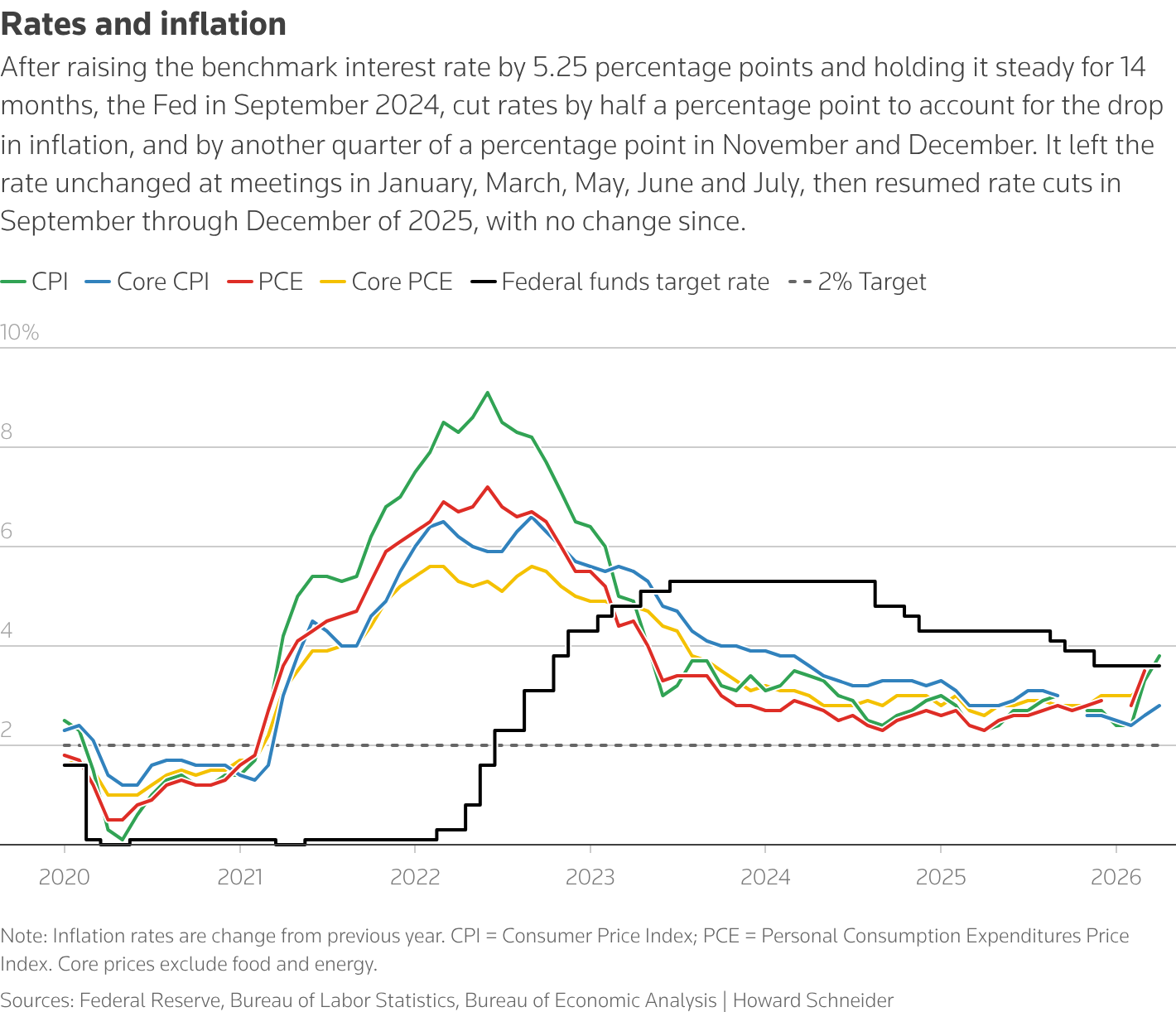
The current federal funds rate target range of 3.5% to 3.75% represents a roughly 400-basis-point reduction from the cycle peak of 5.5% reached in mid-2024, when inflation was running hot across services and shelter. Williams's argument that policy is "appropriate" rests on a specific macroeconomic forecast: that the Middle East war and associated energy supply disruptions are transitory shocks, not structural shifts in inflation dynamics. He expects PCE inflation, currently around 4%, to moderate as the energy spike dissipates and as the effects of earlier tariff increases roll off year-over-year comparisons. Core inflation, which strips out food and energy, remains above 3%, a level that would normally trigger a hawkish response. But Williams is betting that the core reading is being dragged higher by pass-through from energy costs into transportation and industrial inputs, not by demand-pull pressures that would require rate increases to cool. Philadelphia Fed President Anna Paulson echoed this positioning, describing policy as "well positioned" given the combination of high inflation and elevated uncertainty. The key mechanism at work is the Fed's preferred framework of "risk management": Williams is effectively choosing to accept above-target inflation for several more quarters rather than risk tipping the economy into recession by raising rates into an energy shock. That calculus works only if inflation expectations remain anchored, and the bond market's reaction function will be the real-time test of whether that bet holds.
How the Inflation Bet Flows Through Bank P&Ls
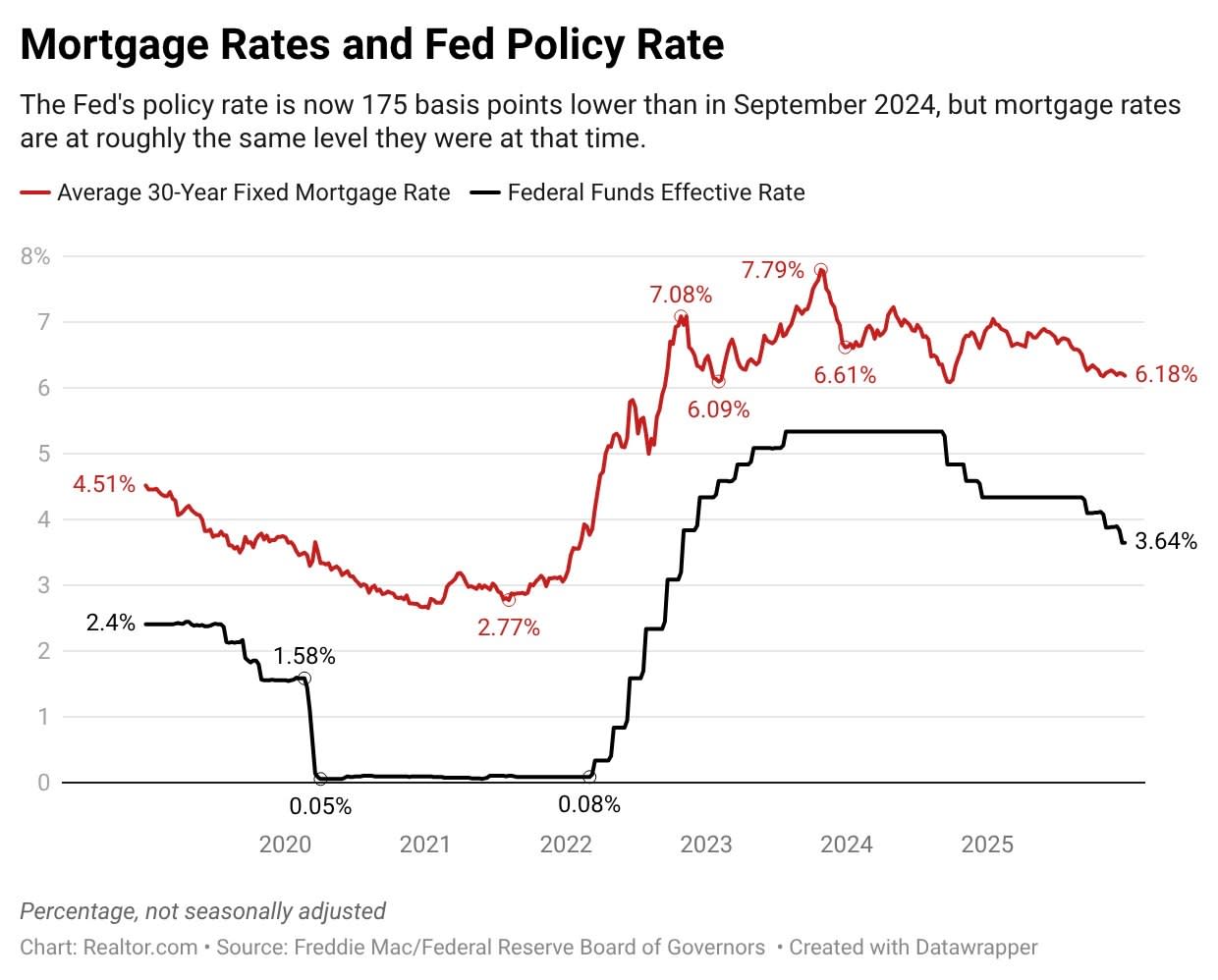
The Fed's policy stance directly shapes bank net interest margins, loan loss provisions, and securities portfolio valuations. At 3.5% to 3.75%, the federal funds rate keeps short-term funding costs for banks (deposits, fed funds, and repo) at levels that still allow positive carry on floating-rate commercial loans tied to SOFR. A rate hike to 4% or higher would compress those margins by raising deposit costs faster than loan yields can reprice, particularly for regional banks with large fixed-rate mortgage books. The inflation persistence that Williams is tolerating also drives higher loan loss provisions: if PCE stays near 4% through year-end, corporate borrowers with variable-rate debt face rising interest coverage ratios, especially in sectors like commercial real estate and leveraged buyouts. Bowman's warning that hiking would add "unwarranted policy restraint" and weigh on economic activity and the labor market speaks directly to this dynamic. A rate increase would slow hiring and capex, reducing loan demand and increasing non-performing assets. For bank treasuries, the duration risk on bond portfolios remains acute: if the market's year-end rate hike expectation materializes, the 10-year Treasury yield could push above 5%, triggering mark-to-market losses on held-to-maturity securities that would force capital ratio adjustments. The Fed's split messaging, with Williams holding and markets pricing a hike, creates a volatility regime that punishes banks that hedge too much or too little. The winners will be institutions that kept floating-rate exposure and short-duration bond books; the losers will be those that bet on a return to near-zero rates.
The Competitive Reshuffle Among Fed Officials
The public divergence between Williams, Bowman, Kashkari, and Paulson represents a breakdown of the consensus-driven communication strategy that Fed chairs have cultivated since Alan Greenspan. Williams, as the New York Fed president and vice chair of the Federal Open Market Committee, carries institutional weight as the permanent voter closest to Wall Street. His "appropriate" framing signals that the FOMC's center of gravity remains in hold mode. Bowman, a governor appointed by President Trump, has taken the most dovish position by explicitly warning against hiking into what she sees as temporary energy inflation. Her argument, that reacting would add unwarranted restraint and weigh on economic activity and the labor market, positions her as the labor-side hawk, prioritizing maximum employment over the inflation mandate. Kashkari, the Minneapolis Fed president, occupies the middle ground: he says it is premature to raise rates now but acknowledges that risks are rising, leaving himself room to pivot if the Middle East conflict escalates. Paulson of Philadelphia offers the most ambiguous stance, calling policy "well positioned" without committing to a direction. This four-way split matters because it undermines the Fed's forward guidance credibility. When investors cannot predict the FOMC's reaction function with confidence, term premiums widen, credit spreads blow out, and the transmission mechanism of monetary policy becomes less efficient. The market's response, pricing a year-end rate hike despite Williams's hold message, reflects a loss of faith that the Fed will stay patient.
Downstream Effects on Hyperscalers, Fabs, and Enterprise Borrowers
The Fed's policy uncertainty cascades directly into corporate capital expenditure decisions, particularly for hyperscalers and semiconductor fabricators that rely on cheap debt to finance multi-billion-dollar data center and fab builds. At 3.5% to 3.75%, the cost of investment-grade corporate debt remains manageable: a 10-year bond for a company like Microsoft or Amazon yields roughly 4.5% to 5%, still below the expected return on AI infrastructure projects. A rate hike to 4% or higher would push those yields toward 5.5%, compressing project IRRs and potentially delaying or scaling back capex plans. For semiconductor fabs, which require $10 billion to $20 billion per facility and have construction timelines of three to five years, the interest rate sensitivity is acute. The CHIPS Act subsidies provide some buffer, but the cost of the private co-financing that fills the gap rises directly with the fed funds rate. Enterprise borrowers face a similar squeeze: middle-market companies that refinanced at low rates in 2020-2021 now face a wall of maturities in 2027-2028, and a rate hike would lock in higher interest costs for a decade. The energy shock that is driving inflation also raises operating costs for logistics-heavy industries, compounding the margin pressure. If the Fed holds rates steady, these borrowers get a reprieve; if it hikes, the capex cycle slows. The bond market's year-end hike expectation is already tightening financial conditions through higher term premiums, even without a formal FOMC move. That tightening acts as a de facto rate increase, reducing the marginal benefit of actual action.
What the Policy Split Signals About the Fed's Future
The Williams-Bowman-Kashkari-Paulson divide is not just a tactical disagreement about the next 25-basis-point move; it is a strategic signal about how the Fed will handle the intersection of geopolitics and monetary policy going forward. The Middle East war and energy shock represent the first major test of the post-COVID framework that prioritizes patience over preemption. Williams's willingness to tolerate 4% PCE inflation reflects a judgment that supply shocks are self-correcting and that the Fed should not tighten into them — a lesson drawn from the 2021-2022 inflation cycle, when the Fed was criticized for being too slow to hike. Bowman's warning against hiking into temporary energy inflation represents the opposite lesson: that overreacting to supply shocks damages the labor market unnecessarily. Kashkari's "rising risks" language signals that the Fed is watching for second-round effects: wage-price spirals or inflation expectations de-anchoring, that would force a pivot from patience to action. The market's year-end rate hike pricing suggests investors believe those second-round effects are already materializing. The strategic implication is clear: the Fed is moving toward a regime where geopolitical risk is a first-order input to monetary policy, not an exogenous shock to be filtered out. That shift will force central banks globally to coordinate more closely on energy security, supply chain resilience, and fiscal-monetary policy mix. Komal Sri-Kumar, president of Sri-Kumar Global Strategies, has argued that the Fed's credibility depends on its willingness to act when inflation persists, regardless of the source. The Williams camp is testing that proposition.
The next six months will determine whether Williams's patience is vindicated or whether the Fed is forced into a belated hiking cycle that compounds the economic damage from the energy shock. If inflation moderates as tariff effects roll off and energy prices stabilize, the current rate level will look like a masterclass in risk management. If PCE stays above 4% through the fourth quarter, the Fed will face a choice between hiking into a slowing economy or accepting permanently higher inflation, neither of which is compatible with the dual mandate. The bond market is already voting with its feet, pricing a year-end hike that the FOMC majority has not endorsed. That divergence will resolve only when the data forces one side to capitulate. For corporate treasurers, bank risk officers, and asset allocators, the correct play is to hedge both outcomes: maintain floating-rate exposure for a hold scenario and buy protection against a hike that would reset the entire rate curve. The Fed's internal debate is not noise; it is the signal that the old playbook for monetary policy in a geopolitically stable world no longer applies.
The BossBlog Daily
One email with the AI markets brief — the 13F moves, the Congressional trades, and what changed. No fixed schedule and no filler: it goes out when there is something worth sending.
Unsubscribe any time. We never sell or share the list.