
The Federal Reserve's April 2026 meeting exposed a central bank in open conflict with itself, as the Federal Open Market Committee voted 8-4 to hold the baseline rate at 3.5%–3.75% while multiple regional presidents publicly warned that the next move will be a hike, not a cut. Boston Fed President Susan Collins flagged a rate-hike scenario as inflation risks tilt higher, while Dallas Fed President Lorie Logan dissented from the majority over language suggesting the next move would likely be a cut. Logan stated plainly that rates will need to rise later this year to bring inflation back to the Fed's 2% target. The hawkish turn comes as the Fed's preferred inflation gauge rose 3.8% in the 12 months through April, far above target, and as the Iran war pushes up energy prices. Investors initially priced in rate cuts for 2026, but those expectations are now off the table. The political dimension adds further complexity: Peter Navarro, senior adviser to President Trump, publicly cautioned the Fed against raising rates, while former Chair Jerome Powell remains on board amid an inspector general probe. The 8-4 vote, the most divided in years, signals that the Fed's internal consensus has fractured at precisely the moment when inflation is proving stickiest.
3.8% Core Inflation Breaks the Fed's Dual Mandate
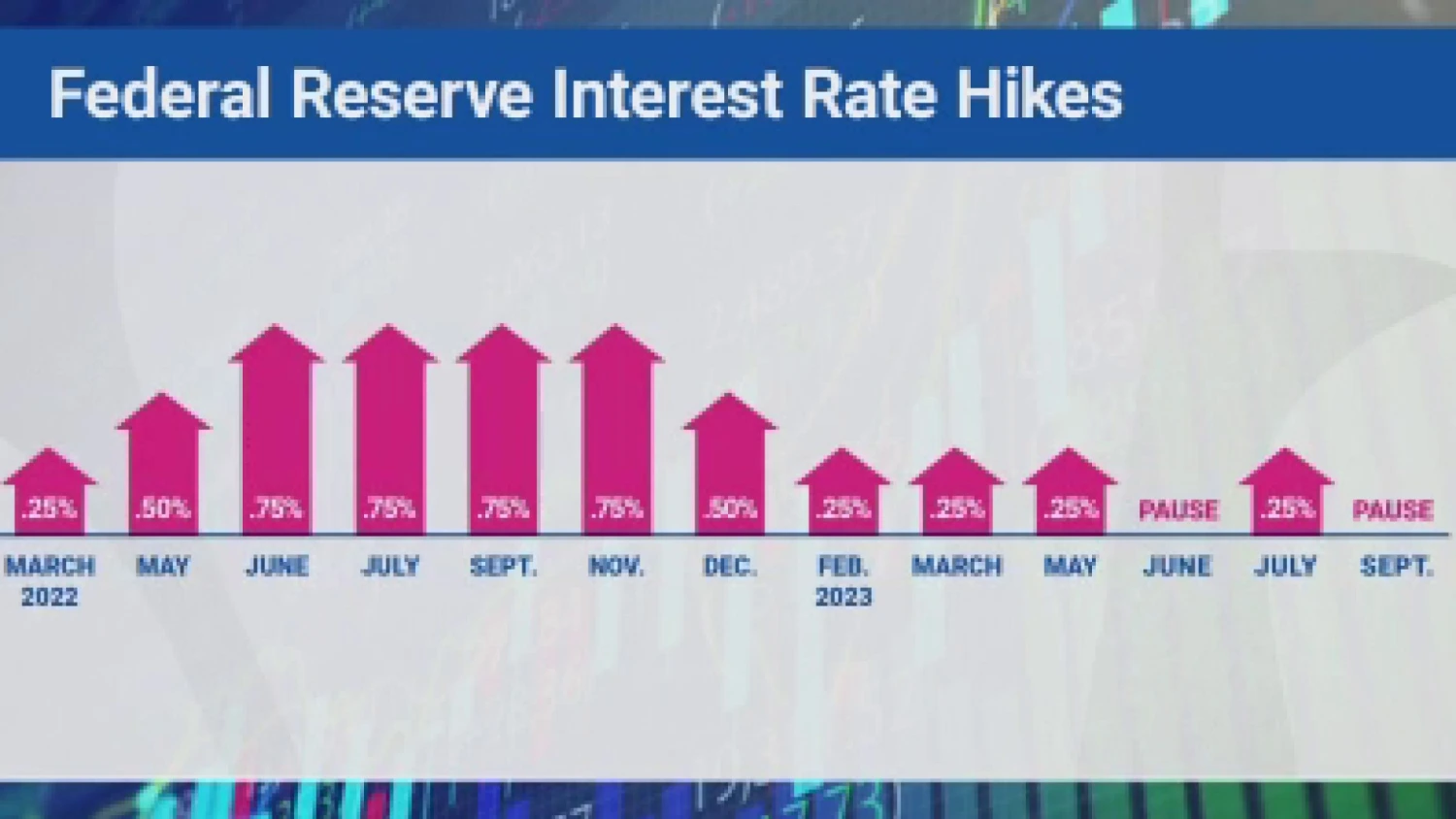
The Fed's preferred inflation measure, the Personal Consumption Expenditures price index, rose 3.8% in the 12 months through April 2026, nearly double the central bank's 2% target. Core measures, which strip out volatile food and energy prices, remain similarly elevated. Dallas Fed President Lorie Logan described inflation as trending toward the "mid 2s," not back to 2%, a distinction that matters enormously for rate policy. The gap between 2.5% and 2% represents roughly $500 billion in cumulative purchasing power erosion across the U.S. economy over a multi-year horizon, and it is precisely this gap that has turned Fed hawks into activists. Logan dissented at the April FOMC meeting specifically over the committee's forward guidance language, which she argued wrongly implied the next move would be a cut. The war in Iran has compounded the problem by pushing up oil prices, which feed directly into transportation costs, industrial inputs, and consumer goods. The Fed's dual mandate requires maximum employment and stable prices, and with the labor market "broadly balanced" per Logan, the employment side of the mandate is satisfied. That leaves inflation as the binding constraint, and at 3.8%, the constraint is tightening. The 8-4 vote reflects a committee where nearly a third of members believe the current policy stance is insufficiently restrictive to bring inflation down within a reasonable timeframe. The Fed's own Summary of Economic Projections from March 2026 showed most members expect inflation to remain above 2% through 2027, reinforcing the hawks' argument that inaction now will require sharper tightening later.
How a Rate Hike Flows Through Bank P&Ls and Bond Portfolios
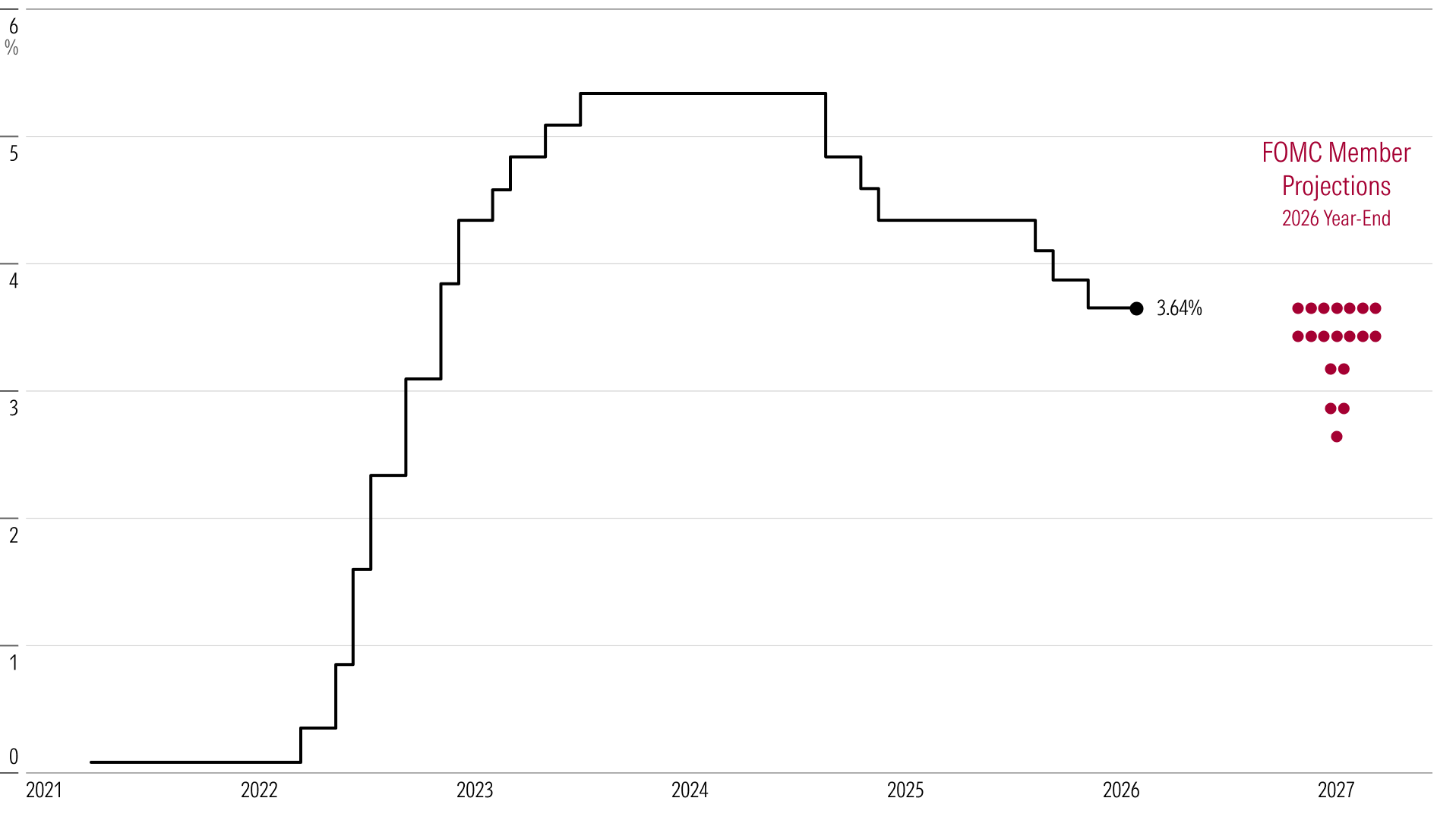
A rate hike from the current 3.5%–3.75% range would compress net interest margins at regional banks that loaded up on longer-duration securities during the low-rate era. Banks that hold large portfolios of agency mortgage-backed securities and Treasury bonds at below-market yields face mark-to-market losses that erode regulatory capital. The unrealized losses on bank balance sheets, estimated at over $700 billion at the peak of the 2023 tightening cycle, have only partially healed as rates stayed elevated. A new hike would reopen those wounds. For money market funds and short-term investors, a hike would push the effective federal funds rate higher, increasing yields on Treasury bills and repo agreements. That would pull more liquidity out of bank deposits and into money market funds, a dynamic that accelerated during the 2022–2023 tightening cycle. For corporate borrowers, a rate hike raises the cost of floating-rate debt, which accounts for roughly 30% of investment-grade corporate bonds and a larger share of leveraged loans. Companies that refinanced during the 2020–2021 low-rate window now face a wall of maturities in 2027–2028 at significantly higher rates. The bond market has already repriced: the yield curve remains inverted, with 2-year Treasuries yielding more than 10-year Treasuries, a classic signal that the market expects tighter policy to slow the economy. A rate hike would deepen that inversion and increase recession risk. The S&P 500 fell 2.3% on the day of the April FOMC statement release, reflecting investor anxiety that higher rates will compress equity valuations across interest-rate-sensitive sectors.
Dallas Fed's Logan Versus the White House: The Battle Lines
Dallas Fed President Lorie Logan has emerged as the most vocal hawk on the FOMC, publicly stating that rates will need to rise later this year to bring inflation to 2%. Her dissent at the April meeting was a procedural shot across the bow, signaling that she will not accept forward guidance that locks the committee into a cutting bias. Logan's district covers the energy-heavy Texas economy, where the Iran war has boosted oil production and refining margins, giving her a direct window into how geopolitical shocks feed through to prices. Her hawkish stance puts her on a collision course with the Trump administration. Peter Navarro, senior adviser to the president, warned the Fed in stark terms: "Don't even think about" rate hikes. The political pressure is intense. The Trump administration wants lower rates to stimulate economic growth heading into the midterm elections, but the Fed's statutory independence means the White House cannot formally dictate policy. The 8-4 vote shows that the hawks, while outnumbered, have enough support to force a public debate. Kevin Warsh, a former Fed governor, faces internal opponents who argue that his approach would not tame inflation without higher rates. The editorial pages have weighed in, suggesting Warsh can tame inflation without raising rates, but the data argues otherwise. The battle lines are drawn: Logan and Collins on one side, the White House on the other, and Powell's successor will inherit a committee that is deeply divided on the most fundamental question of monetary policy.
The Iran War Premium: How Geopolitics Reshapes the Rate Calculus
The war in Iran has injected a persistent supply-side shock into the inflation equation that the Fed cannot offset with demand-side tools. Oil prices have risen sharply, pushing up the Fed's preferred inflation gauge to 3.8% in the 12 months through April. Energy costs feed through to every sector: transportation, manufacturing, agriculture, and consumer goods. Unlike demand-driven inflation, which the Fed can cool by raising rates, supply-driven inflation from geopolitical conflict requires either a resolution to the conflict or a structural adjustment in energy markets. The Fed's models do not handle supply shocks well. The central bank's preferred approach is to look through transitory shocks, but the Iran war shows no signs of ending quickly, making the inflation persistence structural rather than transitory. Logan noted that financial conditions remain "accommodative" despite the current rate level, meaning that the war premium has not yet been fully priced into the real economy. The AI investment boom, which Logan described as booming, adds another layer of demand for capital and electricity, further straining energy grids and pushing up costs. The combination of war-driven energy inflation, AI-driven electricity demand, and a tight labor market creates a three-headed inflation monster that the Fed cannot easily slay with rate hikes alone. The global dimension matters too: New Zealand's central bank narrowly voted to hold rates while signaling hikes are coming, and Uganda held its key lending rate at 9.75%, showing that central banks worldwide are grappling with the same geopolitical inflation dynamics. The International Energy Agency projects that global oil demand will exceed supply by 1.2 million barrels per day through the third quarter of 2026, a deficit that will keep upward pressure on prices regardless of Fed action.
What the 8-4 Vote Tells Us About the Next Fed Chair's Mandate
The 8-4 vote at the April 2026 FOMC meeting was the most divided since the Volcker era, and it sends a clear signal about the challenges facing the next Fed chair. Jerome Powell remains on board amid an inspector general probe, but his term has effectively ended, and the committee is leaderless at a critical moment. The four dissenters represent a bloc that believes the current policy stance is too loose, and they will demand a more hawkish posture from the next chair. The White House, through Navarro, has made clear it wants the opposite: lower rates to support growth. The next chair must navigate between a divided FOMC and a White House that views rate hikes as politically unacceptable. The editorial suggestion that Kevin Warsh can tame inflation without higher rates is a political argument, not an economic one. The data shows inflation at 3.8%, the labor market tight, and financial conditions accommodative. The only way to bring inflation down without rate hikes is through a fiscal contraction or a supply-side boom, neither of which is guaranteed. The 8-4 vote is a warning shot: the Fed's internal consensus has broken, and the next chair will inherit a committee where nearly a third of members are prepared to dissent publicly. That makes forward guidance nearly impossible and increases the risk of policy errors. The market is already pricing in the uncertainty, with rate cuts off the table and the next move increasingly likely to be a hike.
The Fed's April vote was not a pause but a prelude. With inflation at 3.8%, the Iran war pushing energy costs higher, and the labor market broadly balanced, the case for a rate hike will only strengthen in the coming months. The 8-4 split ensures that every future FOMC statement will be scrutinized for shifts in the hawk-dove balance. Logan and Collins have drawn a line in the sand: they will not accept inflation settling in the mid-2s. The White House's political pressure, delivered through Navarro, creates a parallel drama that will test the Fed's institutional independence. The next chair, whether Warsh or another candidate, must decide whether to accommodate the hawks or the White House. The bond market has already made its bet: the yield curve inversion signals recession risk, and the repricing of rate expectations has wiped out the 2026 cut premium. For investors, the message is clear. The era of easy money is definitively over, and the era of Fed infighting has just begun. The only question is whether the hawks will get their hike before the economy forces a different outcome.
The BossBlog Daily
Essential insights on AI, Finance, and Tech. Delivered every morning at 06:00 Asia/Shanghai. No noise.
Unsubscribe anytime. No spam.