
For the first time in the current monetary policy cycle, financial markets now expect the Federal Reserve's next interest rate move to be a hike, not a cut. The dramatic reversal follows hotter-than-expected inflation data that has upended the consensus view of a continued easing path. According to the CME Group's FedWatch tool, which tracks pricing in 30-day federal funds futures, the probability of a 25-basis-point rate hike by the January 2027 Federal Open Market Committee meeting has surged to approximately 60%, up from near zero just weeks ago. Traders also see a roughly 51% chance of a hike as early as the December 2026 meeting, with the probability climbing to over 71% by the March 2027 gathering. The Fed, under outgoing Chair Jerome Powell, has held the federal funds rate at 3.50%–3.75% since December, maintaining an easing bias that three officials formally dissented against in the April policy statement. Now, incoming Chair Kevin Warsh faces a difficult messaging challenge: he must navigate a market that has priced in a tightening cycle before he has even taken the gavel. This shift matters because it signals that the inflation fight is far from over, with persistent price pressures and Middle East uncertainty threatening to force the central bank into a policy reversal that would ripple through bond markets, bank balance sheets, and corporate borrowing costs.
The CPI shock that repriced the Fed
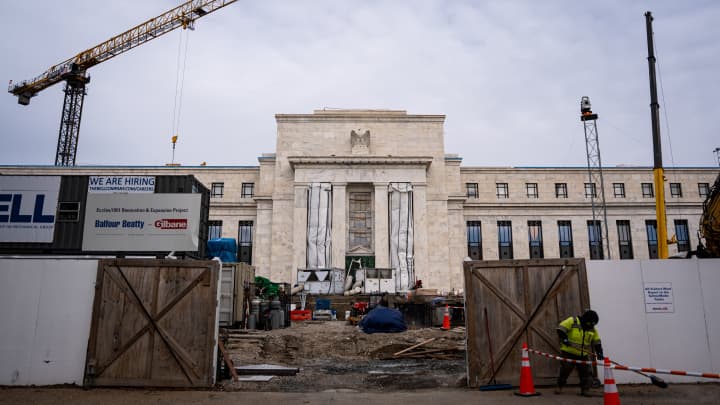
The surge in rate hike expectations is rooted in a single catalyst: hotter-than-expected inflation data that broke the prevailing narrative of disinflation. The Bureau of Labor Statistics reported that the Consumer Price Index rose 0.4% month-over-month, pushing the annual rate to 3.7%, well above the Fed's 2% target. Core inflation, which excludes food and energy, also accelerated, driven by sticky services costs and rising shelter prices. The data landed as a shock to a market that had been pricing in a series of quarter-point cuts through 2026 and into 2027. Within hours of the release, the CME FedWatch tool recorded a dramatic repricing: the probability of a hike by the January FOMC meeting jumped from roughly 15% to 60%. The move was amplified by the structure of the fed funds futures market, where a single large block trade can shift probabilities. Bank of America strategists noted that the pricing now implies a cumulative 25-basis-point hike by early 2027, effectively unwinding the last cut of the previous easing cycle. The shift is not merely a technical anomaly; it reflects a genuine reassessment of the inflation outlook. Energy prices, elevated by Middle East tensions, and a tight labor market that continues to generate wage pressure are the primary drivers. The Fed's April meeting minutes, due Wednesday, are expected to provide further clues on how the committee views this new data, but the market has already moved ahead of the central bank.
How the rate shift flows through bank P&Ls
A rate hike in this environment would have a distinctly different impact on bank profitability than the hiking cycle of 2022–2023. During that period, banks benefited from a steepening yield curve as the Fed raised rates rapidly, allowing them to widen net interest margins by repricing loans faster than deposits. Today, the curve is inverted, with short-term rates above long-term rates, compressing margins. A 25-basis-point hike would push the fed funds rate to 3.75%–4.00%, deepening the inversion if long-term yields do not rise in lockstep. For Bank of America, which holds a large portfolio of longer-duration securities, an inverted curve creates a drag on net interest income. The bank's CFO has previously flagged that a sustained inversion could reduce NII by $500 million to $1 billion per quarter. A hike would also increase funding costs for regional banks that rely on wholesale funding, as money market rates would rise in tandem. On the asset side, variable-rate commercial and industrial loans would reprice higher, providing some offset, but the net effect is likely negative for most lenders. The bigger risk is credit quality: higher rates increase debt service costs for corporate borrowers, particularly in the leveraged loan and private credit markets. The Fed's own Senior Loan Officer Opinion Survey shows that banks have already tightened lending standards for commercial and industrial loans. A rate hike would accelerate that trend, potentially triggering a broader credit crunch that hits small and mid-sized businesses hardest.
The competitive reshuffle among rate-sensitive sectors
The shift in rate expectations creates clear winners and losers across financial markets. The most immediate impact is on the dollar, which has strengthened against major currencies as the rate hike premium attracts foreign capital. A stronger dollar pressures multinational corporations with significant overseas revenue, such as Apple and Microsoft, by reducing the value of foreign earnings when translated back to dollars. Conversely, it benefits import-dependent retailers and airlines by lowering the cost of goods and fuel. In the bond market, the repricing has pushed the 2-year Treasury yield above 4.5%, while the 10-year yield has risen to 4.8%, steepening the curve slightly but still leaving it inverted. This dynamic favors active fixed-income managers who can rotate into shorter-duration instruments, while passive holders of long-duration bonds face mark-to-market losses. The equity market has rotated sharply: financials, particularly regional banks, have underperformed as the inverted curve threatens margins, while energy stocks have rallied on the back of elevated oil prices tied to Middle East uncertainty. Technology and growth stocks, which are sensitive to discount rates, have sold off as higher future rates reduce the present value of their distant cash flows. The CME Group, which operates the FedWatch tool and the fed funds futures market, benefits directly from the surge in trading volume and volatility. Its Q1 earnings showed a 15% increase in interest rate derivatives volume, and the current environment suggests that trend will accelerate.
Downstream effects on corporate borrowing and capex
The second-order effects of a potential rate hike extend deep into corporate balance sheets and capital expenditure plans. Investment-grade bond issuance, which had been running at a record pace in 2026 as companies locked in low yields, is likely to slow as borrowing costs rise. The average yield on the Bloomberg US Corporate Bond Index has already climbed 40 basis points since the inflation data release, pushing the cost of debt for blue-chip borrowers above 5.5%. For speculative-grade issuers, the impact is more severe: high-yield spreads have widened by 75 basis points, reflecting increased default risk. Companies that have been relying on floating-rate debt, such as private equity-backed firms in the leveraged loan market, face immediate cash flow pressure. A 25-basis-point hike would add approximately $2.5 billion in annual interest expense across the $1.2 trillion leveraged loan market, according to S&P Global estimates. This dynamic is already forcing CFOs to reassess capex plans. The Dallas Fed's manufacturing survey showed that the capex expectations index fell to its lowest level since the pandemic, with respondents citing uncertainty about interest rates and energy costs. The hyperscalers (Amazon, Microsoft, Google, and Meta) are somewhat insulated because their capital spending is driven by long-term AI infrastructure needs, but higher rates increase their cost of capital for data center construction and chip procurement. For the semiconductor industry, a rate hike would delay the recovery in end-market demand for PCs and smartphones, which are sensitive to consumer financing costs. Intel and Samsung, which are investing billions in new fabs under the CHIPS Act, face higher financing costs for their bond issuances.
What the rate hike signal says about the policy path
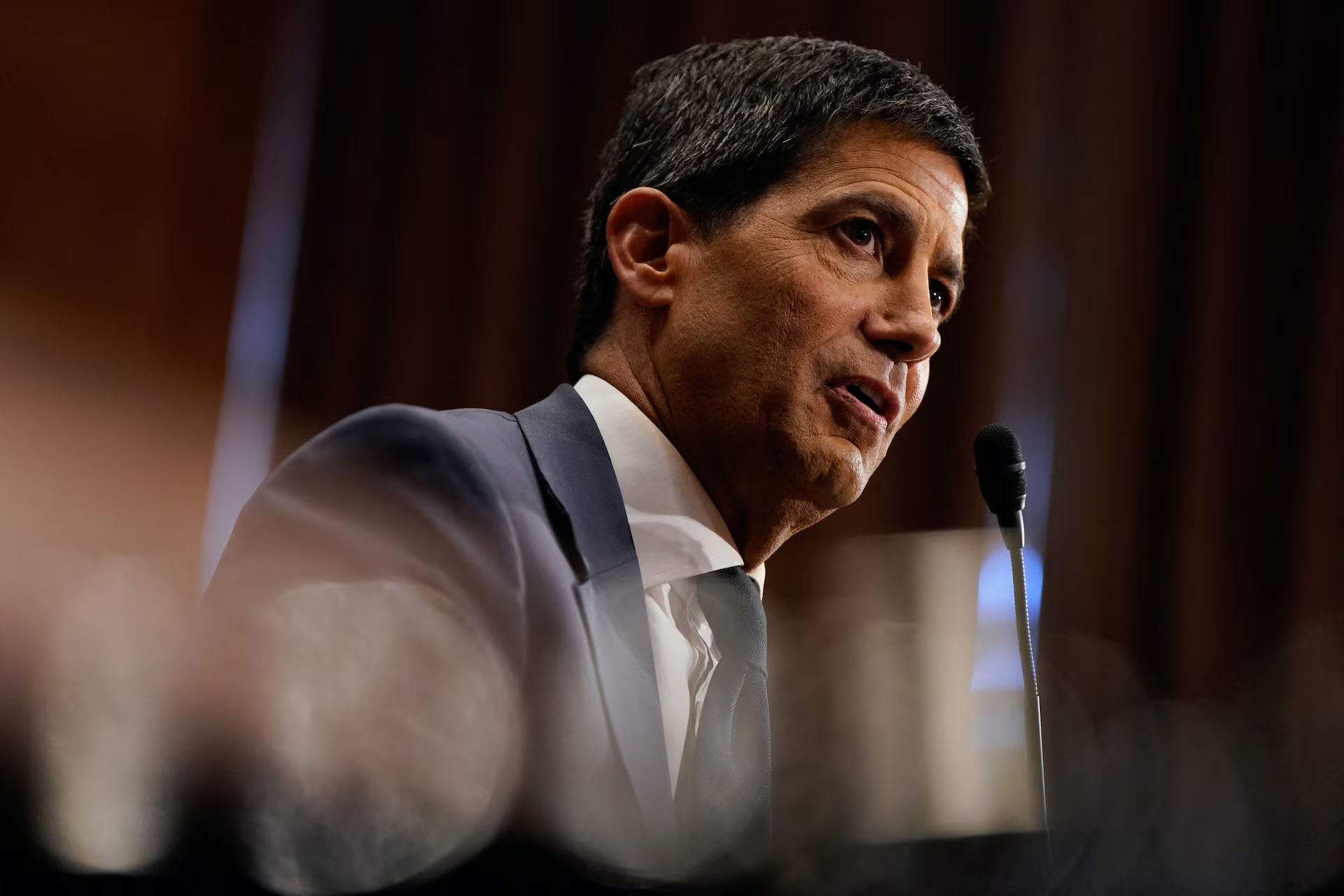
The market's pricing of a rate hike before Kevin Warsh has even taken office is a stark warning about the credibility challenge facing the incoming Fed chair. Warsh, a former Fed governor with deep ties to the Trump administration, inherits a committee that is divided: three officials dissented against the April statement's continued easing bias, arguing that the Fed should signal a neutral stance. The market is now effectively forcing the committee's hand, pricing in a hike that the consensus dot plot does not yet reflect. This disconnect between market pricing and Fed guidance is dangerous because it creates a self-fulfilling dynamic. If the Fed does not hike, it risks falling behind the curve on inflation, forcing larger moves later. If it does hike, it validates the market's view and risks tightening financial conditions too quickly. The Middle East uncertainty compounds the challenge: elevated energy prices act as a supply-side shock that the Fed cannot easily address with rate policy. A rate hike would not lower oil prices, but it would suppress demand, potentially tipping the economy into recession. Warsh's first FOMC meeting in June will be a critical test. He must decide whether to acknowledge the market's pricing by adjusting the forward guidance or to push back against it, arguing that the inflation data is transitory. His choice will set the tone for his entire tenure. The broader signal is that the era of easy money is definitively over, and the Fed's next move (whether in December, January, or March) will mark the first rate hike since July 2023, ending the longest pause in a tightening cycle in decades.
The implications for the broader economy are profound. If the Fed does follow through with a hike, it will mark the first time since the Volcker era that the central bank has resumed tightening after a prolonged pause, a move that would reset expectations for the entire yield curve. The housing market, which has already seen 30-year mortgage rates climb above 7.5%, would face further pressure, with home sales likely to fall to their lowest level since 1995. Consumer spending, which has held up surprisingly well, would finally buckle under the weight of higher credit card and auto loan rates. The political dimension is equally significant: a rate hike in an election year would put Warsh in direct conflict with the administration that appointed him, testing the Fed's independence. The market is now watching for the April FOMC minutes, due Wednesday, for any hint that the committee is moving toward the hawkish side. If the minutes show that a majority of members discussed the need to prepare for a hike, the probability for December will move from a coin toss to a near certainty. Either way, the message is clear: the inflation genie is not back in the bottle, and the Fed's next move will be up, not down.
The BossBlog Daily
One email with the AI markets brief — the 13F moves, the Congressional trades, and what changed. No fixed schedule and no filler: it goes out when there is something worth sending.
Unsubscribe any time. We never sell or share the list.