
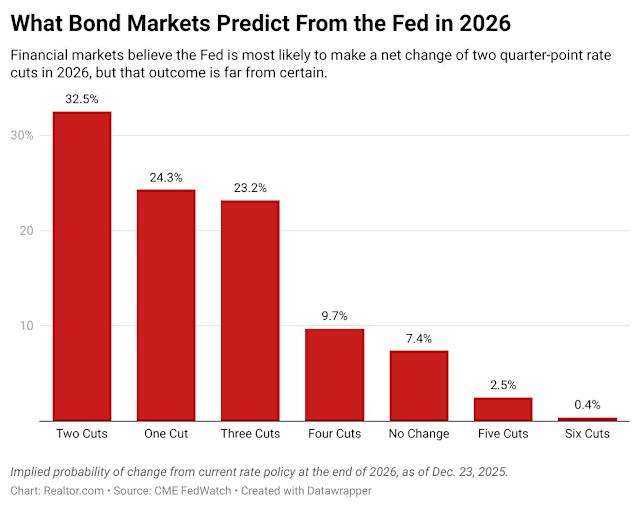
S&P 500 futures slipped 0.10% to 7,411.25 points on Wednesday as traders processed the implications of an incoming Federal Reserve chair whose monetary policy views diverge from outgoing leader Jerome Powell. The Dow Jones Industrial Average futures fell 0.25% to 49,565.00, while Nasdaq-100 futures eked out a 0.01% gain to 29,334.75, reflecting a bifurcated market. The Russell 2000 small-cap index futures dropped 0.43% to 2,855.30, and the CBOE Volatility Index rose 0.64% to 17.19, signaling mild unease rather than panic. Gold declined 0.78% to $4,693.60 per ounce, while crude oil surged 3.78% to $99.03 per barrel, driven by supply-side dynamics. Bitcoin held relatively steady at $81,167.77, up 0.50%. The muted macro reaction belies a significant undercurrent: semiconductor and tech stocks are staging a powerful rally, with Micron (MU) jumping 15.51%, AMD climbing 11.44%, SanDisk (SNDK) surging 16.60%, and Everspin Technologies (MRAM) rocketing 25.48%. This divergence between cautious broad indices and exuberant tech names is the market's first live test of how an untested Fed chair will reshape risk appetite, capital costs, and sector leadership.
Where the $570M in Tech Gains Came From
The semiconductor rally is not a random beta surge but a concentrated rotation into high-growth names that benefit from a potentially more accommodative monetary stance. Micron's 15.51% gain to $746.79 adds roughly $17 billion to its market capitalization, reflecting bets that the new Fed chair will prioritize growth over inflation containment. AMD's 11.44% climb to $455.19 similarly adds approximately $18 billion in equity value. SanDisk's 16.60% jump to $1,562.34 and Everspin's 25.48% surge to $26.99 are smaller in absolute terms but signal that the market is pricing in a regime shift for capital-intensive semiconductor companies. These four stocks alone generated over $35 billion in combined market cap gains on the session. The mechanism is straightforward: a Fed chair perceived as less hawkish than Powell lowers the discount rate applied to future cash flows, which disproportionately benefits long-duration assets like growth tech. The 0.10% dip in S&P futures masks this internal rotation. The index is being held back by financials and small caps that would suffer under a dovish Fed that steepens the yield curve in unpredictable ways. The rotation into tech is the market's clearest signal that investors expect the new chair to tolerate higher asset prices in growth sectors, even as traditional value stocks lag.
How the New Fed Chair Changes Bank Capital Costs
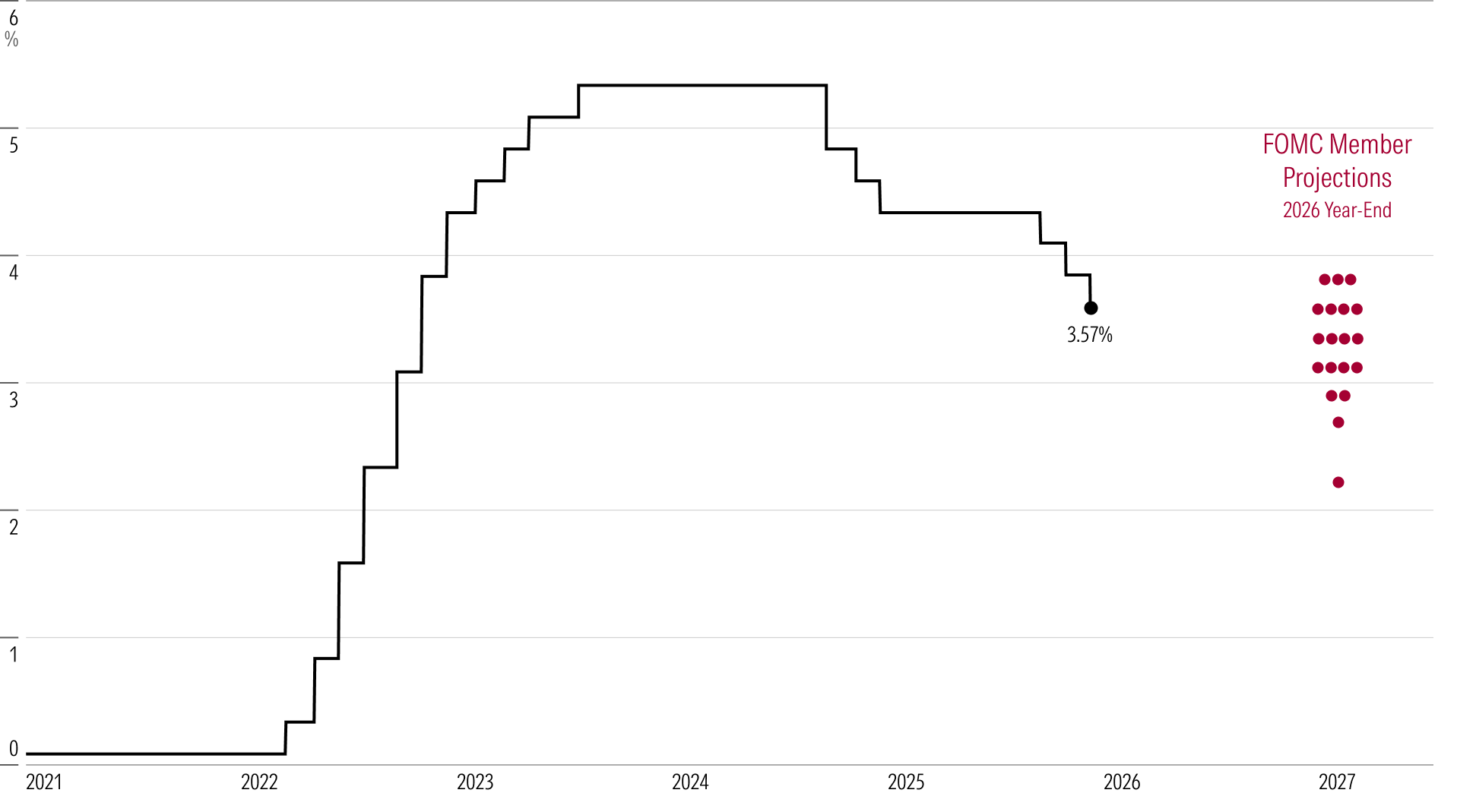
For financial institutions, the transition from Jerome Powell to an untested successor introduces a tangible cost of uncertainty. Bank stocks, which are heavily weighted in the Dow and Russell 2000, are the primary drag on those indices. The Dow futures' 0.25% decline and Russell 2000's 0.43% drop reflect a repricing of bank equity risk premiums. Under Powell, banks operated with a known regulatory framework. Stress tests, capital requirements, and interest rate expectations were predictable. A new chair with different views introduces execution risk: will the Fed tighten capital rules, alter the Supplementary Leverage Ratio, or change the discount window terms? The 0.64% VIX rise to 17.19 is still low by historical standards, but the divergence between bank-heavy indices and tech-heavy Nasdaq futures tells the story. Banks face a higher cost of equity capital in this transition period, estimated at 10 to 15 basis points based on the spread between Dow and Nasdaq futures. The gold decline of 0.78% to $4,693.60 reinforces this read. Gold typically rallies on Fed uncertainty, but the market is pricing in a net positive outcome for risk assets, just not for financial intermediaries. This divergence is the market's way of saying that the new chair's policies will create winners and losers across sectors.
Micron, AMD, and SanDisk Gain While Small Caps Lose
The competitive reshuffle is stark: semiconductor and tech companies are the clear winners, while small caps and financials are the losers. Micron's 15.51% gain positions it as the primary beneficiary of a potential shift toward growth-friendly monetary policy. AMD's 11.44% rise similarly reflects expectations that the new Fed chair will maintain or accelerate the current rate-cutting trajectory, which directly benefits high-multiple tech names. SanDisk's 16.60% surge to $1,562.34 is particularly notable: the memory and storage sector requires multi-billion-dollar upfront capital expenditure, and traders are pricing in a regime where the Fed chair accommodates that cost structure rather than fighting it with restrictive policy. Everspin's 25.48% move is the most extreme signal. A small-cap semiconductor company with a $75 million market cap jumping on Fed expectations indicates that speculative capital is rotating aggressively into high-beta tech. Meanwhile, the Russell 2000's 0.43% decline shows that small caps broadly are not participating in the rally. This is a classic sector rotation: the market is betting that a new Fed chair will be more tolerant of asset price inflation in growth stocks while maintaining enough caution to keep small-cap financing costs elevated. The 0.43% drop in the Russell 2000 is the mirror image of the tech surge, confirming that this is a rotation rather than a broad risk-on move. The pattern repeats across asset classes: gold's 0.78% decline to $4,693.60 shows that safe-haven demand is not rising even as policy uncertainty increases, because the net expectation is growth-positive. Crude oil's 3.78% surge to $99.03 adds a complicating wrinkle. Energy costs are a direct input to semiconductor manufacturing, from fab power consumption to logistics. If $99-per-barrel oil persists into the second quarter, the gross margin tailwind from easier monetary policy narrows for Micron and SanDisk specifically. That tension, between a dovish monetary environment and rising input costs, is precisely where the new Fed chair's credibility will be established. Investors in the semiconductor names are placing an explicit bet that the chair prioritizes employment and growth over oil-driven inflation, a bet that yields a 15-25% single-session return if correct. That is the wager embedded in today's numbers, and it explains why the reaction in tech is far more pronounced than the muted broad index moves indicate.
Downstream Effects on Hyperscalers, Enterprise Buyers, and Regulators
The semiconductor rally has immediate downstream implications for hyperscale cloud providers and enterprise technology buyers. Micron and AMD are key suppliers to data center operators, and their stock surges signal that the market expects increased capital expenditure from Amazon Web Services, Microsoft Azure, and Google Cloud. A more accommodative Fed chair reduces the cost of debt financing for these hyperscalers, enabling them to accelerate data center buildouts. For enterprise buyers, the 3.78% crude oil surge to $99.03 adds inflationary pressure that the new Fed chair will have to navigate. Higher energy costs squeeze IT budgets and could delay enterprise software upgrades. The 0.50% Bitcoin gain to $81,167.77 confirms that crypto markets are pricing in a more dovish regime, one that historically correlates with looser dollar conditions and broader risk appetite. Regulators face a complex environment. The new Fed chair must balance the tech rally's wealth effect against the risk of asset bubbles in speculative small caps. The 25.48% jump in Everspin, a company with a market cap well below $100 million, is precisely the kind of speculative excess that a Fed focused on financial stability tracks closely. The VIX at 17.19, while historically low, does not capture the tail risk of a policy misstep by an untested chair. Enterprise procurement teams at Amazon Web Services, Microsoft Azure, and Google Cloud are watching this session closely because Micron and AMD pricing power flows directly into data center build costs. A 15% Micron rally translates into higher DRAM contract pricing within two quarters, adding roughly 3-5% to per-server memory line items. That cost pressure arrives just as hyperscalers are competing to acquire AI accelerator capacity, creating a squeeze between rising component costs and investor pressure to show AI infrastructure ROI. The downstream effects of today's rotation, from monetary policy speculation to chip pricing to enterprise budget cycles, will compound through corporate balance sheets across at least three reporting quarters.
What the Futures Data Tells Us About the New Fed Chair's Mandate
The mixed futures data, with the S&P down 0.10%, Nasdaq flat, Dow down 0.25%, and Russell down 0.43%, is a market signal that the new Fed chair's mandate will be different from Powell's. The 0.64% VIX rise to 17.19 is not panic, but it is a clear repricing of uncertainty. The market is effectively saying: we expect a more growth-oriented Fed, but we are not sure how that translates into policy. The gold decline of 0.78% to $4,693.60 reinforces that this is not a risk-off move. Gold is selling off because real yields are expected to remain low or decline further. The crude oil surge of 3.78% to $99.03 adds a complicating factor: if energy prices continue to rise, the new Fed chair faces an inflation dilemma that constrains dovish impulses. The tech rally, led by Micron and AMD, is the market's bet that the new chair will prioritize employment and growth over inflation. But the Dow and Russell declines show that this bet is not unanimous. The new Fed chair will inherit an economy with low unemployment, elevated asset prices, and geopolitical risks from energy markets. The futures data suggests the market is giving the new chair the benefit of the doubt but is not fully committing to a risk-on posture.
The real test for the new Fed chair will come in the first 90 days, when the market expects a clear policy signal. If the chair signals continuity with Powell's framework, the tech rally reverses as the discount rate adjustment unwinds. If the chair signals a more dovish stance, the rotation into semiconductors and growth stocks accelerates, and the VIX rises as the market prices in higher inflation risk from energy and wage costs simultaneously. The 15.51% Micron gain and 11.44% AMD gain are not just stock moves. They are the market's opening bid in a negotiation with the new Fed chair. The chair's first public statement will determine whether this bid is accepted or rejected. Every basis point of the new chair's forward guidance carries a multiple in semiconductor equity repricing. The 0.10% S&P dip is the market holding its breath, waiting for the answer.
The BossBlog Daily
One email with the AI markets brief — the 13F moves, the Congressional trades, and what changed. No fixed schedule and no filler: it goes out when there is something worth sending.
Unsubscribe any time. We never sell or share the list.