
The Federal Reserve held its benchmark rate steady at 3.50%-3.75% following its April 29 meeting, but the 8-4 vote, the closest since 1992, revealed deep internal divisions that the market has largely ignored. BofA Global Research, led by economist Aditya Bhave, scrapped its previous forecast for a September 2026 cut and now expects no rate reductions until July 2027. The revision came after headline PCE inflation rose to 3.5% year-over-year in March, up from 2.8% in February, while core PCE hit 3.2% from 2.9%. The labor market remains strong: April nonfarm payrolls added 115,000 jobs and unemployment held at 4.3%. Even Chicago Fed President Austan Goolsbee, typically a dove, publicly floated the possibility of a rate hike. With a new Fed chair set to replace Jerome Powell, the central bank enters an unprecedented period of policy uncertainty that will reshape everything from equity valuations to corporate borrowing costs.
The 8-4 Vote Signals a Fractured Fed
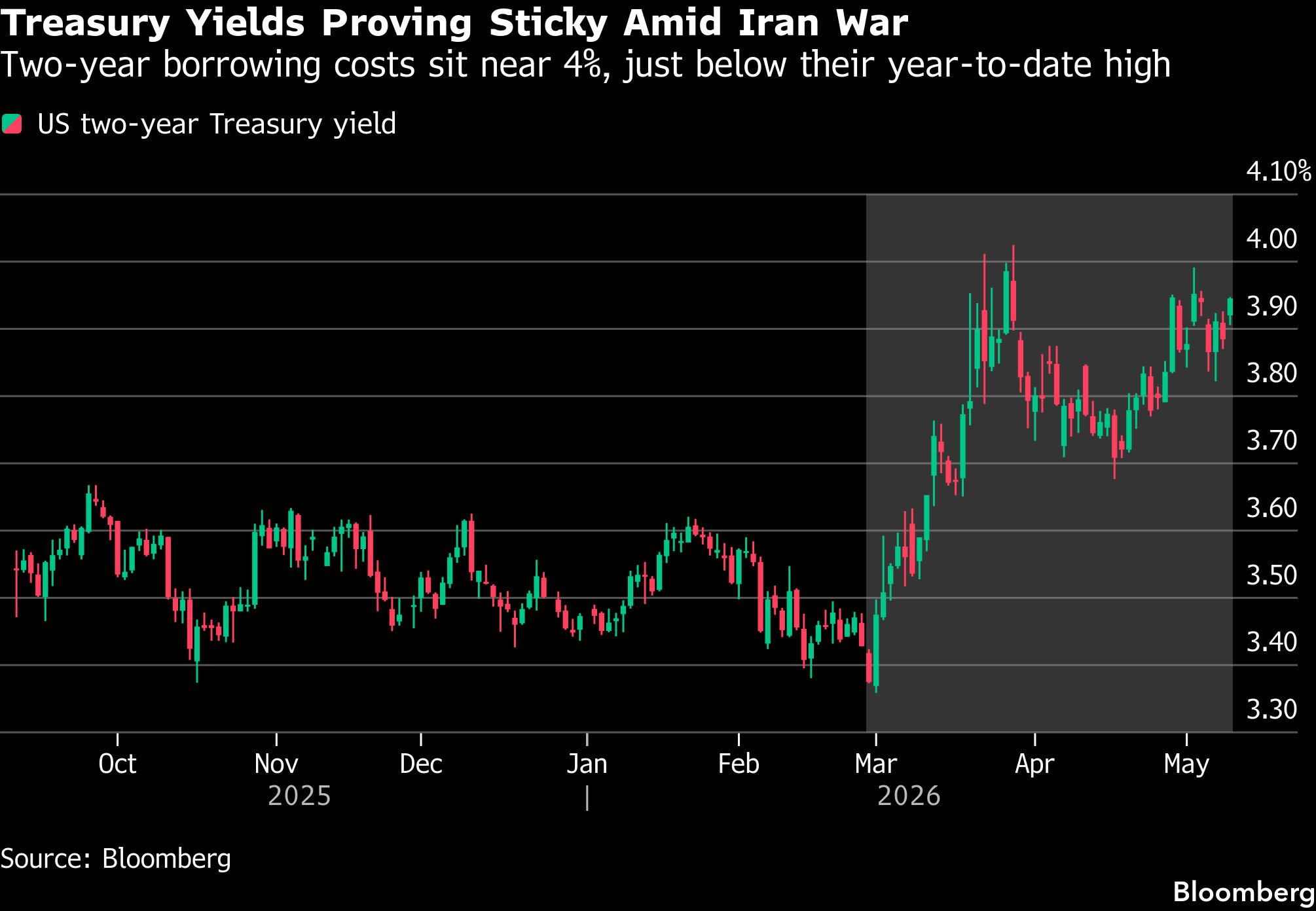
The 4 dissenting votes represent the largest internal opposition to a rate decision since the early 1990s, a period when the Fed was navigating the aftermath of the savings and loan crisis. The dissenters pushed for either a rate hike or a more aggressive statement on inflation, reflecting a hawkish faction that believes the current 3.50%-3.75% range is insufficient to cool an economy where headline PCE is running at 3.5%. The majority, however, argued that holding rates steady allows time to assess the lagged effects of previous tightening without triggering a recession. This split matters because the Fed's next chair, who will replace Jerome Powell, inherits a committee that is ideologically fractured. The 8-4 vote is not a one-off; it signals that the next policy decision, whether a hike, a hold, or a cut, will face intense internal debate. For investors, the vote count is a leading indicator of how quickly the Fed can pivot if conditions change. A divided Fed is a slow Fed, and slow policy responses increase the risk of either overtightening or falling behind the curve on inflation. The last time the committee saw such a wide split was during the 1992 savings and loan crisis, when the Fed ultimately cut rates by 300 basis points over the following year. That historical parallel confirms that today's dissenters are not merely symbolic; they represent a faction that will force the next chair to pick a side early in their tenure.
How $7 Trillion in Money Market Funds Benefits From No Cuts
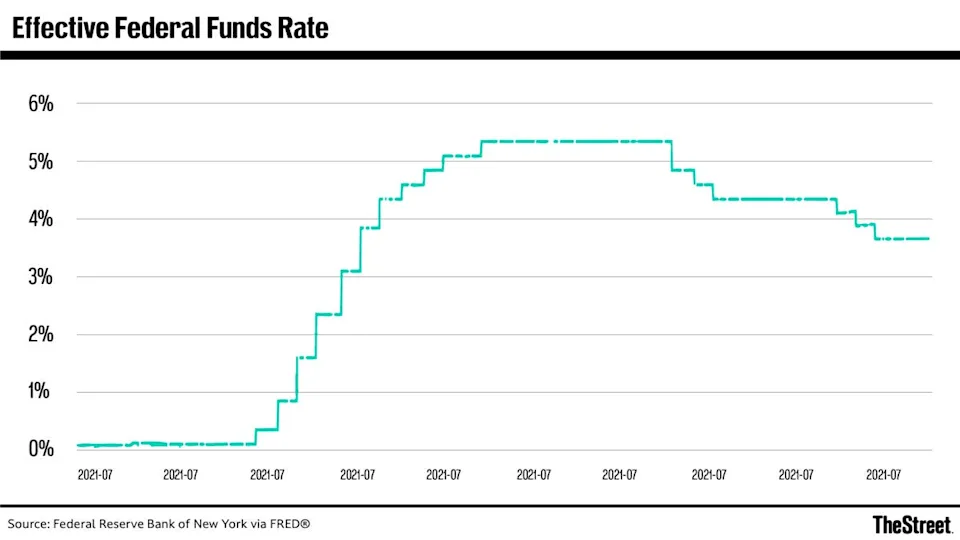
The Fed's extended hold at 3.50%-3.75% creates a powerful tailwind for cash-like assets, particularly Treasury bills. Money market funds, which hold roughly $7 trillion in assets, earn yields directly tied to the fed funds rate. With no cuts expected until July 2027, these funds will continue to generate annualized returns above 3.5% for at least another 13 months. For Bank of America and other large depositories, the rate hold preserves net interest margins that would compress under a cutting cycle. The bank's own research arm now forecasts no cuts for over a year, which means the "higher for longer" narrative is now a baseline assumption, not a tail risk. Corporate treasurers who shifted cash into T-bills during the 2022-2023 tightening cycle have no incentive to rotate back into longer-duration bonds, which would lock in yields below current short-term rates if the curve remains inverted. The opportunity cost of holding cash is zero when the alternative is duration risk in a market that still expects eventual cuts. This dynamic keeps short-term rates elevated and forces equity investors to compete with a risk-free return above 3.5%, compressing valuation multiples across the S&P 500. The $7 trillion parked in money market funds is a record high, and every month that the Fed holds rates steady, that cash pile grows as investors roll over maturing T-bills into new issues at the same elevated yields.
The Companies That Win and Lose From a 2027 No-Cut Scenario
The extended rate hold creates clear winners and losers across sectors. Regional banks that loaded up on long-duration Treasury bonds during the low-rate era face continued pressure on their securities portfolios, as mark-to-market losses persist without the relief of a rate cut. In contrast, money-center banks like Bank of America benefit from a steep yield curve that widens lending spreads, especially on credit cards and commercial loans tied to prime rates. Technology and growth stocks, which trade on discounted future cash flows, face sustained headwinds: the S&P 500 futures at 7,411.25 and Nasdaq futures at 29,334.75 show only modest declines, but the VIX at 17.19 confirms the market is pricing in low volatility rather than complacency. Energy companies are a direct beneficiary, as crude oil at $99.03 per barrel reflects both geopolitical risk from the Iran conflict and the Fed's inability to cut rates to stimulate demand. Homebuilders and mortgage lenders, however, face a brutal environment: with the fed funds rate at 3.50%-3.75%, 30-year mortgage rates remain above 6.5%, crushing affordability and new-home sales volumes. The National Association of Realtors reported that existing home sales in April fell 12% year-over-year, directly tied to the rate environment that the Fed's hold perpetuates. Private equity firms carrying leveraged buyout portfolios feel the pain most acutely: the average LBO was structured at 5-6x EBITDA with floating-rate debt tied to SOFR, meaning every month at 3.50%-3.75% adds roughly $15 million in annual interest expense per billion dollars of debt relative to the zero-rate era. KKR, Apollo, and Blackstone have collectively delayed over 30 portfolio company exits since 2024, waiting for a rate environment that BofA now says will not arrive until mid-2027 at the earliest. Life insurance companies, by contrast, benefit directly: their general accounts, which hold over $4 trillion in fixed-income assets, earn higher reinvestment yields as maturing bonds roll into new issues at above-3.5% rates. Prudential Financial and MetLife both revised their net investment income guidance higher for 2026, citing the extended hold as the single largest driver of earnings upside. The divergence between financial sector winners and losers sharpens with every FOMC meeting that leaves the rate unchanged.
Second-Order Effects on Hyperscalers, Fabs, and Enterprise Buyers
The no-cut regime cascades through corporate capital expenditure decisions with measurable force. Hyperscalers like Amazon, Microsoft, and Google, which collectively plan to spend over $200 billion on data centers and AI infrastructure in 2026, now face higher financing costs for the debt portion of those builds. A 3.50%-3.75% fed funds rate translates to corporate bond yields of 4.5%-5.0% for investment-grade issuers, adding roughly $2 billion in annual interest expense for every $100 billion in new debt. Semiconductor fabs, which require $10 billion to $20 billion per facility and have construction timelines of 3-5 years, are particularly sensitive to rate duration: a 12-month delay in cuts means an additional 50-75 basis points of carry cost on construction loans. Enterprise buyers of IT hardware and software, who finance purchases through equipment leases tied to SOFR, face higher monthly payments that depress procurement volumes. The Fed's hold also strengthens the dollar, which hurts multinational tech companies that generate 50% or more of revenue overseas. For the Fed, the trade-off is clear: holding rates protects against inflation but acts as a tax on the very capital investment needed to boost productivity and eventually lower prices. The Semiconductor Industry Association estimates that each 50-basis-point increase in financing costs delays roughly $5 billion in fab construction starts, meaning the hold is directly slowing the domestic chip manufacturing buildout.
What the New Fed Chair Means for the Rate Path
The impending transition to a new Fed chair, who will replace Jerome Powell, introduces a layer of political and policy uncertainty that the market is not pricing. The 8-4 vote shows that the next chair will inherit a committee where nearly a third of members are willing to dissent publicly, making consensus-building far harder than during Powell's first term. The new chair's first major test will be the June 2026 meeting, where the committee must decide whether to hike, hold, or signal a pivot. If the new chair leans dovish, the hawkish bloc could expand its dissent, triggering a market selloff as investors question the Fed's commitment to price stability. If the new chair leans hawkish, the risk shifts to overtightening into a slowing economy. BofA's forecast of no cuts until July 2027 presupposes that the new chair will prioritize inflation credibility over growth support, at least initially. For bond traders, the transition period is a volatility event: the spread between 2-year and 10-year Treasuries will widen or compress based on signals from the incoming chair. The market's current calm, with the VIX at 17.19, reflects an assumption that the transition will be smooth, but history shows that Fed leadership changes often precede sharp policy reversals. When Paul Volcker stepped down in 1987, the Fed cut rates by 50 basis points within three months; when Alan Greenspan left in 2006, the Fed hiked twice more before the financial crisis forced a reversal. The bond market is already pre-positioning: 2-year Treasury yields fell 8 basis points the week Powell's departure was confirmed, pricing in a more dovish successor even before a nominee was named.
The extended rate hold at 3.50%-3.75% is not a pause. It is a new equilibrium that will persist through at least mid-2027, reshaping asset allocation, corporate finance, and fiscal policy. For equity investors, the risk-free return above 3.5% means that the S&P 500's current forward P/E of 20x is only justified if earnings grow at double-digit rates, a tall order when the economy is growing below trend. For corporate treasurers, the message is clear: extend duration on the liability side and keep cash on the asset side. The biggest unknown remains the new Fed chair, whose first policy statement will either validate BofA's 2027 timeline or force a dramatic repricing of rate expectations across every asset class from Treasuries to private credit. Portfolio managers who built models on three rate cuts in 2026 now face a full recalibration. Until the new chair's first press conference, the 8-4 vote is the clearest signal the Fed will send.
The BossBlog Daily
One email with the AI markets brief — the 13F moves, the Congressional trades, and what changed. No fixed schedule and no filler: it goes out when there is something worth sending.
Unsubscribe any time. We never sell or share the list.