
The Federal Reserve's rate-setting path has hardened into a prolonged pause, with Cleveland Fed President Beth Hammack telling WOSU radio that rates will likely stay on hold "for quite some time" and Minneapolis counterpart Neel Kashkari warning that the Iran war could force the next move to be up if the Strait of Hormuz closes for an extended period. The central bank held its benchmark rate steady for the third consecutive meeting in April 2026, predicting moderate economic growth while multiple officials signal no near-term cuts. Against this backdrop, banks are competing aggressively for deposits: rates on certificates of deposit maturing in a year or less jumped 6 basis points to 3.71%, while 13- to 36-month CDs edged up 1 basis point to 2.62%, according to data from 35 banks under Morgan Stanley coverage. Eight of those 35 institutions raised CD yields in April alone. This divergence, a Fed locked in place and deposit costs rising, creates a real tension for bank net interest margins and signals that the market is pricing in a higher-for-longer scenario that the central bank's dot plot has only begun to acknowledge. The reason this matters now: the combination of geopolitical supply-shock risk and sticky deposit costs means the next rate move is more likely up than down, a reversal of the dovish pivot many investors had expected by mid-2026.
The 6-basis-point jump in CD yields came from bank-by-bank competition for retail deposits
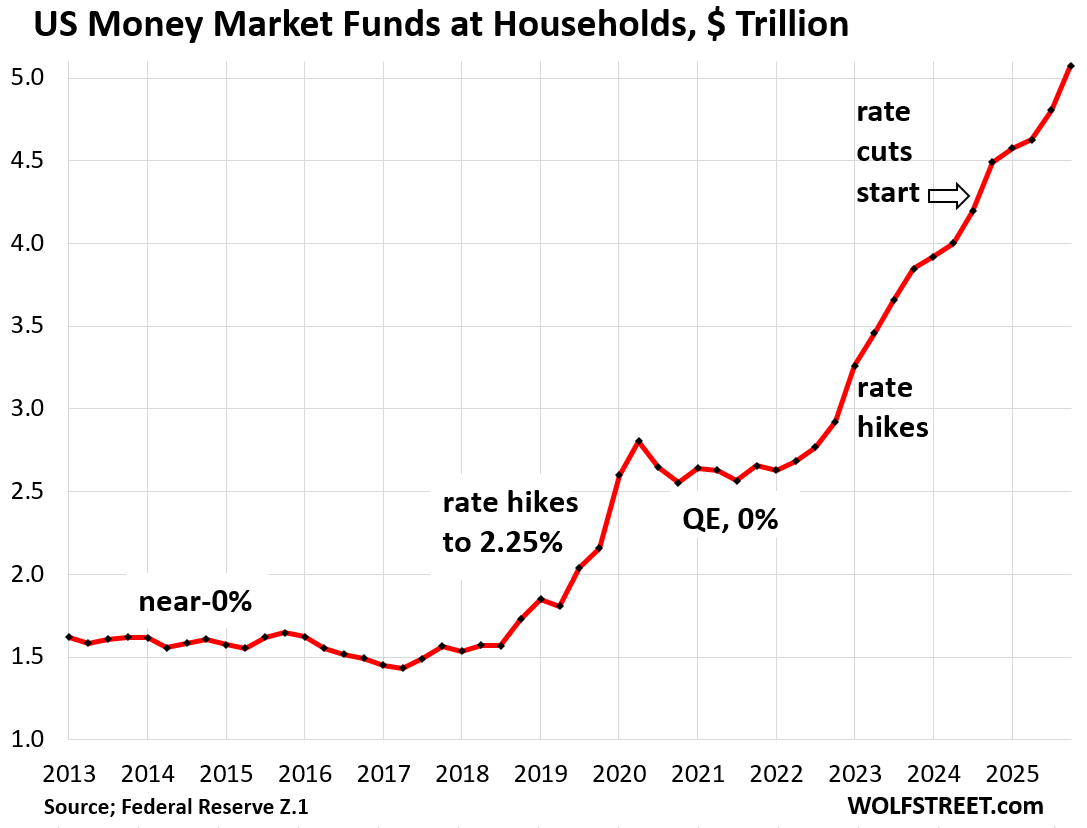
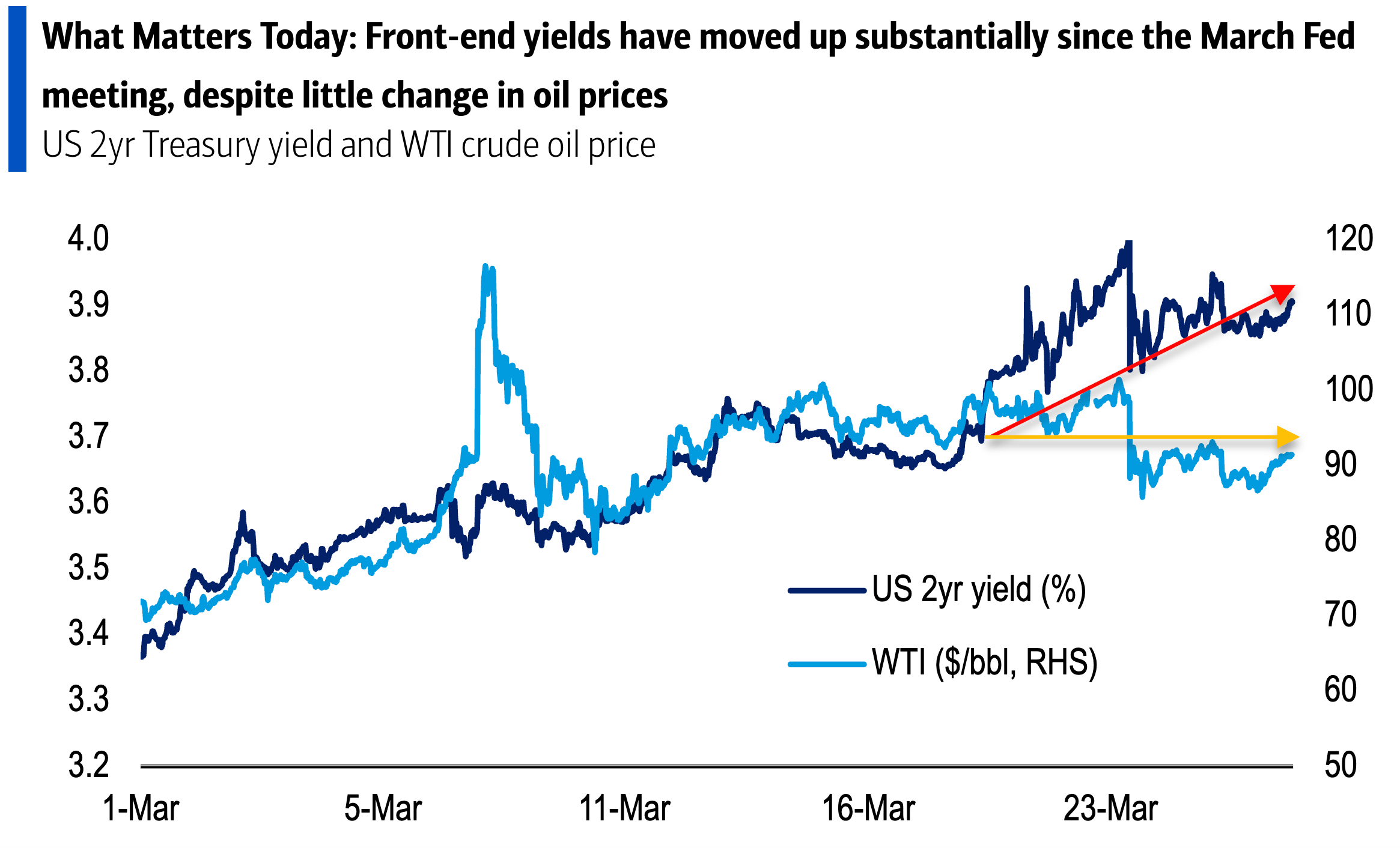
The 6-basis-point increase in short-dated CD rates to 3.71% is not a broad market repricing but a bank-by-bank scramble for retail deposits as the Fed's extended pause drains the urgency of cutting deposit costs. Morgan Stanley analyst Manan Gosalia, who covers 35 banks, reported that eight of them raised CD yields in April, a sign that institutions are willing to pay up for sticky funding rather than rely on wholesale markets that could become more expensive if the Strait of Hormuz disruption persists. The move is concentrated at the short end: CDs maturing in 12 months or less saw the full 6-basis-point lift, while longer tenors from 13 to 36 months gained only 1 basis point to 2.62%. That steepening of the CD yield curve, short rates rising faster than longer ones, mirrors the broader Treasury curve's behavior since the Fed's April decision, where front-end yields have repriced higher on the expectation that the next rate change is a hike, not a cut. Banks are effectively betting that depositors will lock in 3.71% for one year rather than wait for a potential 4%+ environment if oil-driven inflation forces the Fed's hand. The math is straightforward: with the federal funds rate at 4.25%–4.50%, a 3.71% one-year CD offers depositors a real return above inflation expectations, but it also compresses the spread banks earn on new loans. For the eight banks that raised yields, the decision reflects a judgment that deposit retention is worth more than marginal NIM expansion in the current uncertainty. The eight institutions that raised yields include a mix of regional and super-regional banks, each facing distinct funding gaps that made the trade-off acceptable.
How the rate pause reshapes bank net interest margins
The prolonged rate pause creates a two-sided squeeze on bank profitability that the CD yield data makes visible. On the asset side, loan yields are largely fixed or tied to lagging indexes like the prime rate, which has not moved since the Fed stopped hiking. On the liability side, deposit costs are rising as banks compete for a shrinking pool of rate-sensitive retail funds. The 6-basis-point CD increase is a direct cost to net interest income: for a bank with $10 billion in deposits, a 6-basis-point rise in the blended cost of deposits reduces pre-tax net interest income by $6 million annually, assuming no offsetting asset repricing. Morgan Stanley's coverage universe of 35 banks shows that eight institutions have already accepted that trade-off. The broader implication is that the industry's net interest margin, which peaked in late 2025 as the Fed's last hike filtered through, is now under structural pressure. Banks that rely heavily on CDs for funding, typically regional and community institutions, will feel the squeeze more acutely than money-center banks with large non-interest-bearing demand deposit bases. The Fed's steady-rate posture removes the possibility of relief from lower deposit costs, while the Iran war risk introduces the possibility of a hike that would further steepen the deposit curve. For bank equity investors, the signal is clear: the easy NIM expansion of the 2023–2025 hiking cycle is over, and the next phase is margin compression unless loan yields can reprice upward faster than deposit costs.
The competitive reshuffle among banks for deposit market share
The eight banks that raised CD yields in April are making a strategic bet that deposit market share is worth more than short-term margin, and their competitors face a choice between matching the increases or losing rate-sensitive customers. This dynamic is most visible in the 12-month CD market, where the 3.71% yield is now above the 3.50% average for money market funds, making CDs competitive for the first time in over a year. Banks with strong brand recognition and digital platforms, the kind that can attract deposits nationally without brick-and-mortar overhead, are best positioned to win this game. Smaller community banks, which typically offer higher CD rates to compensate for limited branch networks, now face a narrowing premium as larger institutions enter the fray. The 1-basis-point move in longer-dated CDs suggests that banks are willing to pay up for short-term funding but are reluctant to lock in higher costs for two- or three-year tenors, a sign that they expect the rate environment to resolve, either through a cut or a spike, within 12 months. This creates a bifurcated market: aggressive competition for 12-month money, and a wait-and-see approach for longer durations. For depositors, the window to lock in 3.71% may be narrowing if the Fed is forced to hike, but the risk of a cut that would make today's yields look attractive is receding with each geopolitical headline. The eight banks that moved are effectively front-running the competition, betting that deposit costs will only go higher from here.
Downstream effects on loan pricing, mortgage demand, and commercial credit
The rising CD yields have immediate downstream consequences for loan markets because banks fund mortgages, auto loans, and commercial credit from the same deposit base that is now costing 6 basis points more. For mortgage lenders, the 3.71% one-year CD rate sets a floor for the cost of funds that must be covered by loan origination fees and servicing income. With the 30-year fixed mortgage rate already hovering near 7%, any further increase in deposit costs will push lenders to raise mortgage rates or tighten credit standards to maintain margins. Commercial and industrial loan demand, which has been soft as businesses delay capex amid geopolitical uncertainty, will face additional headwinds if banks pass through higher funding costs via wider spreads. The 1-basis-point increase in longer-dated CD yields is particularly relevant for commercial real estate lenders, who typically match-fund five- to ten-year loans with deposits of similar duration. A 2.62% cost of funds for two- to three-year money leaves little room for error when underwriting office or retail properties that face structural vacancy risk. The eight banks that raised yields are signaling to the broader credit market that the cost of intermediation is rising, which will eventually feed through to borrowers in the form of higher rates or reduced availability. For the Fed, this transmission mechanism is exactly what it wants: tighter financial conditions without a rate hike. But the risk is that deposit competition overshoots, creating a self-reinforcing cycle where banks raise CD rates, which forces them to raise loan rates, which slows the economy, which then justifies the very rate cut the Fed is reluctant to deliver.
What the Hammack-Kashkari divergence says about the Fed's next move
Beth Hammack's "quite some time" language and Neel Kashkari's Iran war scenario represent two poles of a Fed that is increasingly comfortable with inaction but unprepared for the tail risk that would force action. Hammack, a centrist regional president, is signaling that the base case is no change through at least the end of 2026, consistent with the April statement's moderate growth forecast. Kashkari, typically a dove, is acknowledging that the Iran war creates a path to a hike: if the Strait of Hormuz closure persists, oil prices spike, and inflation expectations become unanchored. The two views are not contradictory: the Fed can be on hold indefinitely unless a specific shock materializes. But the market is beginning to price a small probability of a hike, which is why short-dated CD yields are rising faster than longer-dated ones. The 6-basis-point move in one-year CDs is a market signal that the probability of a rate increase in the next 12 months has risen, even if the modal forecast remains no change. For investors, the key metric to watch is the spread between one-year CD yields and the one-year OIS rate, which reflects bank-specific funding pressure versus general market expectations. If that spread widens further, it will confirm that deposit competition is decoupling from Fed policy, forcing the central bank to either acknowledge the tightening or cut rates to relieve the pressure. The Hammack-Kashkari divergence is not a split: it is a range of outcomes that the Fed is deliberately leaving open, and the CD market is telling us that the market sees the Kashkari scenario as more probable than the dot plot suggests.
The next six months will determine whether the Fed's prolonged pause is a prelude to a cut or a hike, and the CD market is already voting with its feet. If the Iran war escalates and oil supply is disrupted, Kashkari's scenario becomes the base case, and one-year CD yields will push through 4% as banks price in a 50-basis-point hike. If the geopolitical situation stabilizes and inflation continues to moderate, Hammack's extended hold will prevail, and CD yields will plateau near current levels as the competition for deposits peaks. Either way, the eight banks that raised yields in April have placed a bet that deposit costs are heading higher, not lower. For depositors, the window to lock in 3.71% for one year is open now, but the risk of a hike that would make that yield look low is real. For bank investors, the margin compression story is just beginning, and the stocks that will outperform are those with low deposit betas and diversified funding sources. The Fed's next move is uncertain, but the direction of deposit costs is not: they are rising, and the central bank's inaction is the primary reason.
The BossBlog Daily
One email with the AI markets brief — the 13F moves, the Congressional trades, and what changed. No fixed schedule and no filler: it goes out when there is something worth sending.
Unsubscribe any time. We never sell or share the list.