
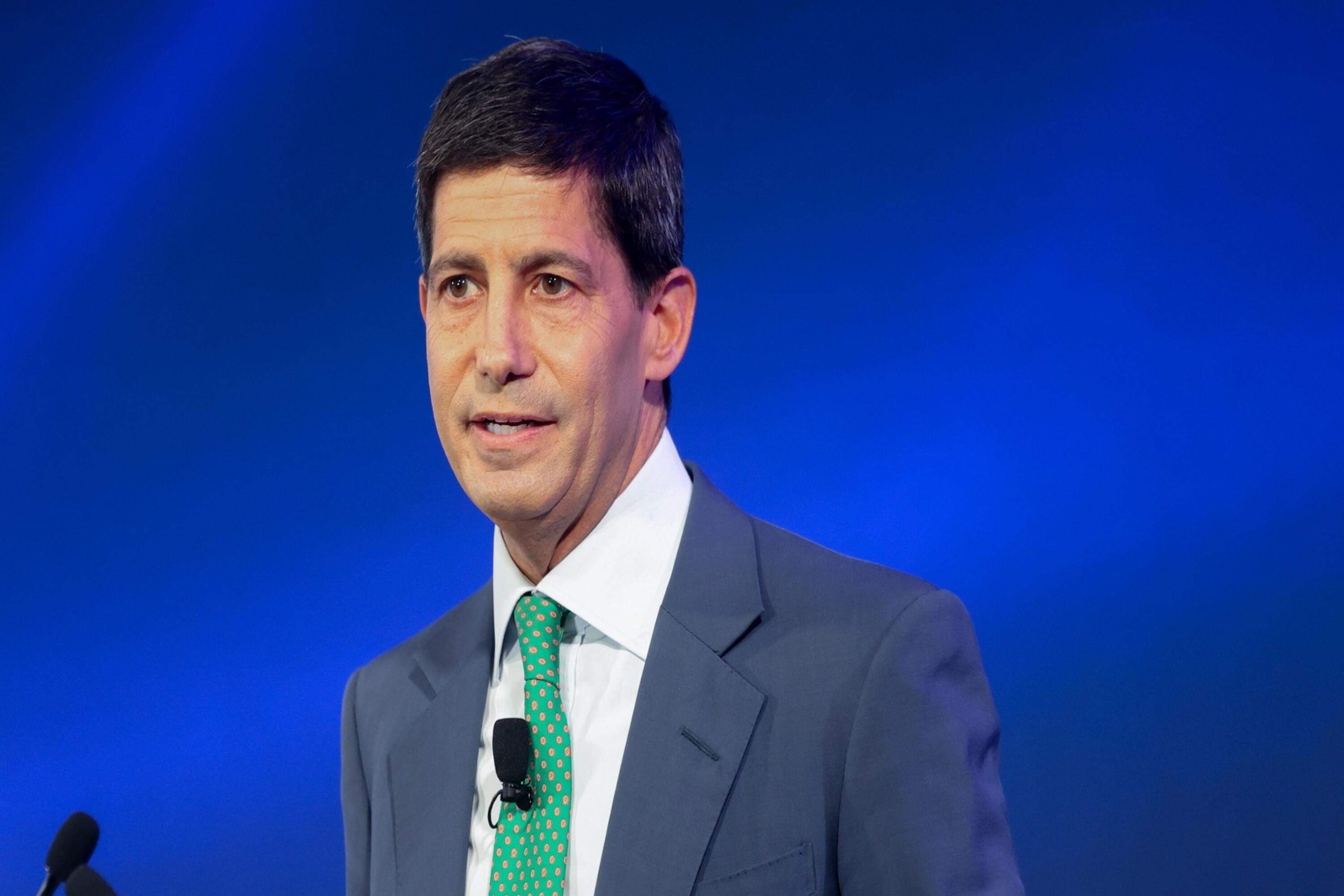
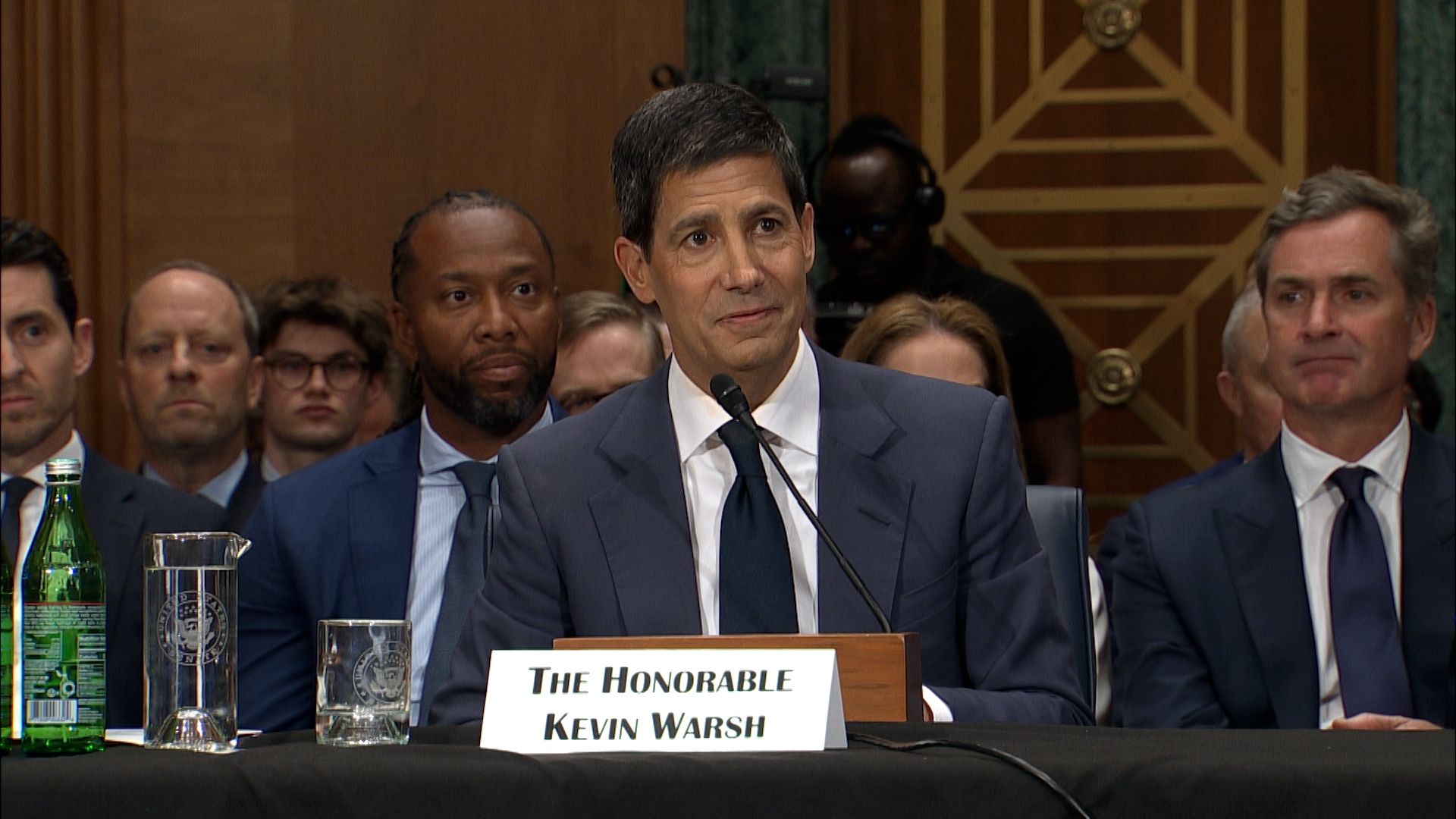
The Senate Banking Committee voted this week to advance Kevin Warsh's nomination to replace Jerome Powell as Federal Reserve Chair, a move that injects fresh uncertainty into a market already grappling with the highest stock valuations in a decade. The S&P 500 trades at 20.9 times forward earnings, well above the 10-year average of 18.9, even as the Fed's policy rate sits in the 3.50%-3.75% range and inflation runs roughly one percentage point above the central bank's 2% target. Democrats on the committee have voiced concerns that Warsh will push for rate cuts to appease President Donald Trump, but the macroeconomic backdrop tells a different story. The U.S.-backed war with Iran has introduced severe supply chain risks, and St. Louis Fed President Alberto Musalem recently warned that the balance of risks has shifted toward higher inflation, meaning rates will need to stay on hold or move up. Meanwhile, expectations of Middle East peace negotiations have driven the 10-year Treasury yield down to 4.352% and the dollar index to 94.64, while crude oil dropped 11.63% to $90.38. For investors sitting on a bull market that has more than doubled since October 2022, the combination of a hawkish Fed nominee, geopolitical inflation, and a stretched P/E multiple creates a dangerous setup where the discount rate will compress valuations just as earnings face margin pressure.
The 20.9 P/E premium over the 10-year average signals rate shock vulnerability
The S&P 500's forward price-to-earnings multiple of 20.9 represents a 10.6% premium over the 10-year average of 18.9, a gap that has historically signaled elevated vulnerability to interest rate shocks. Since the bull market began in October 2022, the index has more than doubled, reaching 7,342.20 on the day of the committee vote. The Dow 30 closed at 49,804.73, the Nasdaq at 25,719.70, and the Russell 2000 has also participated in the rally. But the valuation expansion has been fueled largely by the expectation that the Fed would begin cutting rates in 2026, an assumption now under direct threat from Warsh's nomination. The discount rate mechanism is straightforward: a higher or more uncertain Fed funds rate increases the denominator in present value calculations for future earnings, compressing P/E multiples. The 10-year yield at 4.352% already reflects some of this tension, but the real risk lies in the path ahead. If Warsh signals a willingness to keep rates higher for longer or even hike, the S&P 500's multiple will revert toward its historical average, implying a roughly 10% downside from current levels purely from multiple compression, before any earnings deterioration. The last time the market traded at a similar premium to its average was in early 2022, just before the Fed's tightening cycle triggered a 25% correction. The 10-year average of 18.9 itself masks wide variation: during the 2020 pandemic trough the multiple spiked above 22, while the 2018 tightening cycle pushed it below 16.
How the $570 billion in rate cut expectations unravels
The market has priced in roughly $570 billion in cumulative rate cuts over the next 18 months, according to fed funds futures data, but that expectation now faces a two-front assault. On one side, Warsh's nomination introduces political uncertainty: Democrats worry he will cut rates to please Trump, but the more immediate risk is that he does the opposite to establish credibility. On the other side, the U.S.-backed war with Iran has pushed crude oil to $90.38, and supply chain disruptions are feeding directly into core inflation readings that remain about one percentage point above the Fed's 2% target. St. Louis Fed President Musalem explicitly stated that risks have shifted toward higher inflation and that rates will need to stay on hold or move up. Chicago Fed President Austan Goolsbee has echoed similar caution. The result is that investors now see little chance of rate cuts for perhaps another year or more, a dramatic reversal from the six cuts the market expected at the start of 2026. For sectors sensitive to borrowing costs, Harley-Davidson and Ford, both of which rely on consumer financing, the extended hold period creates direct headwinds to sales volumes and margins. The dollar index falling to 94.64 provides some offset for multinational earnings, but the primary transmission mechanism runs through higher discount rates compressing equity valuations across the board.
The competitive reshuffle: large-cap defensives vs. rate-sensitive cyclicals
The Warsh nomination and the Iran conflict are driving a sharp rotation within the S&P 500 that favors large-cap defensive names at the expense of rate-sensitive cyclicals and small caps. The Russell 2000, which is more exposed to floating-rate debt and domestic consumer spending, faces a double hit: higher for longer rates increase borrowing costs for the small-cap companies that rely on bank loans, while the supply chain disruptions from the Iran war hit their less diversified revenue bases harder. In contrast, the S&P 500's mega-cap technology and healthcare names benefit from fortress balance sheets, pricing power, and global revenue streams that hedge against dollar weakness. The Nasdaq's 1.55% gain on the day of the committee vote, outpacing the Dow's 1.03% and the S&P 500's 1.14%, confirms this rotation is already underway. Gold surged 2.75% to $4,694.30 and later hit $4,722.20, reflecting demand for assets that are uncorrelated with Fed policy. Bitcoin has also rallied as investors hedge against fiat currency debasement risk. The key second-order effect is that the valuation dispersion between the S&P 500's top decile and bottom decile by P/E is now at its widest since 2021, creating an environment where active managers who bet on mean reversion are getting crushed, while passive investors in the cap-weighted index remain exposed to the concentration risk of the top five names. The Russell 2000's higher proportion of floating-rate debt means each quarter of delayed rate cuts directly reduces net interest margins for banks and increases default risk for small borrowers.
Downstream effects on capex, supply chains, and enterprise buyers
The combination of elevated inflation, a hawkish Fed nominee, and the Iran war is already reshaping capital expenditure plans across the economy. Crude oil at $90.38, down from recent highs but still elevated, is squeezing margins for transportation and logistics companies while boosting cash flows for energy producers. The 11.63% drop in crude on expectations of peace negotiations shows how quickly the geopolitical risk premium can unwind, but the underlying supply chain disruptions from the conflict remain unresolved. For hyperscalers and enterprise buyers, the higher discount rate environment makes long-duration capital projects, data centers, semiconductor fabs, and AI infrastructure, more expensive to finance. The 10-year yield at 4.352% increases the hurdle rate for these projects by roughly 150 basis points compared to the 2020-2021 period, when many of these investment plans were conceived. Ford and Harley-Davidson face a different but equally painful dynamic: higher rates suppress demand for big-ticket financed purchases, while the supply chain disruptions from the Iran war raise input costs. The Fed's balance sheet reduction, which Warsh is expected to continue, further tightens financial conditions by draining liquidity from the banking system. This creates a feedback loop where tighter conditions slow economic activity, reducing corporate earnings, which then makes the S&P 500's 20.9 P/E look even more stretched relative to a declining earnings base.
What the Warsh nomination signals about Fed policy going forward
The decision to advance Kevin Warsh's nomination is not just a personnel change. It is a signal about the direction of monetary policy in a period of overlapping crises. Warsh, a former Fed governor, has been critical of the Powell era's reliance on forward guidance and quantitative easing, and his appointment suggests the Trump administration wants a chair who is more willing to use the Fed's balance sheet as an active tool. The immediate market reaction, the Nasdaq up 1.55%, gold up 2.75%, and the dollar down 0.68%, reflects a bet that Warsh will eventually cut rates, but the inflation data argues against that timeline. The Fed's policy rate has been stuck in the 3.50%-3.75% range since December, and Powell himself has acknowledged movement at the "center" of the central bank toward possible rate hikes. Musalem's explicit warning that rates will need to move up is the strongest signal yet that the FOMC is shifting hawkish. For investors, the key question is whether Warsh will validate the market's rate-cut expectations or surprise to the hawkish side. The historical precedent is not encouraging: the last time a new Fed chair took over during an inflation shock, Paul Volcker in 1979, the result was a dramatic tightening that crushed equities before eventually setting the stage for a multi-decade bull market. At its peak, the 10-year yield reached 15%, compared with today's 4.352%, yet the equity drawdown still lasted three years. The S&P 500 at 20.9 times earnings is pricing in a much softer landing than Volcker delivered.
The next six weeks will determine whether the Warsh nomination is a catalyst for a correction or the beginning of a new policy regime that ultimately resets the market on firmer footing. If peace negotiations with Iran succeed and crude oil continues its decline toward $80, the inflation pressure will ease enough to give Warsh room to cut rates by year-end, validating the current P/E multiple. But if the conflict escalates and supply chain disruptions worsen, the Fed under new leadership will have no choice but to hike into a slowing economy, a scenario that will compress the S&P 500's valuation toward or below its historical average. The VIX at 16.24, down 6.56% on the day, suggests the options market is not pricing in a tail risk event, but that complacency is itself a risk. For investors who have ridden the 100%+ rally since October 2022, the prudent move is to reduce exposure to rate-sensitive cyclicals and increase allocations to gold, Bitcoin, and short-duration Treasuries. The era of easy money is definitively over, and the Warsh nomination is the final confirmation that the Fed is no longer the market's friend.
The BossBlog Daily
One email with the AI markets brief — the 13F moves, the Congressional trades, and what changed. No fixed schedule and no filler: it goes out when there is something worth sending.
Unsubscribe any time. We never sell or share the list.