
The Federal Reserve held its benchmark interest rate target at 3.5%-3.75% at the conclusion of its May 2026 meeting, but the decision was anything but unanimous. Federal Reserve Bank of Cleveland President Beth Hammack dissented over the statement language, which she argued improperly signaled that the next move would be a rate cut. Hammack expects rates to remain on hold for "quite some time," citing an entrenched "inflationary mindset" that has persisted despite more than five years of inflation exceeding the Fed's 2% target. The dissent makes Hammack one of three FOMC members who voted against the statement language, marking the largest number of dissenters at a single Fed meeting since 1992. The central bank's decision comes amid a backdrop of "considerable uncertainty" driven by the ongoing Iran conflict and other geopolitical shocks, including the post-COVID recovery and the Russia-Ukraine war. For investors and corporate borrowers who had priced in a pivot to looser monetary policy by mid-2026, Hammack's hawkish stance signals that elevated borrowing costs are likely to persist well into the second half of the year, reshaping everything from bank deposit strategies to corporate capital expenditure plans. The three dissenters collectively hold significant institutional weight within the FOMC, and their willingness to publicly break with the majority statement marks a shift in the committee's communication calculus. The May 2026 meeting will be remembered not for the rate decision itself, but for the fracture it put on public record.
Hammack's "quite some time" language and the FOMC fracture
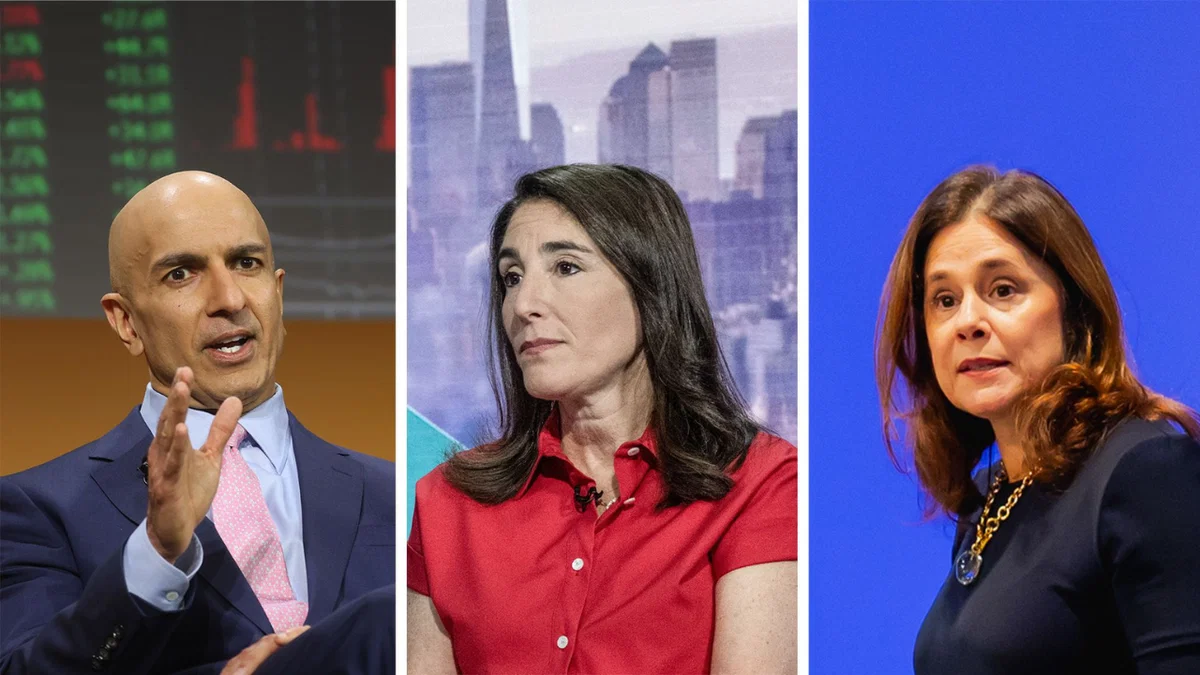
Beth Hammack's dissent centers on a single but consequential phrase in the FOMC statement: language that signaled the next policy move would be a cut. In her view, that forward guidance is premature given the inflation data. Hammack's base case is that rates will stay at 3.5%-3.75% for an extended period, and she explicitly expects them on hold for "quite some time." The Cleveland Fed president cited "considerable uncertainty" from the Iran conflict, which she argued directly impacts both inflation and the job market. Her position reflects a deeper concern that the economy has developed an "inflationary mindset" that will not be easily unwound. This is not a transitory inflation narrative; inflation has exceeded the Fed's 2% target for more than five years, spanning the post-COVID reopening, the Russia-Ukraine war, and now the Iran conflict. Hammack's dissent is part of a broader fracture within the FOMC. Three members voted against the statement language, the largest number of dissenters at a Fed meeting since 1992. The split reveals a central bank struggling to communicate a coherent forward path when the inflation data refuses to cooperate. For markets, the key takeaway is that the hawks are not a fringe minority; they have enough institutional weight to force a public break in consensus. The dissenters' collective action signals that internal disagreement over the timing of any future cut is deeper than the majority statement suggests.
How the rate hold reshapes bank deposit economics
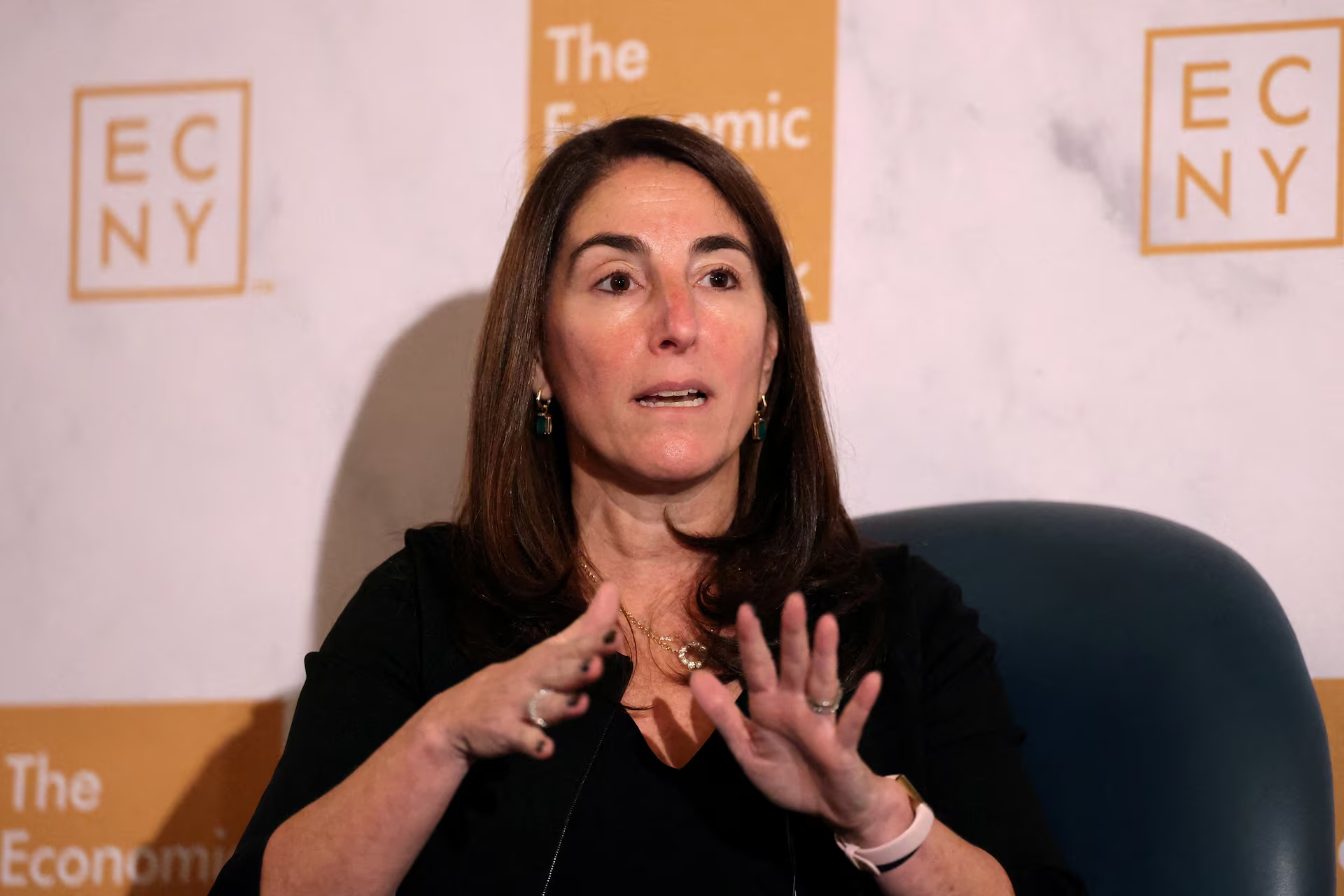
The Fed's decision to hold rates at 3.5%-3.75% has immediate consequences for the banking sector's deposit franchise. When the Fed pauses, banks face a choice: pass the higher-for-longer rate environment to depositors or risk losing funding to competitors and money market funds. The data shows banks are choosing the former. In April, several banks raised their certificate of deposit (CD) yields. Rates on CDs maturing in one year or less rose 6 basis points to 3.71%, while rates on 13-36 month CDs edged up 1 basis point to 2.62%. Morgan Stanley analyst Manan Gosalia, who covers 35 banks, reported that eight of those institutions raised CD yields in April. Gosalia expects CD rates to remain flat to slightly higher in the coming months. The logic is straightforward: with the Fed holding steady and inflation still above target, depositors have no incentive to accept lower yields. Banks that try to trim deposit costs will simply lose marginal funding to competitors. The rate hold also compresses net interest margins for banks that rely on low-cost demand deposits, as those deposits continue to rotate into higher-yielding CDs and money market accounts. For the largest U.S. banks, the margin squeeze is manageable but real, and it will be a recurring theme in second-quarter earnings calls. Banks that outperform in this environment are those that locked in long-term fixed-rate loan portfolios when rates were lower, allowing them to absorb rising deposit costs without sacrificing net interest income. Banks with shorter-duration loan books face a harder trade-off: their assets reprice downward when the Fed eventually cuts, while CD liabilities issued at 3.71% mature and roll over at still-elevated rates for the next several quarters.
Morgan Stanley's coverage universe reveals a competitive split
The CD rate data from Morgan Stanley's coverage universe exposes a clear competitive divide in U.S. banking. Of the 35 banks under coverage, eight raised CD yields in April, while the remaining 27 held steady or made no changes. The banks that raised rates are typically those with higher loan-to-deposit ratios or greater reliance on wholesale funding. These institutions cannot afford to let deposits leak to competitors offering 3.71% on short-term CDs. The banks that held steady are those with excess liquidity or a more stable deposit base, such as large money-center banks with deep corporate relationships. But the competitive pressure is not static. If Hammack's "quite some time" forecast proves accurate, more banks will eventually need to raise CD yields to retain funding. The winners in this environment are the banks with sticky, low-cost core deposits; these are typically the largest institutions with extensive branch networks and corporate cash management operations. The losers are regional and mid-cap banks that must compete aggressively for deposits in a high-rate environment. This dynamic will accelerate consolidation in the banking sector, as smaller institutions find it increasingly difficult to fund loan growth without paying up for deposits. Morgan Stanley's Manan Gosalia expects CD rates to remain flat to slightly higher, which suggests the competitive pressure is not yet peaking.
Downstream effects on hyperscalers, enterprise buyers, and capital expenditure
The Fed's rate hold reverberates far beyond the banking sector. For hyperscalers and large enterprise buyers, the cost of capital remains elevated, directly impacting capital expenditure decisions. When the Fed holds rates at 3.5%-3.75%, the risk-free rate that underpins corporate discount rates stays high. This makes long-duration capital projects, such as building new data centers, semiconductor fabs, or enterprise software platforms, more expensive to justify on a net-present-value basis. For the hyperscalers, which have been in a multiyear capex cycle driven by AI infrastructure, the rate hold means their cost of debt remains elevated. Microsoft, Amazon, Google, and Meta have all issued significant debt in recent years to fund data center construction. With rates on hold, their interest expense will not decline, and their free cash flow will remain under pressure. For enterprise buyers, the rate hold means leasing or financing equipment remains expensive, delaying IT refresh cycles. The Iran conflict adds another layer of uncertainty, as energy price volatility will further pressure corporate margins. For semiconductor fabs and advanced packaging facilities, the rate hold is a headwind to new project announcements. Companies like TSMC, Intel, and Samsung rely on a mix of debt financing and government subsidies to fund multi-billion-dollar fab construction. Higher-for-longer rates increase the cost of that debt, slowing the pace of new fab announcements in the U.S. and Europe.
The policy signal: a Fed unwilling to declare victory on inflation
Hammack's dissent is not just about one meeting's statement language; it is a policy signal about the Fed's broader posture. By dissenting over language that signaled a future cut, Hammack is effectively arguing that the Fed should not telegraph any easing until inflation is demonstrably and sustainably below 2%. This is a significant departure from the post-2022 consensus that the Fed would cut rates as soon as inflation showed any moderation. Hammack's view reflects a deeper concern that the economy has absorbed multiple inflation shocks, including post-COVID, Russia-Ukraine, and now Iran, and that each shock has reinforced an "inflationary mindset" among businesses and consumers. If the Fed signals a cut prematurely, it risks validating that mindset and making it harder to bring inflation down to target. The fact that three FOMC members dissented over this language, the largest number since 1992, shows that Hammack is not alone. The policy signal is clear: the Fed's hawks are willing to force a public break with the majority to prevent premature easing. For markets, this means the bar for a rate cut is now higher than it was before the meeting. The Fed will need to see not just one or two months of better inflation data, but a sustained trend that breaks the "inflationary mindset" Hammack described. That could take the rest of 2026 and into 2027.
The most important question for the second half of 2026 is whether Hammack's "quite some time" becomes the FOMC's consensus view or remains a dissenting minority. If the Iran conflict escalates further, pushing energy prices higher and disrupting global supply chains, the hawks will gain more converts. If inflation finally begins to moderate, the doves will argue that the 3.5%-3.75% rate is sufficiently restrictive. The next two CPI reports will be decisive. For now, the Fed's message is clear: rates are on hold, and anyone expecting a cut in the next few months is betting against both the data and a vocal minority of FOMC members willing to fight for their conviction. The three dissenters' public break with the majority is a standing reminder that the Fed's internal debate is far from settled. Each CPI print above 2% gives Hammack and her allies another argument for patience; each softening in the jobs market gives the doves more ammunition to press for an early cut. The 3.5%-3.75% rate target is not just a benchmark; it is the cost the entire economy carries for five consecutive years of inflation that never broke cleanly toward target.
The BossBlog Daily
One email with the AI markets brief — the 13F moves, the Congressional trades, and what changed. No fixed schedule and no filler: it goes out when there is something worth sending.
Unsubscribe any time. We never sell or share the list.