
Kevin Warsh's nomination to replace Jerome Powell as Federal Reserve Chair cleared the Senate Banking Committee on Wednesday, injecting a new layer of uncertainty into a market already grappling with elevated valuations and persistent inflation. The S&P 500 closed at 7,342.20, up 1.14%, with the Dow 30 at 49,804.73 and the Nasdaq at 25,719.70, but the forward P/E multiple of 20.9x now sits a full two turns above the 10-year average of 18.9x. That premium becomes precarious when the discount rate (the Fed's policy rate, currently at 3.50%–3.75%) shows no sign of declining. Democrats on the committee have voiced concerns that Warsh will cut rates to appease President Donald Trump, even as inflation remains roughly one percentage point above the Fed's 2% target. The St. Louis Fed President Alberto Musalem has warned that risks have shifted toward higher inflation, and Powell himself sees movement at the "center" of the Fed toward possible rate hikes. For equity investors, the math is unforgiving: a higher discount rate compresses P/E multiples, and at 20.9x, the S&P 500 has further to fall than it did at the start of the bull market in October 2022, when the index was trading at a much lower multiple. This is the moment when a leadership transition at the Fed collides with a fully priced market, and the outcome will determine whether the bull market survives or buckles under the weight of its own valuation.
The 10.6% P/E premium and the discount rate trap
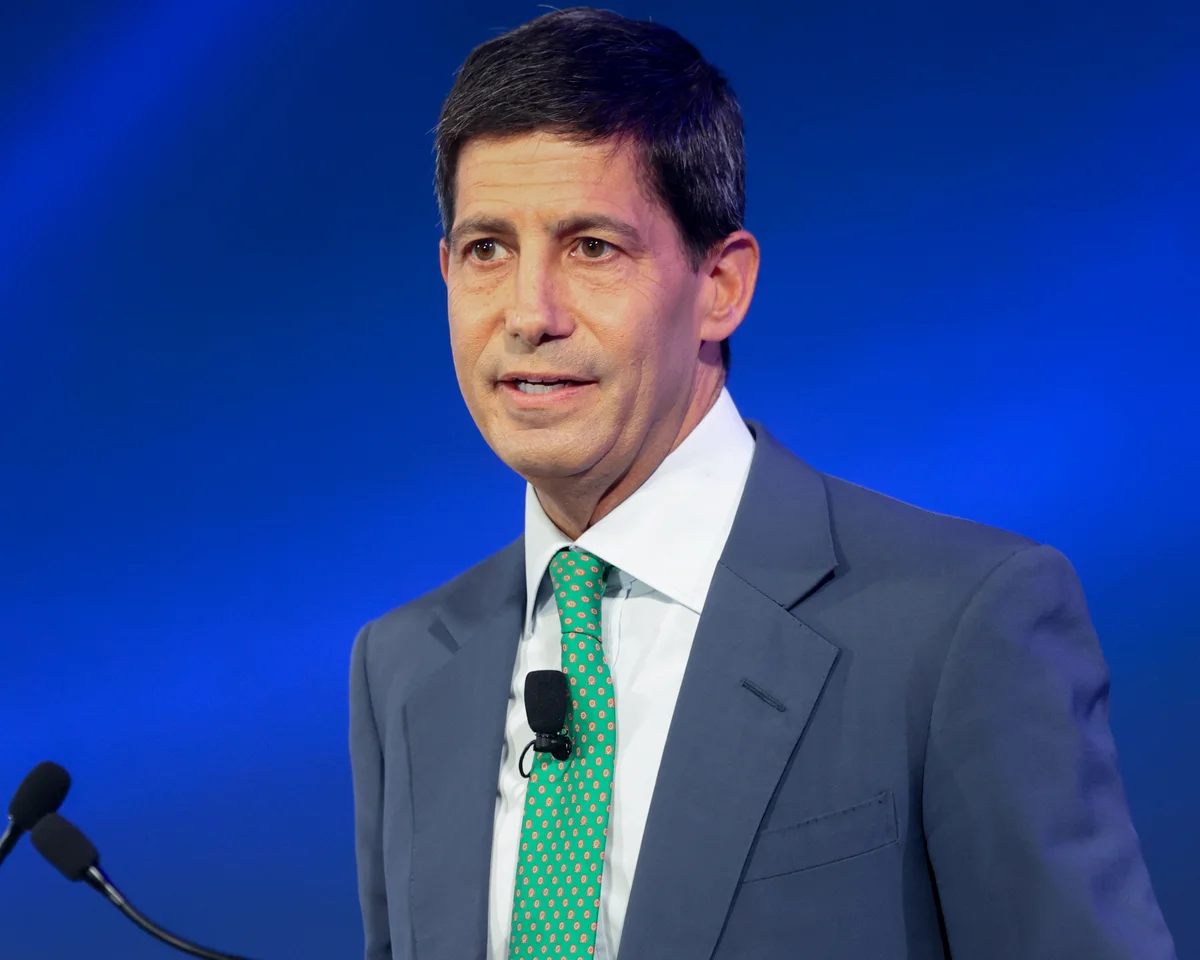
The S&P 500's forward P/E of 20.9x represents a 10.6% premium over the 10-year average of 18.9x, a gap that has historically been closed either by earnings growth or by multiple compression. The Fed's policy rate, now at 3.50%–3.75%, has been held steady since December, and the April meeting confirmed an extended pause. The discount rate used in equity valuation models is directly tied to the risk-free rate, and when the Fed shrinks its balance sheet (a process that continues under Powell's watch), the effective discount rate rises further. A 100-basis-point increase in the discount rate reduces the fair-value P/E of a 20x-multiple stock by roughly 5%, all else equal. For the S&P 500, that translates to a potential 350-point decline if the market re-rates to its historical average. The bull market that began in October 2022 has more than doubled the index, but that run was built on the expectation of rate cuts that have not materialized. With inflation still above target and supply chain risks from the U.S.-backed war with Iran adding upward pressure on oil prices, the path to lower rates is blocked. The market is pricing in a Fed that will hold steady, but the risk is that Warsh, under political pressure from Trump, moves to cut rates prematurely, creating a policy error that forces rates back up later. The S&P 500's current multiple leaves no room for error: any increase in the discount rate will trigger a revaluation that erases months of gains.
How the Warsh nomination reshapes the rate-cut calculus
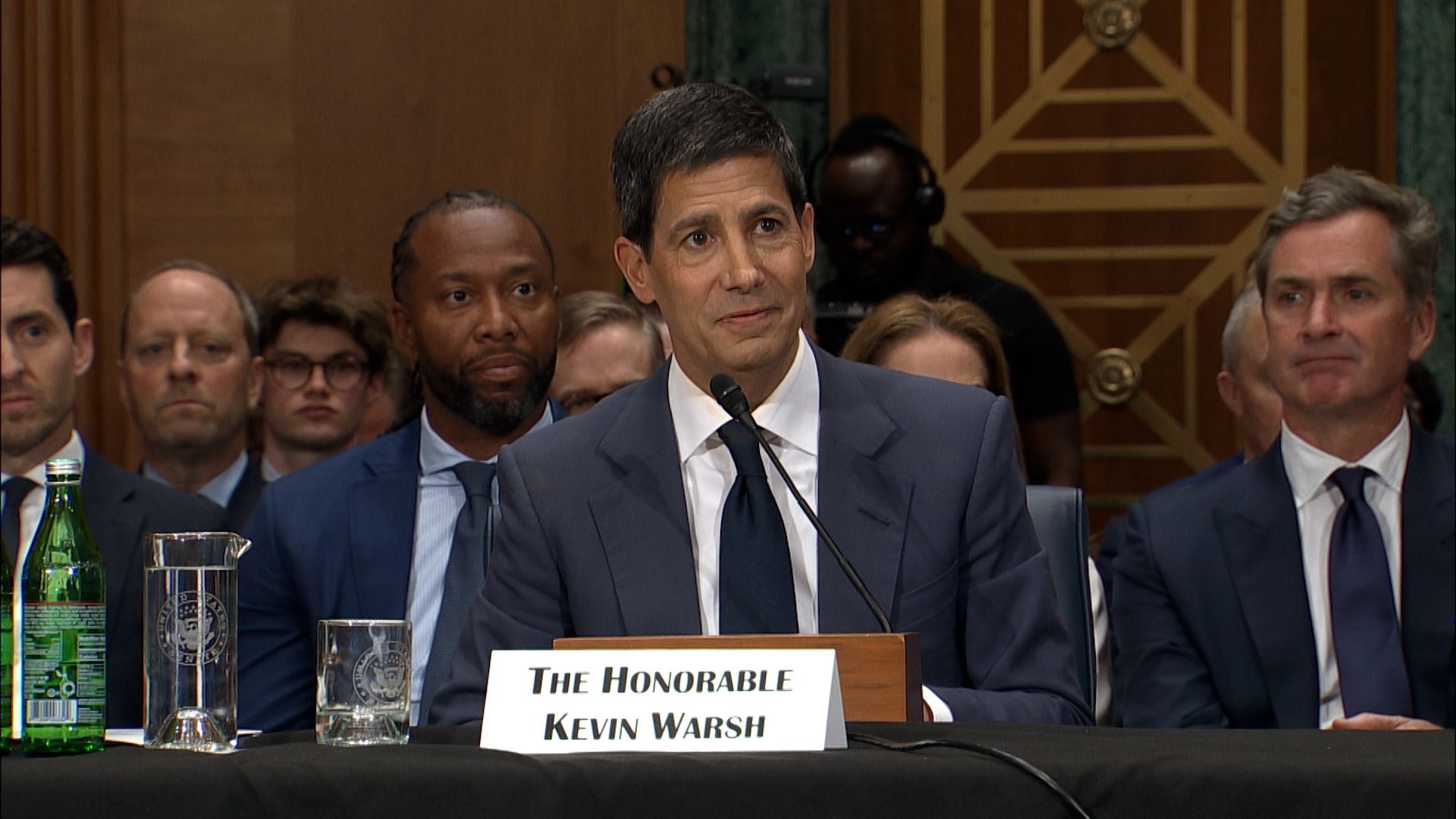
Kevin Warsh's nomination is not just a personnel change; it is a signal about the Fed's independence and its reaction function. During his previous tenure as a Fed governor from 2006 to 2011, Warsh was a key architect of the central bank's response to the financial crisis, but his views on monetary policy have evolved. He has publicly criticized the Fed's quantitative easing programs and argued for a more rules-based approach to setting rates. However, the political context is different now. Trump has made no secret of his desire for lower rates, and Warsh's nomination is widely seen as a vehicle for delivering them. The Senate Banking Committee vote to advance his nomination was along party lines, with Democrats warning that Warsh will cut rates to boost the economy ahead of the 2028 election. The Fed has already cut rates by 75 basis points in 2025, but the market expects no further cuts in 2026. If Warsh pushes through a rate cut despite inflation being above target, the Fed risks losing credibility. The bond market would likely sell off, pushing long-term yields higher and offsetting any benefit from lower short-term rates. For the S&P 500, a rate cut that triggers a bond selloff is worse than no cut at all, because it raises the discount rate on long-duration equities. The technology-heavy Nasdaq, with its high-growth, long-duration cash flows, would be the most exposed.
Sector winners and losers under a Warsh-led Fed
A Warsh-led Fed that cuts rates would create clear winners and losers across the S&P 500. Financials, particularly regional banks, would benefit from a steeper yield curve if short-term rates fall while long-term rates rise. The FDIC-insured average savings account pays just 0.38%, but high-yield savings accounts still offer up to 5.00%, a spread that banks would defend by lowering deposit rates faster than loan rates. The Federal Reserve's 75 basis points of cuts delivered in 2025 were absorbed without triggering a deposit rate war; a further cut under Warsh would widen net interest margins for well-capitalized banks that have locked in longer-duration assets at higher rates, even as their funding costs decline. Conversely, the technology sector, which has driven the bulk of the S&P 500's gains since October 2022, would face headwinds. Companies with high price-to-earnings ratios and long-duration earnings streams (think software, cloud infrastructure, and AI-related names) are the most sensitive to discount rate changes. A 50-basis-point cut that is perceived as politically motivated would not be viewed as a durable reduction in the cost of capital, so the valuation uplift would be limited. Meanwhile, consumer staples and utilities, which trade at lower multiples and have more predictable earnings, would see less multiple compression but also less upside. The real losers would be bond proxies like real estate investment trusts and telecoms, which have been supported by the expectation of stable rates. If Warsh cuts rates and inflation reaccelerates, the Fed would be forced to reverse course, creating whipsaw volatility that punishes all sectors equally.
The supply chain and inflation feedback loop that constrains the Fed
The U.S.-backed war with Iran has introduced a supply chain shock that complicates any rate-cut scenario. Oil prices have risen as shipping routes through the Strait of Hormuz face disruption, and the cost of intermediate goods is climbing. St. Louis Fed President Musalem has explicitly stated that risks have shifted to higher inflation and that rates need to stay on hold or move up. This is not a theoretical concern: inflation is already about one percentage point above the Fed's 2% target, and a sustained oil price spike could add another 0.5 to 1.0 percentage points. For the S&P 500, higher input costs compress margins, particularly for industrials, materials, and consumer discretionary companies. The bull market has been fueled by strong earnings growth, but that growth is now at risk. If the Fed holds rates steady, the discount rate remains elevated, and P/E multiples compress. If the Fed cuts rates, inflation accelerates, and the Fed eventually has to hike, causing an even sharper correction. The only clean path is for supply chain disruptions to ease and inflation to fall, but the Iran conflict shows no signs of de-escalation. The Fed's balance sheet reduction adds another layer: as the Fed shrinks its holdings, it reduces the supply of reserves in the banking system, which tightens financial conditions independent of the policy rate. This quantitative tightening is a hidden headwind for equity valuations that the market has largely ignored.
What the Warsh nomination says about the Fed's long-term direction
The nomination of Kevin Warsh is the most consequential signal about the Fed's trajectory since Powell took the helm in 2018. It represents a return to a more politically responsive Fed, one that is willing to subordinate inflation targeting to growth objectives. This shift has implications far beyond the next rate decision. The Fed's credibility as an independent inflation fighter is the bedrock of the bond market's confidence, and any erosion of that credibility raises the term premium on long-term Treasuries. For the S&P 500, a higher term premium means a higher discount rate for all equities, not just those with long-duration cash flows. The 10-year yield, which has been hovering around 4.5%, could rise to 5% or higher if the market prices in a Warsh-led Fed that cuts rates prematurely. That would push the equity risk premium to levels not seen since the 2022 bear market. The broader message is that the era of easy money is definitively over, and the Fed's next move (whether a cut, a hold, or a hike) will be judged not on its economic merits but on its political calculus. Investors who have ridden the bull market since October 2022 must now decide whether to accept lower returns or rotate into assets that are less sensitive to Fed policy.
The market is now pricing in a Fed that will hold rates steady through 2026, but the Warsh nomination introduces a binary risk that is not fully discounted. If Warsh cuts rates, the initial equity rally will be met with a bond market selloff that raises long-term yields and compresses P/E multiples. If he holds rates steady, the current valuation premium will erode slowly as earnings growth catches up. The most dangerous scenario is a cut that triggers an inflation reacceleration, forcing the Fed to hike in 2027 and sending the S&P 500 into a bear market. For now, the prudent trade is to reduce exposure to high-multiple growth stocks and increase allocation to sectors with pricing power and shorter-duration earnings. The bull market is not dead, but its margin of safety has shrunk to a level that demands respect. Warsh's confirmation hearings will be the first real test of whether the market's current complacency is warranted.
The BossBlog Daily
One email with the AI markets brief — the 13F moves, the Congressional trades, and what changed. No fixed schedule and no filler: it goes out when there is something worth sending.
Unsubscribe any time. We never sell or share the list.