
Mistral AI did three things at once on May 2: it released Mistral Medium 3.5, a 128-billion-parameter dense model that consolidates three prior offerings into a single set of weights; it launched remote coding agents inside its Vibe developer tool, allowing cloud-hosted agent sessions to run while a developer is away; and it shipped a Work mode in Le Chat, the company's consumer and enterprise chat product, that can autonomously sequence through email, calendar, and document tasks with parallel tool calls. The triple release is a deliberate statement about where European open-weight AI is heading — toward full agentic capability, not just benchmark-chasing. It arrives weeks after Mistral secured an $830 million debt facility to fund Paris-area data center expansion. The timing is not coincidental: Mistral needs infrastructure credible enough to sell remote execution at scale, and it needs a model powerful enough that enterprises pay for the hosted version rather than self-hosting the open weights on four GPUs.
Medium 3.5 Folds Chat, Reasoning, and Code Into One 128B Model
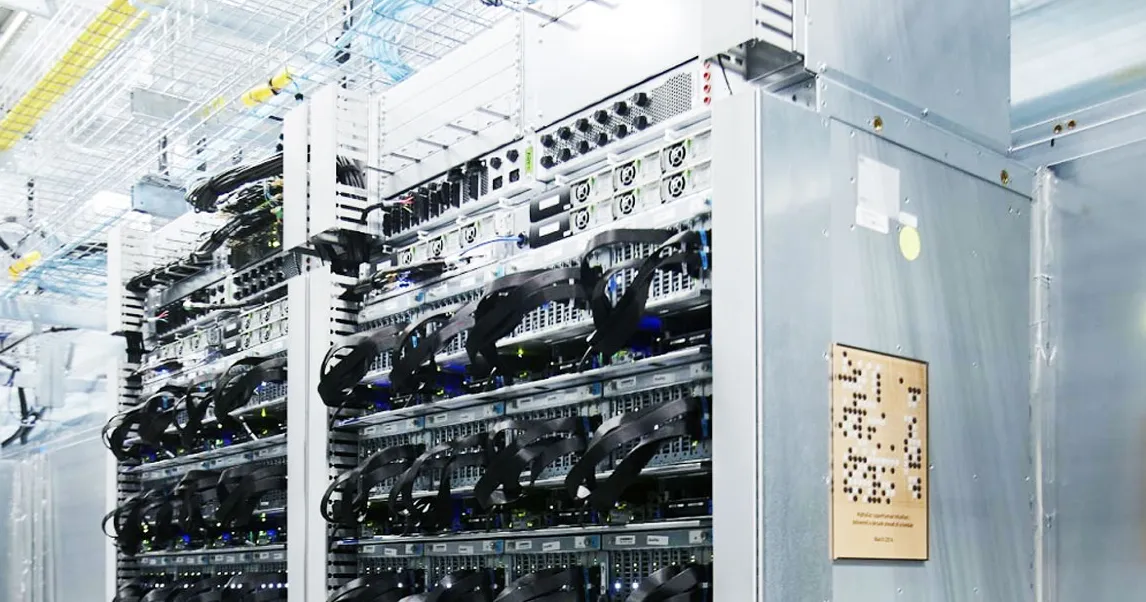
Until this release, Mistral maintained separate model lines for general chat (Medium 3.1), reasoning-heavy tasks (Magistral), and coding (Devstral 2). Medium 3.5 replaces all three. The architecture is dense (128 billion parameters activated on every token) rather than mixture-of-experts, which means inference cost is deterministic and latency is predictable, a practical requirement for agentic pipelines that need consistent throughput across hundreds of parallel steps. The context window is 256,000 tokens, roughly 200,000 words in a single pass, sufficient to ingest an entire mid-size codebase or a year's worth of email threads.
Benchmark performance is the headline the company leads with: 77.6% on SWE-Bench Verified, the industry-standard gauge that tests whether a model can resolve real-world GitHub issues from active open-source repositories. That score places Medium 3.5 ahead of Devstral 2 and above Qwen 3.5 397B A17B at this benchmark, and Mistral claims it matches or beats Claude Opus 4.5 on several coding sub-tasks. An additional τ³-Telecom score of 91.4 signals competitive accuracy on domain-specialized reasoning, relevant for telecommunications enterprises that represent a meaningful slice of Mistral's European customer base. The model is available under a modified MIT license, which allows commercial use with self-hosting on as few as four GPUs, a deliberate contrast to the proprietary API-only posture of OpenAI and Anthropic.
One architectural addition matters practically: a new reasoning_effort parameter lets developers toggle how much compute the model spends on internal chain-of-thought before answering. Set it low for quick autocomplete-style interactions; set it high for multi-step code generation or long-horizon planning. The same model weights handle both ends of the spectrum, which eliminates the management overhead of maintaining separate fast and slow model endpoints.
The Revenue Calculus: $1.50 Per Million Tokens Against $830M in Debt
Mistral has priced Medium 3.5 at $1.50 per million input tokens and $7.50 per million output tokens through its API. That puts it between the cost of Claude Sonnet 4.6 and Gemini 3.1 Pro for most enterprise workloads. The pricing is aggressive given the model's benchmark position but makes sense in the context of the company's capital structure: Mistral raised $830 million in debt financing in March to build out a Paris-area cluster that will handle remote agent compute, and it needs to convert API volume into revenue that services that debt.
The strategic lever is agentic margin expansion. A single human developer interacting with Le Chat for an hour might consume 500,000 tokens. A Vibe remote agent session running overnight on a complex pull request can consume 30 to 50 million tokens, at $7.50 per million output. If Mistral captures even a fraction of the engineering workflow automation market that Cursor, GitHub Copilot, and Cognition's Devin are all competing for, the per-user economics look materially different from standard chat APIs. The debt financing is, in part, a bet that token consumption grows non-linearly as coding agents move from hours-long sessions to overnight batch runs, and Mistral's data center capacity is positioned to capture a share of that volume.
The modified MIT license creates a two-tier revenue funnel. Startups and academics self-host; enterprises requiring guaranteed uptime, compliance certifications, and integrated billing tend to call the API. Mistral's product strategy assumes the open-weights release generates developer mindshare that eventually converts to enterprise API contracts, a model that has worked for Llama 4 within Meta's ecosystem and for Mistral's own earlier releases.
Vibe Remote Agents Shift the Bottleneck From Developer to Machine
The Vibe remote agent feature is architecturally straightforward but operationally significant. Previously, Vibe ran as a local CLI session: the developer kept a terminal open, monitored progress, and handled interruptions manually. With the May 2 release, a developer can initiate a session with a task description ("refactor the authentication module to use JWT v5", "investigate why the CI pipeline failed on commit a3f92b") and then teleport that session to the cloud. The agent runs in an isolated sandbox, draws on the 256k context window to hold the full codebase in memory, and opens a pull request on GitHub when it finishes. The developer returns to a PR ready for review, not a half-finished terminal output.
The competitive significance is direct. GitHub Copilot Workspace, announced in 2024, targets the same async coding workflow and has the advantage of GitHub's native integration, but it operates on GitHub's own model backbone. Cursor, which surpassed $500 million annualized revenue in 2025, has announced similar async agent features for mid-2026. Cognition's Devin, the original autonomous software engineer that raised at a $2 billion valuation before pivoting toward enterprise deployment, runs on proprietary infrastructure with closed weights. Mistral's move is to offer a comparable async agent experience with an open-weight model that enterprises can audit, fine-tune on proprietary code, and self-host if regulatory requirements demand it.
The Vibe integration chain matters for adoption: agents can read GitHub issues, pull Linear tickets, and ingest Sentry incident logs as context before starting work. The bidirectional loop (issue to PR without a human in the middle for routine tasks) is the design target. Multiple sessions run in parallel, which means a team can batch-queue a sprint's worth of refactoring or test-writing tasks and let them execute overnight.
Le Chat Work Mode and the Enterprise Connector Integration Race
Work mode in Le Chat extends the same agent capability to non-developer workflows. The agent runs on Medium 3.5, calls tools in parallel rather than sequentially, and requires explicit confirmation before sensitive actions: sending emails, deleting calendar events, modifying shared documents. The confirmed connector list includes email (Gmail, Outlook), calendar (Google Calendar, Microsoft Calendar), documents (Google Drive, OneDrive, Notion), and project tools (Jira, Linear, Slack, Microsoft Teams). That breadth puts it in direct competition with Microsoft's Copilot for Microsoft 365, which reached 20 million paid seats in April 2026, and with Anthropic's Claude for Enterprise, which has been adding connector depth rapidly since its Pentagon partnership was announced in April.
The parallel tool-call architecture is the performance differentiator Mistral emphasizes. Sequential agentic systems (run one tool, wait for output, decide next step) accumulate latency across long task chains. Work mode calls multiple tools simultaneously where dependencies allow, compressing a 20-minute sequential workflow into roughly 6 to 8 minutes of wall-clock time. For knowledge workers processing 80 to 120 emails per day alongside calendar coordination and document review, that compression has practical value beyond benchmark scores.
The confirmation-before-action design addresses the enterprise liability concern that has slowed autonomous agent adoption in regulated industries. Financial services firms in particular need a human-in-the-loop moment before an agent executes outbound communications or modifies compliance records. Mistral is betting that transparent reasoning traces plus explicit approval gates are sufficient to unlock enterprise procurement in sectors where pure autonomy is not yet legally permissible.
Open Weights as European Geopolitical Hedge
Mistral's open-weight strategy has always carried a geopolitical subtext that the company now makes explicit. The modified MIT license for Medium 3.5 is designed to allow full commercial use while retaining restrictions that prevent other AI companies from extracting the weights and building closed derivatives without attribution. That licensing structure, combined with the Parisian data center, positions Mistral as Europe's answer to both US hyperscaler lock-in and Chinese state-adjacent AI infrastructure.
The European Union's AI Act, which entered full application in 2026 for high-risk systems, creates regulatory friction for US-sourced models that lack auditable European infrastructure. Mistral's ability to offer on-premises deployment within EU jurisdiction, with weights that a customer's legal team can inspect, is a procurement argument that OpenAI and Anthropic cannot currently match at the same cost point. This is not incidental to the business model; Mistral has specifically targeted European telcos, banks, and government agencies where data residency requirements are non-negotiable. The τ³-Telecom benchmark result was almost certainly designed to land with those customers.
NVIDIA's parallel launch of the Nemotron 3 family, including the multimodal Nano Omni at 30 billion parameters with 9x higher throughput than comparable open omni models, underscores how crowded the open-weight agentic space has become in weeks. Both NVIDIA and Mistral are shipping production-ready agent scaffolding alongside the weights: Nemotron 3 includes reinforcement learning environments for agentic training, while Mistral ships Vibe and Work mode. That signals a model release alone no longer moves enterprise purchasing decisions. The benchmark race has become a baseline expectation; the differentiator is the surrounding agent runtime.
The $1.50 per million token price point for Medium 3.5 is sustainable only if Mistral can fill the Paris data center with token volume, and that volume comes from enterprises that choose API over self-hosted deployment. Every connector Mistral adds to Le Chat Work mode, every GitHub integration that makes Vibe stickier for a development team, is a retention mechanism for the hosted endpoint. The open weights are the top of the funnel; the agent runtime is the monetization engine. That structure may be the defining template for European AI in 2026.
Mistral has built a viable second route to enterprise AI infrastructure that does not require a hyperscaler as the distribution layer. The combination of a 128B model, a remote agent runtime, and $830 million in capital behind the cluster to run it on is the most complete expression of that ambition to date.
The BossBlog Daily
One email with the AI markets brief — the 13F moves, the Congressional trades, and what changed. No fixed schedule and no filler: it goes out when there is something worth sending.
Unsubscribe any time. We never sell or share the list.