
The institution that gave the world an Oscar for Rain Man and a Razzie for Gigli has now rendered its clearest judgment yet on generative AI: humans only, please. On May 2, 2026, the Academy of Motion Picture Arts and Sciences published its updated eligibility rules for the 99th Academy Awards, drawing a hard line in two of film's most contested categories, acting and screenwriting, and leaving the rest of the craft departments conspicuously unrestricted. The ruling is not a blanket ban on AI in filmmaking. It is something more precisely targeted and, in the long run, likely more consequential: the first formal authorship certification framework from a major cultural institution, one that will reverberate through the entertainment industry's labor contracts, investor decks, and creative pipeline for years.
The timing is not coincidental. As Deep as the Grave, a feature film built around an AI-generated digital replica of Val Kilmer, has been winding through festival circuits for months, raising a practical question the Academy could no longer defer. At the same time, an AI-generated actress named Tilly Norwood attracted sustained press attention for appearing in a short-form project without any human performer behind her face or voice. Both cases arrived before the Academy had issued any guidance. Now, with eight months before the eligibility period for the 99th Oscars opens, it has.
What the Academy's New Eligibility Rules Actually Require
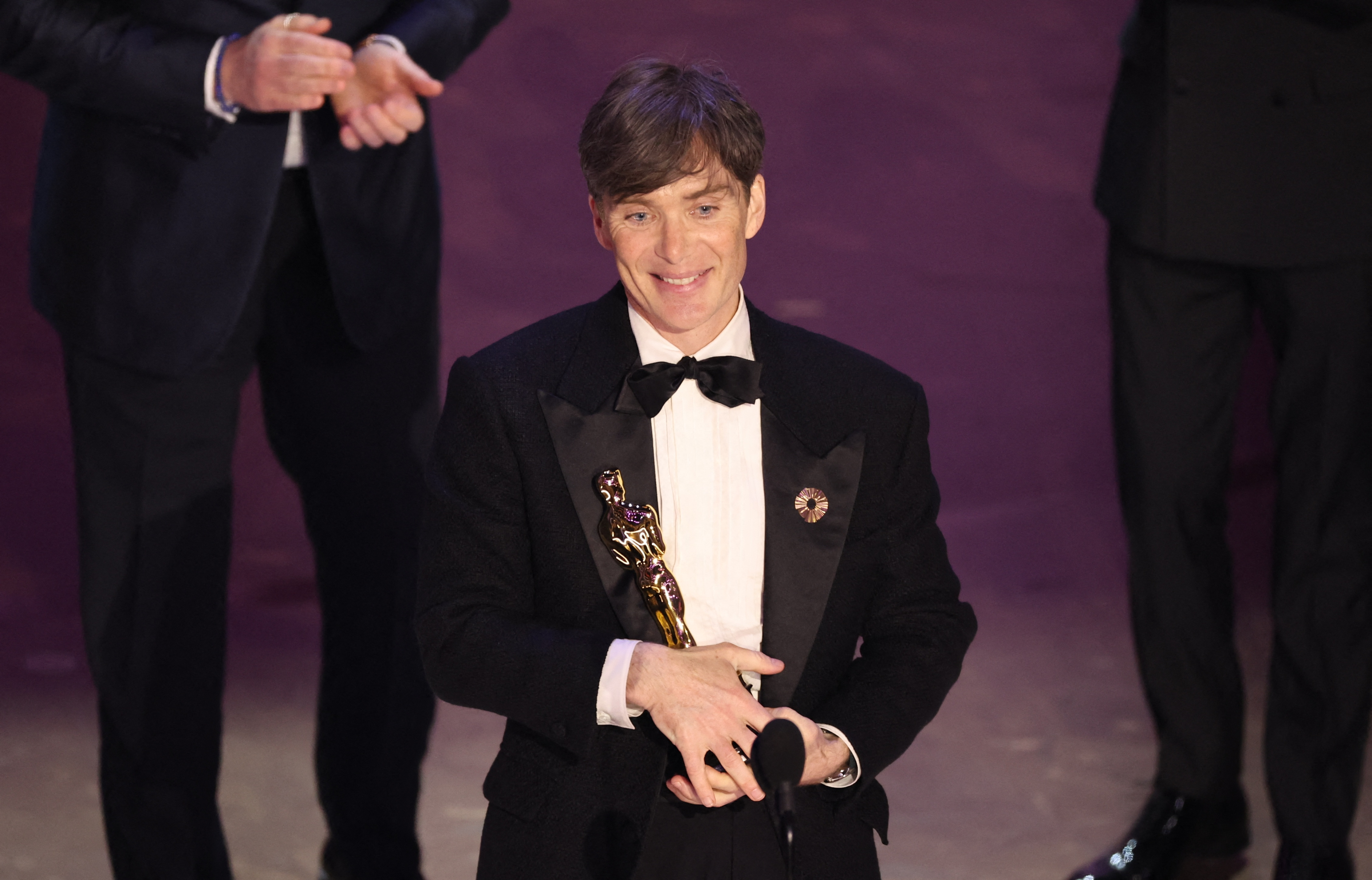
The rule text that matters is short and specific. For acting categories, the Academy stipulates that only performances "credited in the film's legal billing and demonstrably performed by humans with their consent" qualify for consideration. The phrase "with their consent" connects directly to SAG-AFTRA provisions on digital replicas established in the 2023 strike settlement, which required performer consent for any AI-generated likeness. The Academy has effectively incorporated that labor standard into its awards eligibility structure.
For screenplay categories, the requirement is that the work be "human-authored." The Academy does not define a minimum human contribution threshold, leaving the practical calibration open for case-by-case adjudication. What it does specify is enforcement: the organization "reserves the right to request more information from the filmmaking team about the nature of the use of AI and human authorship" when evaluating any submitted work. Bill Kramer, the Academy's chief executive, and president Lynette Howell Taylor both emphasized human authorship as central to the organization's mission, per reporting by ABC News and TechCrunch.
For all other craft categories including visual effects, sound design, film editing, costume design, original score, and cinematography, the Academy issued no restrictions. An AI-assisted sound mix remains as eligible as one built by hand at Abbey Road. An AI-de-aged actor in a VFX sequence remains fully eligible. This asymmetry is a considered policy choice, not an oversight, and it will shape the economics of AI adoption across the industry's production stack for the foreseeable future.
The Enforcement Gap That Defines the Rule's Real Bite
Rules about human authorship are only as strong as the infrastructure to verify them, and the Academy has built very little of that infrastructure yet. The stated enforcement mechanism is reactive and discretionary rather than systematic. No third-party audit process has been announced. No definition of what "demonstrably performed by humans" looks like in practice has been published. No guidance has been offered on hybrid works where a human performance is subsequently enhanced or partially replaced by AI tools during post-production.
This matters because the industry has already moved well past simple cases. Current AI tools allow studios to clone a performer's voice from a short recording, animate a digital facial likeness from still photography, and extend or modify a filmed performance in ways that can be essentially invisible. Determining the point at which a human performance becomes AI-generated involves questions that audio engineers, visual effects supervisors, and intellectual property attorneys debate without consensus. The Academy has articulated a standard without yet specifying how compliance will be demonstrated, creating both legitimate uncertainty for films with complex digital post-production and a potential loophole for productions willing to treat the rules as aspirational.
The more durable enforcement mechanism is likely to come from the performers themselves. SAG-AFTRA's consent provisions give union members a contractual right to approve or refuse any AI-generated use of their likeness, and members have financial incentives to enforce those rights when an unconsented AI performance attempts to qualify for an Oscar. Guilds, in other words, will probably do more enforcement work than the Academy's own review process.
Studios Split on How AI Limits Affect Awards Strategy
The competitive implications break along a fairly predictable line. Studios that run serious Oscar campaigns, including A24, Focus Features, Sony Pictures Classics, and the prestige arms of the major studios, will treat compliance with the new rules as a basic operational requirement for any film entering awards consideration. The cost of non-compliance is not just ineligibility but reputational damage in a market segment where critical credibility and perceived artistic integrity have direct commercial value.
For AI-native production companies and the technology vendors supplying them, the Academy's ruling creates a more structural challenge. Startups building AI actor platforms and AI screenplay generation tools have pointed to entertainment industry adoption as a key growth market. The Oscar ban walls off the highest-prestige segment of that market for human-replacement use cases, though it leaves untouched the larger volume of content including streaming series, genre pictures, and international co-productions that do not pursue Academy consideration. Runway, ElevenLabs, and similar companies are not existentially threatened by the ruling, but they lose a legitimacy narrative. The path to being the technology that generated an Oscar-nominated performance is now closed.
The more interesting competitive dynamic is inside the major studios themselves. Disney, which invested heavily in AI de-aging for the Indiana Jones and Avengers franchises, operates within a structure where AI in visual effects has long been normalized while SAG-AFTRA contract provisions govern digital replicas. Disney's ILM division is already compliant with the consent requirement for its legacy applications. Where the new rules create friction is in the emerging generation of productions that have begun using AI tools earlier in the creative process, in script development, in performance capture, in dialogue generation, rather than exclusively in post-production finishing. Those workflows are now subject to scrutiny they did not face before.
The VFX Exemption and What It Reveals About Industry Politics
The decision to leave visual effects, sound design, and all other craft categories outside the AI restriction is a significant political choice. Visual effects is the most expensive single line item in most major studio budgets, routinely accounting for 30 to 60 percent of production costs on effects-heavy films. AI tools embedded in VFX workflows, for simulating crowds, generating environment extensions, and automating rotoscoping, represent genuine cost-reduction opportunities that studios have strong financial incentives to capture.
The Academy's restraint in not extending restrictions to those categories reflects the reality that a blanket ban on AI in technical craft categories would have been opposed by the studios most likely to fund Oscar campaigns. The restriction on acting and writing, by contrast, aligns with the interests of the unions representing actors and writers, both of which made AI protection a central bargaining priority since the 2023 strikes. The Academy's ruling is, among other things, a document recording which constituencies the organization was most interested in accommodating.
This creates a structural incentive worth monitoring over the next several award cycles. A production that retains enough human authorship in writing to claim compliance, then layers AI into its visual effects budget to reduce costs, qualifies fully for Oscar consideration while capturing the economic benefits of AI adoption. The rules, as written, reward AI adoption in the categories where studios have the most financial incentive to adopt it, and restrict it in the categories where labor unions have the most political leverage. Variety's coverage of the rule changes noted that the new provisions arrive alongside a separate change allowing performers to receive multiple nominations in the same category for the first time since 1945, another structural shift that broadens the pool of eligible human talent the Academy wants to recognize.
How the Oscar Authorship Standard Travels to Grammy, BAFTA, and Brussels
The Recording Academy has been wrestling with equivalent questions about AI-generated music since at least 2023, when it clarified that Grammy eligibility required "meaningful human authorship" without defining what that means in practice. The Academy of Motion Picture Arts and Sciences' new language, "demonstrably performed by humans with their consent" and "human-authored," is more precise than anything the Grammy process has produced and will function as a reference point in those ongoing negotiations. BAFTA has also been conducting internal consultations on AI eligibility; the AMPAS ruling gives it a transatlantic counterpart to harmonize with or diverge from.
The policy implications extend further. The European Union's AI Act, which began phasing in enforcement in early 2025, establishes requirements around transparency and human oversight for AI systems used in creative work, but does not impose standards equivalent to what the Academy has now articulated. California AB 2602, which came into effect in 2025, provides performers with enforceable rights against unauthorized digital replicas but does not address authorship standards for awards eligibility. What the Academy has done is create a voluntary industry standard in advance of legislative requirements, and in doing so has set a benchmark that regulators, other awards bodies, and collective bargaining agreements will reference when they eventually catch up.
Whether that benchmark proves enforceable depends less on the Academy's administrative capacity than on whether the industry's financial interests align with compliance. For films in the prestige segment, they do. For the broader market, the Academy's rules are largely irrelevant. That asymmetry, strict standards in the high-visibility, low-volume prestige segment and minimal constraints elsewhere, is the most accurate description of where AI governance in entertainment actually stands today. The Academy has drawn a line. It has not yet built a fence.
The BossBlog Daily
One email with the AI markets brief — the 13F moves, the Congressional trades, and what changed. No fixed schedule and no filler: it goes out when there is something worth sending.
Unsubscribe any time. We never sell or share the list.