
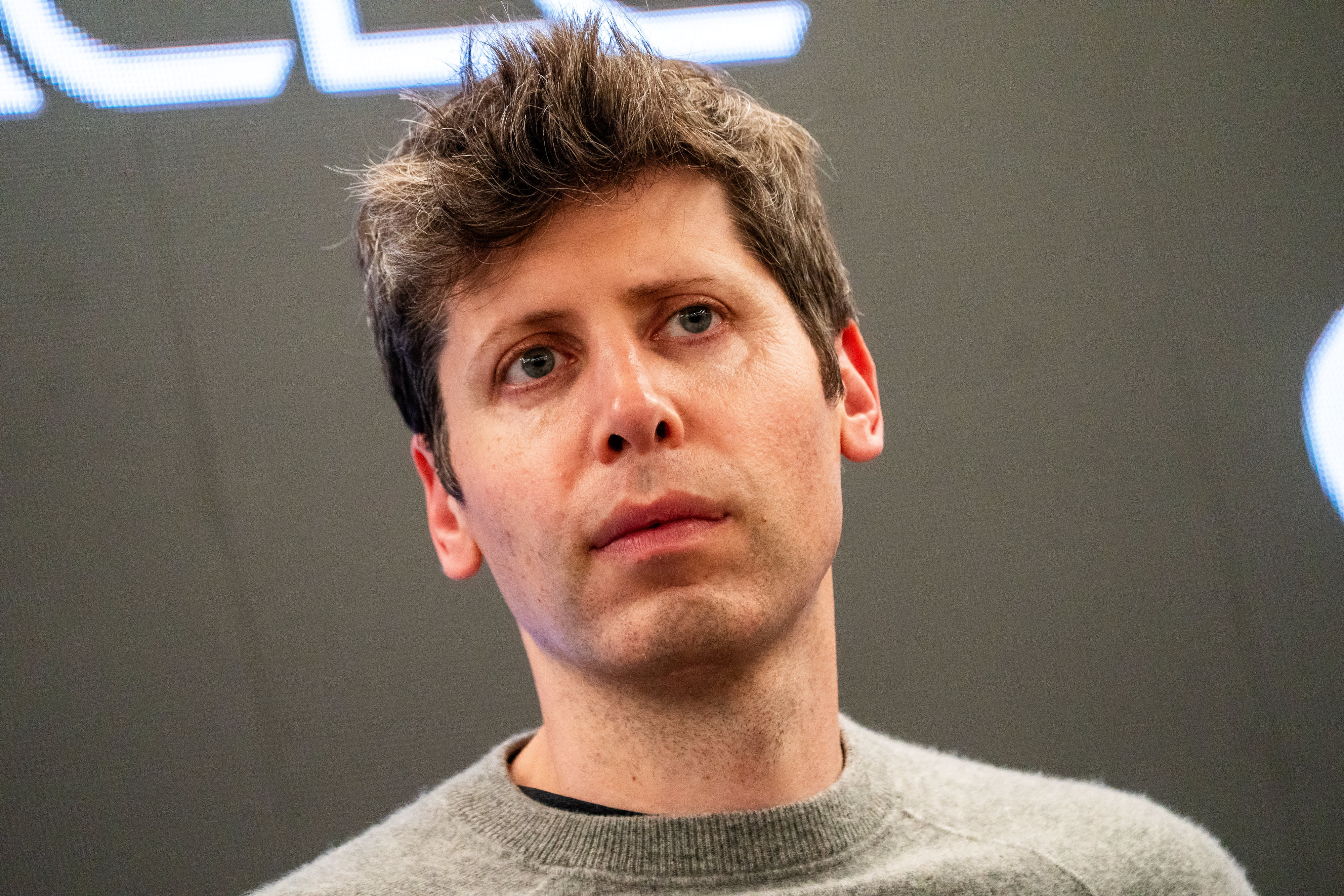
On April 30, OpenAI announced it would begin rolling out GPT-5.5 Cyber to "critical cyber defenders" within days. The announcement came barely two weeks after Sam Altman had publicly criticized Anthropic for doing something nearly identical with its own security-focused model, Claude Mythos Preview. TechCrunch reported on the irony directly: Altman had called Anthropic's restricted rollout of Mythos paternalistic, then confirmed OpenAI would follow the same path with Cyber. The contradiction did not appear to slow either the announcement or the rollout timeline. What it did do is clarify that both companies have independently reached the same conclusion: the most capable AI tools for offensive and defensive cybersecurity cannot be deployed like consumer software.
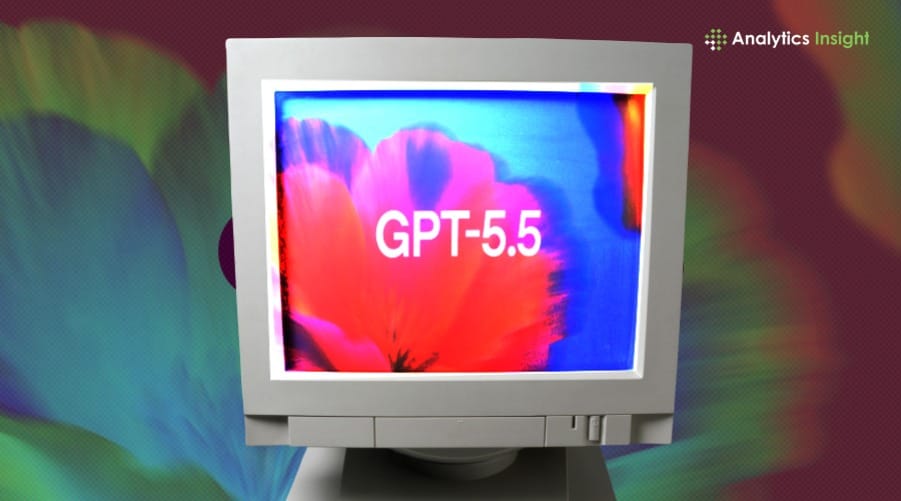
GPT-5.5 Cyber is not a narrowly scoped chatbot add-on. According to CNBC and Analytics Insight, the model is capable of penetration testing, vulnerability identification across enterprise systems, code review for security flaws, malware reverse engineering, and threat intelligence synthesis. These are not passive analysis tasks. Several of them ??penetration testing and malware reverse engineering in particular ??are precisely the capabilities that nation-state threat actors and criminal groups would find most useful if they could access a frontier-grade AI system without restriction. OpenAI's own safety classification acknowledges this: the base GPT-5.5 model received a "High" cybersecurity risk classification in its system card, stopping short of the "Critical" threshold that would indicate the model could autonomously develop novel zero-day exploits, but affirming that unrestricted access carries real risk. An independent red team reportedly found a universal jailbreak against the model that could elicit violative content across all malicious cyber queries ??a finding that reportedly took six hours of expert effort to develop. The restricted rollout is a direct response to that finding, not a marketing positioning choice.
Sam Altman's Reversal and What It Reveals About AI Safety
The sequence of events around Altman's comments and the Cyber announcement exposes a tension present in the AI industry since large language models became genuinely capable. In mid-April, Anthropic released Claude Mythos Preview with access gated to select users, citing the model's enhanced capabilities in areas with obvious dual-use implications. Altman responded publicly, framing Anthropic's decision as overreach ??a suggestion that competitors were using safety language as cover for competitive restriction. Then, within weeks, OpenAI announced that GPT-5.5 Cyber would follow an identical gating structure through its Trusted Access for Cyber program.
The reversal does not necessarily mean Altman was being cynical in his earlier criticism. It may instead reflect something more informative: that the risk assessment for Cyber was not complete when the Mythos commentary was made, and that the red-team findings ??specifically the jailbreak discovery ??shifted OpenAI's internal calculus toward restriction. Or it may reflect the reality that both companies are navigating the same fundamental problem without a shared framework, and arriving at the same answers through independent paths. Either way, the episode illustrates that responsible AI deployment is less a fixed principle than an ongoing negotiation between capability, risk, and competitive positioning. What both companies agree on is the conclusion: the most powerful cybersecurity AI tools require identity verification before access.
What GPT-5.5 Cyber Can Actually Do
The capabilities list for GPT-5.5 Cyber is detailed enough that understanding the access restrictions requires engaging with it directly. According to OpenAI's official documentation for the Trusted Access for Cyber program, GPT-5.5-Cyber extends from the GPT-5.3-Codex baseline ??OpenAI's most cyber-capable frontier reasoning model prior to this release ??and removes capability restrictions that apply to the public-facing GPT-5.5 model for a specific class of verified users.
In practice, this means that a vetted security researcher using GPT-5.5 Cyber can ask the model to analyze a binary executable for malicious behavior, walk through the logic of a penetration test against a defined target system, generate threat intelligence reports from raw indicator data, or review source code for authentication and authorization flaws. Each of these tasks sits at the intersection of defensive security work and the kind of analysis that offensive actors would pay significant sums for. The model does not, according to OpenAI's security card, cross into autonomous zero-day development ??it cannot independently construct a working exploit chain for a previously unknown vulnerability without human direction. But it can substantially accelerate the work of someone who already understands the domain.
The partners list that OpenAI disclosed for the program is one of the clearest signals of who the intended user base actually is. Bank of America, BlackRock, BNY, Citi, Cisco, Cloudflare, CrowdStrike, Goldman Sachs, iVerify, JPMorgan Chase, Morgan Stanley, NVIDIA, Oracle, Palo Alto Networks, SpecterOps, US Bank, and Zscaler have all signed up. This is not a startup ecosystem. It is a cross-section of the organizations most likely to face sophisticated, well-resourced threat actors ??financial institutions whose systems underpin payment and clearing infrastructure, cybersecurity vendors whose products protect millions of enterprise endpoints, and cloud platforms that are persistent targets for espionage and ransomware campaigns. The composition of the partner list suggests that GPT-5.5 Cyber was built for institutional defenders, not individual security researchers.
The Trusted Access for Cyber Framework
OpenAI's mechanism for managing access to GPT-5.5 Cyber is its Trusted Access for Cyber (TAC) program, which it formally introduced alongside the model announcement. The framework is identity and trust-based: users who want access to the cyber-permissive version of the model must verify their identity at chatgpt.com/cyber, and enterprises can request trusted access for their entire team through a separate process. The program is tiered, with the highest tier providing access to GPT-5.5-Cyber's full capability set and lower tiers providing access to earlier models ??GPT-5.4 and GPT-5.3-Codex ??with progressively fewer restrictions as trust verification increases.
OpenAI is also committing $10 million in API credits to accelerate cyber defense work through the program. That figure is meaningful at the enterprise scale where most TAC participants operate ??it represents enough compute to run significant security analysis workloads without cost being a barrier to adoption. The grant program is structured through a dedicated Cybersecurity Grant Program track separate from the main TAC access pathway, and is targeted at teams rather than individuals, suggesting that OpenAI's primary interest is in institutional adoption rather than individual researcher usage.
CNN reported that OpenAI held a hands-on workshop for government officials as part of its push to make TAC accessible at all levels of federal and state government. Sasha Baker, who leads OpenAI's government engagement, articulated the strategic rationale: the goal is to democratize the ability to uplift everyone who needs cyber defense. The phrasing inverts the typical democratization argument. Rather than making the most powerful tools available to the widest possible audience, OpenAI is using democratization to describe expanding access within the universe of verified defenders ??not the general public. It signals that the framework for responsible deployment of its most capable tools is a verified network of institutional actors, not the open web.
Why the AI Industry Is Converging on Restricted Access
The parallel decisions by OpenAI and Anthropic to gate their most security-capable models behind identity verification reflects a structural shift in how frontier AI companies think about deployment risk. For most of the current LLM generation ??GPT-4, Claude 3, and their variants ??the dominant framework was broad availability with content moderation applied at the output layer. Models were accessible to anyone with an API key, and harm prevention relied primarily on system prompts, fine-tuned refusals, and post-hoc monitoring.
That framework made sense when the marginal capability uplift from AI for a sophisticated attacker was limited. A threat actor who already possessed domain expertise in exploit development did not gain much from a chatbot that could explain concepts they already knew. The calculus has shifted as AI models have approached and in some areas exceeded expert-level performance on security-relevant technical tasks. A model that can autonomously analyze binaries, identify patterns consistent with known malware families, and generate functional code for security tools represents a genuine capability expansion for actors who previously lacked those skills. The asymmetry matters: sophisticated attackers may not need AI assistance, but the pool of moderately skilled actors who could become significantly more dangerous with AI access is large.
Both OpenAI and Anthropic appear to have concluded that the output-layer moderation model is insufficient for this capability tier. Jailbreaks against content filters are documented at scale, and the six-hour expert effort to develop a universal jailbreak against GPT-5.5 Cyber suggests that determined adversaries will invest the required time if the payoff is access to a model with substantially expanded cybersecurity capabilities. Identity verification does not eliminate risk ??verified users can still misuse access ??but it creates accountability and narrows the exposed surface from the entire internet to a known, auditable set of institutions.
The Dual-Use Dilemma in AI Cybersecurity
The restricted access model creates a genuine tension that neither company has fully resolved. Cybersecurity is an inherently dual-use domain: every technique used to identify and remediate vulnerabilities can, in principle, be used to exploit them. Penetration testing is legally and ethically sanctioned when conducted with authorization and used to expose weaknesses before attackers do. The same techniques, applied without authorization, constitute the core of criminal and state-sponsored intrusions.
AI cybersecurity tools amplify this duality. A model that makes defensive security teams significantly more effective at vulnerability analysis also, in principle, makes offensive actors more effective if they gain access. The TAC framework is OpenAI's attempt to maintain the benefits of the former while limiting the risks of the latter by creating a verified population of legitimate defenders. What it cannot do is guarantee that every verified institution maintains that status indefinitely, or that access credentials remain secure. Anthropic's Mythos access controls faced exactly this problem: TechCrunch reported that an unauthorized group reportedly gained access to the model despite restrictions, indicating that the verification boundary is not absolute.
The long-term implication is that the AI industry is being pushed toward a two-tier deployment model for its most capable systems. Consumer-facing products will remain broadly accessible, with capability restrictions calibrated to acceptable risk for an anonymous user base. Frontier systems with the highest capability ceiling for security-relevant tasks will be gated behind institutional identity verification, government partnership frameworks, and contractual accountability. This mirrors how classified intelligence tools, certain pharmaceutical research compounds, and dual-use export-controlled technologies have been managed for decades. What is new is that AI is forcing this categorization to happen in real time, with companies making threshold judgments about which capabilities require controlled access without a regulatory mandate requiring them to do so.
Government as the Critical Constituency
The emphasis on government access in both companies' deployment decisions is significant beyond the cybersecurity context. Federal agencies, state governments, and critical infrastructure operators represent a constituency where the defensive case for frontier AI access is strongest and the institutional accountability structures for managing that access already exist. By orienting the TAC program around government agencies and hosting hands-on workshops for federal officials, OpenAI is positioning itself as a partner in national cyber defense at a moment when adversarial nation-state cyber activity remains at historically elevated levels.
This positioning has implications that extend beyond the Cyber model specifically. A company that successfully integrates its most capable tools into federal cyber defense infrastructure creates dependencies ??training, workflow integrations, data interfaces ??that are extraordinarily difficult for competitors to displace. The $10 million in API credits is a relatively small investment to secure that kind of institutional foothold. The more consequential bet is that GPT-5.5 Cyber performs well enough against real-world threat scenarios that the agencies and firms using it develop confidence in the platform before a competitor can establish a comparable position.
Whether the restricted access model will prove sufficient to prevent misuse, and whether the TAC verification framework can scale to the thousands of individual defenders and hundreds of teams that OpenAI has targeted, are questions that will be answered in deployment rather than in press releases. What April 30 confirmed is that both leading frontier AI labs have concluded their most powerful cybersecurity tools are categorically different from their general-purpose models ??and that governing access to them requires something more than a terms-of-service agreement.
The BossBlog Daily
One email with the AI markets brief — the 13F moves, the Congressional trades, and what changed. No fixed schedule and no filler: it goes out when there is something worth sending.
Unsubscribe any time. We never sell or share the list.