
Anthropic has received multiple preemptive offers to raise between $40 billion and $50 billion at a valuation of $850 billion to $900 billion, according to reporting by TechCrunch and CNBC citing people with knowledge of the discussions. If the round closes at the high end, it would hand Anthropic the title of the world's most valuable private AI company, displacing OpenAI, which was last valued at $852 billion in March 2026. A board meeting scheduled for May is expected to determine whether the company proceeds and at what figure. The speed of the move is what stands out: as recently as February 2026, Anthropic raised capital at a $380 billion valuation. A nine-month doubling of that number into the $900 billion range is less a financing event than a verdict on which frontier lab has momentum.
The backdrop that makes a $900 billion number credible is revenue. Anthropic's annualized run rate has crossed $30 billion, with sources closer to the company telling TechCrunch it is running nearer to $40 billion. That compares to roughly $10 billion in annual revenue the year before. The two product lines driving the acceleration are Claude Code, the developer-facing coding agent that has captured significant market share from competing assistants, and Cowork, Anthropic's enterprise collaboration platform. Neither product existed in anything approaching its current form twelve months ago. The pace of revenue formation at the frontier tier of AI has detached from historical software growth curves in ways that make traditional valuation multiples difficult to apply.
How a $380B Startup Became a $900B Startup in Nine Months
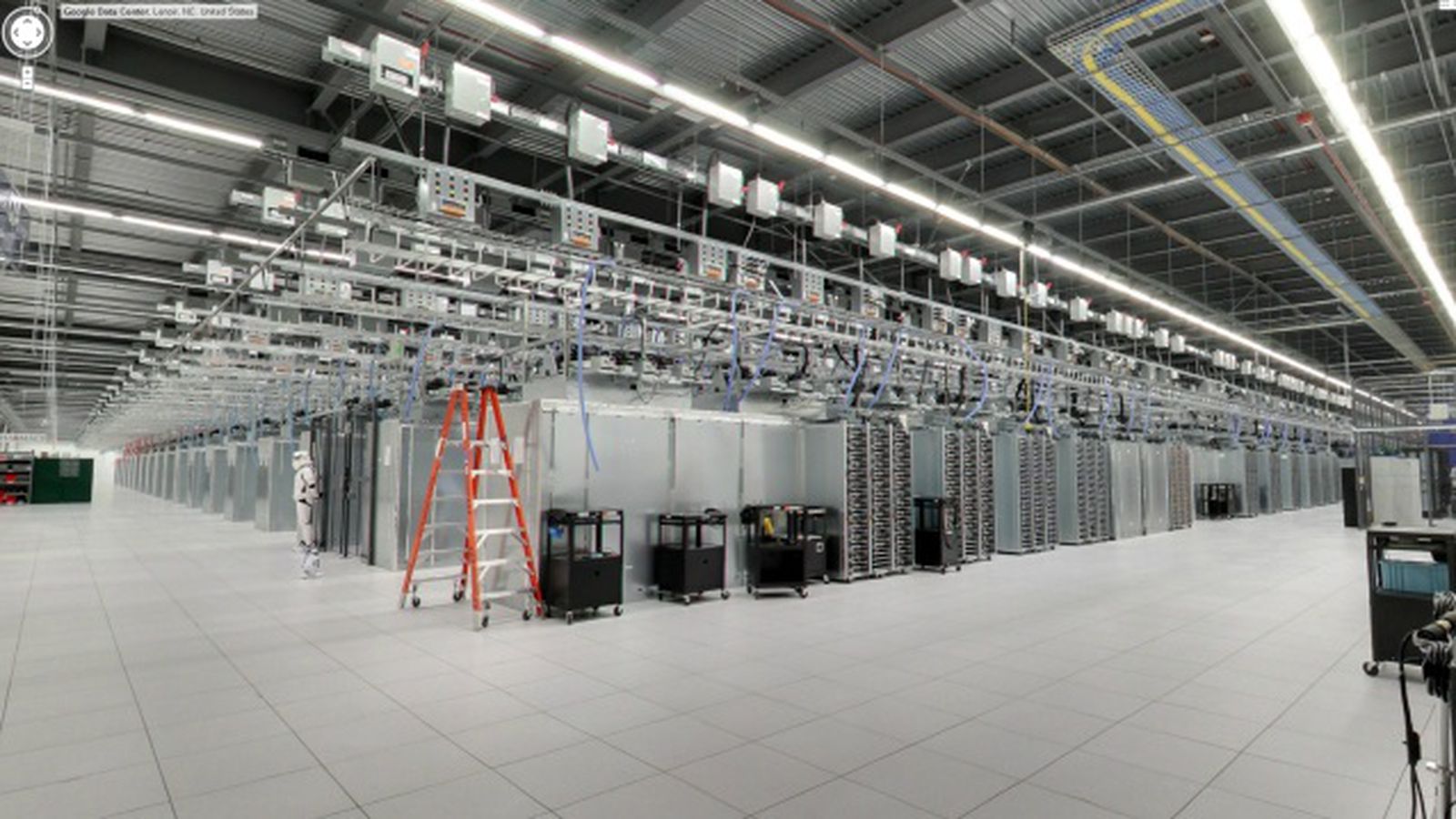
The arithmetic of Anthropic's re-rating is traceable to three structural commitments that landed in rapid succession. Amazon pledged up to $25 billion and Google up to $40 billion, providing a combined $65 billion in capital and cloud credits that backstop Anthropic's cost structure through at least 2028. Alongside the cash, Anthropic locked in compute supply: 5 gigawatts of capacity from Amazon's infrastructure and a further 5 GW from Google and Broadcom. The latter deal is notable because it includes bespoke AI accelerator silicon, reducing Anthropic's exposure to Nvidia's allocation queue.
Those structural underpinnings gave the company credibility to accelerate model releases. Claude Opus 4.7 and the Claude Mythos Preview?? reasoning-focused model positioned as a challenge to OpenAI's o-series??oth shipped in April. Investors reading preemptive offers into a company at this juncture are not simply underwriting AI optimism. They are underwriting a company that has demonstrated it can ship competitive frontier models while generating enterprise revenue at a rate that most software incumbents took a decade to approach. The re-rating from $380 billion to $900 billion in nine months tracks almost exactly with revenue tripling over the same period.
The Revenue Engine and Where the Money Comes From
Claude Code is the product most analysts credit with the revenue inflection. Developer teams at large enterprises have adopted it for everything from codebase migration to pull-request review, and the pricing model??eat-based with a usage overlay??as generated average revenue per account that exceeds the headline rates posted by competitors. Cowork, the enterprise collaboration product, sits on top of the same Claude model stack but routes into procurement channels where Anthropic has displaced or augmented Microsoft Copilot deployments.
The client roster for Claude Code includes financial institutions, large technology companies, and government contractors, according to people familiar with the sales pipeline, though Anthropic has not disclosed specific names. The government channel matters because it carries implications for security clearance, model access restrictions, and long-term contract structures that are worth more than the initial contract value suggests. Amazon and Google's investment positions are also distribution agreements: both clouds resell Claude-based services, which means Anthropic's revenue figure understates the total addressable demand flowing through the combined AWS and Google Cloud marketplaces.
Annualized revenue of $30 billion to $40 billion at a $900 billion valuation implies a revenue multiple of roughly 22-30x. That is high by historical enterprise software standards but low relative to where OpenAI and Anthropic's peers have traded in private markets over the past six months. The AI funding ecosystem in Q1 2026 absorbed $242 billion in venture capital??0 percent of all global startup investment for the quarter??ith four mega-rounds (OpenAI's $122 billion, Anthropic's $30 billion, xAI's $20 billion, and Waymo's $16 billion) accounting for 65 percent of that total. At these scale points, traditional multiple compression arguments are secondary to the question of whether a company can sustain the revenue trajectory. Anthropic's answer, at least for now, is yes.
Who Loses Ground If Anthropic Closes the Round
The primary competitive casualty of an Anthropic re-rating above $900 billion is OpenAI's positioning as the definitive market leader. OpenAI's last publicly reported valuation of $852 billion was set against an annualized revenue run rate that, per its own disclosures, trailed Anthropic's current figure. The gap in enterprise-facing products has widened: OpenAI's GPT-5.5 model released in April competes directly with Claude Opus 4.7, but Anthropic's Claude Code has captured developer mindshare in ways that GPT-based coding tools have not yet reversed.
The funding race also compresses the space for mid-tier frontier labs. Mistral, Cohere, and AI21 Labs are all competing for enterprise budgets against two companies??nthropic and OpenAI??hat can fund indefinite compute burn without returning to markets. xAI, Elon Musk's AI venture, raised $20 billion in Q1 2026 and carries a separate strategic advantage in the form of X's real-time data feed, but it has not yet demonstrated the enterprise revenue formation that Anthropic's Claude Code has. Waymo's $16 billion raise is in a different vertical, but it underscores that capital concentration in AI has moved beyond the foundation model layer into transportation and physical-world applications?? trend that will eventually compress available LP capital for smaller model-focused labs.
Compute Bottlenecks Are the Real Ceiling on AI Valuations
Beneath the valuation arithmetic lies a constraint that no amount of fundraising fully resolves: physical compute capacity. Half of the US AI data centers planned for 2026 have been delayed or cancelled, according to Yahoo Finance. Of the projected 12 gigawatts of new capacity expected to come online this year, only one-third is under active construction. The delays stem from interconnected supply chain problems??ong-lead procurement for transformers and switchgear, permitting timelines for grid interconnect, and competition between hyperscalers for the same limited pool of Nvidia GPU clusters.
For Anthropic specifically, the 5 GW commitments from Amazon and Google are structural hedges against this constraint. By locking in capacity at the cloud level rather than owning physical facilities, Anthropic passes the buildout risk to two counterparties with the balance sheets and procurement leverage to absorb it. The trade-off is that Anthropic's compute costs flow through cloud pricing rather than depreciation, which limits gross margin ceiling compared to a lab that owns its own silicon. Investors underwriting a $900 billion valuation are implicitly accepting that gross margins in the 60-70 percent range??ather than the 80-plus percent that hyperscale software achieves??re the appropriate reference for a company whose product depends on continuous inference and training at scale.
The infrastructure crunch is simultaneously a moat for well-capitalized incumbents and a recruitment signal for hardware adjacent businesses. Rogo, a finance-focused agentic AI platform, closed a $160 million Series D led by Kleiner Perkins in late April, bringing total funding past $300 million and extending its client base to 35,000 professionals at 250 institutions including Rothschild & Co, Jefferies, and Lazard. Rogo's AI agent, Felix, handles deal screening, CIM generation, and data room diligence autonomously. Its growth is a downstream indicator of the enterprise deployment wave that Anthropic's model infrastructure enables??he same stack that drives Claude Code's developer adoption also underpins the specialized vertical agents that Rogo and its peers are building.
The Valuation as a Strategic Statement
Anthropic's willingness to entertain a $900 billion valuation is itself a message to the market. It signals that the company believes its revenue trajectory is durable enough to justify pricing that most software businesses reach only at public market maturity, and that it does not view an imminent IPO as necessary to achieve that repricing. The February 2026 round at $380 billion was less than a year after Anthropic's previous raise, and this round, if it closes, would follow by three months. The compression of financing cycles at the frontier tier reflects the speed with which revenue is growing relative to burn, which has historically been a precondition for reduced fundraising frequency, not increased frequency. Here the dynamic is inverted: Anthropic is raising more often because investors are competing to get in, not because the company is consuming cash at an unsustainable rate.
The question the board will weigh in May is not whether to raise but how much dilution the founders and existing investors are willing to accept at a valuation that still carries meaningful execution risk. Translating $900 billion in paper valuation into a public market cap at that level requires Anthropic to sustain revenue growth above 100 percent annually for at least another two years, maintain model leadership against OpenAI's continued releases, and navigate a regulatory environment in the US and Europe that is increasingly treating frontier AI companies as systemically important. None of those conditions is guaranteed. But as of May 2026, the capital markets appear to have concluded that Anthropic is the best-positioned bet on all three.
Nine months from $380 billion to a potential $900 billion is the kind of re-rating that rewrites the terms of competition in an entire market. OpenAI's next move??hether another funding round, an accelerated IPO timeline, or a product announcement designed to reassert model leadership??ill arrive against that backdrop. In a capital environment where $242 billion flowed into AI in a single quarter, the frontier lab that can best convert capital into durable revenue has a compounding advantage that the rest of the ecosystem has not yet figured out how to neutralize.
The BossBlog Daily
One email with the AI markets brief — the 13F moves, the Congressional trades, and what changed. No fixed schedule and no filler: it goes out when there is something worth sending.
Unsubscribe any time. We never sell or share the list.