
The most coveted engineers in artificial intelligence are voting with their feet. Across Silicon Valley and London, researchers who spent years training the world's most powerful models at Meta, Google, OpenAI, and DeepMind are walking out the door — and walking into funding rounds that would have seemed absurd eighteen months ago. David Silver, the DeepMind researcher who cracked Go and helped pioneer reinforcement learning, raised $1.1 billion in a single seed round for his new company, Ineffable Intelligence, in a transaction that TechCrunch called a record for any pre-product startup. He is not alone. The current wave of departures is so large, so well-funded, and so strategically coordinated that venture capitalists now openly describe Meta and Google as the premier training grounds for tomorrow's AI founders.
The numbers make the case bluntly. Venture capital firms poured $18.8 billion into AI startups founded since the start of 2025, according to data compiled by Dealroom reported by CNBC. That figure is already on track to surpass the $27.9 billion invested across all of 2025 in companies launched since the start of 2024. The acceleration is compressing what used to be a multi-year credibility-building cycle down to months: researchers announce a departure, drop a research preprint, and close a nine-figure round before the ink dries on their resignation letters.
David Silver's $1.1 Billion Seed Resets the Benchmark
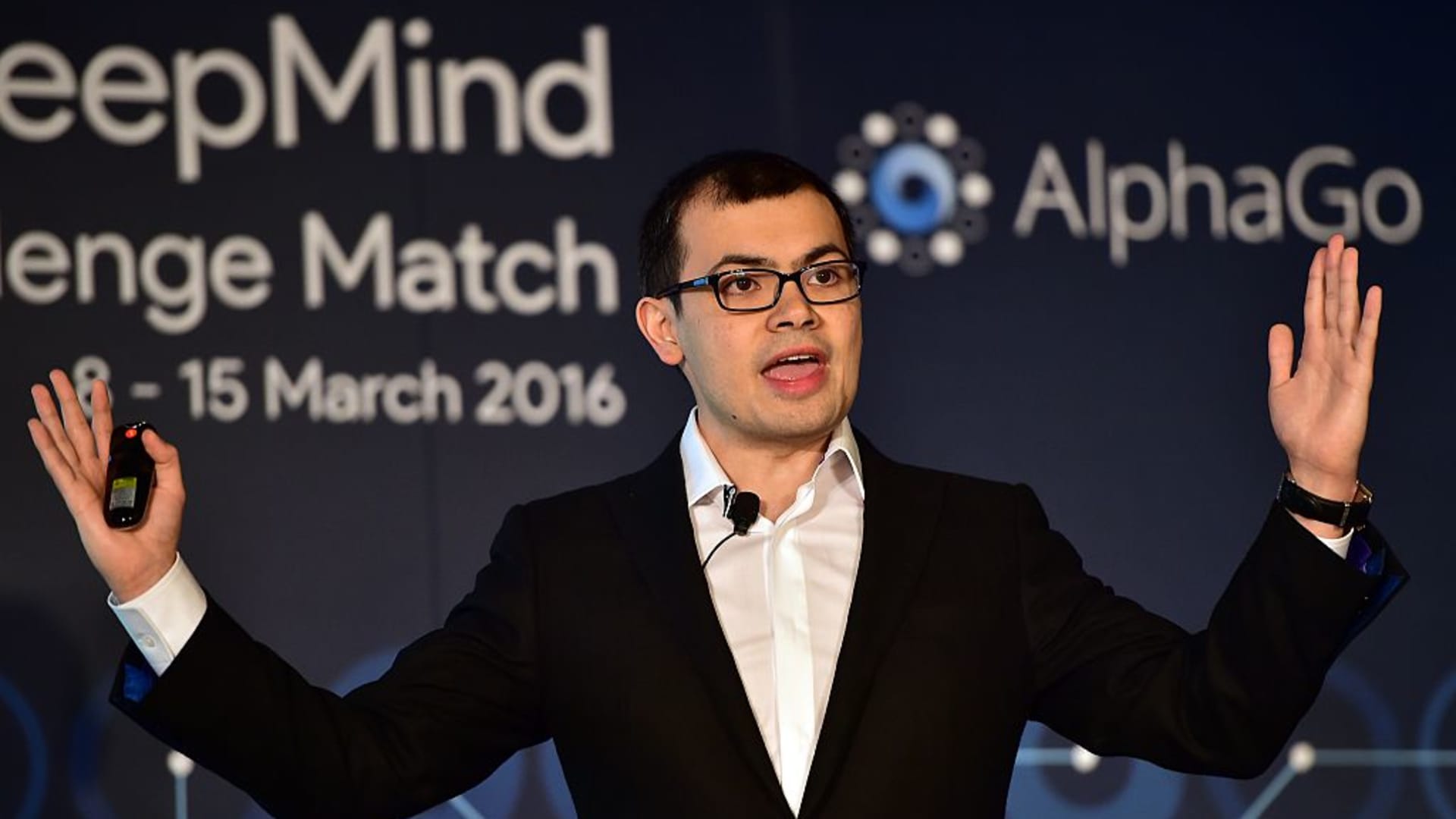
No single deal has crystallised the moment more sharply than Ineffable Intelligence. Silver, who led AlphaGo, AlphaZero, and contributed to the core reinforcement-learning stack at DeepMind, raised $1.1 billion in a seed-stage financing that included Nvidia and Google among its backers, according to CNBC. The company's stated mission — building a system capable of discovering knowledge and skills without relying on human-generated data — places it at the frontier of unsupervised and self-directed learning, a research direction that the large labs have increasingly deprioritised in favour of scaling supervised fine-tuning on human-labelled corpora.
The scale of the round signals something beyond ordinary venture enthusiasm. Seed financing at this size, awarded before a product exists or a revenue line is visible, represents a bet that the researcher's credibility is itself the asset. Investors are effectively purchasing the right to be in the room when a new architecture emerges rather than acquiring a company in any conventional sense. That logic has taken hold across the ecosystem and is reshaping how founders approach fundraising: the bigger the name, the larger the pre-emptive check.
Tim Rocktäschel, another DeepMind veteran, is reportedly in advanced discussions to raise up to $1 billion for his venture Recursive Superintelligence, in a round that would track closely with Silver's, according to CNBC reporting. Two former DeepMind researchers commanding a combined $2 billion in seed capital within a matter of weeks is a data point that no chief scientist at a large lab can ignore.
The Talent Pipeline Running Through Meta, Google, and OpenAI
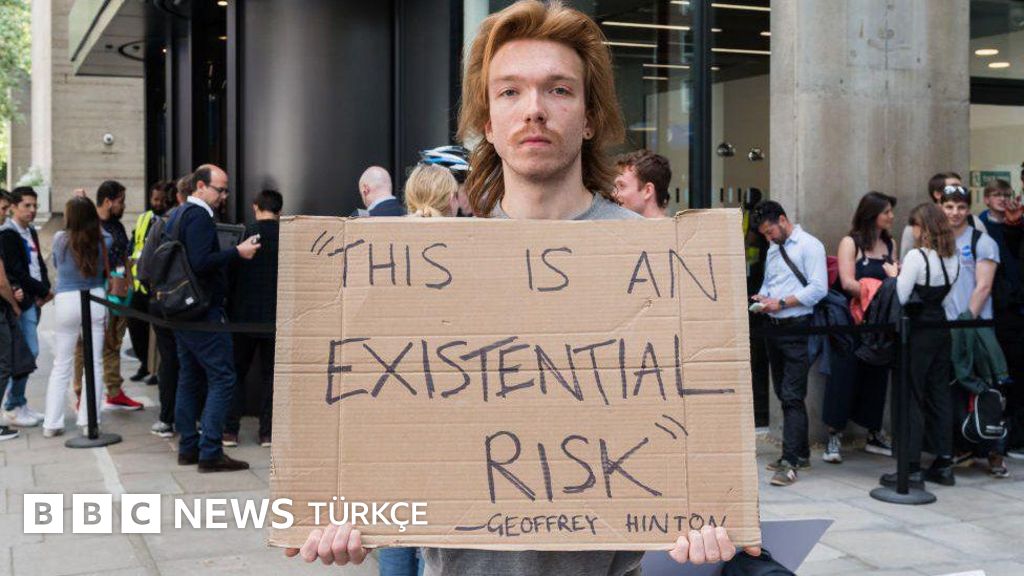
The departures are not random. They cluster around a recognisable career arc: a researcher joins a major lab after a PhD, spends several years contributing to a flagship model or training infrastructure breakthrough, and then concludes that the lab's commercial imperatives have diverged too far from the science they want to do. CNBC reported that investors explicitly seek out researchers who have been "constrained" by the labs' focus on benchmark performance and rapid release cycles, on the theory that those constraints have left important scientific terrain unexplored.
Yann LeCun, Meta's chief AI scientist and one of the architects of modern deep learning, stepped down and co-founded AMI Labs, which raised $1 billion in March 2026. LeCun has been publicly critical of the dominant large-language-model paradigm, arguing that autoregressive token prediction cannot by itself produce the kind of world models needed for robust intelligence. AMI Labs is understood to be pursuing alternative architectures that do not rely on the transformer stack that has defined the last several years of progress.
Periodic Labs, founded by Liam Fedus, who served as VP of Research at OpenAI and was a key contributor to the GPT-4 and GPT-4o training runs, alongside Ekin Dogus Cubuk, formerly of Google Brain, raised a $300 million seed round led by Andreessen Horowitz, with early checks from Felicis and participation from Nvidia, Accel, DST Global, Eric Schmidt, Jeff Dean, and Jeff Bezos, according to TechCrunch. The company is building autonomous AI-driven laboratories that combine robotic experimentation with model-driven hypothesis generation, targeting materials science and chemistry. Cubuk had previously worked on Google's GNoME project, a computational system that identified 41 novel stable crystal compounds in a single automated run — a preview of the scientific productivity Periodic Labs intends to systematise.
The breadth of the talent flows extends beyond founders. According to retention data cited by AI Hola, Anthropic retains 80 percent of employees past the two-year mark, compared with 78 percent at DeepMind and 67 percent at OpenAI. Engineers leaving OpenAI are eight times more likely to join Anthropic than the reverse; the flow from DeepMind to Anthropic runs at an 11-to-1 ratio. This asymmetry has become a structural feature of the industry, with Anthropic quietly compounding a talent advantage that compounds with each new cohort of departures from rivals.
Q1 2026 Venture Funding Doubles All of 2025
The talent movement is inseparable from an extraordinary capital environment. According to Crunchbase News, venture funding to foundational AI startups in Q1 2026 alone reached $178 billion across just 24 deals — more than double the $88.9 billion raised across 66 deals in all of 2025. The concentration is striking: fewer transactions, dramatically larger checks, all flowing to a handful of labs that investors have decided represent civilisation-scale bets.
The three largest rounds tell the story. OpenAI raised a cumulative $122 billion including a $10 billion extension closed in March at an $852 billion post-money valuation. Anthropic raised $30 billion in a Series G that valued the company at $380 billion, a financing anchored by Amazon and Google. Elon Musk's xAI raised $20 billion in a Series E. Together, these three rounds account for the vast majority of foundational AI capital raised in the quarter.
Zooming out to the full AI sector, venture investment reached $211 billion in 2025, up 85 percent from $114 billion in 2024, Crunchbase reported. The trajectory implies that 2026 will shatter those figures unless credit conditions tighten substantially. The practical effect for researchers considering departures is that fundraising friction is near zero: a credible former lab researcher with a plausible thesis can expect term sheets within weeks of going to market.
The $36 Billion Acqui-Hire Arms Race
Not all talent exits end in new startups. A parallel trend has seen Big Tech respond to departures by acquiring entire teams rather than attempting to re-recruit individual researchers. According to AI Hola, Meta, Google, and Nvidia spent more than $36 billion on three acqui-hires in the twelve months since mid-2025. Meta acquired Scale AI for $14 billion, a deal widely read as primarily a play for founder Alexandr Wang and his team. Google paid $2.4 billion for Windsurf, the AI coding assistant, to acquire its engineering bench ahead of a critical competitive juncture in developer tools. Nvidia bought Groq, the inference chip startup, for $20 billion, securing a team that had deep expertise in compiler optimisation and low-latency serving that Nvidia needed as it pushed into end-to-end AI infrastructure.
The scale of these transactions reflects a recognition among large-company CEOs that organic talent development operates too slowly when the competitive window may be measured in quarters. It also reflects how tight the supply has become at the senior researcher level: the world contains only a small number of people who have personally directed training runs at the frontier, and that number does not grow proportionally with the capital being deployed. When researchers leave, companies cannot simply hire replacements; they must buy companies.
OpenAI has attempted a softer version of the same dynamic, reportedly re-recruiting several researchers who had departed for Mira Murati's startup Thinking Machines. Murati, the former OpenAI CTO, is understood to be building a safety-centric lab; the counter-offers OpenAI extended underscored how much institutional knowledge each departure carries. One former Anthropic safety researcher was hired by OpenAI as head of preparedness at a reported base salary of $555,000 — a compensation level that would have been implausible in academic AI research five years ago and is now a reference point for senior hires across the industry.
Why Researchers Leave — and What They Are Building
The exodus is driven by more than money. Researchers interviewed across multiple outlets consistently identify the same cluster of motivations: an accumulation of commercial pressures that narrow the research agenda, internal politics that slow publication timelines, and a growing sense that the most interesting scientific problems are being avoided rather than confronted.
Inside the large foundational labs, the pressure to deliver benchmark performance and maintain rapid release cycles leaves limited room for genuinely exploratory research, particularly outside the dominant large-language-model paradigm. Researchers who want to investigate alternative architectures — state-space models, neuromorphic approaches, reinforcement learning from scratch — find that resource allocation committees prefer projects with near-term product implications. The result is a kind of intellectual stratification, in which the highest-profile researchers do boundary-pushing work that the lab cannot afford to publicise while more junior staff execute the production pipelines.
PhD students have read this situation clearly. The opportunity cost of completing a doctorate, which typically requires five to seven years, has become difficult to justify when classmates who left after their second year are closing $100 million rounds at two-year-old companies. Academic institutions have begun losing not just postdoctoral researchers but advanced doctoral students who judge that the window for high-value participation in the current wave is narrowing faster than their degrees will complete.
Investors, for their part, have adjusted their diligence accordingly. The traditional framework — assess product, team, market size — has been supplemented by a credentialing heuristic: what did this person specifically build at their last lab, and is that thing important enough to justify a pre-product round? The answers have been yes often enough that the heuristic has become self-reinforcing. Founders now structure their announcements to emphasise specific model contributions rather than general experience, knowing that the conversation with a top-tier VC will move faster if they can point to a named system.
Anthropic's Talent Magnetism and the Loyalty War
Among established labs, Anthropic has emerged as the clearest beneficiary of the talent dynamics reshaping the industry. Its 80 percent two-year retention rate stands in contrast to OpenAI's 67 percent and reflects a culture that researchers describe as more mission-coherent. The company's constitution-based approach to model alignment and its emphasis on interpretability research attract people for whom safety is not a compliance checkbox but a primary scientific interest.
The competitive implications compound over time. A lab that retains the people who built its last generation of models is better positioned to build the next generation than one that must continuously onboard and upskill replacements. The talent asymmetry between Anthropic and OpenAI, measured by retention differentials and inbound flow ratios, may not show up in near-term benchmark comparisons but is likely to show up in research productivity over a three-to-five year horizon.
The broader war for talent is far from resolved. Each new record seed round raises the bar for retention packages at the large labs, which are beginning to respond with equity refreshes, research autonomy programmes, and internal incubation vehicles designed to give researchers the startup experience without the funding uncertainty. Whether those mechanisms prove sufficient to slow the exodus or merely delay it will determine how concentrated the frontier remains — and whether the next great leap in AI capability comes from an incumbent or from a researcher who walked out the door with a billion dollars in seed funding and a clear scientific thesis.
The pattern that has emerged in 2026 is one of creative destruction operating at unusual speed. The same commercial success that enabled the large labs to fund frontier research has created the conditions for their own disruption, producing a generation of well-capitalised, research-focused competitors who have the credentials, the capital, and the conviction to try to get there first.
The BossBlog Daily
One email with the AI markets brief — the 13F moves, the Congressional trades, and what changed. No fixed schedule and no filler: it goes out when there is something worth sending.
Unsubscribe any time. We never sell or share the list.