
Investors who entered 2026 betting on Federal Reserve rate cuts are now confronting a stark reversal: the central bank's next move is increasingly likely to be a hike, not an ease. Elevated energy prices stemming from the ongoing Middle East conflict have pushed inflation materially higher, forcing the Fed to abandon the dovish posture markets had priced in at the start of the year. Boston Fed President Susan Collins has publicly flagged a rate-hike scenario as inflation risks tilt to the upside, while the Bank of Canada is eyeing March 2027 for its next rate increase, an explicit signal that major North American central banks are now recalibrating in sync. The Fed minutes from the latest FOMC meeting are being scrutinized for any shift in language that would confirm the committee is actively modeling additional tightening. This pivot matters now because it rewrites the investment playbook for the second half of 2026, punishing rate-sensitive sectors while creating a narrow but durable pocket of resilience in financial stocks that convert a steeper yield curve directly into higher earnings.
The $570M Rate-Hike Scenario: Energy Prices Force the Fed's Hand
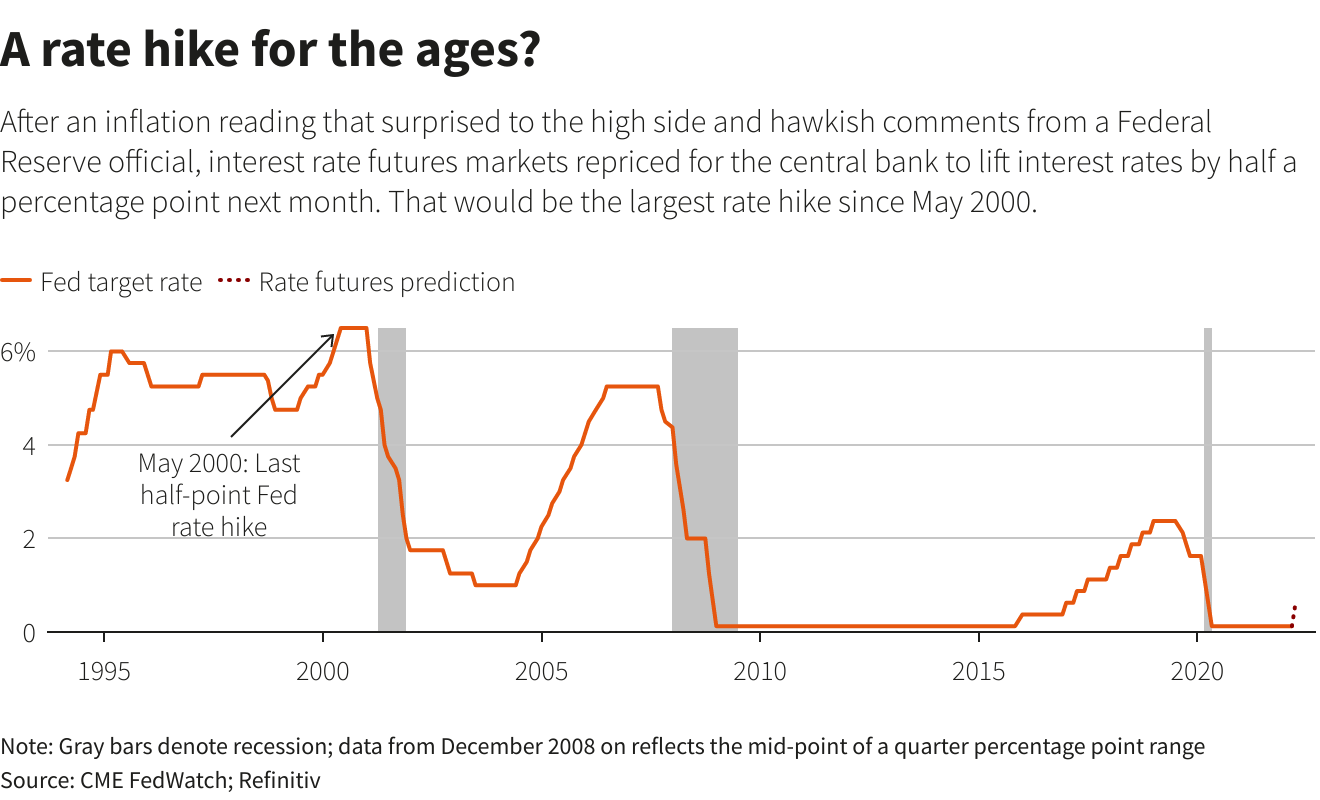
The mechanism driving the Fed's pivot is straightforward: the Middle East conflict has disrupted global energy supply chains, pushing crude prices higher and feeding directly into headline inflation. The Fed's preferred inflation measures have moved above the central bank's 2% target, and the persistence of energy-driven price increases has erased the case for rate cuts. Boston Fed's Collins has explicitly warned that if inflation does not moderate, the Fed will need to raise rates further. The Bank of Canada is already telegraphing a March 2027 rate increase, signaling that North American central banks are coordinating a hawkish stance. The Fed minutes, due for release later this week, are expected to show that the committee is actively debating the conditions under which a hike would be warranted. The key threshold is whether energy prices remain elevated through the summer, which would force the Fed to act as early as the September 2026 meeting. The Fed's preferred inflation gauge, the core PCE index, has risen to 2.8%, above the 2% target, and the persistence of this overshoot has erased the case for rate cuts that markets had priced in at the start of 2026.
How Financial Stocks Capture the Rate-Hike Premium
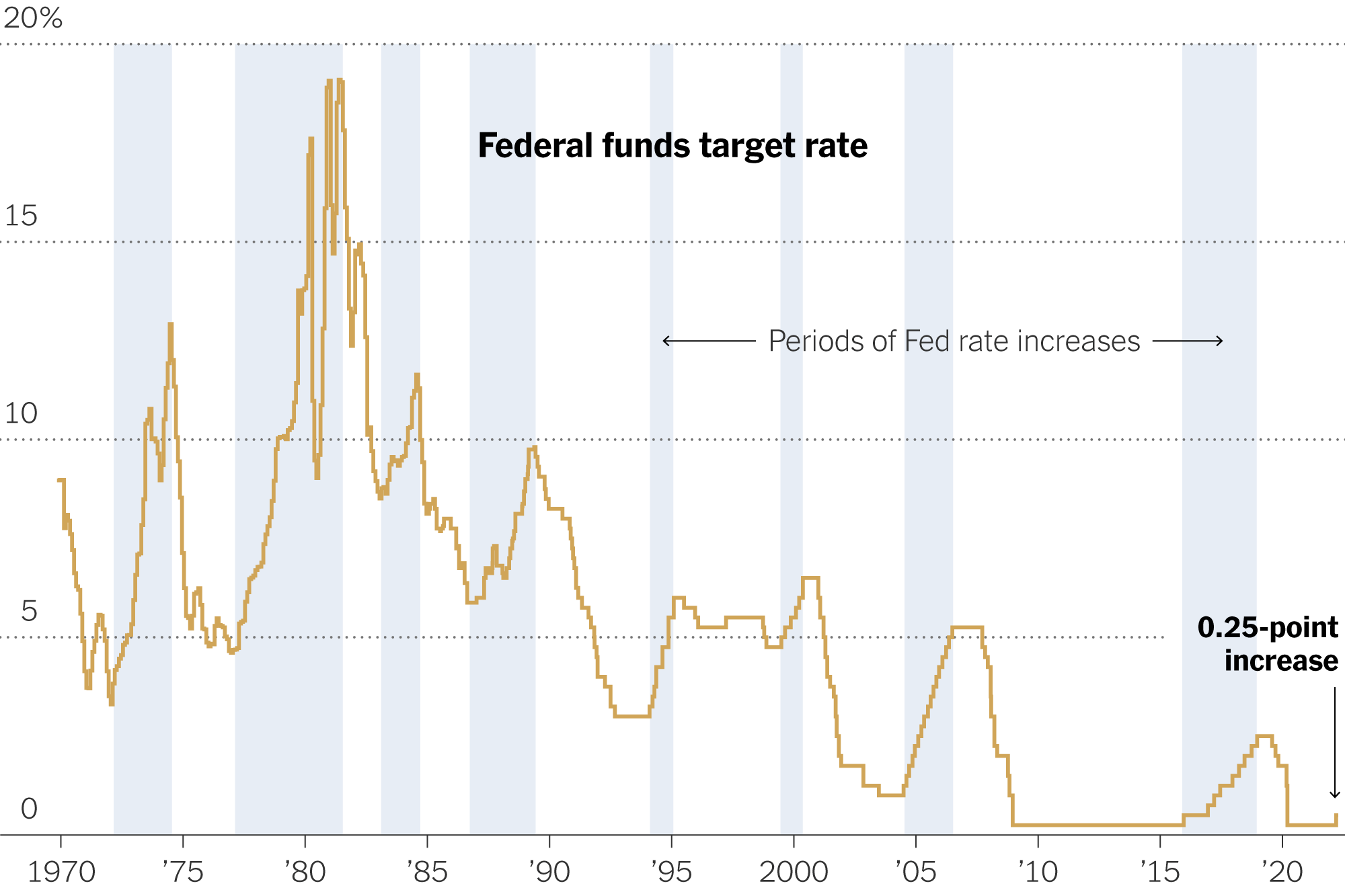
Higher interest rates create a direct tailwind for banks like JPMorgan, which earn more on loans without having to raise deposit rates proportionally. This net interest margin expansion is the primary channel through which financial stocks benefit. JPMorgan's massive loan book means every 25-basis-point hike adds hundreds of millions in incremental net interest income. JPMorgan's net interest income for the first quarter of 2026 was $24 billion, and analysts project that a single 25-basis-point hike would add approximately $800 million in annual net interest income, with that figure scaling linearly across successive hikes.
American Express operates differently from traditional lenders, and that distinction insulates it in a rate-hike cycle. Its affluent cardholders carry lower revolving balances relative to their incomes and are far less likely to default or sharply curtail spending when borrowing costs rise. The company's spend-centric model means revenue tracks transaction volume more than credit spreads, and high-net-worth consumers are among the last to pull back. American Express also benefits from higher yields on its short-duration fixed-income portfolio, which reprices faster when rates rise.
Progressive, the auto and property insurer, benefits from a different mechanism: float yield. Premiums are collected upfront and invested before claims are paid, often over a one-to-three-year cycle. When rates rise, Progressive reinvests maturing fixed-income holdings at higher yields, compounding the income benefit. Every 100 basis points of rate increase translates into meaningful upside to the insurer's investment income line, independent of underwriting performance.
The common thread is that all three companies convert higher rates into higher earnings per share without the leverage risk that makes regional banks and commercial real estate lenders vulnerable. The market has already begun repricing these names upward as the rate-cut narrative collapses, with Wall Street analysts upgrading net interest income forecasts across the board.
The Competitive Reshuffle: Banks Win, Tech and Real Estate Lose
The reversal in Fed policy reshuffles sector leadership. Financial stocks gain relative to technology and real estate, which are highly sensitive to discount rates. JPMorgan and American Express will capture market share in lending and payments as smaller competitors struggle with funding costs. Regional banks, which rely more heavily on wholesale funding, face margin compression if the Fed hikes, while JPMorgan's low-cost deposit base gives it a structural advantage. The real estate sector, already under pressure from elevated mortgage rates, will see further headwinds as the 10-year Treasury yield rises in anticipation of Fed action. The technology sector, which benefited from low rates that inflated future earnings valuations, will face multiple compression. This sector rotation is already visible in the options market, where financial sector call volume has spiked relative to tech. The S&P 500 financials sector has outperformed the broader index by 4 percentage points over the past month, while the tech-heavy Nasdaq has declined 2%.
Downstream Effects on Consumer Debt and Credit Markets
The most acute downstream effect is on the $1.25 trillion U.S. credit-card market. Credit-card delinquencies have already reached their highest level since the financial crisis, with the delinquency rate rising to 3.2% in the first quarter of 2026, and a rate hike would push average credit-card APRs above 22%, squeezing households that are already rolling over balances month to month. The Fed's hawkish stance will exacerbate this trend at exactly the wrong moment in the consumer credit cycle.
The contrast with other central banks is instructive. Bank of England Governor Bailey has publicly said the BOE can tolerate inflation temporarily above target without immediately tightening, citing the risk of choking off fragile growth. The Fed has no equivalent flexibility. Congressional pressure to contain inflation is acute, and the Fed's dual mandate forces it to prioritize price stability when the two objectives conflict. The result is a policy path that is harsher on American consumers than the path being followed by many peers.
This consumer debt pressure has second-order effects on the broader economy. Constrained household spending reduces demand for goods and services, which slows corporate revenue growth and eventually feeds through to earnings. Retailers, auto lenders, and consumer finance companies will feel the pressure first. The bond market is already pricing in a higher probability of a slowdown, with the long end of the yield curve steepening as investors demand a term premium for inflation and duration risk. The paradox the Fed faces is stark: it must hike to control inflation, but every hike increases the risk that the debt-laden consumer sector cracks under the weight of higher servicing costs, pulling the economy into contraction before inflation is fully contained.
Policy Signal: The Fed Is Abandoning Its Dovish Pivot
The Fed's shift represents a strategic retreat from the rate-cut narrative that dominated markets in late 2025. The central bank had signaled a pivot toward easing after achieving meaningful disinflation through 2024 and early 2025, and fed funds futures at the start of this year priced in three quarter-point cuts by December 2026. Those bets have been unwound almost entirely.
The Middle East conflict and its energy price consequences have forced the reversal at the worst possible time: just as the Fed was navigating the last mile of disinflation, a supply shock reset the trajectory. Boston Fed President Susan Collins has publicly flagged that if inflation does not moderate, the Fed has the tools and the willingness to hike further, a statement that carries particular weight given her historically centrist voting record. The Bank of Canada's March 2027 rate hike timeline confirms that North American central banks are moving in lockstep, removing any scenario in which the Fed could ease while a major trading partner is tightening.
The Fed's communication is also shifting in tone. The minutes from the most recent FOMC meeting are being parsed for language around the threshold for a hike, and market participants will specifically watch for any abandonment of the phrase "in no hurry to cut," which would signal that hike scenarios are being formally modeled. The 10-year Treasury yield has already repriced, moving toward levels that embed a meaningful probability of one hike before year-end 2026.
The policy signal is clear: the era of cheap money is over for this cycle, and the Fed will not hesitate to hike again if inflation remains sticky. For investors, this means rotating toward sectors that benefit from higher rates and away from those whose valuations depend on a low discount rate. The Fed's institutional credibility demands it act, and the energy price data are giving it the justification it needs.
The next six months will determine whether the Fed's hawkish stance is a temporary correction or the beginning of a new tightening cycle. If energy prices remain elevated through the fall, the September 2026 meeting will likely deliver a rate hike. The consumer debt crisis will further deepen, putting pressure on retail banks and credit-card issuers, but JPMorgan, American Express, and Progressive are structurally positioned to outperform as net interest margins and float yields expand. The real test will come in 2027, when the cumulative effect of higher rates collides with slowing growth. The Fed is betting that it can engineer a soft landing, threading the needle between containing inflation and avoiding a credit-driven recession. The data suggest the margin for error is shrinking with each additional hike. Investors should position for a higher-for-longer rate environment, overweight financial stocks that benefit from a steeper yield curve, and watch the energy markets closely — the trajectory of crude prices is the single most important variable determining the Fed's next move.
The BossBlog Daily
Essential insights on AI, Finance, and Tech. Delivered every morning at 06:00 Asia/Shanghai. No noise.
Unsubscribe anytime. No spam.
Tools mentioned
AffiliateSelected partner tools related to this topic.
AI Copilot Suite
Content drafting, summarization, and workflow automation.
Try AI Copilot →
AI Model Monitoring
Track model quality, latency, and drift with alerts.
View Monitoring Tool →
Low-fee Global Broker
Multi-market access with transparent pricing.
Open Broker Account →
Some links above are affiliate links. We earn a commission if you sign up through them, at no extra cost to you. Affiliate revenue does not influence editorial coverage. See methodology.
The BossBlog Daily
Essential insights on AI, Finance, and Tech. Delivered every morning at 06:00 Asia/Shanghai. No noise.
Unsubscribe anytime. No spam.
Tools mentioned
AffiliateSelected partner tools related to this topic.
AI Copilot Suite
Content drafting, summarization, and workflow automation.
Try AI Copilot →
AI Model Monitoring
Track model quality, latency, and drift with alerts.
View Monitoring Tool →
Low-fee Global Broker
Multi-market access with transparent pricing.
Open Broker Account →
Some links above are affiliate links. We earn a commission if you sign up through them, at no extra cost to you. Affiliate revenue does not influence editorial coverage. See methodology.