
Dallas Federal Reserve President Lorie Logan delivered one of the most direct warnings from a U.S. central banker in the current cycle on June 3, 2026, stating that rate hikes will be required later this year to tamp down stubborn inflation. Speaking publicly, Logan argued that the current interest rate setting of 3.5% to 3.75% no longer constrains rising prices — a sharp departure from the prevailing narrative that the Fed's tightening cycle is complete. Her remarks land just two weeks before the next Federal Open Market Committee meeting scheduled for June 16-17, 2026, and inject a new layer of uncertainty into a market that had largely priced in a steady-state rate environment through year-end. The timing is critical: inflation has proven stickier than anticipated, hovering at levels that erode the Fed's credibility on price stability. Logan's hawkish pivot forces investors, corporate treasurers, and bank executives to recalibrate their assumptions about the cost of capital for the remainder of 2026. This matters now because it signals that the Fed's terminal rate has not yet been reached, and that the next move, contrary to widespread expectations of cuts, is a rate hike, with immediate consequences for bond yields, equity valuations, and corporate borrowing costs.
Where the 3.5%-3.75% Rate Fails to Constrain Prices
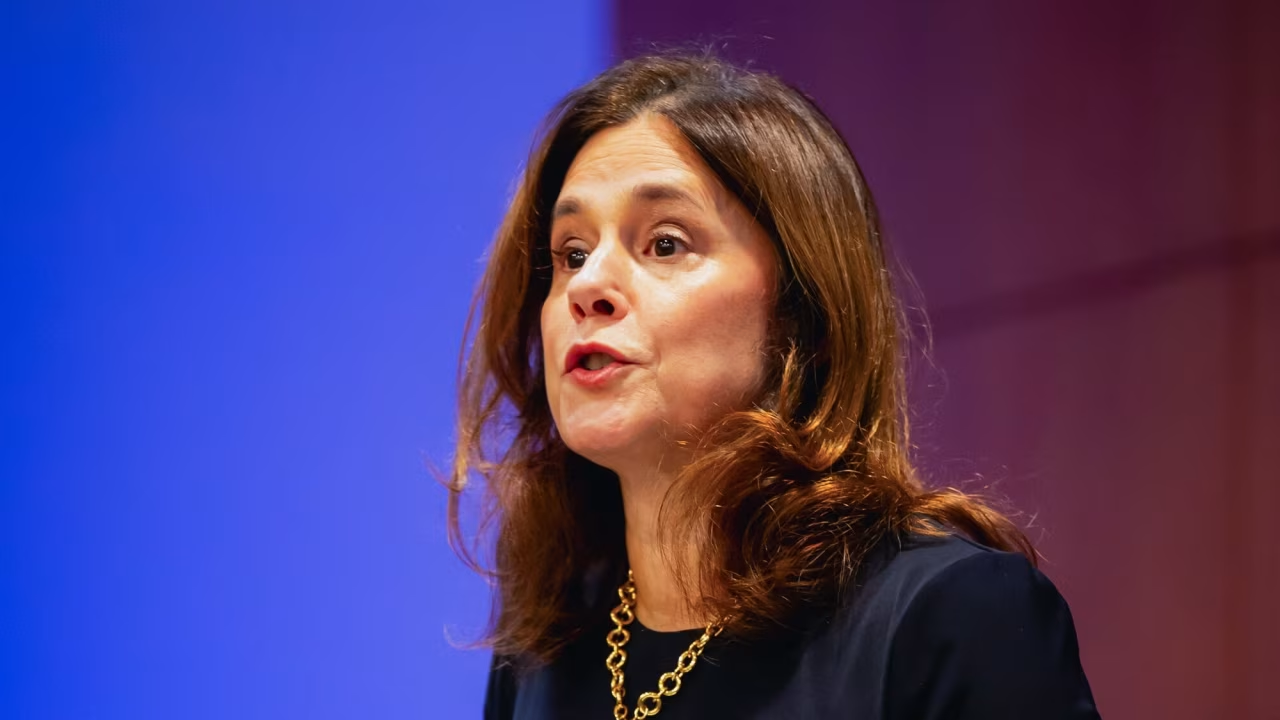
Logan's core argument rests on a straightforward but consequential assessment: the current federal funds rate range of 3.5% to 3.75% is no longer restrictive enough to bring inflation down to the Fed's 2% target. This is a material shift in diagnosis. Throughout 2025 and early 2026, Fed officials had characterized the rate level as "restrictive" and sufficient to cool the economy over time. Logan now rejects that framing, asserting that the policy rate has lost its bite against persistent price pressures. The data supports her skepticism: core inflation measures have remained elevated, with the Consumer Price Index running well above the Fed's comfort zone. Logan's speech on June 3 directly challenged the view that the Fed can afford to wait and see. She argued that maintaining the current rate risks allowing inflation to become entrenched, forcing the central bank to play catch-up later with more aggressive tightening. This is not a hypothetical concern. The 1970s experience of premature easing followed by double-digit rate hikes looms large in Fed institutional memory. By publicly stating that the current rate "no longer appears to be constraining rising prices," Logan has effectively moved the goalposts for what constitutes a restrictive policy stance. Her warning implies that the neutral rate (the theoretical level that neither stimulates nor restrains the economy) has risen, requiring a higher terminal rate to achieve the same dampening effect.
How a Rate Hike Flows Through the P&L of Banks and Borrowers
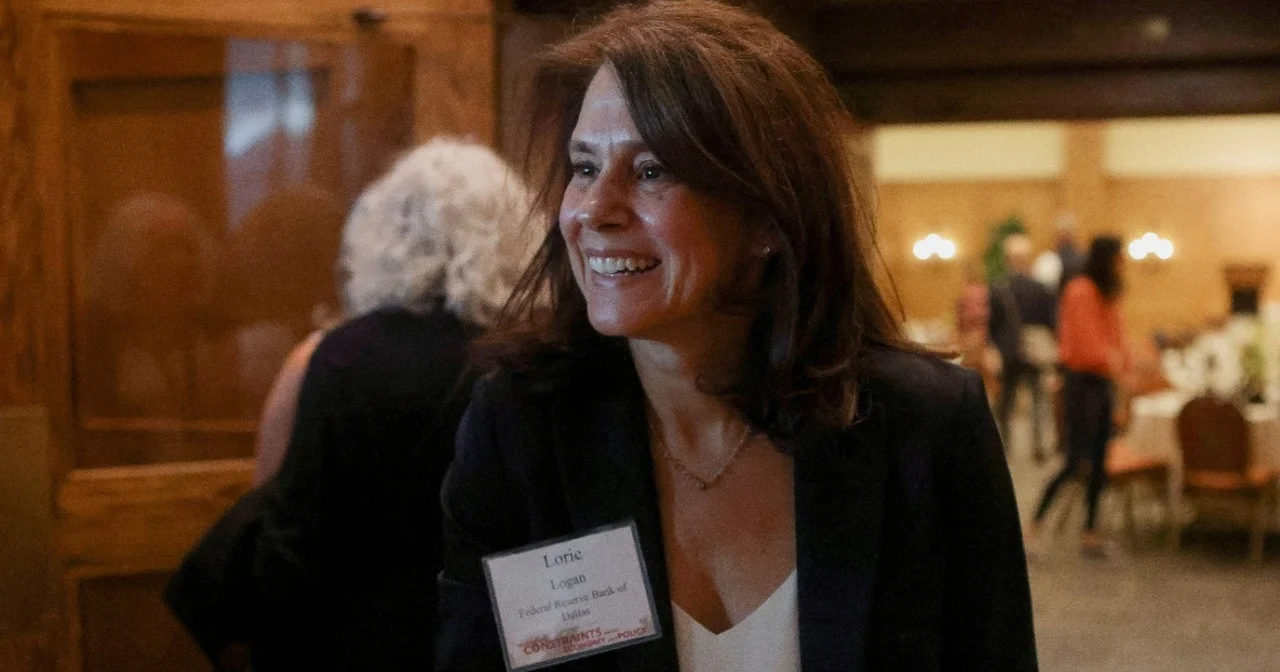
A rate hike from the current 3.5%-3.75% range would have immediate and uneven effects across the financial system. For banks like MassMutual, whose head of investment strategy Kelly Kowalski has been closely monitoring the Fed's inflation outlook, the impact is twofold. On the asset side, higher rates boost net interest margins on floating-rate loans and securities, but they also depress the market value of fixed-rate bond portfolios. This dynamic contributed to the regional banking stress of 2023. For commercial borrowers, a 25 or 50 basis point increase would raise the cost of revolving credit facilities and term loans tied to SOFR or prime rates. Companies that refinanced at the current 3.5%-3.75% level in 2025 now face the prospect of higher debt service costs, compressing margins at a time when input costs remain elevated. The NYSE Fed Funds Rate Index PR, which shows a previous close of 151.63 and a day's range of 151.37 to 152.71, reflects the market's real-time pricing of rate expectations. A sustained move above 152.71 would indicate that traders are pricing in a higher probability of a hike. For corporate treasurers, the message is clear: lock in fixed-rate funding now, or risk paying more later. The ripple effects extend to mortgage rates, auto loans, and credit card APRs, all of which would reset higher, dampening consumer demand and potentially slowing the very economic activity the Fed is trying to cool.
The Competitive Reshuffle: Hawks vs. Doves at the Fed
Logan's hawkish stance creates a visible fault line within the Federal Reserve, and the competitive dynamics among regional bank presidents are now on full display. San Francisco Fed President Mary Daly, speaking at the Bloomberg Tech conference in San Francisco on June 4, 2026, just one day after Logan's speech, struck a markedly different tone. Daly said monetary policy is in a "good place" but that there is too much uncertainty to offer a definitive view on rate direction. She emphasized that the Fed is prepared to respond "either way, whatever the economy brings." This divergence between Logan and Daly is not merely academic; it shapes market expectations and influences how investors position ahead of the June 16-17 FOMC meeting. Logan, as a Dallas Fed president, represents a more inflation-hawkish constituency that has long argued the Fed should have tightened more aggressively in 2024-2025. Daly, leading the San Francisco Fed, reflects a more data-dependent, wait-and-see approach that prioritizes avoiding unnecessary damage to the labor market. The split matters because FOMC decisions are consensus-driven, and a vocal hawk like Logan can shift the center of gravity, even if she does not have a vote this year. Her public warning forces other committee members to take a position, hardening the hawkish bloc ahead of the June meeting. For market participants, the key question is whether Logan is an outlier or a bellwether. If other regional presidents echo her concern, the probability of a rate hike will rise sharply.
Downstream Effects on Hyperscalers, Fabs, and Enterprise Buyers
A rate hike would reverberate through the capital-intensive sectors that have driven much of the U.S. economy's recent growth. Hyperscalers including Amazon Web Services, Microsoft Azure, and Google Cloud are in the midst of a multi-year capex cycle, building out data centers and purchasing AI-optimized hardware. These projects are financed through a mix of operating cash flow and debt issuance. A 25 or 50 basis point increase in the federal funds rate would raise the cost of new corporate bonds, making it more expensive to fund the next wave of data center construction. For semiconductor fabs, which require billions in upfront investment and have long construction timelines, higher rates increase the hurdle rate for new projects. The CHIPS Act subsidies provide some buffer, but private capital will still demand higher returns. Enterprise buyers of IT infrastructure and software, from mid-market firms to Fortune 500 companies, will face tighter budgets as their own borrowing costs rise. CFOs who were planning to upgrade legacy systems or invest in AI pilots will defer those decisions, compressing demand for enterprise technology vendors. The bond market has already begun to price in this risk: the NYSE Fed Funds Rate Index PR's 52-week range of 151.37 to 152.71 suggests that traders see limited upside for rate-sensitive assets. For the Fed, the challenge is calibrating the pace of any hike to avoid triggering a sharp slowdown in business investment, which would compound the effects of already-tight consumer credit conditions.
What Logan's Warning Signals About the Fed's Policy Trajectory
Logan's June 3 speech is best read not as a prediction but as a strategic signal. It is a deliberate attempt to manage expectations and prepare markets for a policy reversal. By stating that rate hikes "may be required later this year," she is laying the groundwork for the FOMC to shift its forward guidance at the June 16-17 meeting. The Fed's dot plot, which summarizes each member's rate projection, will be closely watched for any upward revision to the median 2026 rate estimate. If even one or two additional officials move their dots higher, the market will interpret that as a credible threat of tightening. Logan's warning also serves a second purpose: it pressures the Biden administration and Congress to address the fiscal drivers of inflation. Persistent deficit spending and regulatory costs feed into price increases. By publicly tying the need for rate hikes to the failure of current policy to constrain prices, Logan is implicitly arguing that monetary policy alone cannot solve the inflation problem. This is a politically charged message, but one that resonates with the Fed's institutional independence. For investors, the takeaway is that the era of "higher for longer" is giving way to "higher and then higher still." The next FOMC meeting will be a critical inflection point: either the committee rallies behind Logan's hawkish view, or it reaffirms the current stance and risks losing credibility on inflation. Either outcome carries significant portfolio implications.
The trajectory of Fed policy now hinges on the data between June 3 and June 16. If the May CPI report, due for release on June 10, shows continued stickiness, Logan's warning will gain additional force and the FOMC will face intense pressure to at least open the door to a hike in its post-meeting statement. Conversely, a surprise softening in inflation gives Daly's data-dependent approach the upper hand, allowing the committee to hold steady. But the broader message from Logan is unmistakable: the Fed is no longer willing to tolerate inflation persistence, and the cost of waiting is rising. For corporate leaders, the prudent course is to plan for a rate hike scenario. They should stress-test balance sheets, lock in fixed-rate financing where possible, and defer discretionary capex until the policy path becomes clearer. The next two weeks will determine whether Logan's warning is a solitary hawkish cry or the opening salvo in a new tightening cycle. Bond desks, corporate treasury teams, and equity strategists will watch the May CPI print on June 10 as the definitive test. A print above consensus revalidates Logan's diagnosis and shifts the committee's calculus decisively. Either way, the era of monetary policy certainty is over.
The BossBlog Daily
One email with the AI markets brief — the 13F moves, the Congressional trades, and what changed. No fixed schedule and no filler: it goes out when there is something worth sending.
Unsubscribe any time. We never sell or share the list.