
Kevin Warsh takes the gavel at the Federal Open Market Committee meeting on June 17, 2026, for the first time as Fed Chair, and the script has flipped. Appointed by President Donald Trump, Warsh spent his confirmation period arguing for rate cuts, positioning himself as a dove willing to ease policy despite inflation running hot. But the data has not cooperated. April inflation, measured by the Fed's preferred gauge, sits at 3.8% — nearly double the central bank's 2% target. Dallas Fed President Lorie Logan has publicly warned that the Fed will need to hike rates this year to confront persistent price pressures. Markets, as tracked by CME Group's FedWatch tool, assign virtually no chance of a cut at this meeting. The conversation inside the Eccles Building has shifted from easing to tightening, and Warsh must now decide whether to follow the data or the political pressure from Trump, who wants rates sharply lower. This first meeting will signal whether Warsh governs as an independent central banker or bends to the White House, and the answer will ripple through borrowing costs, asset prices, and the dollar.
Inflation at 3.8% Upends Warsh's Rate-Cut Thesis
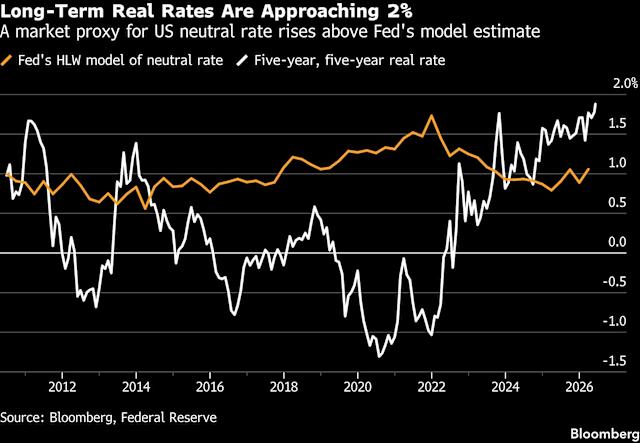
Warsh entered office with a stated openness to cutting rates, a position that aligned with Trump's public demands for cheaper money. But the inflation data has erased that option. The April reading of 3.8% on the Fed's preferred gauge is more than a rounding error above target. It represents a structural persistence that the central bank's models have failed to extinguish. Core services inflation, excluding housing, remains sticky at levels that historically require restrictive policy to break. Warsh's own prior statements, which downplayed the urgency of tightening, now look out of step with the FOMC's internal forecasts. The median dot plot, updated at this meeting, is expected to show fewer cuts in 2026 than Warsh's early public commentary implied. The Fed's current rate range of 3.50% to 3.75% already sits above neutral estimates from many regional bank presidents. If Warsh holds steady, as the market expects, he will effectively be endorsing the hawkish stance he once criticized. The language in the post-meeting statement will be the tell. Analysts expect Warsh to place himself in the "wait-and-see" camp, but the burden of proof for any future cut now rests on a sustained decline in inflation that the data does not yet show. The FOMC's internal models project inflation staying above 3% through the third quarter, leaving no room for a near-term easing.
How the Rate Decision Flows Through Consumer Borrowing and Savings
The Fed's hold at 3.50%–3.75% directly shapes the cost of credit for households and businesses. Mortgage rates, which track the 10-year Treasury yield more than the fed funds rate, have already repriced higher on the expectation of a prolonged pause. Credit card APRs, which are tied to the prime rate, will remain elevated, squeezing consumers who carry balances. Auto loan rates, currently averaging above 7% for new vehicles, will not ease until the Fed signals a definitive pivot. On the savings side, money market funds and high-yield savings accounts will continue to offer yields above 4%, drawing cash out of equities and into risk-free instruments. The wealth effect cuts both ways: retirees benefit from higher yields on fixed income, but younger borrowers face a housing market that remains unaffordable due to both high prices and high rates. Dan North, senior economist at Allianz Trade, has noted that the lagged effects of previous rate hikes are still working through the economy, meaning the full impact of the tightening cycle has not yet peaked. If Warsh's Fed holds rates steady through the summer, the cumulative drag on consumer spending will intensify, particularly in rate-sensitive sectors like housing and durable goods. The risk is that the Fed overtightens by simply staying put, as real rates rise if inflation falls faster than nominal rates. Consumer credit growth has already slowed to a 2.5% annual rate, the weakest since 2020, signaling that households are pulling back.
Competitive Reshuffle: How Global Central Banks Diverge from the Fed
While the Fed pauses, other major central banks are moving in different directions, creating a fragmented global rate landscape that reshapes currency and capital flows. The Reserve Bank of India held rates steady at 5.25% at its latest meeting, but lowered growth forecasts and increased inflation projections, signaling a cautious stance that mirrors the Fed's dilemma. Sweden's Riksbank held at 1.75% and now sees a higher chance of a hike later this year, a hawkish tilt that strengthens the krona. The European Central Bank, per chief economist Philip Lane, will raise its key rate again if inflation concerns persist, a statement that keeps the euro bid against a dollar that lacks yield support from a cutting Fed. This divergence matters for corporate earnings: U.S. multinationals with exposure to Europe and India face currency headwinds if the dollar weakens relative to the euro and rupee. Conversely, emerging markets that have already cut rates, like Brazil and Chile, will see capital outflows if the Fed holds firm while they ease. The Fed's pause, combined with hawkish signals from other central banks, compresses the interest rate differential that has supported the dollar. Roger Ferguson, former Fed vice chairman, has pointed out that the Fed's credibility depends on its willingness to diverge from political pressure, but divergence from global peers carries its own risks for financial stability. The dollar index has already fallen 2% since Warsh's nomination, reflecting the shifting rate expectations.
Downstream Effects on Corporate Capex and the Housing Market
The Fed's rate stance cascades through corporate capital expenditure plans and the housing sector with a lag that investors underestimate. Companies that borrowed heavily during the low-rate era now face refinancing walls at higher coupons. The Bloomberg U.S. Corporate Bond Index yield has risen 40 basis points since Warsh's nomination, increasing the cost of debt for investment-grade issuers. High-yield spreads have widened, reflecting concern that a prolonged hold will tip some overleveraged firms into distress. Capital-intensive industries, including energy, industrials, and real estate, are deferring projects that require a lower cost of capital to pencil out. The housing market is the most visible casualty. Existing home sales have fallen to levels not seen since the 2008 financial crisis, as the combination of 7% mortgage rates and record home prices locks both buyers and sellers out of the market. Homebuilders are pulling back on starts, which will reduce housing supply and keep prices elevated. The Fed's hold, by keeping long-term rates high, directly suppresses the housing sector's contribution to GDP. If Warsh's Fed eventually hikes, the impact on housing would be even more severe. The transmission mechanism from Fed policy to Main Street runs through mortgage applications, which have dropped 15% year-over-year, and through commercial real estate, where office vacancy rates in major cities exceed 20%. The National Association of Home Builders index has fallen to 38, its lowest reading since the pandemic, indicating builder pessimism.
What Warsh's First Meeting Signals About the Fed's Policy Trajectory
This meeting is less about the rate decision itself and more about the signal Warsh sends regarding his independence and his reading of the inflation regime. By holding rates steady, Warsh aligns with the FOMC consensus but breaks from his own pre-appointment rhetoric. The statement language will be parsed for any shift in the balance of risks. If the Fed removes its reference to "transitory" inflation factors or adds a phrase about "elevated vigilance," markets will interpret that as a prelude to a hike at the July or September meeting. The dot plot will show whether the median participant still expects two cuts in 2026 or has revised that down to one or zero. Warsh's press conference will be his first major test of communication. He must explain why the data has forced a reassessment without appearing to bow to political pressure from Trump. The risk is that markets see a Fed that is behind the curve, having failed to cut when it could have and now forced to consider hikes that will tighten financial conditions further. The CME FedWatch tool already prices a 25% probability of a hike by December, up from zero three months ago. Warsh's legacy begins with this meeting, and the trajectory he sets will define whether the Fed achieves a soft landing or triggers a recession through inaction.
The path forward for Warsh's Fed is narrow and fraught with political and economic landmines. If inflation continues to run at 3.8% or higher, the case for a hike will strengthen, forcing Warsh to reverse his earlier dovish stance entirely. That would put him in direct conflict with Trump, who has publicly demanded lower rates. A hike would also tighten financial conditions at a time when corporate earnings are slowing and consumer savings are depleting. If inflation moderates in the second half of 2026, Warsh can claim vindication for his wait-and-see approach and potentially cut rates in 2027. But the risk of stagflation, persistent inflation combined with slowing growth, is real. The Fed's own models show that the neutral rate has likely risen, meaning the current 3.50%–3.75% range is not as restrictive as it appears. Warsh must navigate this without the benefit of a long track record as chair. Bond markets are already pricing a more cautious Fed, with the 2-year Treasury yield holding above 4%, reflecting expectations that the current rate range stays in place through at least the third quarter. Institutional investors tracking the CME FedWatch tool have shifted their rate-cut probability estimates lower for every meeting through year-end, a repricing that confirms the market's view that Warsh will prioritize credibility over accommodation. His first meeting will be remembered not for the rate decision, but for whether he demonstrated the intellectual flexibility to change his mind and the political courage to resist White House pressure. Markets will watch his every word, and the dollar, the S&P 500, and the bond market will react in real time to the signals he sends.
The BossBlog Daily
One email with the AI markets brief — the 13F moves, the Congressional trades, and what changed. No fixed schedule and no filler: it goes out when there is something worth sending.
Unsubscribe any time. We never sell or share the list.