
Kevin Warsh, the new Federal Reserve chair nominee awaiting Senate confirmation, faces his first major test just three weeks into the job. Inflation has roared back at the fastest pace in three years, investors are dumping US Treasury bonds and betting the Fed will need to raise rates by December, and President Donald Trump is simultaneously pushing for lower borrowing costs. The Fed is expected to hold its benchmark rate steady in a range of 3.5% to 3.75% at the upcoming meeting, but Warsh's maiden press conference will be scoured for clues on the central bank's stance. Goldman Sachs now expects no rate cuts until 2027, pushing its first-cut forecast to June 2027, while Bank of America warns of a 1994-style stock market shock. The stakes are extraordinarily high: Warsh must prove the Fed can maintain its independence and credibility even as political and market pressures collide.
The 3.5%–3.75% rate floor and the FOMC's internal divide
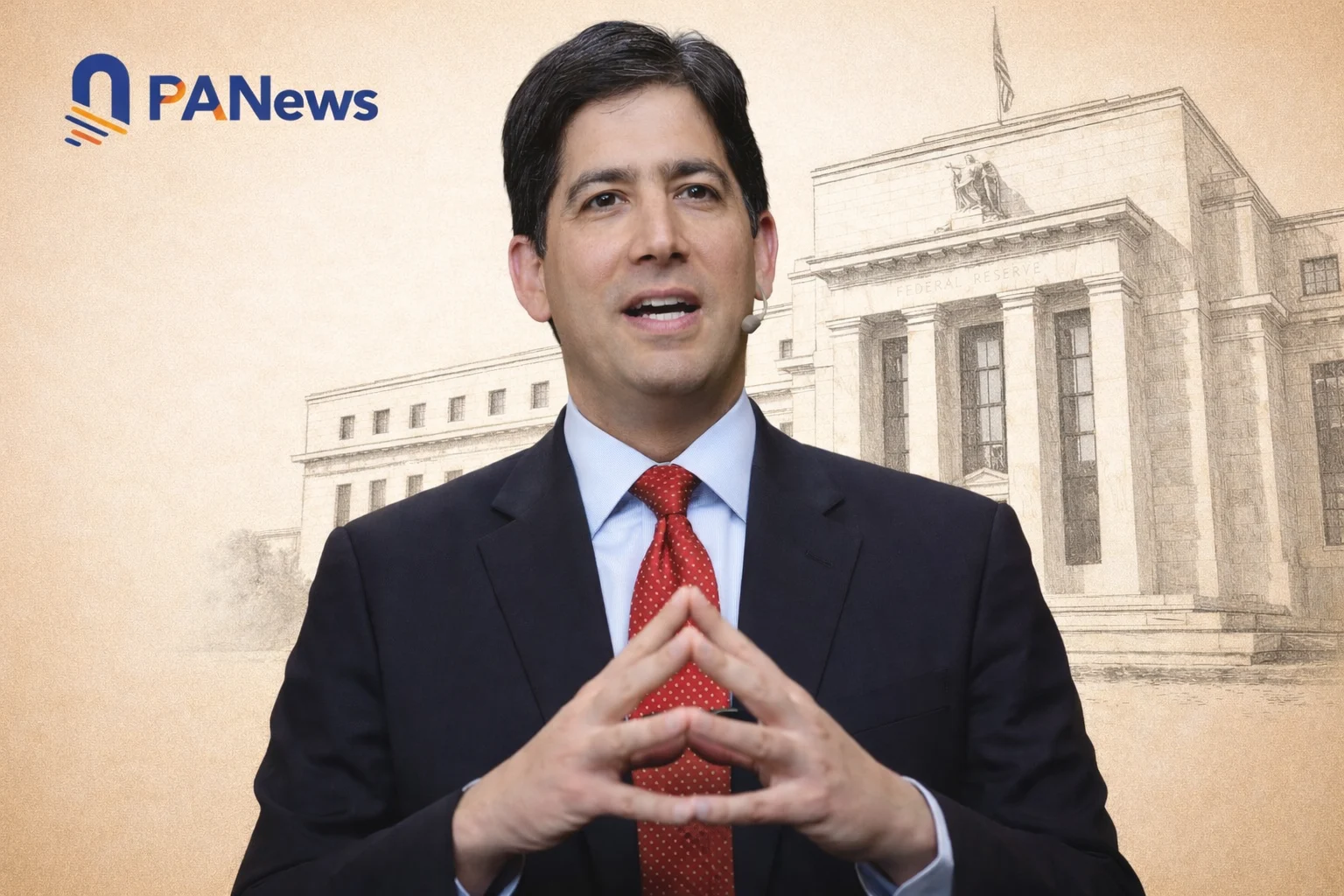
The current rate range of 3.5% to 3.75% is the product of a deliberate pause by the Federal Open Market Committee, the 12-person policy committee that includes all seven Fed governors, the president of the New York Fed, and four of the other 11 regional reserve-bank presidents whose seats rotate each January. Jerome Powell, the current Fed chair whose term expires in May, will lead two final meetings before handing over to Warsh. The FOMC has held rates steady since the last cut in March, as inflation data consistently surprised to the upside. Over the past six months, inflation has averaged roughly 0.5% monthly, a pace that Bank of America warns will push annual CPI above 5% by the midterm elections. This is not a transitory spike. Producer price index and personal consumption expenditures data both confirm the trend. The Fed's own preferred gauge, the PCE, is running well above the 2% target. The committee is now divided between hawks who want to resume hikes and doves who argue the economy can still achieve a soft landing. Warsh will need to build a consensus among these 12 officials, a task made harder by the fact that his own confirmation is not yet complete and that the rotating regional bank presidents may shift the voting balance in a more hawkish direction later this year. The internal split means that any signal from Warsh will be magnified, as each faction will interpret his words as validation of its own position.
How the bond market is forcing Warsh's hand
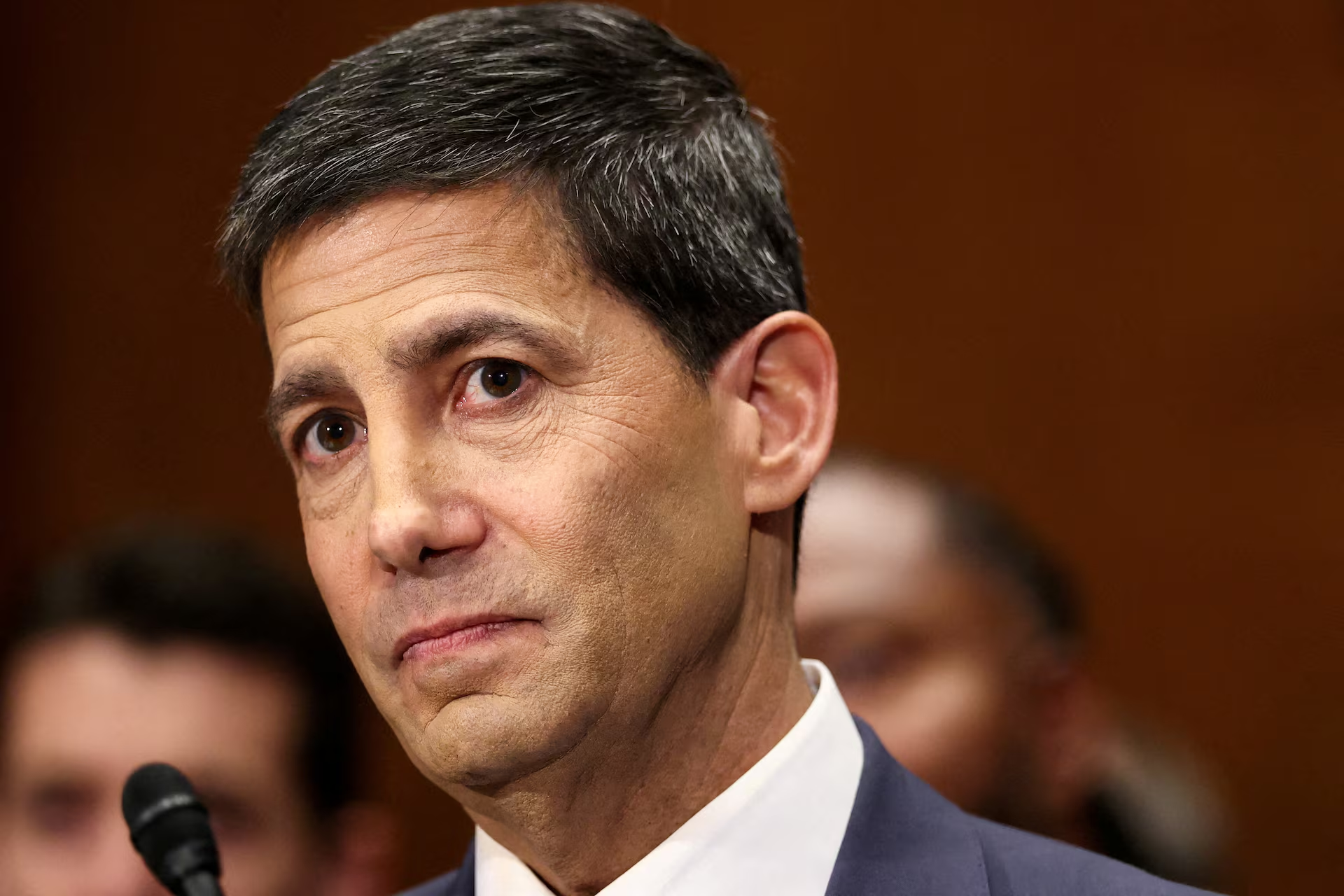
The bond market is delivering a clear message: the Fed must raise rates, and soon. Investors have been dumping US Treasury bonds, pushing yields higher across the curve. The 10-year Treasury yield has climbed sharply, making it harder to justify stock valuations and tightening financial conditions without the Fed lifting a finger. This selloff is not a fleeting reaction to a single data point. It reflects a structural repricing driven by persistent inflation and the realization that the soft landing narrative is in jeopardy. Goldman Sachs has abandoned its earlier forecast of a mid-2026 rate cut and now expects the first cut in June 2027, more than a year away. That is a dramatic shift from just six months ago, when markets were pricing in three or four cuts this year. The implications for the Fed's balance sheet are significant. Higher yields mean the Fed's portfolio of Treasury and mortgage-backed securities is losing value, and the central bank will eventually need to restart quantitative tightening or accept a slower pace of runoff. For Warsh, the bond market's revolt is a direct challenge: if he signals dovishness to satisfy Trump, yields will rise further as inflation expectations become unanchored. If he signals hawkishness, he risks a stock market rout and political backlash. The yield on the 10-year note has already moved more than 50 basis points in recent weeks, a violent repricing that leaves little room for equivocation.
Bank of America and Goldman Sachs reshape the rate outlook
Two of Wall Street's most influential firms have drawn a stark line under the new rate regime. Bank of America warns that the current environment mirrors 1994, when the Fed under Alan Greenspan surprised markets with a series of aggressive rate hikes that triggered a bond market crash and a stock market correction. The parallel is uncanny: inflation is running hot, valuations are stretched, and the Fed is at a pivot point. The S&P 500's forward 12-month P/E ratio is around 21 times, above its 5-year average of 19.9 and its 10-year average of 18.9. Higher Treasury yields make those multiples unsustainable. Bank of America's analysts argue that a 1994-style shock is probable if the Fed does not act decisively. Goldman Sachs, meanwhile, has pushed its first rate cut forecast to June 2027, effectively telling clients that the era of cheap money is over for the foreseeable future. The two banks are not alone. Across Wall Street, economists are revising their rate paths upward. The consensus is shifting from "when will the Fed cut?" to "how many hikes will it take to break inflation?" This repricing has direct consequences for corporate borrowing costs, mortgage rates, and the Treasury's own debt servicing bill, which is already running at over $1 trillion annually. The shift in Wall Street's consensus is itself a market-moving force, as institutional investors reallocate portfolios in anticipation of a prolonged tightening cycle.
Which companies and sectors gain or lose from the rate standoff
The winners and losers of this rate standoff are becoming clear. Banks like JPMorgan Chase and Goldman Sachs benefit from a steeper yield curve, as they can borrow short-term at the Fed's rate and lend long-term at higher Treasury yields. Their net interest margins expand when the curve steepens, and the current selloff is doing exactly that. Regional banks, however, face a more precarious position. They hold large portfolios of long-duration Treasuries and mortgage-backed securities that lose value as yields rise, and their funding costs are rising faster than their lending rates. The tech sector is the most vulnerable. High-growth, unprofitable companies that rely on cheap debt to fund operations will see their cost of capital surge. The S&P 500's elevated P/E ratio of 21 times is heavily weighted toward the mega-cap tech names that drove the 2023–2025 rally. If yields continue to climb, those multiples will compress, and the index will correct. Private equity and venture capital are also exposed. The leveraged buyout model depends on cheap debt, and the IPO window has already narrowed. For the broader economy, the housing market is the canary in the coal mine. Mortgage rates have already risen above 7%, and a return to rate hikes would push them higher, freezing the housing market and hitting homebuilder stocks like D.R. Horton and Lennar. The divergence between winners and losers is sharpening with every basis point move in Treasury yields.
What Warsh's first press conference signals about Fed independence
Warsh's maiden press conference will be the most closely watched Fed communication event in years. Every word will be parsed for signs of political influence. Trump nominated Warsh and has publicly demanded lower rates, but the bond market is betting on hikes. Warsh cannot satisfy both. If he leans dovish, he risks losing credibility with investors who will see the Fed as politicized and inflation expectations will rise. If he leans hawkish, he risks angering the president who appointed him and potentially triggering a stock market selloff that Trump will blame on the Fed. The precedent is not encouraging. Alan Greenspan navigated political pressure successfully in the 1990s, but Ben Bernanke faced intense scrutiny during the 2010–2011 inflation scare and ultimately pivoted to a more accommodative stance. Warsh's background as a former Fed governor and a partner at the Andersen Institute gives him a deep understanding of monetary policy mechanics, but his political instincts are untested. The key signal to watch is whether he explicitly reaffirms the Fed's independence and its commitment to the 2% inflation target without caveats. Any hedging or reference to "supporting economic growth" in a way that suggests a trade-off with inflation will be read as a concession to Trump. The market will react instantly, and the dollar, Treasury yields, and equities will move in real time. Warsh's first test is not just about the rate decision — it is about whether the Fed remains a rule-based institution or becomes a political instrument.
The coming months will determine whether Warsh can establish himself as a credible steward of monetary policy or whether he becomes a cautionary tale about the erosion of central bank independence. The data is unambiguous: inflation is running at 0.5% monthly, the bond market is pricing in rate hikes by December, and Goldman Sachs has pushed its first cut to June 2027. If Warsh caves to political pressure, he will accelerate the unanchoring of inflation expectations and force the Fed into a more aggressive tightening cycle later, exactly as Bank of America's 1994 scenario predicts. If he stands firm and signals a willingness to hike, he will face a direct confrontation with the White House and a potential stock market correction. The smart money is on a hawkish hold: the Fed will keep rates steady at the upcoming meeting, but Warsh will use his press conference to prepare markets for a hike in September or December. That is the path of least regret for a new chair who needs to build credibility quickly. The alternative, a dovish pivot, would be a catastrophic signal that the Fed has lost its nerve. Investors should brace for volatility, higher yields, and a prolonged period of restrictive policy. The soft landing is no longer the base case. The new base case is a hard landing, delayed but not avoided, as Warsh learns the hard way that fighting inflation is never popular and never easy.
The BossBlog Daily
One email with the AI markets brief — the 13F moves, the Congressional trades, and what changed. No fixed schedule and no filler: it goes out when there is something worth sending.
Unsubscribe any time. We never sell or share the list.