
Kevin Warsh chairs his first Federal Open Market Committee meeting this week, June 16-17, with an unwelcome inheritance: consumer price inflation surged to 4.2% last month, more than double the Fed's 2% target, while the federal funds rate sits at a range of 3.5% to 3.75%. Economists overwhelmingly expect the committee to hold rates steady; 71% of respondents in a recent survey forecast a unanimous decision. But the real action is in the forward guidance, or lack thereof. Warsh has argued for over a decade that the Fed should say less about its thinking, a sharp break from the Ben Bernanke-era communications apparatus that turned every FOMC statement into a multi-paragraph exegesis of economic probabilities. Markets have already adjusted: fed funds futures price a single rate rise by the end of 2026, not the cuts that many investors had hoped for earlier this year. This meeting is Warsh's first chance to signal whether the new regime will talk less, act more, and force Wall Street to read the dots for itself. Why this matters now: the Fed's communication strategy is itself a monetary policy tool, and Warsh's silence is the loudest signal of all.
The Structural Reset of the Rate Path
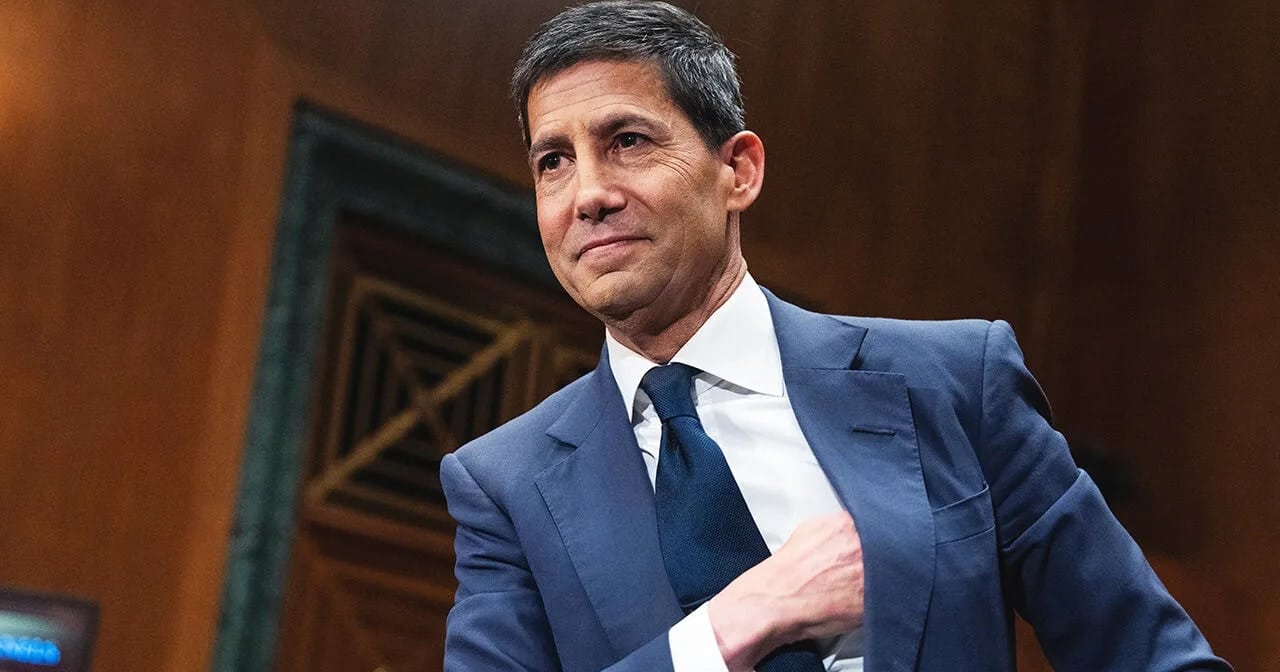
The latest CPI reading of 4.2% is not a transitory blip; it is a structural reset of the rate path. Core inflation, which strips out food and energy, registered 2.9%, still well above the Fed's 2% target and stubbornly sticky in services and shelter components. The current federal funds rate range of 3.5% to 3.75% was set when inflation appeared to be cooling toward 3% in late 2025. The 1.2 percentage point gap between the headline inflation rate and the top of the funds rate means real interest rates are deeply negative, a condition that historically forces central banks to either raise nominal rates or accept accelerating price pressures. Warsh, who served as a Fed governor during the 2008-09 financial crisis, witnessed firsthand how Bernanke's innovations in bond holdings and communication reshaped the transmission mechanism. He also saw the limits of forward guidance when markets stopped believing the dot plot. The June meeting will test whether Warsh believes the current rate is restrictive enough to bring down 4.2% inflation, or whether he views the economy as needing a higher nominal anchor. The unanimous vote that 71% of economists expect masks a deeper debate inside the committee: doves argue that lag effects from previous hikes will cool the economy by Q4, while hawks point to the latest CPI data as proof that the neutral rate has risen permanently. Warsh's decision to hold or signal a hike will settle that argument, at least for now.
How Fed Funds Futures Price a Single Rate Rise by End of 2026
The market has already done the math that the FOMC is reluctant to do publicly. Fed funds futures now embed a single quarter-point rate rise by December 2026, pushing the target range to 3.75%–4.0%. This pricing reflects a fundamental repricing of the terminal rate, not a temporary adjustment. Before last month's CPI release, futures had priced a cut in mid-2026; now they price a hike. The shift is driven by two mechanics: first, the 4.2% headline inflation number makes any rate cut politically untenable for a new chair trying to establish credibility; second, the real economy is still generating enough demand that the output gap has not closed. The futures curve prices the Fed holding rates steady through the summer and fall, then deliver a single hike at either the November or December meeting. This is a remarkable inversion of the consensus from January 2026, when economists expected three cuts. The pricing also reflects a belief that Warsh will tolerate higher rates for longer than his predecessors, given his public skepticism of the Fed's ability to fine-tune the economy through communication. If the futures are correct, the Fed will end 2026 with rates higher than they started, a scenario that would have seemed improbable when Warsh was nominated. The single hike pricing also creates a coordination problem: if the Fed delivers the hike, markets will immediately ask whether it is enough, and if it does not, inflation expectations become unanchored. Warsh's first meeting will be judged not by the rate decision itself, but by whether the statement and press conference align with the futures curve or surprise it.
The Communication Break: Why Warsh Will Say Less Than Bernanke or Greenspan
Warsh has argued for over a decade that the Fed should reduce the volume and specificity of its forward guidance. This is a direct repudiation of the Bernanke-era playbook, which turned the FOMC statement into a detailed roadmap of rate expectations and economic projections. Warsh's view, shaped during the 2008-09 crisis when he watched Bernanke struggle to calibrate market expectations through words alone, is that excessive communication creates a dependency that the Fed cannot sustain. When the Fed says too much, markets trade on the guidance rather than on fundamentals, and any deviation from the script causes violent repricing. Warsh wants to break that cycle. At his inaugural meeting, the statement will be shorter, the press conference more terse, and the dot plot (if it survives at all) less deterministic. This is a high-risk strategy. Alan Greenspan also said little, but he had the advantage of a low-inflation, high-productivity economy. Warsh faces 4.2% inflation, a labor market that is still tight, and a market that has already priced a rate rise. If he says too little, the market will fill the vacuum with its own assumptions, which will diverge from the committee's actual intentions. The 71% of economists expecting a unanimous decision shows the committee papering over internal disagreements for the sake of a unified debut. But Warsh's communication style will determine whether that unity lasts beyond June. Wall Street will parse every word, and every silence, for signs of the new regime's direction.
The Competitive Reshuffle: Banks, Bond Markets, and Borrowers Adjust to a Higher-for-Longer Fed
A Fed that holds rates at 3.5%–3.75% and signals a potential rise reshuffles the competitive landscape across financial services. Regional banks, which loaded up on long-duration Treasuries and mortgage-backed securities during the low-rate era, face renewed pressure on their net interest margins if the yield curve stays inverted. The 2-year Treasury yield has already repriced above 4.5% in anticipation of the single hike, while the 10-year hovers around 4.2%, keeping the curve inverted by roughly 30 basis points. That inversion is a tax on bank lending: regional banks borrow short and lend long, and an inverted curve compresses their spreads. Money-center banks with large trading operations, by contrast, benefit from the volatility. The single rate rise priced by futures creates a window for fixed-income desks to position for a steepening trade, betting that the hike will be the last and that the curve will normalize in 2027. For corporate borrowers, the message is clear: the window for cheap refinancing has closed. Investment-grade companies that rushed to issue debt in Q1 2026 at yields around 5% now face a primary market where 5.5% is the new floor. High-yield borrowers are in worse shape: spreads have widened by 50 basis points since the latest CPI print, and the single rate rise priced by futures confirms the Fed will not ride to the rescue. The competitive advantage shifts to companies with strong cash positions and low leverage, which can wait out the cycle. Private equity firms, which rely on cheap debt for leveraged buyouts, are the biggest losers: the higher-for-longer regime forces them to hold portfolio companies longer, delaying exits and depressing fund returns.
Downstream Effects on Housing, Auto Loans, and Consumer Credit
The transmission of the 3.5%–3.75% federal funds rate into the real economy is already visible in the most interest-rate-sensitive sectors. The 30-year fixed mortgage rate has climbed back above 7.5%, pushing the median monthly payment on a new home to a record high of $2,600. Existing home sales have fallen for four consecutive months as the lock-in effect deepens: homeowners with sub-4% mortgages refuse to sell, choking supply and keeping prices elevated. The latest inflation print ensures that the Fed will not cut rates to relieve housing affordability, which means the housing market is stuck in a high-price, low-volume equilibrium that benefits homebuilders with cash buyers but excludes first-time purchasers. Auto loans are following the same trajectory: the average rate on a new car loan is now 8.2%, up from 6.5% a year ago, and auto delinquencies have ticked above 7% for subprime borrowers. The single rate rise priced by futures will push those rates higher still, compressing demand for big-ticket discretionary purchases. Credit card APRs have already breached 24%, and revolving credit growth is slowing as households shift from spending to saving. The downstream effect on consumer credit is a tightening cycle that operates independently of the Fed's rate decisions: banks are raising underwriting standards, reducing credit limits, and cutting back on unsecured lending. This is the second-order effect that the FOMC watches closely: if consumer credit tightens faster than the funds rate would imply, the economy slows more than the 4.2% inflation reading signals. Warsh's first meeting will need to balance the inflation signal from the latest CPI against the credit crunch signal from the real economy.
The Policy Signal: Warsh's First Meeting as a Statement of the New Fed's Direction
Every inaugural FOMC meeting is a signal, but Warsh's carries unusual weight because it is the first test of whether the Fed can manage inflation without relying on the communication tools that defined the Bernanke and Greenspan eras. The decision to hold rates steady, with 71% of economists expecting a unanimous vote, is itself a statement: Warsh is not panicking over 4.2% inflation, and he is not rushing to hike. That patience is a gamble. If inflation remains at 4.2% or rises further in June and July, the Fed will have lost credibility by failing to act. If inflation falls back toward 3% by September, Warsh will be hailed as a steady hand who let the data guide policy. The policy signal from this meeting is that the Fed is shifting from a forward-guidance-driven model to a data-dependent, shorter-horizon model. Warsh will say less about where rates are going in 2027 and more about what the committee sees in the incoming data. That is a fundamental change in the Fed's relationship with markets. For the past 15 years, the Fed has told investors what it planned to do; under Warsh, investors will have to infer the plan from the data themselves. The risk is that markets misread the signal and overreact, forcing the Fed to intervene with emergency communication. The reward is that the Fed regains the flexibility to change course without being trapped by its own guidance. This meeting is not just about 4.2% inflation or a single rate rise; it is about whether the most powerful central bank in the world can govern through action rather than words.
The single rate rise priced by futures will test Warsh's resolve. If he delivers it in November or December, markets will accept that the new Fed is serious about inflation. If he holds through 2026, the 4.2% print will be seen as an outlier, and the rate cut cycle will begin in early 2027. Either way, the June 16-17 meeting is the prologue to a new chapter in monetary policy, one where the Fed talks less and acts more, and where Wall Street must learn to read the economy rather than the statement.
The BossBlog Daily
One email with the AI markets brief — the 13F moves, the Congressional trades, and what changed. No fixed schedule and no filler: it goes out when there is something worth sending.
Unsubscribe any time. We never sell or share the list.