
Kevin Warsh, President Donald Trump’s newly installed Federal Reserve chair, convenes his first Federal Open Market Committee meeting this week under conditions that would test any central banker. Inflation hit a three-year high in May, driven partly by the US-Israel war on Iran, while the president who appointed Warsh has publicly demanded lower rates and launched a criminal probe against his predecessor, Jerome Powell. The FOMC is widely expected to hold the federal funds rate at 3.50 to 3.75 percent, but the real drama lies in the vote count, the statement language, and the signals Warsh sends about the path ahead. Markets, already pricing in a rate hike by December according to LSEG data and CME's FedWatch tool, will parse every word for clues on whether the new chair can maintain the Fed’s inflation-fighting credibility while navigating an unprecedented assault on its independence. This meeting is not just about rates. It is the first live test of whether the Fed can still operate as a technocratic institution under a president who has shown he is willing to weaponize the Justice Department against his own appointees.
The Dissent Divide: Four Votes That Shook the FOMC
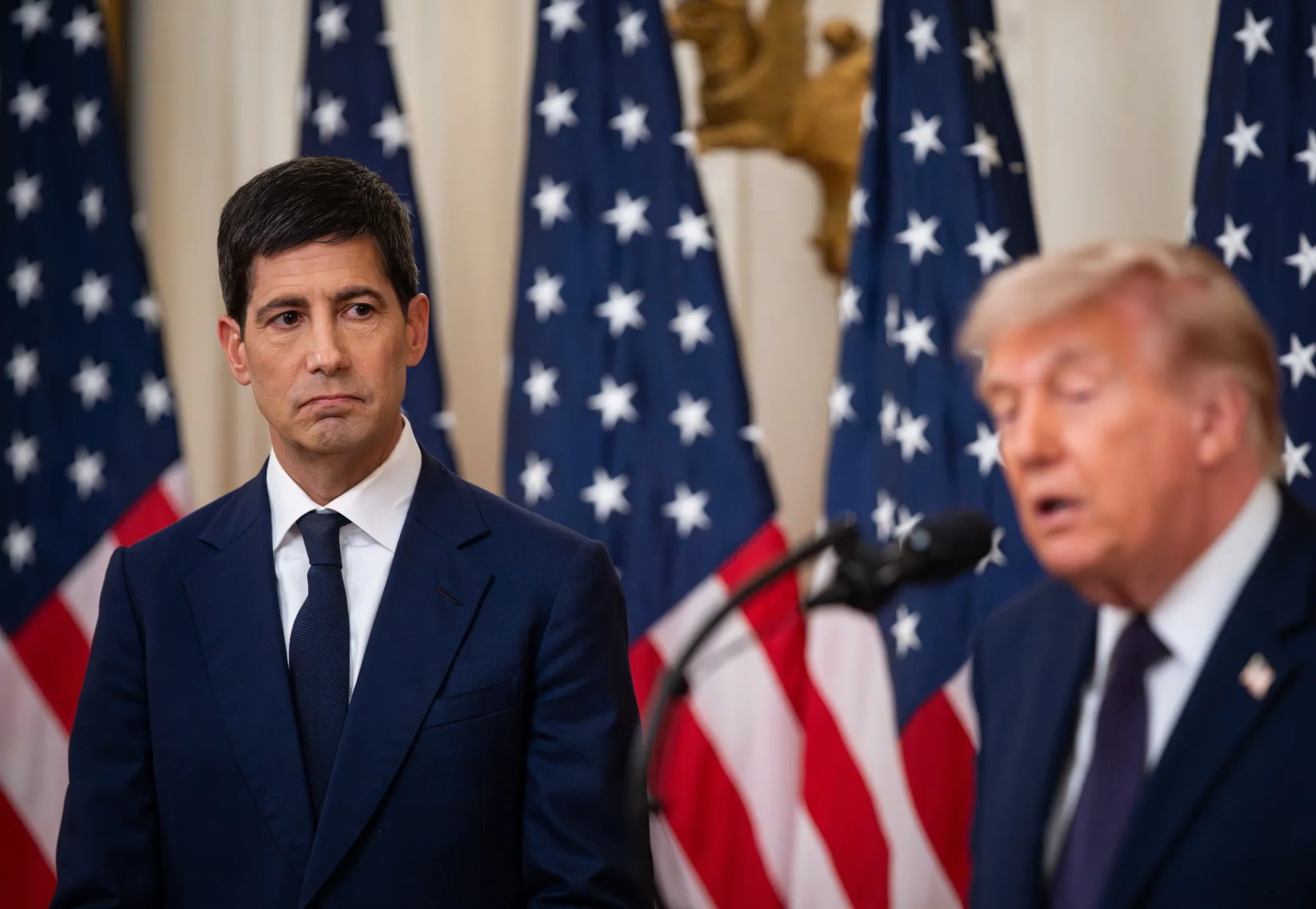
The last FOMC meeting in April, still under Jerome Powell, produced a result that has no modern parallel. The committee voted to hold rates steady at 3.50 to 3.75 percent, but four members dissented. That is the largest number of dissenting votes since 1992. Those four votes came from regional bank presidents who wanted a hike, reflecting a hawkish faction that believes the Fed is falling behind the inflation curve. The dissent count matters because it signals the depth of internal disagreement at a moment when the committee’s credibility is already under siege. Under normal circumstances, a new chair might try to build consensus and paper over divisions. Warsh cannot afford that luxury. The four dissenters are unlikely to change their views simply because a new chair sits at the head of the table, especially with May inflation data showing the fastest consumer price growth in three years. Warsh must decide whether to accommodate the hawks by shifting the forward guidance toward a tightening bias, or to hold the line and risk more public defections. The 12-person FOMC includes all seven Fed governors, the New York Fed president, and four rotating regional bank presidents. With the White House already probing the Fed’s independence, a split vote would be read by markets as a sign that the institution is fracturing.
Where the Rate Path Gets Real: December Hike Now Priced In
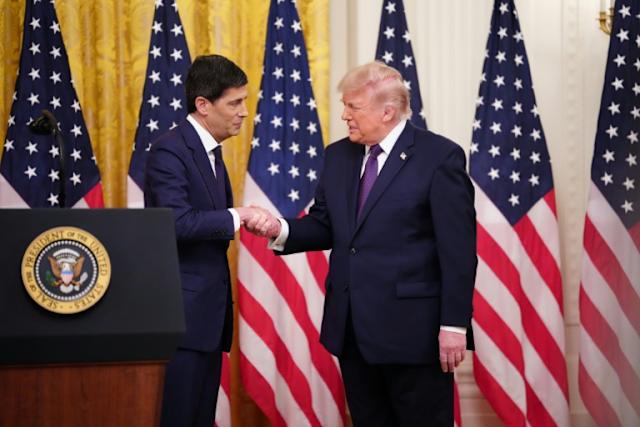
Market pricing has shifted dramatically since the start of the year. Fed funds futures tracked by CME’s FedWatch tool now imply a rate hike by December, a complete reversal from the cuts that were priced in as recently as March. The driver is clear: the US-Israel war on Iran has disrupted energy markets and supply chains, pushing consumer inflation to a three-year high in May. State Street’s macro strategy team has noted that the inflation impulse from the conflict is broader than oil alone, affecting shipping costs, agricultural commodities, and industrial inputs. The implications for the FOMC’s dot plot are significant. At the April meeting, the median projection showed no rate moves for the rest of 2026. That projection is now stale. Warsh must decide whether to update the dot plot to reflect the new inflation reality, which would effectively validate the market’s hawkish repricing. Doing so would put him directly at odds with Trump, who has repeatedly demanded lower rates. But failing to adjust the dots would risk the Fed losing control of inflation expectations. That mistake would force even larger hikes later. Marvin Loh, a senior macro strategist at State Street, has described the new chair’s position as “between a rock and a hard place,” with the added complication that Trump has already demonstrated he will use the criminal justice system against Fed officials who displease him.
The Competitive Reshuffle: Powell’s Shadow and Trump’s Legal War
Jerome Powell is gone but not forgotten. Trump launched a criminal probe against his predecessor and attempted to fire another Fed governor, moves that have no precedent in the Fed’s 113-year history. The legal assault sends a clear signal to every FOMC member: dissent from the White House line carries personal risk. This creates a competitive dynamic within the committee that is entirely new. The hawkish regional bank presidents who dissented in April now face a choice: continue to vote their convictions and risk becoming targets of a vindictive administration, or fall in line and sacrifice their policy principles. Warsh, as the new chair, must manage this pressure while maintaining the appearance of independence. The market is watching closely. LSEG data shows that the spread between short-term Treasury yields and forward rate agreements has widened, indicating that investors are pricing in a risk premium for political interference. If Warsh caves to Trump’s demands for lower rates, the bond market will punish him with higher long-term yields. If he holds firm, he risks the same fate as Powell. The four dissenters who voted for a hike in April were all regional bank presidents, a group historically insulated from political pressure by fixed terms and geographic distance from Washington. That insulation no longer functions as designed. When the president has already deployed the Justice Department against a sitting Fed official, the chilling effect on policy dissent becomes real and measurable. Warsh enters the chair at an institution where the threat of legal retribution now reshapes every vote, every public statement, and every dot-plot projection. The competitive reshuffle is not between banks or firms. It is between the Fed’s institutional integrity and the raw political power of a president who has shown he will use any tool at his disposal.
Downstream Shockwaves: Capex, Credit, and the Hyperscaler Pause
The uncertainty emanating from this FOMC meeting is already rippling through corporate capital expenditure plans. Enterprise buyers of long-duration assets (data centers, industrial equipment, commercial real estate) are delaying decisions as they wait for clarity on the rate path. The hyperscalers, which have been on a multi-year spending spree for AI infrastructure, are particularly sensitive to the cost of capital. A rate hike in December would push the effective fed funds rate to 3.75 to 4.00 percent, raising the hurdle rate for projects that were approved when rates were lower. The US-Israel war on Iran adds a second layer of uncertainty: energy costs are rising, supply chains are tightening, and the timeline for resolution is unknown. For the semiconductor industry, which depends on stable long-term financing for fab construction, the combination of higher rates and geopolitical risk is forcing a reassessment of capacity expansion plans. The FOMC’s decision on forward guidance will directly influence whether these projects proceed or are shelved. Meanwhile, the banking sector is watching the yield curve. If the Fed signals a hike, the curve could steepen, which is generally positive for bank net interest margins. But if the curve inverts further, regional banks (already under stress from commercial real estate exposure) will face renewed pressure. The downstream effects of this meeting will be felt not in the overnight lending market, but in the boardrooms where billion-dollar capex decisions are made.
The Policy Signal: Trump’s Fed Independence Assault as a Structural Regime Change
This FOMC meeting is the opening act of a broader policy drama that will define the remainder of Trump’s term. The criminal probe against Powell and the attempted firing of a Fed governor are not isolated incidents. They are part of a deliberate strategy to subordinate the central bank to the executive branch. Warsh, as Trump’s nominee, is the instrument of that strategy, but he also has his own reputation and legacy to consider. The signal he sends this week will be read not just by markets, but by foreign central banks, sovereign wealth funds, and the dollar’s reserve currency status. If the FOMC statement contains any language that suggests political considerations influenced the decision, the dollar will weaken and Treasury yields will rise. If Warsh delivers a hawkish statement that defies Trump, he will test whether the president’s threats are real or rhetorical. The stakes are extremely high. The Fed’s independence is not a legal construct. It is a norm that has been respected by every president since Jimmy Carter. Trump is breaking that norm, and Warsh’s first meeting will determine whether the norm survives. The market is already pricing in a higher risk premium for political interference. If Warsh validates that risk, the cost will be borne by every borrower, every pension fund, and every household in America.
The real question is not whether the Fed holds rates steady this week. It is whether the institution can survive the next six months intact. Warsh has the opportunity to prove that he is his own man, or to confirm the market’s worst fears that the Fed has become a political tool. The answer will come not in the rate decision, but in the statement language, the dot plot, and the press conference. If Warsh signals that inflation fighting remains the Fed’s primary mandate, the December hike will be locked in and Trump will be furious. If he signals a willingness to cut rates to please the White House, the bond market will revolt and the dollar will slide. Either path carries risk, but one of them preserves the Fed’s credibility for the next chair. The other destroys it. The May inflation print of 4.2% year-over-year, the highest since 2023, underscores the urgency of the decision. LSEG data shows that the probability of a December hike has risen to 68% from 22% in March, reflecting the market’s rapid repricing of the rate outlook.
The BossBlog Daily
One email with the AI markets brief — the 13F moves, the Congressional trades, and what changed. No fixed schedule and no filler: it goes out when there is something worth sending.
Unsubscribe any time. We never sell or share the list.