
Kevin Warsh takes the helm of the Federal Reserve today as the central bank convenes its June 17 Federal Open Market Committee meeting, his first as chair. The former Fed governor, appointed by President Donald Trump, inherits an economy where inflation is running at roughly double the central bank's 2% long-term target. Markets, as measured by CME Group's FedWatch tool, assign virtually no chance of a rate cut at this meeting. Instead, analysts are parsing whether Warsh's debut will signal a shift toward tighter policy or merely a holding pattern. Rate hike talks have intensified in recent weeks, complicating the new chair's relationship with the White House, which has historically favored lower rates. Warsh's communication philosophy, honed over a decade of arguing that the Fed should explain less about its thinking, adds another layer of uncertainty for bond markets, mortgage rates, and global central bank coordination. This meeting is not just about the rate decision; it is the first read on how a less transparent Fed will manage market expectations under duress. Why this matters now: Warsh's approach will determine whether the Fed can tame inflation without triggering a bond market revolt, all while navigating political pressure from the administration that appointed him.
The Rate Decision: Hold Steady Amid Sticky Inflation
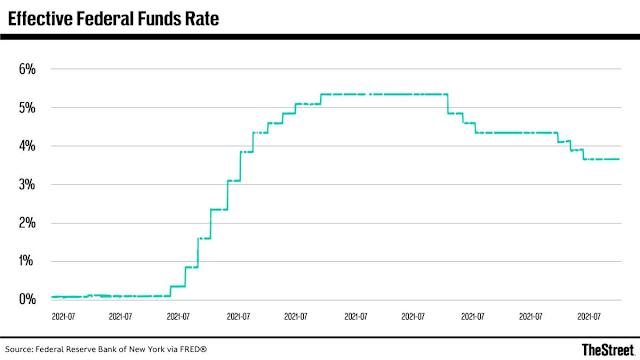
The FOMC is widely expected to leave the federal funds rate unchanged at the conclusion of its two-day meeting. Fed funds futures, tracked by CME's FedWatch tool, show markets pricing in virtually no probability of a cut. The decision reflects a stark reality: inflation at roughly double the 2% target leaves the committee with little room to ease. Warsh previously indicated he would consider cutting rates, but the persistence of price pressures has shifted the calculus. Rate hike talks are now heating up among some committee members, though a move at this meeting remains unlikely. The new chair's first decision is therefore a test of his willingness to defy both market expectations and political pressure. Warsh witnessed Ben Bernanke pioneer larger bond holdings and systematic communication during the 2008-09 crisis, giving him firsthand experience of how the Fed's messaging can move markets. Yet his own intellectual trajectory has been toward less transparency, not more. The June 17 statement will be parsed for any shift in forward guidance language, particularly around the phrase "patient" or any reference to data dependency. Wall Street will scrutinize the vote tally for dissents, which would signal internal divisions. A unanimous hold would suggest Warsh has consolidated the committee behind a wait-and-see posture, buying time to assess whether inflation is truly sticky or merely lagging in its response to prior tightening.
How Warsh's Communication Shift Affects Bond Markets
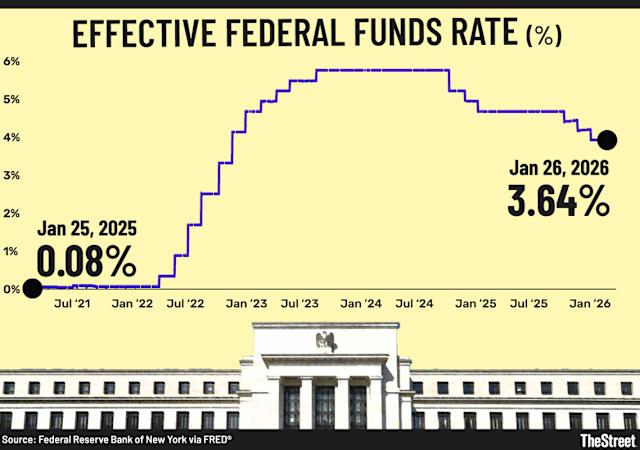
Warsh has argued for over a decade that the Fed should say less about its thinking, a philosophy that marks a sharp departure from the Bernanke and Janet Yellen eras of increased transparency. For bond markets, this shift carries real consequences. The yield curve, already inverted in parts, will steepen if investors perceive the Fed as less predictable. Mortgage rates, which track the 10-year Treasury yield, will rise as term premiums increase to compensate for greater uncertainty about the Fed's reaction function. Warsh's less-is-more approach means fewer press conferences, shorter statements, and less granular forward guidance. This reduces the Fed's ability to anchor long-term rate expectations through communication alone. During the Bernanke era, the Fed used "dot plots" and press briefings to signal its intentions, compressing term premiums. Warsh's model removes that tool, forcing markets to rely more on economic data releases and less on the Fed's interpretation of them. The immediate effect is likely to be higher volatility in interest rate derivatives, particularly in the Eurodollar and SOFR futures markets. Hedge funds and proprietary trading desks will need to adjust their models to account for a Fed that communicates less frequently and less precisely. For corporate borrowers, this means wider spreads on investment-grade and high-yield bonds as the risk premium for Fed uncertainty rises. The CME FedWatch tool, which aggregates rate expectations from fed funds futures, becomes even more critical as a market-based signal in the absence of clear Fed guidance.
Competitive Reshuffle Among Central Banks
Warsh's debut comes at a moment of global central bank divergence. The US strike with Iran has reduced geopolitical risk, potentially easing energy prices and giving other central banks room to cut. The European Central Bank and Bank of England are both grappling with their own inflation dynamics, but the Fed's posture under Warsh will set the tone for global monetary conditions. If the Fed holds steady while inflation remains elevated, the dollar strengthens, tightening financial conditions abroad. Emerging market central banks, particularly in Asia and Latin America, face a choice: hike to defend their currencies or accept imported inflation. This dynamic creates winners and losers. Countries with strong current account surpluses, like Saudi Arabia and China, can absorb dollar strength more easily. Those with high external debt, such as Argentina and Turkey, face renewed pressure. Warsh's less-transparent communication style also complicates coordination with other central banks. During the Bernanke era, the Fed used its communication to signal intentions to G7 partners, reducing the risk of policy surprises. Warsh's approach will lead to more frequent episodes of "taper tantrum"-style volatility as markets and other central banks struggle to interpret the Fed's stance. The Bank for International Settlements has warned that reduced transparency from major central banks increases the risk of disorderly rate adjustments. A less legible Fed forces foreign central banks to rely more heavily on their own inflation data rather than Fed signals, increasing the probability of policy divergence that can destabilize capital flows and exchange rates at a moment when the global economy is still adjusting to the US-Iran deal. Warsh's first meeting will be watched closely by central bank governors in Tokyo, Frankfurt, and London for any sign of how the new chair intends to engage with the global policy community.
Downstream Effects on Corporate Borrowing and Housing
The Fed's rate decision and Warsh's communication style will ripple through corporate balance sheets and household finances. With the federal funds rate unchanged, the prime rate remains elevated, raising the cost of variable-rate debt for businesses and consumers. Commercial real estate, already under stress from higher vacancy rates and refinancing needs, faces additional pressure as floating-rate loans reset at current levels. The mortgage market is particularly exposed. Homebuyers are already grappling with rates near multi-decade highs, and any signal that the Fed is considering hikes would push mortgage rates higher, further compressing affordability. Warsh's less-transparent approach adds a layer of uncertainty for mortgage-backed securities investors, who rely on Fed guidance to model prepayment and default risk. The spread between agency MBS and Treasuries could widen as investors demand compensation for greater policy uncertainty. For corporate treasurers, the lack of clear forward guidance complicates debt issuance timing. Companies that need to refinance maturing bonds face a narrower window of opportunity if the Fed's next move is ambiguous. The investment-grade bond market, which saw record issuance in 2024 and 2025, now faces a wall of maturities in 2027-2028. Warsh's ability to provide clarity, or his refusal to do so, will directly affect the cost of that refinancing. Private equity firms, which rely on leveraged loans and high-yield debt for buyouts, are particularly sensitive to rate volatility. A Fed that communicates less will produce sharper rate moves, increasing the cost of hedging and reducing deal activity.
The Policy Signal in Warsh's First Meeting
Warsh's appointment by President Trump carries an implicit political mandate, but the new chair's first meeting will be judged on economic grounds. The decision to hold rates steady, despite inflation running at roughly double the target, signals that Warsh is not immediately pivoting to the hawkish stance some Trump allies might prefer. Instead, he is buying time, waiting for more data on whether the inflation spike is transitory or structural. This cautious approach mirrors his intellectual evolution: Warsh has argued that the Fed should not overreact to short-term data, but should also avoid locking itself into a predetermined path. The Iran deal, which reduces energy price risk, gives him some cover to hold steady. But the longer inflation remains elevated, the more pressure builds for rate hikes. Warsh's communication style will be the primary channel through which he manages this pressure. By saying less, he avoids committing to a specific trajectory, preserving flexibility. This strategy carries risks: markets may interpret silence as indecision or as a signal that the Fed is behind the curve. The June 17 statement will be the first test of whether Warsh can maintain credibility without the crutch of detailed forward guidance. His predecessors, from Alan Greenspan to Ben Bernanke to Roger Ferguson, all faced moments where their words moved markets. Warsh's challenge is to achieve the same effect with fewer words, relying on the Fed's actions to speak for themselves. The outcome of this meeting will set the template for his entire tenure.
The market's focus now shifts to the post-meeting statement and any accompanying press conference. If Warsh follows through on his less-is-more philosophy, the statement will be brief and the press conference may be shorter than usual. Investors will need to recalibrate their models for a Fed that provides fewer guideposts. The real test will come in the months ahead, as inflation data, employment reports, and geopolitical developments force the committee to act. Warsh's ability to navigate these crosscurrents without the communication tools his predecessors relied on will define his legacy. If he succeeds, he will have proven that a less transparent Fed can still anchor expectations. If he fails, the result will be higher volatility, wider credit spreads, and a more fragmented global monetary system. The June 17 meeting is just the first step in that experiment.
The BossBlog Daily
One email with the AI markets brief — the 13F moves, the Congressional trades, and what changed. No fixed schedule and no filler: it goes out when there is something worth sending.
Unsubscribe any time. We never sell or share the list.