
Citadel Securities has publicly called on the Federal Reserve to raise interest rates, arguing that persistent inflation above the central bank's 2% target demands a tightening of monetary policy. The firm's intervention comes as minutes from the Fed's April meeting reveal a majority of officials now warn that rate hikes will be necessary if inflation remains elevated. Interest-rate swaps are pricing in a quarter-point hike as virtually certain by early next year, with the earliest possible move coming no sooner than late October. Bond yields have jumped sharply since late February as inflation concerns have intensified, reshaping the cost of capital across the economy. The debate is no longer about whether the Fed will hold rates steady: it is about how fast and how far it will need to go. This matters now because the shift from a rate-cutting to a rate-hiking regime will directly impact asset valuations, corporate borrowing costs, and the strategic calculus of every major financial institution and publicly traded company.
Where the quarter-point hike is already priced in
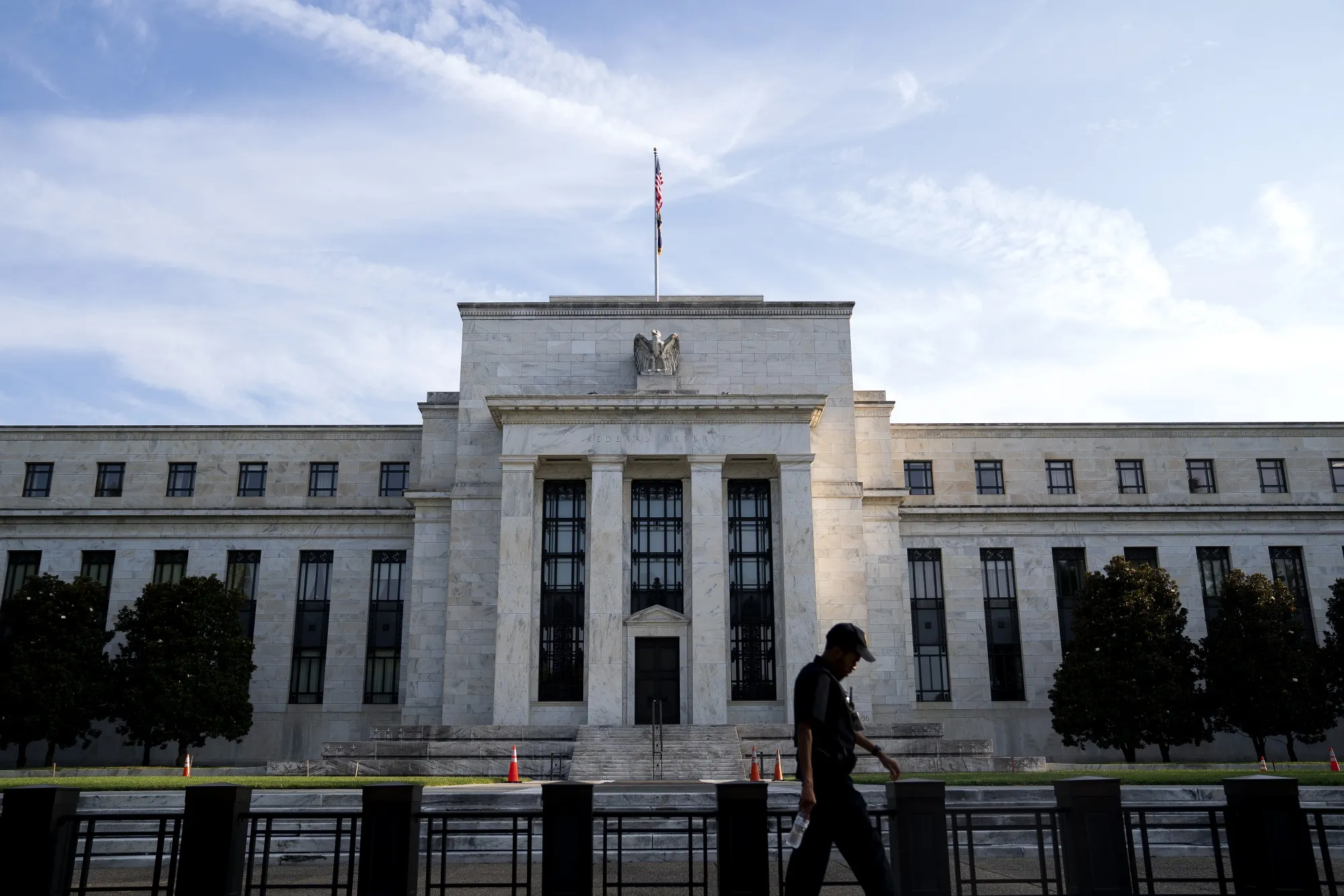
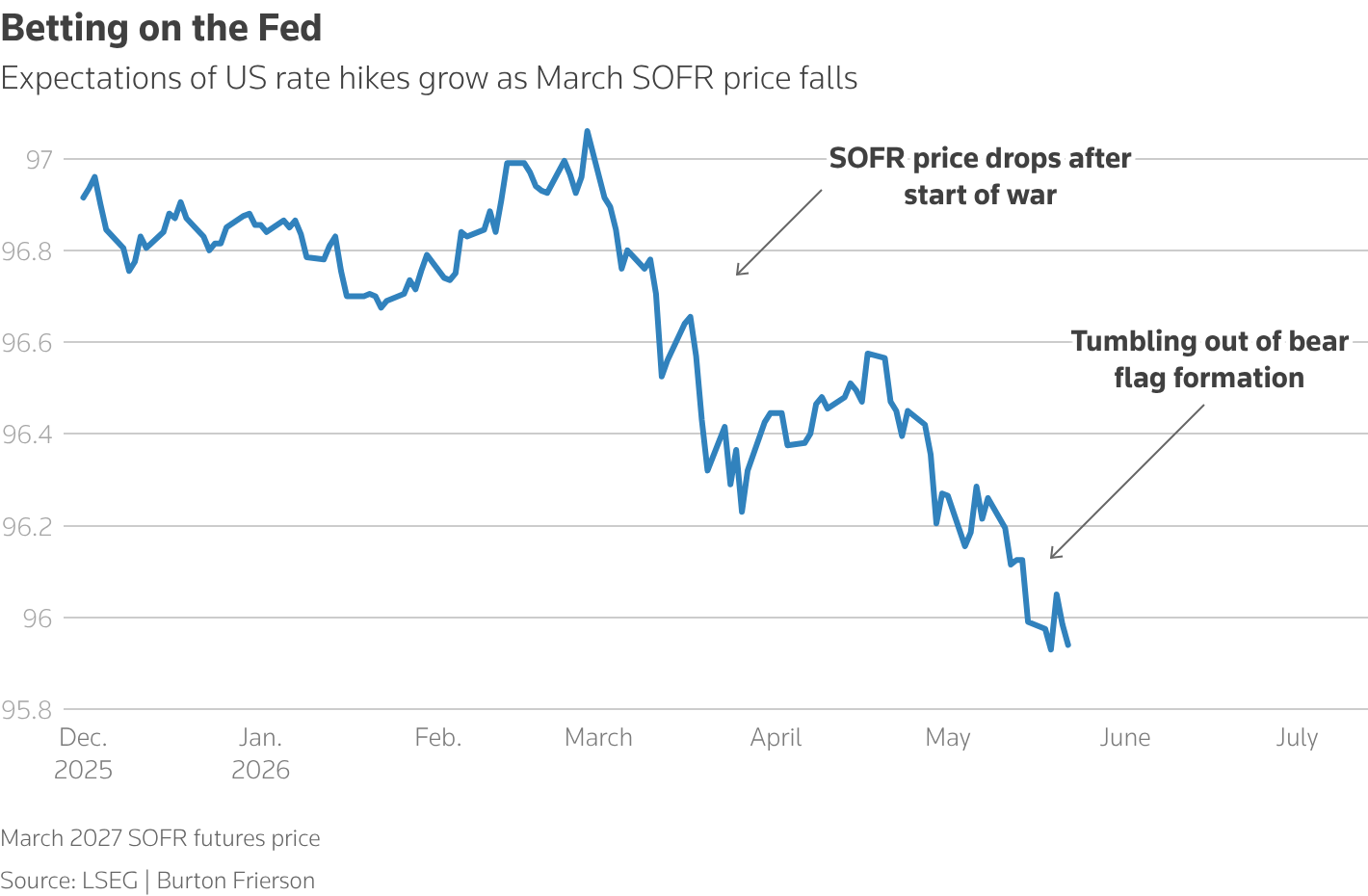
The market has moved well ahead of the Fed's own signaling. Interest-rate swaps now reflect a quarter-point rate increase as a near-certainty by early 2027, with the earliest possible implementation date pushed to late October 2026. This pricing represents a dramatic repricing of expectations from just three months ago, when markets were still anticipating a rate cut. The shift has been driven by a string of inflation readings that have consistently exceeded the Fed's 2% target, forcing traders to abandon their dovish assumptions. The yield on the benchmark 10-year Treasury note has surged since late February, compressing risk premiums across credit markets and raising the cost of financing for corporations and households alike. For Citadel Securities, the market's repricing validates its hawkish thesis. The firm's call for an actual rate hike, not just a hold, goes further than what swaps currently imply, but the trajectory is unmistakable. The bond market is already doing some of the Fed's work for it, tightening financial conditions through higher yields. But Citadel Securities argues that the central bank needs to follow through with an explicit rate increase to anchor inflation expectations before they become unmoored. The cost of waiting, the firm argues, is a sharper and more disruptive tightening cycle down the road. The swaps market has repriced so aggressively that even a hold would now be seen as a dovish surprise, forcing the Fed to catch up with market expectations rather than lead them.
How higher rates flow through bank P&Ls and trading desks
A quarter-point rate hike would directly boost net interest margins at large banks, but the effect is more nuanced for market makers like Citadel Securities. Higher short-term rates increase the cost of funding leveraged positions, compressing spreads in fixed-income trading. For Citadel Securities, which operates the largest retail equity market-making operation in the U.S., the impact is felt through the cost of the leverage it uses to warehouse risk. Every basis point increase in the fed funds rate raises the firm's financing costs by millions of dollars annually. However, the firm's public call for a hike shows it believes the benefits of lower inflation, and the resulting stability in long-term bond markets, will outweigh the near-term drag on its own P&L. For the broader banking sector, the picture is more straightforward. Regional banks and money-center institutions with large loan books stand to benefit from wider net interest margins, provided the yield curve does not invert further. An inverted curve, where short-term rates exceed long-term rates, squeezes the spread between what banks pay for deposits and what they earn on loans. The current curve remains deeply inverted, and a quarter-point hike would exacerbate that inversion unless long-term yields rise in tandem. The Fed's balance sheet policy, which Governor Michael Barr defends as essential for bank resilience and market stability, also plays a role. A larger balance sheet means the Fed holds more duration risk, which can suppress long-term yields and keep the curve inverted.
The competitive reshuffle: who gains and who loses from tighter policy
The rate hike debate is reshaping competitive dynamics across sectors. For growth-dependent companies like Plug Power Inc., which burns cash to scale its green hydrogen operations, higher rates increase the cost of capital and compress the present value of future earnings. The stock has already repriced lower as the rate-hike narrative has gained traction. American Airlines Group Inc., which carries a heavy debt load and operates on thin margins, faces higher interest expense on its floating-rate debt and reduced consumer demand if rate hikes slow the economy. On the other side of the ledger, asset managers and trading firms with significant cash holdings benefit from higher risk-free returns. Citadel Securities itself, with its massive balance sheet and diversified trading operations, is positioned to capture wider bid-ask spreads in volatile markets that typically accompany rate regime shifts. NVIDIA Corporation, while less directly exposed to interest rates, faces a potential headwind if higher rates cool the AI capex boom that has driven its valuation. Enterprise customers may delay large-scale GPU purchases if their own financing costs rise. Nokia Oyj, a telecom equipment provider, will see delayed 5G investment from carriers grappling with higher debt service costs. Redwire Corporation, a space infrastructure company, relies on government contracts that are less rate-sensitive but also depends on capital markets for project financing. The rate hike creates a clear bifurcation: companies with strong cash flows and low leverage gain relative to highly indebted peers.
Downstream effects on hyperscalers, fabs, and enterprise buyers
The second-order effects of a rate hike cascade through the technology and industrial supply chain. Hyperscalers like Amazon Web Services, Microsoft Azure, and Google Cloud have been on a multi-year capital expenditure spree, building out data centers to support AI workloads. Higher rates increase the cost of the debt financing that underwrites this buildout, potentially slowing the pace of capacity additions. For chipmakers like NVIDIA, which sells GPUs into these data centers, any slowdown in hyperscaler capex would directly reduce demand. The same dynamic applies to semiconductor fabrication plants. TSMC and Intel are spending tens of billions of dollars on new fabs in the U.S., Japan, and Europe, much of it financed through corporate bonds. A quarter-point hike raises the yield on investment-grade debt, increasing the all-in cost of these projects. For memory chipmakers that supply high-bandwidth memory (HBM) to NVIDIA, the rate sensitivity is even more acute because their customers, the hyperscalers, are the ones ultimately bearing the financing cost. Enterprise buyers of AI infrastructure are also affected. Companies considering large-scale GPU deployments face a higher hurdle rate for internal project approval when risk-free rates rise. The payback period for AI investments lengthens, pushing some projects further right. Meanwhile, the Fed's balance sheet policy, which keeps the central bank as a large buyer of Treasuries and agency MBS, distorts the term premium and complicates the transmission of rate hikes to the real economy. Governor Barr's defense of the large balance sheet as a tool for market stability clashes with the need for tighter monetary conditions to fight inflation.
The policy signal: a Fed that has lost patience with inflation
Citadel Securities' public call for a rate hike is more than a trading desk's opinion: it is a signal that the market's most sophisticated participants no longer believe the Fed's current stance is credible. The minutes from the April meeting show that a majority of Fed officials now warn that rate hikes will be necessary if inflation persists above 2%. Minneapolis Fed President Neel Kashkari has explicitly stated that the inflation fight takes priority over the labor market, which he describes as "in decent shape." Kashkari warned that persistent inflation could unanchor consumer expectations, forcing the Fed to take sharper action later. Rising energy and fertilizer costs are key drivers of the price pressures he cites. The hawkish pivot represents a dramatic reversal from the narrative that dominated 2024 and early 2025, when the market was pricing in a series of rate cuts. The Fed's own dot plot is likely to shift higher at the next meeting, with more officials projecting a hike. The debate over the Fed's balance sheet size adds another layer of complexity. The WSJ has argued that a large balance sheet blocks innovation and puts the government in the driver's seat on bond, repo, and interbank markets. Governor Barr's defense of the large balance sheet reflects a fundamental disagreement within the Fed about the appropriate post-crisis framework. The combination of rate hikes and a large balance sheet creates an unusual policy mix: tighter short-term rates but continued suppression of term premiums.
The Fed is now at a crossroads where the cost of acting too late exceeds the cost of acting too soon. The market has already done the heavy lifting on financial conditions, but the central bank must follow through with an explicit rate increase to restore its inflation-fighting credibility. If the Fed hesitates, it risks allowing inflation expectations to become unanchored, which would force a sharper and more disruptive tightening cycle later. The data dependency framework that has guided policy for the past two years is breaking down as inflation proves stickier than models predicted. Citadel Securities' intervention is a bet that the Fed will ultimately choose credibility over patience. The next two inflation prints will determine whether the first rate hike comes in October or is pushed into early 2027, but the direction of travel is clear. The era of easy money is definitively over, and the long adjustment to a higher-rate regime will reshape portfolios, corporate strategies, and the competitive landscape for years to come.
The BossBlog Daily
One email with the AI markets brief — the 13F moves, the Congressional trades, and what changed. No fixed schedule and no filler: it goes out when there is something worth sending.
Unsubscribe any time. We never sell or share the list.