
Runway, the AI startup that began as a toolkit for filmmakers, has raised $860 million to date, including a $315 million round in February from AMD Ventures and Nvidia, as it pivots from cinematic effects to building world models through video generation. Co-founder Anastasis Germanidis told TechCrunch that the company sees video generation not as an end product but as the foundational layer for world models. These are AI systems that can simulate physical reality, predict outcomes, and serve as scientific infrastructure. The shift comes as AI video generation becomes one of the most contested battlegrounds in artificial intelligence, with Chinese companies pulling ahead of US rivals in output quality and speed, according to the Financial Times. Runway now competes directly against Google?? Veo, Luma AI, World Labs, and OpenAI, each of which has raised far more capital. World Labs alone has $1.29 billion, and OpenAI roughly $175 billion. The company has deals with CoreWeave and Nvidia for compute, though it has not confirmed a dedicated cluster. The bet is audacious: if video generation can encode the physics of the real world, the winner of this race will own the operating system for embodied AI, robotics, and simulation. That is why this matters now. The AI infrastructure boom is reshaping capital allocation, and Runway is staking its future on the idea that the most valuable model is one that understands how the world actually moves.
Where the $860 million went and what it buys

Runway?? total funding of $860 million includes a $315 million round closed in February 2026, led by AMD Ventures and Nvidia. These two chipmakers have a direct interest in the company?? compute consumption. The round signals that Runway is not just building software; it is buying hardware access at scale. Nvidia and AMD are effectively subsidizing their own future revenue streams by ensuring Runway trains and runs on their silicon. The company has existing deals with CoreWeave, the cloud provider that has become the go-to infrastructure partner for AI startups, and with Nvidia directly. What remains unclear is whether Runway owns or has exclusive access to a dedicated cluster. This is a critical distinction when training video models that can consume tens of thousands of GPU-hours per run. Luma AI, by comparison, raised $900 million and has been more explicit about its infrastructure partnerships. World Labs, founded by Fei-Fei Li, raised $1.29 billion and operates its own compute stack. Runway?? $860 million puts it in the middle tier of this capital-intensive race, but the involvement of AMD Ventures and Nvidia as co-investors gives it a structural advantage: the chipmakers have a financial incentive to keep Runway?? training pipelines full. The money flows directly into GPU procurement, data center reservations, and the engineering talent needed to compress physical dynamics into latent space. Runway?? compute deals with CoreWeave and Nvidia ensure it has access to the hardware required for training runs that can last weeks.
Why video generation is the path to world models
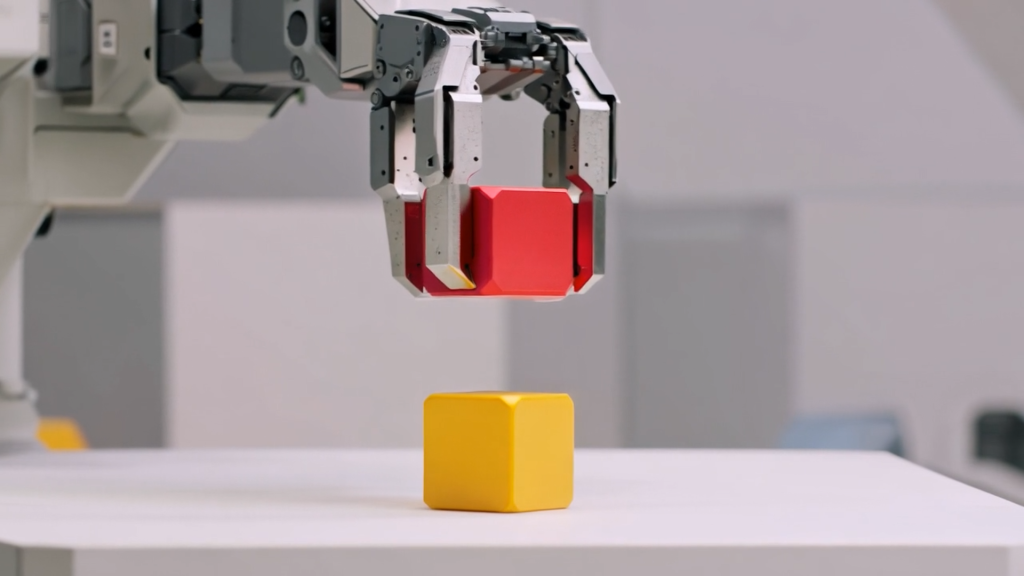
Germanidis frames video generation as the most data-rich signal for learning how the world works. A video model must predict not just which pixel comes next, but how objects move, occlude, reflect light, and interact with forces like gravity and friction. That makes video a better training signal than text or static images for building what he calls ??cientific infrastructure????models that can simulate physical processes without explicit programming. Runway?? thesis is that a model trained on enough video will spontaneously develop an internal representation of physics, causality, and spatial reasoning. This is the same logic that drives Google?? Genie and OpenAI?? Sora, but Runway is taking a narrower, more capital-efficient approach: instead of training on internet-scale video, it focuses on high-quality, structured footage that captures specific physical phenomena. The company?? background in filmmaking tools gives it access to curated datasets that competitors lack. If the thesis holds, Runway will have built a world model at a fraction of the cost of rivals. If it fails, the company will have spent $860 million on a better video editor. The distinction between those outcomes is the difference between a product company and an infrastructure platform, and Runway is betting its future on the latter.
The competitive reshuffle: who gains and who loses
The AI video generation market is splitting into two tiers. On one side are well-capitalized US incumbents and startups: Google with Veo, OpenAI with Sora, Luma AI with $900 million, World Labs with $1.29 billion, and Runway with $860 million. On the other side are Chinese AI groups that, according to the Financial Times, have pulled ahead in output quality and generation speed. That competitive dynamic creates a winner-take-most scenario where capital access and compute efficiency determine survival. Runway?? position is precarious but defensible. It has less cash than Luma AI or World Labs, but it has Nvidia and AMD as strategic investors. This relationship guarantees preferential access to next-generation hardware. Google, meanwhile, has the advantage of owning its own TPU infrastructure and the distribution power of YouTube, but it lacks the startup agility that Runway brings to rapid iteration. The losers in this reshuffle will be companies that raised too little to compete on compute or too late to catch the quality curve. Alphabet, worth $4.86 trillion, can absorb failure in Veo; Runway cannot. The company must ship a world model that demonstrably outperforms Google?? in physical accuracy, or it will be relegated to a niche filmmaking tool. Such a fate would make its $860 million valuation look like a peak-cycle anomaly.
Downstream effects on hyperscalers, fabs, and enterprise buyers
Runway?? pivot to world models has second-order effects across the AI infrastructure stack. Every video model training run consumes GPU-hours at a rate that dwarfs text model training. A single world model requires between 10x and 100x the compute of a large language model, based on the GPU-hour requirements disclosed by comparable training runs at Google DeepMind and OpenAI. That demand flows directly to hyperscalers like CoreWeave, which has deals with Runway, and to chipmakers Nvidia and AMD, who benefit from the escalating compute intensity. Data center delays, as reported by The Information, are already reshaping the landscape: new facilities take 18 to 36 months to come online, and hardware diversity is forcing startups to optimize for multiple architectures. Runway?? deals with both Nvidia and AMD mean it will need to maintain model portability across CUDA and ROCm stacks. This is a technical burden that smaller competitors without strategic chipmaker backing cannot absorb without significant engineering investment. For enterprise buyers, the implication is clear: world models will become a new category of software procurement, priced per simulation hour rather than per seat. Companies in robotics, autonomous vehicles, and industrial design will pay for access to Runway?? physics engine the way they now pay for cloud compute. The capex cycle is self-reinforcing. More demand for world models drives more GPU orders, which drives more fab construction, which drives more capital into the AI ecosystem. Runway is a small player in that cycle, but its thesis that video generation leads to world models is one of the purest expressions of the infrastructure boom narrative.
Policy and strategy signal: what Runway?? bet says about the market
Runway?? decision to pivot from filmmaking to world models is a strategic signal about where the AI market is heading. The company is essentially arguing that the most valuable AI application is not content creation but reality simulation. This claim has profound implications for regulation, export controls, and national competitiveness. If world models become a strategic asset, governments will treat them like semiconductor fabs or satellite imagery: subject to export restrictions, investment screening, and national security oversight. The involvement of AMD Ventures and Nvidia in Runway?? round suggests that the chipmakers see world models as a driver of sustained GPU demand, independent of the boom-and-bust cycles in consumer AI. The Financial Times has reported that AI narratives dominate global equity markets, with capital concentrated in perceived winners and losers facing significant stock weakness. Runway is positioning itself as a winner in the next narrative cycle: the shift from language to physics. The BlackRock Smaller Companies Trust, which returned 8.1% against a benchmark of 10.6% in the second half, noted that AI narratives are driving market concentration. Runway?? bet is that world models will be the next narrative to capture investor imagination, and that its early move from video to physics will give it a first-mover advantage that capital alone cannot replicate.
The question that will define Runway?? trajectory is whether video generation is a stepping stone to world models or a dead end. If Germanidis is right, Runway will have built the scientific infrastructure for embodied AI, robotics, and simulation. That platform represents the infrastructure layer for a multitrillion-dollar industry. If he is wrong, the company will have spent $860 million chasing a mirage, and its investors will be left with a filmmaking tool in a market dominated by Google and OpenAI. The next 12 months are critical: Runway must demonstrate that its video models encode physical dynamics that competitors cannot replicate, and it must do so before its capital advantage erodes. A credible world model benchmark, released publicly, would accelerate both investor confidence and enterprise adoption. The company?? deals with CoreWeave and Nvidia give it a window, but that window is narrowing as Chinese rivals accelerate and US incumbents scale. Sam Altman has said that AI will be the most capital-intensive industry in history, and Runway is testing that thesis at its limit. The outcome will determine not just Runway?? fate, but whether the path to world models runs through video or through something else entirely.
The BossBlog Daily
One email with the AI markets brief — the 13F moves, the Congressional trades, and what changed. No fixed schedule and no filler: it goes out when there is something worth sending.
Unsubscribe any time. We never sell or share the list.