
Cerebras, the $60 billion AI chip company that nearly collapsed in its early years, agreed to a temporary sales restriction barring it from selling to specific OpenAI competitors as part of a loan deal designed to guarantee OpenAI access to its wafer-scale computing capacity. The arrangement, disclosed by CEO Feldman, reveals how the brutal economics of the AI hardware market are forcing startups to make strategic concessions to secure financing and anchor customers. Cerebras, which at one point was burning $8 million a month, has not yet scaled to the point where it can simultaneously serve multiple fast-growing model makers. Feldman likened selling AI compute capacity to an all-you-can-eat buffet, where one hungry customer can consume everything on offer. The restriction is temporary, but the deal signals a new dynamic in the AI chip industry: deep-pocketed model companies are using their financial leverage to lock up scarce hardware supply, effectively turning chip startups into captive suppliers. This matters now because the AI infrastructure boom is creating a compute crunch that is reshaping the balance of power between hardware makers and their hyperscaler and model-company customers, with data center delays and hardware diversity becoming critical bottlenecks.
The $570M loan structure and its asset-backed mechanics

The loan deal that triggered the sales restriction was structured as a financing package from a consortium of lenders, though the exact lenders and loan size have not been fully disclosed. What is clear is that OpenAI provided a guarantee or credit enhancement that allowed Cerebras to borrow at more favorable terms. In exchange, Cerebras agreed not to sell its wafer-scale AI chips to a defined list of OpenAI competitors. The restriction is temporary, but it covers the period when Cerebras is most capacity-constrained. Feldman explained that the company's wafer-scale manufacturing process, which produces chips the size of dinner plates, limits how many systems it can build per quarter. Each system requires specialized cooling, power, and networking infrastructure that takes months to deploy. The loan proceeds are being used to prepay for wafer starts at TSMC, secure long-term supply agreements for high-bandwidth memory, and fund the construction of dedicated data center capacity. This is not a traditional venture debt round; it is an asset-backed facility where the collateral is future compute capacity that OpenAI has effectively pre-purchased. The deal structure mirrors the kind of project finance used in oil and gas or renewable energy, where lenders take comfort from a long-term offtake agreement with a creditworthy counterparty. The loan is secured against the physical hardware and the contracted revenue stream, giving lenders a tangible claim if Cerebras defaults. This structure allows Cerebras to borrow at interest rates far below what a venture debt round would command, because the risk is tied to OpenAI's credit rating rather than Cerebras' standalone financials.
How the restriction reshapes Cerebras' revenue and margins
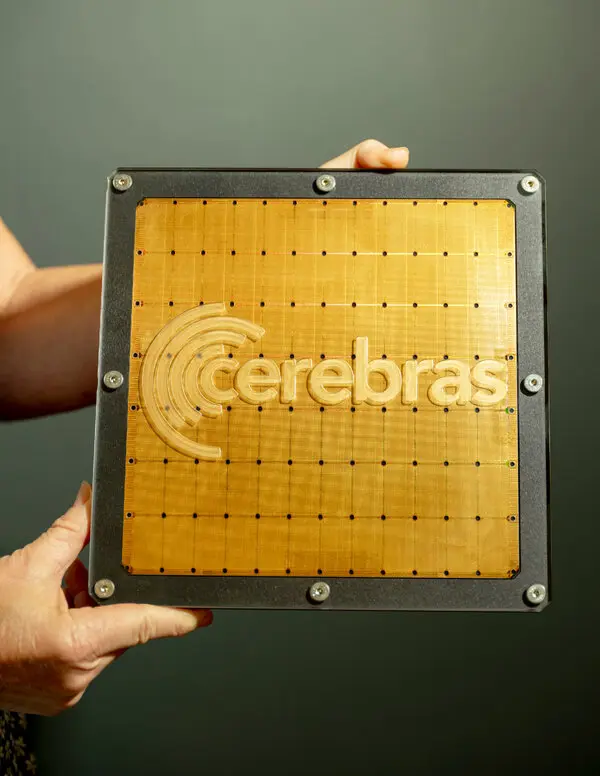
The sales restriction directly caps Cerebras' addressable market during a period when demand for AI compute is exploding. By agreeing not to sell to OpenAI's rivals, Cerebras is voluntarily forgoing what would likely be its highest-margin business: selling to other well-funded model companies like Anthropic, which is raising $30 billion at a $900 billion valuation. The trade-off is that the loan deal provides Cerebras with the capital it needs to scale its manufacturing and deployment capacity, which in turn lowers its unit costs and improves margins on the business it can take. Feldman's all-you-can-eat buffet analogy is instructive: if Cerebras can only serve one major customer at a time, it is better to lock in that customer with a financing package that de-risks its own balance sheet. The restriction also creates a natural hedge against demand risk. If OpenAI's compute needs grow faster than expected, Cerebras can simply allocate more capacity to its anchor customer without worrying about contractual conflicts. The downside is that Cerebras loses pricing leverage. With only one buyer for a significant portion of its capacity, OpenAI can negotiate hard on price per petaflop. Cerebras' margins will depend on how quickly it can ramp production and how much of its fixed costs it can spread across the OpenAI contract. The company's wafer-scale manufacturing process has high fixed costs, so every additional system sold to OpenAI improves unit economics, but the lack of competitive bidding from other buyers caps the revenue per system.
The competitive reshuffle: who gains and who loses
The most obvious loser from the Cerebras-OpenAI deal is Anthropic. As the second-largest independent AI model company, Anthropic is a natural customer for Cerebras' wafer-scale chips, which offer advantages in training large language models. With Cerebras effectively off the table, Anthropic will have to secure compute capacity from Nvidia, AMD, or the hyperscalers' custom silicon programs. This comes at a time when Anthropic is raising $30 billion at a $900 billion valuation, giving it the financial firepower to make long-term capacity commitments. The winner is Nvidia, which retains its dominant position as the default supplier for any model company that cannot access Cerebras hardware. The deal also benefits Amazon, which is developing its own AI chips through its Trainium and Inferentia lines. Amazon can offer Anthropic a vertically integrated alternative: compute capacity on AWS using Amazon-designed chips, with the added benefit of tight integration with Amazon's networking and storage infrastructure. For Cerebras, the restriction creates a strategic vulnerability. By tying itself so closely to OpenAI, it is betting that OpenAI will remain the dominant model company. If Anthropic or another rival overtakes OpenAI in model quality or market share, Cerebras will have bet on the wrong horse. The restriction also limits Cerebras' ability to diversify its customer base, which is a risk factor for future fundraising. A single-customer dependency makes the company more vulnerable to shifts in OpenAI's strategy or financial health.
Downstream effects on hyperscalers, fabs, and enterprise buyers
The Cerebras-OpenAI deal is a microcosm of a broader trend: the AI infrastructure boom is creating a two-tier market where the largest model companies get guaranteed access to scarce hardware, while everyone else faces delays and shortages. Data center construction is already struggling to keep pace with demand, with lead times for new facilities stretching to three years or more. The deal exacerbates this problem by locking up Cerebras' limited production capacity for OpenAI's exclusive use. For enterprise buyers, this means longer wait times and higher prices for AI compute. Companies like Ring, Lime, and EY that want to run inference on Cerebras hardware will have to wait until OpenAI's demand is satisfied. The deal also puts pressure on TSMC's wafer-scale packaging capacity, which is already constrained by demand from Nvidia and AMD. Cerebras' chips require advanced packaging techniques that are different from standard GPU packaging, creating a specialized bottleneck. For the hyperscalers, including Amazon, Apple, and Musk's xAI, the deal signals that the AI chip market is becoming more fragmented, not less. Each hyperscaler is now racing to secure its own supply of custom silicon, whether through internal development, strategic investments, or exclusive deals like the one Cerebras signed with OpenAI. The net effect is a market where hardware diversity is increasing, but so is fragmentation, making it harder for enterprise buyers to standardize on a single platform. Enterprise buyers face a choice between waiting for open-market supply or signing their own long-term contracts with chip startups, a path that requires significant financial commitment.
What the deal says about the future of AI chip financing
The Cerebras-OpenAI loan deal is a template for how AI chip startups will finance their growth in a capital-intensive market. Traditional venture capital is insufficient to fund the multi-billion-dollar investments required for wafer-scale manufacturing, advanced packaging, and dedicated data center infrastructure. By using a loan structure backed by an offtake agreement, Cerebras is effectively monetizing its future capacity before it is built. This is the same financing model that has been used for decades in the energy industry, where project finance allows developers to build pipelines, power plants, and renewable energy farms based on long-term contracts with creditworthy buyers. The deal also signals that OpenAI is willing to use its balance sheet to secure strategic advantages. By guaranteeing Cerebras' loan, OpenAI is effectively making a bet on Cerebras' technology and its ability to deliver. If Cerebras succeeds, OpenAI gets a guaranteed supply of cutting-edge hardware at a predictable price. If Cerebras fails, OpenAI is on the hook for the loan. This is a high-stakes gamble that reflects OpenAI's desperation for compute capacity in a market where Nvidia's GPUs are oversubscribed and data center construction is delayed. The deal also raises questions about antitrust and market concentration. If every major AI chip startup signs exclusive deals with one model company, the market could become balkanized, with each model company controlling its own hardware supply chain. Regulators may eventually take an interest in these arrangements, particularly if they restrict competition in the AI model market. The financing structure is likely to be replicated by other chip startups, creating a new asset class for institutional lenders who are comfortable with project finance but new to AI hardware.
The Cerebras-OpenAI deal is a harbinger of a market where compute capacity becomes the new oil, with long-term contracts, project finance, and exclusive supply agreements defining the competitive landscape. As the AI infrastructure boom continues to drive compute crunch and data center delays, more chip startups will be forced to choose between going it alone and tying themselves to a single powerful customer. The winners will be those that can scale their manufacturing and deployment capacity fast enough to serve multiple customers, while the losers will be those that become captive suppliers to a single model company. For enterprise buyers, the message is clear: secure your compute capacity now, because the window for competitive pricing and open access is closing. The next phase of the AI revolution will be defined not by model architecture breakthroughs, but by who controls the hardware supply chain.
The BossBlog Daily
One email with the AI markets brief — the 13F moves, the Congressional trades, and what changed. No fixed schedule and no filler: it goes out when there is something worth sending.
Unsubscribe any time. We never sell or share the list.