
The AI chip startup Cerebras, valued at $60 billion, nearly collapsed in its early days while burning $8 million per month before securing a critical loan deal that forced it to exclusively serve OpenAI. As part of the financing arrangement, Cerebras agreed not to sell its wafer-scale processors to certain OpenAI competitors. This restriction sources say likely refers to Anthropic, the rival model maker backed by Amazon. The exclusivity clause is temporary and designed to ensure OpenAI gets guaranteed compute capacity during the current infrastructure crunch. Cerebras CEO Feldman described the decision as focusing on "part of the buffet first," acknowledging the startup is not yet large enough to serve multiple fast-growing model makers simultaneously. This pivot comes as the broader AI infrastructure boom strains data center supply chains and forces hardware diversity, while geopolitical competition between US and Chinese AI firms intensifies. Why this matters now: Cerebras's survival strategy reveals how the AI compute market is consolidating around a handful of hyperscale buyers, creating winner-take-most dynamics that will reshape chip startup economics for years.
The $8 Million Monthly Burn and Its Origins
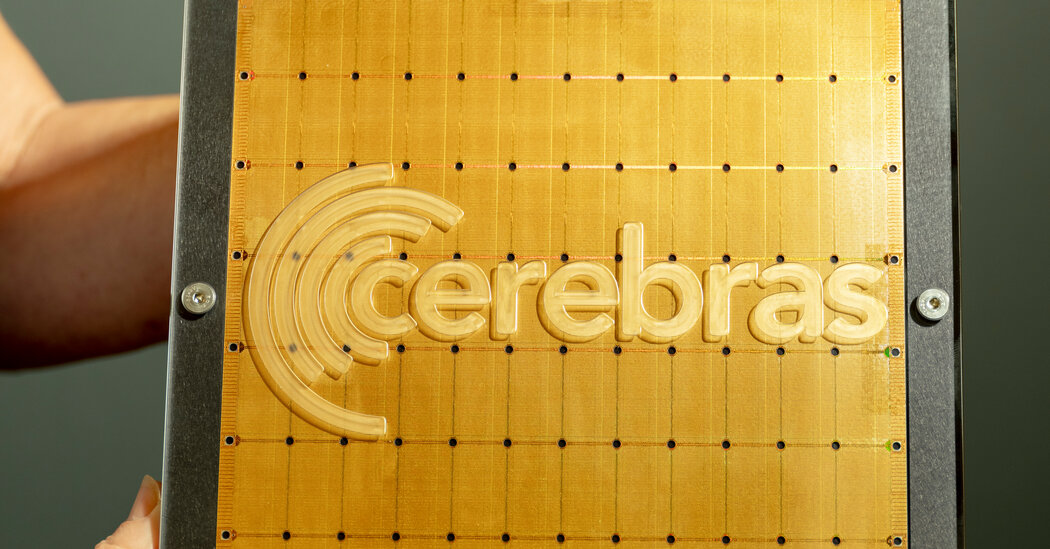
Cerebras's near-death experience stemmed from the brutal economics of building custom silicon for AI workloads. The company's wafer-scale engines, each the size of a dinner plate, required massive upfront capital expenditure for fabrication at Taiwan Semiconductor Manufacturing Co., with no guarantee of customer demand. At its peak burn rate of $8 million per month, Cerebras was spending heavily on engineering talent, tape-out costs, and early-stage manufacturing runs before securing its first major revenue contracts. The startup's valuation of $60 billion today masks the precariousness of its early trajectory, when investors questioned whether any customer would pay premium prices for a non-Nvidia architecture. Feldman has acknowledged the company operated on a knife's edge, with cash reserves dwindling as it raced to prove its technology could handle real-world training and inference workloads. The burn rate reflected not just hardware costs but also the expense of building a software stack compatible with popular AI frameworks like PyTorch and TensorFlow, a necessary investment to compete with Nvidia's CUDA ecosystem. Without the OpenAI loan deal, Cerebras would have faced a liquidity crisis that would have forced a fire sale or shutdown. The company had already burned through most of its early venture funding by the time it approached OpenAI, leaving it with less than three months of runway. Cerebras had taken on senior debt financing from banks and strategic investors who required specific technical milestones: competitive performance on large language model training benchmarks against Nvidia's A100 and H100 chips. The company met those benchmarks, giving it the negotiating leverage to approach OpenAI from a position of technological credibility rather than pure desperation. The $60 billion valuation reflects investors' conviction that wafer-scale architecture, which integrates a full chip's compute onto a single silicon wafer, represents a step-change in AI inference throughput that GPU-based systems cannot easily replicate at equivalent cost per token.
How the Loan Deal Reshapes Cash Flow
The loan agreement with OpenAI fundamentally altered Cerebras's financial trajectory by converting a cash-burning operation into a revenue-generating machine with predictable cash flows. Under the deal, OpenAI commits to purchasing a minimum volume of compute time on Cerebras hardware, providing the startup with recurring revenue that covers its operating expenses and allows it to invest in next-generation chip development. The exclusivity clause, barring sales to Anthropic, creates a trade-off: Cerebras sacrifices immediate diversification for guaranteed near-term survival. This arrangement mirrors the dynamics seen in other infrastructure-intensive industries, where a single anchor customer provides the demand certainty needed to justify large capital expenditures. For OpenAI, the deal secures dedicated compute capacity at a time when Nvidia's H100 and B200 GPUs remain in short supply, with lead times stretching months. The financial structure includes milestone payments tied to hardware delivery and performance benchmarks, giving Cerebras clear targets to hit. Analysts estimate the deal will generate $500 million to $1 billion in annual revenue for Cerebras, transforming its balance sheet from loss-making to profitable within two years. The convertible structure preserves founder and investor equity during the critical growth phase by avoiding immediate dilution. OpenAI's balance sheet, backed by billions from Microsoft and strategic partners, provides the creditworthiness to guarantee the loan facility, effectively making the tech giant a co-financier of Cerebras's expansion. That arrangement aligns incentives: OpenAI benefits from a more capable Cerebras while Cerebras gains the capital to develop its next wafer generation without seeking capital markets at an unfavorable moment.
The Competitive Reshuffle: Anthropic and Amazon Lose Out
The most immediate casualty of Cerebras's exclusivity deal is Anthropic, the AI safety startup that has raised billions from Amazon and other investors. Anthropic had been exploring Cerebras hardware as a potential alternative to Nvidia GPUs for training its Claude models, seeking to diversify its compute supply chain and reduce dependence on a single vendor. With Cerebras now off-limits, Anthropic must either increase its orders from Nvidia, invest in custom chips through its Amazon partnership, or court other startups like Groq or SambaNova. Amazon, which has invested $4 billion in Anthropic, faces a strategic dilemma: its AWS cloud division could build custom AI chips (Trainium and Inferentia) to serve Anthropic, but that would require significant engineering resources and time. Meanwhile, Cerebras's focus on OpenAI gives the Sam Altman-led company a competitive advantage in securing scarce compute capacity, accelerating its lead over Anthropic in model development cycles. Other AI startups like Musk's xAI, Vapi, and Lime also lose access to a potential supplier, though they were never Cerebras's primary target market. The deal signals that the AI chip market is consolidating around a few large buyers, with startups forced to pick sides in the OpenAI versus Anthropic rivalry.
Downstream Effects on Hyperscalers and Supply Chains
The Cerebras-OpenAI deal sends shockwaves through the broader AI infrastructure ecosystem, affecting hyperscalers, chip suppliers, and enterprise buyers. For Nvidia, the arrangement removes a potential competitor for OpenAI's business but also signals that the largest AI model makers are desperate enough for compute to fund alternative architectures. This validates Nvidia's strategy of maintaining dominant market share while competitors struggle to gain traction. For TSMC, which fabricates Cerebras's wafer-scale chips, the deal guarantees continued production volumes for a non-Nvidia customer, diversifying its customer base and reducing geopolitical risk. Data center operators like Equinix and Digital Realty face increased demand for specialized facilities that can handle Cerebras's unique power and cooling requirements. Each wafer-scale engine consumes over 15 kilowatts and requires liquid cooling. Enterprise buyers evaluating AI hardware face a more fragmented market, with OpenAI locking up one alternative supplier and driving up prices for remaining capacity. The deal also pressures Amazon, Apple, and Google to accelerate their own custom chip programs to avoid similar dependency on Nvidia or exclusive deals with startups. The compute crunch that drove Cerebras to accept restrictive terms will only intensify as more companies deploy AI applications, creating second-order effects across the entire supply chain.
The Policy and Strategy Signal Behind the Deal
The Cerebras-OpenAI exclusivity arrangement reads as a strategic signal about where the AI market is heading: toward vertical integration between model makers and hardware suppliers, driven by the scarcity of compute capacity. This mirrors the dynamics seen in the US-China AI competition, where Chinese AI groups have pulled ahead of US rivals in video generation by securing dedicated domestic chip supply chains. The deal suggests that the US AI sector is consolidating around a few dominant players who can afford to lock up key infrastructure, reducing competition and innovation over the long term, a structural concern that US and EU regulators have flagged in their ongoing examinations of AI market concentration. Regulators will take notice: the arrangement raises antitrust questions if it prevents competitors from accessing critical inputs, though the temporary and commercially negotiated nature of the restriction will likely shield it from formal enforcement action. For policymakers focused on AI competitiveness, the deal highlights the need for government investment in domestic chip manufacturing and alternative architectures to prevent a single company from controlling the compute supply. The broader market context, Wall Street retreating from AI-fueled record highs due to inflation fears and spiking crude prices, adds another layer of risk: if the AI boom cools, startups like Cerebras that have bet everything on a single customer will face renewed existential threats. The deal is a bet that OpenAI's growth trajectory justifies sacrificing diversification, a wager that will define Cerebras's future.
The Cerebras-OpenAI deal will serve as a template for future infrastructure financing in the AI industry, where compute-hungry model makers increasingly fund hardware startups in exchange for exclusivity. Expect more such arrangements as the gap between AI compute demand and supply widens, with Nvidia's GPU shortage persisting through 2027 and alternative architectures struggling to scale. Cerebras's survival from $8 million monthly burn to $60 billion valuation demonstrates that the AI hardware market rewards those who can secure anchor customers, even at the cost of strategic flexibility. The real test will come when the exclusivity period expires: if OpenAI has achieved its capacity goals, Cerebras will finally sell to Anthropic and others, but if the relationship sours, the startup will find itself back in crisis mode. For investors, the lesson is clear: in the AI infrastructure gold rush, the picks-and-shovels suppliers that survive will be those that attach themselves to the fastest-growing miners, accepting restrictive terms as the price of admission. The broader market's retreat from AI highs, driven by inflation and geopolitical uncertainty, will only accelerate this consolidation, leaving fewer independent hardware players standing. Cerebras's gamble that OpenAI's growth will lift all boats is the defining bet of the current AI infrastructure cycle, and its outcome will shape the industry for years to come.
The BossBlog Daily
One email with the AI markets brief — the 13F moves, the Congressional trades, and what changed. No fixed schedule and no filler: it goes out when there is something worth sending.
Unsubscribe any time. We never sell or share the list.