
DeepSeek founder Liang Wenfeng plans to lead the startup's first funding round of up to 50 billion yuan ($7.35 billion), a record for a Chinese AI company that signals Beijing's determination to challenge U.S. dominance in foundation models. The round, reported by The Information, would value DeepSeek at a level that places it among the most richly capitalized AI labs globally, even as the company has yet to disclose a clear path to profitability from its open-weight models. Liang, who previously funded DeepSeek largely from his quantitative trading firm High-Flyer, is now tapping external capital for the first time, a move that aligns with a broader industry shift: AI labs are raising large funding rounds not just for training compute but for consulting and deployment services. The Information's Martin Peers, Jessica Lessin, and the team noted that Allen Control Systems, an autonomous weapons startup, is also seeking $200 million at a $2 billion valuation, underscoring the breadth of AI capital demand. But DeepSeek's raise dwarfs those ambitions. The round comes as OpenAI struck a $4 billion arrangement with 19 investors including Brookfield and TPG for its consulting business OpenAI Deployment, and Anthropic formed a new company with Blackstone, Goldman Sachs, and Hellman & Friedman, raising $1.5 billion. DeepSeek's move is the clearest signal yet that Chinese AI labs are no longer content to compete on technical benchmarks alone. They are now building the financial infrastructure to match U.S. rivals dollar for dollar.
Where the $7.35 billion will be deployed
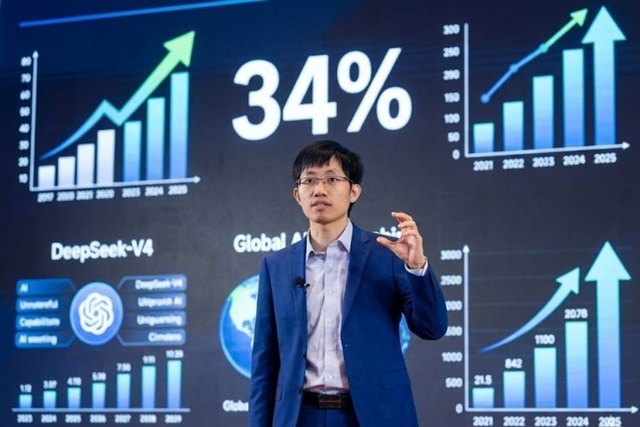
DeepSeek's capital raise of up to 50 billion yuan ($7.35 billion) represents a step-change in Chinese AI financing. Previous rounds by domestic peers such as Baidu's ERNIE unit or Alibaba's Tongyi Qianwen were smaller and structured as corporate investments rather than standalone venture rounds. Liang Wenfeng's decision to lead the round himself (he remains DeepSeek's controlling shareholder through High-Flyer) signals that the founder intends to retain strategic control even as he brings in outside limited partners. The funds will likely be split across three major cost centers: compute infrastructure, talent acquisition, and deployment services. DeepSeek has historically relied on Nvidia H800 chips, which were restricted under U.S. export controls, forcing the company to optimize its Mixture-of-Experts architecture to achieve competitive performance with fewer FLOPs. The new capital will allow DeepSeek to pre-pay for guaranteed access to advanced chips from Chinese suppliers like Huawei's Ascend line, as well as to stockpile HBM memory modules. A portion of the round will also fund a consulting and deployment arm modeled on OpenAI Deployment, which raised $4 billion from 19 investors including Brookfield and TPG. DeepSeek's engineers are already embedding with enterprise clients to redesign business processes, then moving on. This is the same model that Anthropic and OpenAI are scaling. The round's size also creates a buffer against future export controls: if Washington tightens restrictions further, DeepSeek will have the cash to pivot to domestic chip supply chains or to acquire smaller Chinese AI startups for their talent and IP.
How the funding reshapes AI lab economics
The $7.35 billion round changes the unit economics for DeepSeek and its competitors. Before this raise, DeepSeek operated on a lean budget, funding inference costs through High-Flyer's trading profits and token sales at below-market rates. The new capital allows the company to subsidize inference pricing aggressively, undercutting rivals like Baidu and Alibaba on API calls while investing in higher-margin deployment services. This mirrors the strategy of OpenAI, which struck a $4 billion arrangement with 19 investors for its consulting business, and Anthropic, which raised $1.5 billion from Blackstone, Goldman Sachs, and Hellman & Friedman for a similar deployment entity. The consulting model is capital-intensive because it requires embedding engineers on-site for months at a time, but it generates recurring revenue and locks clients into long-term contracts. DeepSeek can now offer Chinese enterprises a bundled package: free or cheap model access through its API, plus paid consulting to integrate the models into workflows. This two-tier pricing strategy compresses margins for competitors that lack DeepSeek's capital cushion. The round also gives DeepSeek the firepower to acquire smaller Chinese AI labs, consolidating the market. For investors, the bet is that DeepSeek's open-weight strategy will drive adoption faster than closed models, creating a larger total addressable market for deployment services. The risk is that open weights reduce pricing power, but DeepSeek's consulting revenue can offset that erosion.
Competitive reshuffle: who gains and who loses
DeepSeek's record round reshuffles the competitive landscape for Chinese AI labs and global foundation model providers. Baidu's ERNIE unit and Alibaba's Tongyi Qianwen, which previously competed on price and integration with their cloud platforms, now face a better-capitalized rival that can afford to run at a loss for longer. DeepSeek's open-weight approach also pressures Meta's Llama franchise, which has been the dominant open-source model globally. If DeepSeek can match Llama's performance while offering cheaper inference through subsidized compute, it will capture market share among developers and enterprises that prioritize cost over geopolitical alignment. The round also affects U.S. AI labs indirectly. OpenAI and Anthropic have raised billions for deployment services ($4 billion and $1.5 billion respectively), but those raises were structured as separate entities with distinct investor groups. DeepSeek's single $7.35 billion round gives it more flexibility to allocate capital between training, inference, and consulting without the governance constraints that come with multiple corporate structures. Allen Control Systems, an autonomous weapons startup seeking $200 million at a $2 billion valuation, represents a different segment of the AI market (defense), but its raise signals that investors are willing to pay premium valuations for AI companies with clear government contracts. DeepSeek's round validates that thesis at a much larger scale. The losers are smaller Chinese AI labs that lack the brand recognition or technical reputation to attract similar capital; they will either be acquired by DeepSeek or forced to pivot to niche verticals.
Downstream effects on hyperscalers, fabs, and enterprise buyers
DeepSeek's $7.35 billion capital injection will ripple through the Chinese AI supply chain, affecting hyperscalers, chip fabricators, and enterprise software buyers. On the compute side, DeepSeek will need to secure guaranteed access to advanced chips, which means placing large pre-orders with Huawei's Ascend division and domestic memory suppliers for HBM modules. This demand will strain China's limited advanced packaging capacity, pushing fabs like SMIC and Hua Hong to prioritize DeepSeek's orders over those of smaller clients. The round also pressures Chinese cloud providers (Alibaba Cloud, Baidu AI Cloud, and Tencent Cloud) to cut inference prices to retain customers who might defect to DeepSeek's subsidized API. For enterprise software companies like ServiceNow and SAP, which are already rethinking pricing models due to AI agents, DeepSeek's entry into the Chinese market accelerates the shift from per-seat licensing to consumption-based pricing. The Information reported that AI agents are forcing ServiceNow and SAP to rethink pricing models, and DeepSeek's consulting arm will embed engineers to redesign business processes, then move on. This is the same model that OpenAI and Anthropic use. This creates a dilemma for enterprise buyers: they can pay DeepSeek for consulting and model access, or they can pay higher prices to incumbents. The round also has implications for nuclear energy: Oklo Inc. and Idaho National Laboratory are using INL's Prometheus AI platform to accelerate reactor design for Oklo's Pluto reactor, which uses plutonium-bearing fuels, as part of the DOE's Reactor Pilot Program and the federal Genesis Mission. DeepSeek's capital could fund similar AI-for-energy projects in China, where the government is pushing AI-driven nuclear reactor design.
Policy and strategy signal from Beijing
DeepSeek's record funding round is the strongest signal yet that Beijing is backing a select group of AI champions with the financial firepower to compete with U.S. labs on equal terms. The Chinese government has not directly invested in DeepSeek, but the round's size and Liang Wenfeng's willingness to lead it suggest that state-linked capital (through sovereign wealth funds or policy banks) is available as a backstop. This mirrors the U.S. approach, where OpenAI and Anthropic have raised billions from investors like SoftBank, Brookfield, and TPG, many of which have deep ties to Washington. The round also signals that Beijing is willing to tolerate the capital outflow risks associated with large AI raises, provided the funds stay within China's domestic supply chain. DeepSeek's open-weight strategy aligns with the government's push for self-reliance: by releasing models publicly, DeepSeek ensures that Chinese enterprises and state-owned entities are not dependent on U.S.-controlled APIs. The round's timing (just months after the U.S. tightened export controls on advanced chips) suggests that DeepSeek has secured assurances from domestic chip suppliers that they can meet its compute needs. For global regulators, the round is a warning that the AI arms race is no longer just about technical benchmarks but about financial infrastructure. The U.S. response will likely involve further restrictions on capital flows to Chinese AI companies, though enforcement will be difficult given the round's yuan-denominated structure. DeepSeek's raise also pressures European AI labs, which lack comparable government backing, to consolidate or partner with U.S. firms.
The $7.35 billion round positions DeepSeek as the financial equal of OpenAI and Anthropic, but the real test will come in the next 18 months, when the capital must translate into revenue from consulting and deployment services. Liang Wenfeng's background in quantitative trading gives DeepSeek a cultural advantage in optimizing for capital efficiency, but the company faces the same challenge as every AI lab: converting technical leadership into sustainable business models. If DeepSeek succeeds, it will validate the thesis that open-weight models can generate higher returns through consulting revenue than closed models through API fees. If it fails, the round will be remembered as the peak of Chinese AI exuberance. The round also creates a precedent for other Chinese AI labs to raise similar amounts, potentially triggering a capital war that benefits enterprises but crushes margins. For now, DeepSeek has the financial ammunition to execute its strategy, and the market is watching to see whether Liang Wenfeng can deliver on the promise of AI deployment at Chinese scale.
The BossBlog Daily
One email with the AI markets brief — the 13F moves, the Congressional trades, and what changed. No fixed schedule and no filler: it goes out when there is something worth sending.
Unsubscribe any time. We never sell or share the list.