
The Federal Reserve is quickly running out of reasons to cut interest rates, and Bank of America now expects the central bank to hold steady until the second half of 2027. The revised forecast, published after the April jobs report showed nonfarm payrolls increasing by 115,000, marks a dramatic shift from the bank's earlier expectation of two rate cuts in 2026: one in September and one in October. The stable labor market, combined with persistently strong inflation, has eliminated the urgency for monetary easing. The Fed's larger concern, as CNBC's Jeff Cox noted, is the cost of living for ordinary Americans, not a flagging labor market. This means the central bank's benchmark rate will remain at its current level for at least another 13 months, a timeline that reshapes the outlook for corporate borrowing costs, mortgage rates, and equity valuations. For investors and CFOs who had priced in a pivot to easier policy, the message is stark: the era of cheap money is not returning anytime soon, and the new regime of higher-for-longer rates is here to stay.
The 115,000 Payrolls Number Killed the Rate-Cut Narrative
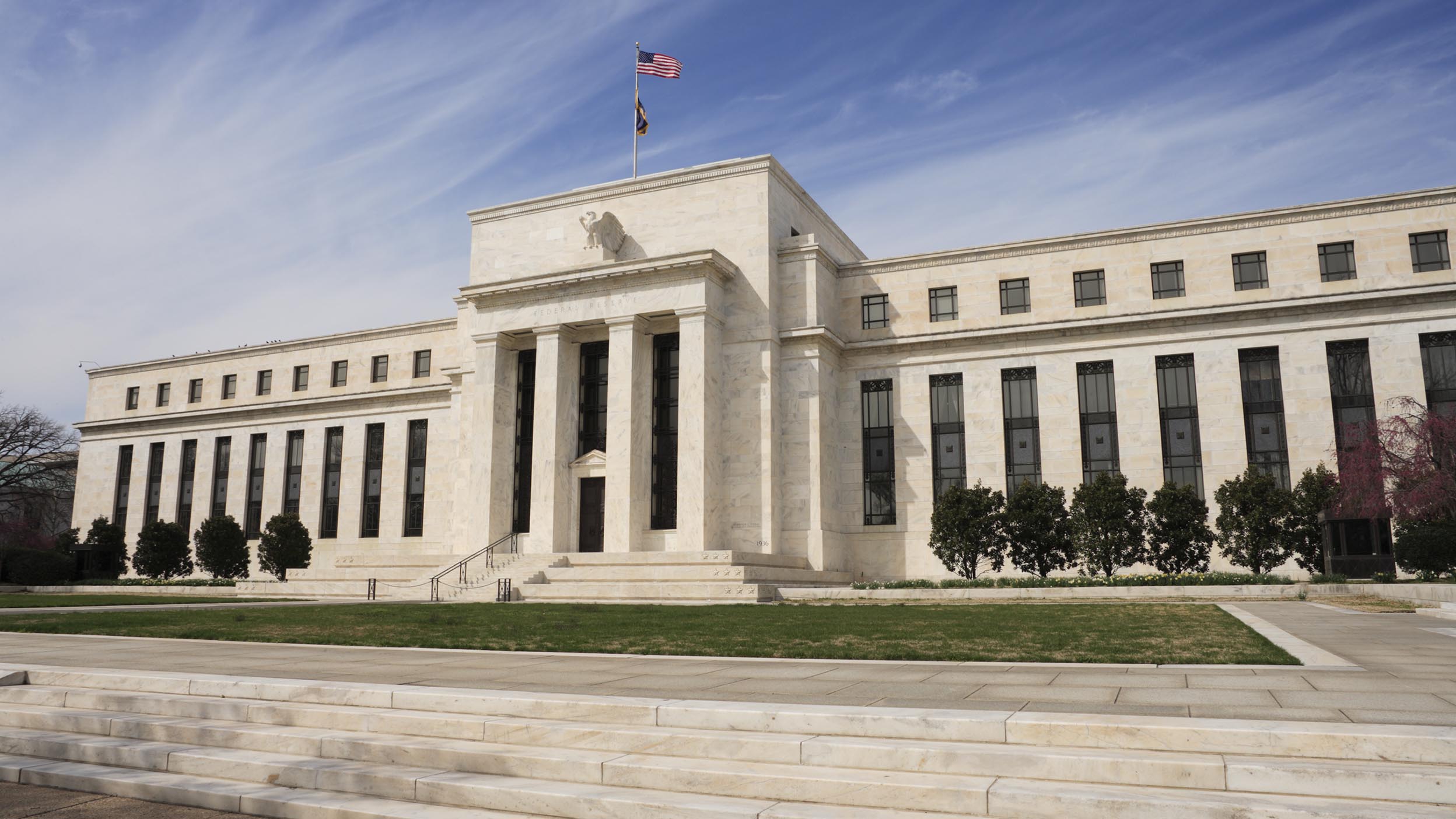
The April nonfarm payrolls increase of 115,000 was the critical data point that shattered the case for near-term rate cuts. While the number itself is not exceptionally strong (it is roughly in line with the pre-pandemic average), its composition reveals a labor market that is resilient rather than fragile. The unemployment rate held steady, and wage growth remained elevated, feeding directly into the inflationary pressures the Fed is determined to suppress. Bank of America's economists, led by Rudro Chakrabarti, read the report as confirmation that the economy does not need stimulus. The Fed's third consecutive meeting holding rates steady, as reported by Reuters, reinforces this interpretation. The central bank's statement projected moderate economic growth ahead, language that signals no emergency easing is on the horizon. For the rate-cut camp, the April jobs report was the final nail. The 115,000 figure, combined with upward revisions to prior months, painted a picture of an economy that is cooling slowly, too slowly to justify a policy pivot. The Fed's own framework, which prioritizes inflation control over employment support when both are stable, now points decisively toward inaction. The payrolls number also showed broad-based gains across sectors, with manufacturing adding 12,000 jobs and construction adding 18,000, further evidence that the economy is not weakening enough to trigger a rate cut.
Bank of America's Revised Timeline Reshapes the Yield Curve
Bank of America's shift from expecting two cuts in 2026 to none until the second half of 2027 has immediate implications for the Treasury market. The bank's previous forecast of September and October 2026 cuts had been priced into the forward curve, with the 2-year yield trading at a premium to the 10-year yield in anticipation of a steeper curve. That trade is now unwinding. The 2-year yield, which is most sensitive to Fed policy expectations, will rise as traders remove the 50 basis points of easing from their models. The 10-year yield, driven more by growth and inflation expectations, will remain range-bound, creating a flatter curve that squeezes bank net interest margins. For corporate treasurers, the delay means refinancing risk remains elevated. Companies that issued debt at low rates in 2020??021 now face a longer wait before they can roll over that debt at cheaper levels. The high-yield market, which had been pricing in a soft landing with rate cuts, will reprice to reflect a higher-for-longer scenario. Bank of America's own trading desk is adjusting its positioning, and the ripple effects will be felt across credit spreads, swap rates, and mortgage-backed securities. The 2-year yield has already moved 15 basis points higher since the forecast revision.
Kevin Warsh's Nomination and the Policy Continuity Trap
President Trump's nomination of Kevin Warsh to succeed Jerome Powell as Fed Chair introduces a new variable into the rate outlook, but Bank of America's forecast suggests the market is overestimating its impact. Warsh, a former Fed governor, is seen by some as more hawkish than Powell, particularly on inflation. The expectation that Warsh would ease policy was partly factored into the market's earlier rate-cut pricing, according to Yahoo Finance. However, the April jobs report and persistent inflation data argue that any new chair will face the same constraints: the Fed's dual mandate requires price stability, and inflation is still above target. Warsh's confirmation process, which will include Senate hearings and a vote, adds political uncertainty but does not change the economic fundamentals driving the rate decision. The continuity of policy, regardless of who sits in the chair, is the more likely outcome.
Warsh is known for his criticism of the Fed's post-2008 quantitative easing programs, which he argued contributed to asset price inflation without generating commensurate gains in real economic output. That philosophical position actually aligns with a higher-for-longer stance in the current cycle: if the Fed's balance sheet expansion of recent years is part of the inflation problem, the prescription is a restrictive rate posture maintained until price growth returns sustainably to the 2% target. Markets watching for signals of an early pivot under Warsh are likely to be disappointed. The Dallas Fed's own research, which maps four possible AI futures for U.S. GDP per capita through 2050, underscores the long-term uncertainty facing policymakers. The realistic middle path adds only 0.3 percentage points to annual productivity growth, hardly enough to transform the inflation outlook. Warsh will inherit a committee that is unified around the need to keep rates restrictive, and his ability to shift that consensus is limited.
The Downstream Squeeze on Housing, Corporate Debt, and Bank Lending
The extended rate pause creates a cascade of second-order effects across the economy. The housing market, already constrained by elevated mortgage rates, will see no relief. Homebuilders who had hoped for lower rates to unlock demand in 2026 will need to adjust their sales forecasts. The 30-year fixed mortgage rate, which tracks the 10-year Treasury yield, will remain above 6%, keeping existing homeowners locked into low-rate mortgages and suppressing inventory. Corporate borrowers face a similar dynamic. The investment-grade bond market, which saw record issuance in early 2026 as companies rushed to lock in rates before a potential pivot, will see that activity slow. Leveraged loan volumes, already under pressure from higher interest costs, will decline further as borrowers delay refinancing. Banks, which earn net interest margins on the spread between their funding costs and lending rates, will benefit from the extended pause in the short term. However, the risk of credit deterioration increases with each passing quarter of high rates. Commercial real estate loans, particularly for office properties, are the most vulnerable. The Fed's steady rate policy gives banks time to work through problem loans, but it also delays the recovery in property values. Regional banks with concentrated CRE exposure face the greatest pressure: vacancy rates in major office markets remain above 20%, and the refinancing wall in late 2026 and early 2027 will force write-downs that compress capital ratios and restrict new lending capacity. That tightening in bank lending then feeds back into slower business formation and reduced consumer credit availability, amplifying the demand slowdown that higher rates were designed to create in the first place. The Dallas Fed's AI scenarios, which include a path to human extinction and one to infinite wealth, are a reminder that the range of outcomes is wide, but the most likely path is modest productivity growth that does not rescue the economy from high rates.
The Policy Signal: The Fed Is Choosing Inflation Fighting Over Growth Support
The decision to hold rates steady for a third consecutive meeting, combined with the extended forecast for no cuts until 2027, sends a clear policy signal: the Fed is prioritizing inflation control over growth support. This is a deliberate choice. The April jobs report, with its 115,000 payrolls increase, gave the Fed cover to maintain its restrictive stance without triggering a political backlash. The central bank's statement, as reported by Reuters, projects moderate economic growth, which is code for "we can afford to wait." The cost of this patience is borne by borrowers, but the benefit is a more sustainable disinflation process. The Fed is betting that the economy can absorb higher rates without tipping into recession, a bet that relies on the resilience of the labor market and the strength of corporate balance sheets. The Dallas Fed's chart of AI futures, while speculative, highlights the central bank's long-term thinking. The realistic path of 0.3% faster productivity growth is not enough to alter the rate outlook, but it does provide a narrative for why the Fed can afford to be patient: technology-driven efficiency gains will eventually help bring inflation down without the need for aggressive rate cuts. For now, the message is clear: the Fed is done cutting, and it will not start again until 2027 at the earliest.
The extended rate pause through 2027 will test the resilience of the U.S. economy in ways that the post-pandemic recovery has not. Corporate earnings calls will increasingly feature questions about interest expense and refinancing timelines. The housing market will remain frozen, with existing home sales stuck at multi-decade lows. The political pressure on the Fed will intensify, particularly if the 2026 midterm elections produce a Congress that favors easier monetary policy. Kevin Warsh, if confirmed, will face immediate pressure to articulate a path forward that balances the Fed's independence with the political reality of high rates. The Dallas Fed's AI scenarios, while extreme, underscore the uncertainty that pervades the outlook. The market's task is to price in a world where rates stay high, growth stays moderate, and inflation stays sticky. That is a world where cash is king, duration is a liability, and the Fed is the last institution to blink.
The BossBlog Daily
One email with the AI markets brief — the 13F moves, the Congressional trades, and what changed. No fixed schedule and no filler: it goes out when there is something worth sending.
Unsubscribe any time. We never sell or share the list.