
Anthropic announced a compute deal with SpaceXAI (xAI) at its developer conference in San Francisco, securing access to over 300 megawatts of new capacity and roughly 220,000 Nvidia GPUs from xAI's Colossus 1 supercomputer. The arrangement addresses a critical infrastructure strain for Anthropic, which has been struggling to keep up with surging demand for its Claude product line, including Claude Pro, Claude Max, and the rapidly adopted Claude Code, which the average developer now runs for at least 20 hours per week. Under the deal, Anthropic will draw power from Colossus 1, xAI's largest data facility primarily located around Memphis. This comes as Elon Musk's xAI navigates a thicket of legal and regulatory issues, including an ongoing lawsuit with OpenAI and a separate agreement with Google and Microsoft to submit new AI models to US national security reviews. The partnership marks a strategic pivot for Anthropic, which has already signed a multibillion-dollar agreement with Amazon and is in talks to raise cash at a valuation of $900 billion. Why this matters now: the deal signals that even the best-funded AI startups are willing to do business with controversial rivals to solve their most existential bottleneck, compute.
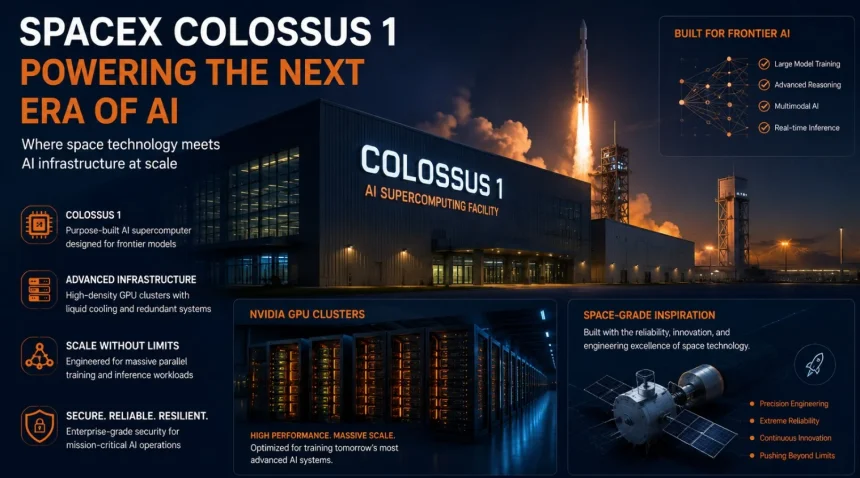
The 300 Megawatts and 220,000 GPUs from Colossus 1
The compute deal taps directly into xAI's Colossus 1 supercomputer, a sprawling data facility that has been under construction primarily around Memphis, Tennessee. Colossus 1 is designed to deliver over 300 megawatts of capacity, a figure that places it among the largest single-tenant AI supercomputers in operation. For context, a typical hyperscaler data center runs between 30 and 50 megawatts; Colossus 1's capacity is enough to power roughly 250,000 homes. The facility is packed with approximately 220,000 Nvidia GPUs, likely a mix of H100 and B200 chips, though neither company disclosed the exact SKU breakdown. Anthropic will draw power and compute cycles from this cluster, effectively renting a slice of xAI's infrastructure rather than building its own. The arrangement is structured as a compute-for-cash deal, not an equity swap or joint venture. This matters because it gives Anthropic immediate access to a massive GPU cluster without the multi-year lead time required to construct a comparable facility. The deal also bypasses the traditional cloud providers, Amazon, Google, and Microsoft, which have dominated AI compute leasing. By going directly to xAI, Anthropic secures a dedicated allocation of GPUs at a time when Nvidia's supply chain remains constrained, with lead times for new orders still stretching 26 to 52 weeks. The Colossus 1 facility has been operational since late 2025, and xAI has been gradually scaling its GPU count to meet both internal Grok training demands and external leasing opportunities.
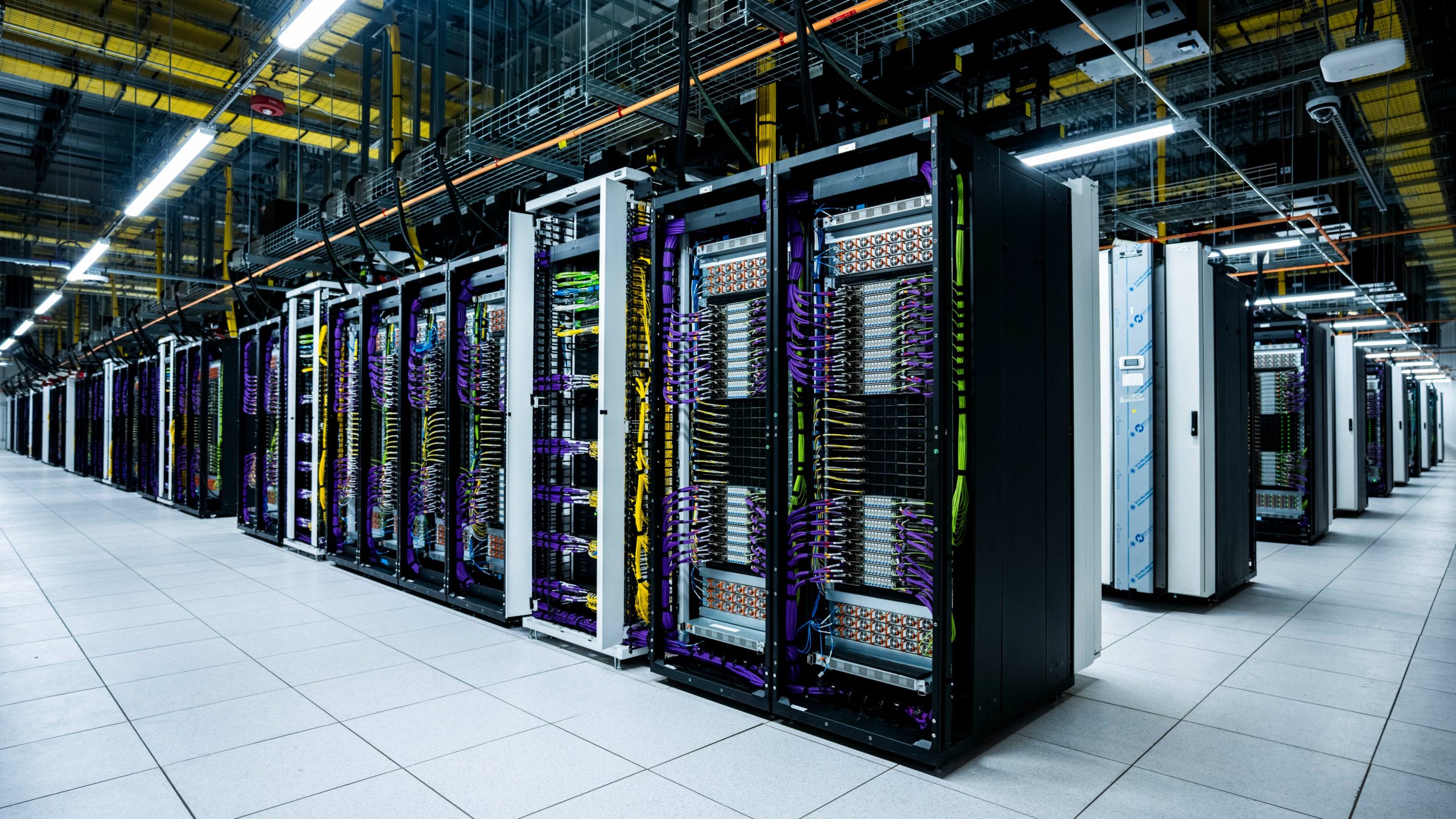
How the Deal Flows Through Anthropic's P&L and Valuation
The financial implications of this deal ripple through Anthropic's income statement and its fundraising narrative. Anthropic is currently in talks to raise cash at a valuation of $900 billion, a figure that would place it among the most valuable private companies in the world. To justify that valuation, the company must demonstrate that it can scale its inference and training capacity to meet demand without burning through its balance sheet. The compute deal with xAI provides a path to do that. Instead of spending billions on data center construction, a capital-intensive process that would depress free cash flow for years, Anthropic is effectively leasing compute capacity. This shifts the cost from CapEx to OpEx, improving near-term cash flow metrics that venture investors scrutinize. The multibillion-dollar agreement with Amazon already provides a floor for Anthropic's compute spending, but the xAI deal diversifies its supply chain. On the revenue side, Claude Code's adoption is a key driver: with developers spending 20 hours per week on the tool, Anthropic is generating recurring usage-based revenue that scales linearly with GPU allocation. The company's gross margins on inference, typically 60% to 80% for leading AI labs, will benefit from having a dedicated GPU cluster that avoids the premium pricing of spot instances or oversubscribed cloud regions. For xAI, the deal provides a revenue stream ahead of its planned IPO as soon as next month, helping to demonstrate that Colossus 1 can generate third-party income beyond powering Grok. Anthropic's CFO has indicated that the deal's terms include a multi-year commitment, giving both companies predictable revenue and cost visibility.
Competitive Reshuffle: Who Gains and Who Loses Share
The deal reshuffles the competitive landscape in AI compute by creating an unlikely alliance between two companies that have been on opposite sides of the industry's most bitter legal feud. Anthropic gains a direct line to compute infrastructure that its primary rivals, OpenAI and Google, cannot easily replicate. OpenAI, which raised $1 billion from Microsoft in 2019 and an additional $13 billion over four years, has relied heavily on Microsoft's Azure cloud for its training and inference needs. That relationship has been strained by OpenAI's own compute shortages and Microsoft's competing AI ambitions. Google, meanwhile, has its own TPU chips and data centers, but it has agreed to submit new models to US national security reviews alongside xAI and Microsoft, signaling a regulatory convergence that could slow its deployment speed. For xAI, the deal provides a validation of its Colossus infrastructure ahead of its IPO. Elon Musk's company has been fighting multiple legal and regulatory battles, including a lawsuit alleging that Sam Altman and Greg Brockman deceived Musk during OpenAI's transition to for-profit status, but the Anthropic deal shows that xAI's compute assets are valuable enough to attract a customer that is also a rival in the AI model market. The losers here are the traditional cloud hyperscalers: Amazon, Microsoft, and Google. Anthropic's multibillion-dollar agreement with Amazon remains intact, but the xAI deal signals that Anthropic is unwilling to be locked into any single provider. This will force the hyperscalers to compete more aggressively on price and availability for GPU-heavy workloads.
Downstream Effects on Hyperscalers, Fabs, and Enterprise Buyers
The second-order effects of this deal extend well beyond Anthropic and xAI. For Nvidia, the deal confirms that demand for its GPUs remains insatiable, even as the company faces questions about whether its next-generation Blackwell architecture will face production delays. The 220,000 GPUs in Colossus 1 represent a significant chunk of Nvidia's annual output, roughly 5% of the estimated 4 million GPUs Nvidia shipped in 2025. This keeps Nvidia's pricing power intact and reinforces its position as the bottleneck in the AI supply chain. For hyperscalers like Amazon, Google, and Microsoft, the deal is a warning sign that their cloud platforms are not the only game in town for AI compute. If startups can bypass the cloud by striking direct deals with GPU owners like xAI, the hyperscalers risk losing the high-margin inference revenue that they have been counting on to justify their own massive data center investments. For enterprise buyers, the deal signals that AI compute costs are unlikely to fall anytime soon. With Anthropic, OpenAI, and xAI all competing for the same finite pool of Nvidia GPUs, the price of compute will remain elevated, pushing up the cost of AI services for businesses that rely on Claude, GPT, or Grok. On the regulatory front, the deal adds urgency to the US national security reviews that Google, xAI, and Microsoft have agreed to. If a foreign adversary were to gain access to a supercomputer of Colossus 1's scale, the implications for AI safety and national security would be severe. The deal also raises environmental questions: xAI's Colossus 1 uses natural gas-burning turbines that have worsened air pollution in Memphis, sparking protests from local communities and environmental groups.
Policy and Strategy Signal: What the Deal Says About the AI Market's Direction
The Anthropic-xAI compute deal is a strategic signal that the AI industry is entering a new phase of consolidation and unconventional partnerships. The most important read-through is that compute has become the single most valuable asset in AI, more valuable than talent, data, or even model architecture. Anthropic, valued at $900 billion, chose to partner with a company that is simultaneously suing its founders and facing regulatory scrutiny over national security and environmental issues. That decision reveals that the scarcity of compute is so acute that it overrides competitive and reputational concerns. For regulators, the deal is a headache. The US government has been pushing for national security reviews of new AI models, and Google, xAI, and Microsoft have all agreed to participate. But the deal creates a complex web of relationships: Anthropic now has compute agreements with both Amazon and xAI, while xAI is also competing with Anthropic in the consumer AI market through Grok. This makes it harder for regulators to track the flow of compute, data, and model weights across the industry. The deal also signals that xAI's IPO, expected as soon as next month, will be a bellwether for how the market values pure-play AI compute infrastructure. If xAI can demonstrate that its Colossus supercomputer generates recurring third-party revenue, its IPO could set a valuation benchmark that influences how other GPU owners, including CoreWeave, Lambda, and even Nvidia itself, structure their own financing rounds. For Anthropic, the deal is a hedge against the risk that its relationship with Amazon sours or that Amazon's own compute capacity falls short of demand.
The deal positions Anthropic to weather the next wave of AI infrastructure constraints, but it also ties the company's fortunes to Elon Musk's increasingly complex web of legal and regulatory battles. If xAI's IPO stumbles or its environmental controversies in Memphis escalate, Anthropic could find itself scrambling for an alternative compute partner. The broader market should watch for copycat deals: if OpenAI or Google strike similar arrangements with other GPU owners, the hyperscaler cloud model for AI compute will face its most serious challenge yet. For now, Anthropic has bought itself time and capacity, two commodities that are becoming harder to separate in the AI arms race.
The BossBlog Daily
One email with the AI markets brief — the 13F moves, the Congressional trades, and what changed. No fixed schedule and no filler: it goes out when there is something worth sending.
Unsubscribe any time. We never sell or share the list.