
Enterprise software giant SAP is acquiring Prior Labs, the German pioneer of Tabular Foundation Models (TFMs), for over ?? billion in a deal that creates Europe?? most ambitious corporate AI research lab. The transaction, expected to close in the second or third quarter of 2026 pending regulatory approval, commits SAP to invest more than ?? billion over four years to build what it calls a "globally leading frontier AI lab." Separately, Sierra, the AI customer service agent company co-founded by former Salesforce co-CEO Bret Taylor and ex-Google VP Clay Bavor, raised $950 million at a $15.8 billion post-money valuation in a round led by Tiger Global and GV, with participation from Benchmark, Sequoia, Greenoaks, and others. The two deals, announced within days of each other, signal a decisive shift in how capital is flowing into enterprise AI: large strategic acquirers are placing billion-dollar bets on foundational model research, while venture investors continue to pour nearly $1 billion into application-layer startups. The message is clear. The enterprise AI market is bifurcating into a capital-intensive infrastructure tier and a fast-moving application tier, and the gap between them is widening.
Where the ?? billion SAP commitment goes
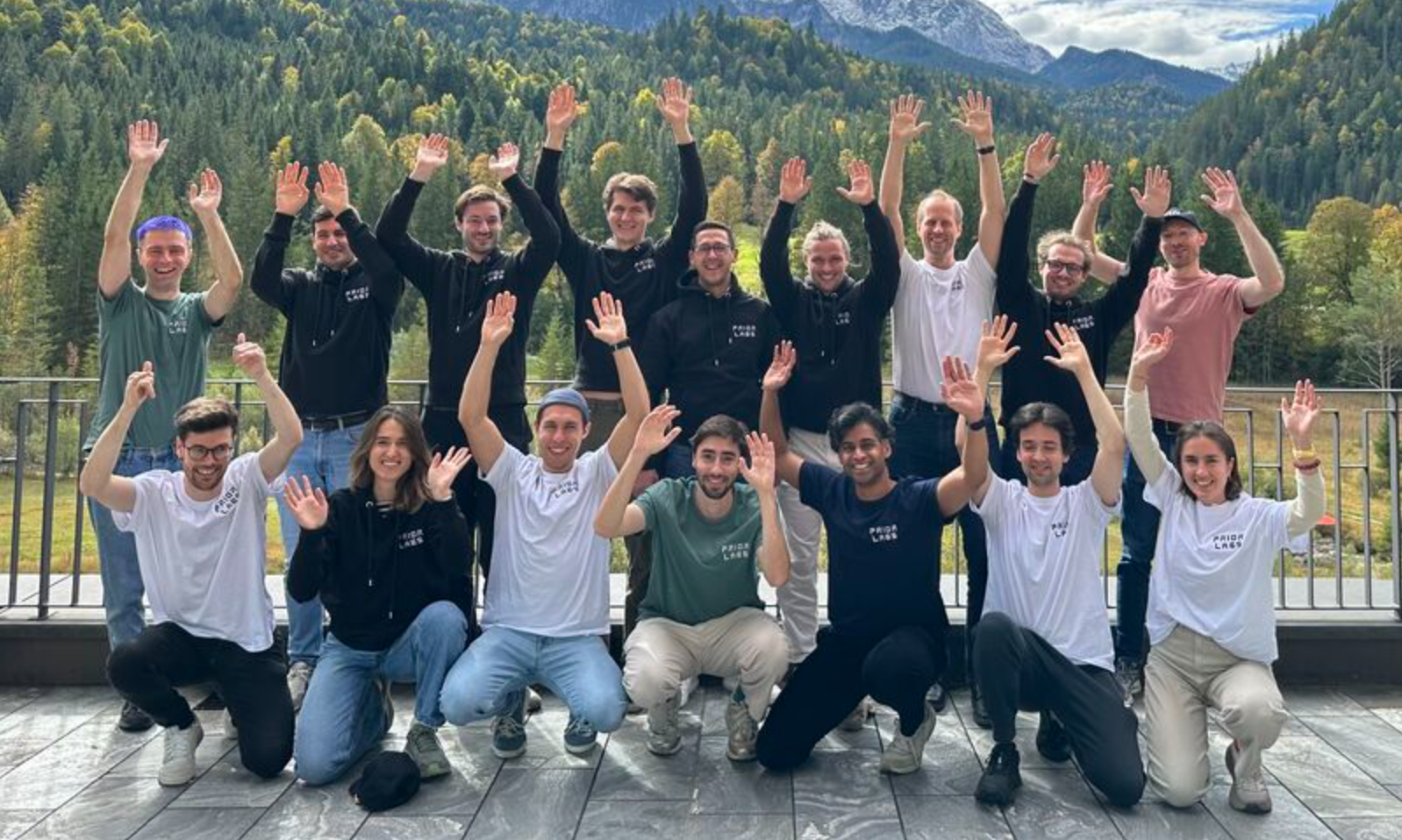
SAP is not simply buying Prior Labs for its technology; it is buying the team and the research trajectory. Prior Labs developed TabPFN, a Tabular Foundation Model that applies transformer architectures to structured data. This is the kind of data that populates SAP?? ERP systems, supply chain records, and financial ledgers. The model is designed to perform classification, regression, and imputation tasks on tabular data without the need for extensive feature engineering or fine-tuning. SAP plans to integrate Prior Labs??research into its existing AI infrastructure, including SAP AI Core, SAP Business Data Cloud, and the Joule copilot. The ?? billion commitment covers four years of funding for Prior Labs to operate as an independent research unit, meaning the lab retains its own hiring, publishing, and research direction. This structure mirrors how DeepMind operated under Google and how Microsoft structured its relationship with OpenAI in the early years. The key difference is that Prior Labs??research agenda is tightly scoped to tabular data, not general intelligence, which makes the integration risk lower and the commercial path clearer. SAP gains a proprietary foundation model layer that its competitors, including Oracle, Workday, and Salesforce, cannot easily replicate, because Prior Labs??models are trained on the specific structure of enterprise transactional data. The acquisition also gives SAP exclusive access to a research team that has published at top machine learning conferences, including NeurIPS and ICML, on the application of transformers to structured data.
How the $950 million flows through Sierra?? P&L
Sierra?? $950 million raise at a $15.8 billion valuation represents a 4.5x revenue multiple on its estimated 2025 revenue of roughly $350 million, a premium that reflects the market?? appetite for AI-native customer service agents. The company sells AI agents that handle customer inquiries across chat, voice, and email, using models from both OpenAI and Anthropic. Sierra does not train its own foundation models; it layers proprietary orchestration, safety guardrails, and integration tooling on top of third-party models. This capital-light approach means the $950 million goes primarily toward sales and marketing, partner integrations, and expanding the agent?? ability to handle complex multi-turn conversations. The round?? lead investors, Tiger Global and GV, are betting that Sierra can capture a significant share of the $400 billion global customer service market by replacing legacy contact center software from vendors like Genesys, NICE, and Zendesk. Sierra?? unit economics depend on reducing the cost per customer interaction from $5 to $8 for a human agent to under $1 for an AI agent, while maintaining or improving customer satisfaction scores. The company has not disclosed its gross margins, but the model-agnostic architecture gives it pricing leverage over its model providers. Sierra?? sales team has already signed contracts with several large enterprises in the retail and financial services sectors, according to sources familiar with the company?? operations.
Competitive reshuffle: who gains and who loses
SAP?? acquisition of Prior Labs directly threatens Oracle and Workday, both of which have invested heavily in AI features but lack a dedicated foundation model research lab. Oracle has focused on embedding generative AI into its Fusion Cloud applications using models from Cohere and others, while Workday has built its own machine learning models for HR and finance workflows. Neither has a Tabular Foundation Model that can match Prior Labs??TabPFN on structured data tasks. For Salesforce, which competes with SAP in CRM and ERP, the deal raises the stakes: Salesforce has invested in its own Einstein AI platform but has not acquired a foundation model lab. Sierra?? raise, meanwhile, pressures legacy contact center vendors. Genesys and NICE have added AI features, but they lack Sierra?? native agent architecture and the venture backing to subsidize aggressive pricing. The deal also creates a subtle tension between Sierra and its model providers, OpenAI and Anthropic. As Sierra scales, it gains bargaining power to negotiate lower per-token pricing or even to develop its own small models for specific customer service tasks. The competitive dynamics in both markets are shifting rapidly, with the Prior Labs and Sierra deals accelerating the timeline for product launches across the enterprise AI landscape. The week's activity extended beyond the two headline deals. SageOX, a startup developing what it calls agentic context infrastructure, emerged from stealth with a $15 million seed round led by Canaan, signaling strong investor appetite for the connective layer that helps AI agents absorb institutional knowledge currently trapped in workplace conversations and meeting notes.
Downstream effects on hyperscalers, chips, and enterprise buyers
The SAP and Sierra deals have distinct but overlapping downstream implications. SAP?? ?? billion commitment means it will need significant compute capacity for training and inference on Tabular Foundation Models. SAP will likely turn to AWS, Azure, or Google Cloud for GPU clusters, but the scale of the investment, combined with the desire for European data sovereignty, could push SAP to build its own dedicated compute infrastructure in Germany or elsewhere in the EU. This would increase demand for Nvidia H100 and B200 GPUs in Europe, a region that has lagged behind the US in AI infrastructure buildout. For Sierra, the $950 million raise means it will increase its inference spend with OpenAI and Anthropic, which in turn drives demand for GPU capacity at Microsoft Azure, OpenAI?? exclusive cloud provider, and Google Cloud, Anthropic?? primary cloud partner. Enterprise buyers, meanwhile, face a more complex procurement landscape. SAP?? TFM-powered features will be bundled into existing ERP licenses, potentially raising the total cost of ownership for SAP customers. Sierra?? agents will be priced per conversation, creating a variable cost that scales with usage. Both models shift risk from vendor to buyer, but in opposite directions: SAP?? bundling locks customers into a higher fixed cost, while Sierra?? usage-based pricing exposes customers to volume risk. The net effect is that enterprise procurement teams will need to develop new frameworks for evaluating AI investments, balancing fixed and variable cost structures against expected returns.
Policy and strategy signal: Europe?? AI sovereignty play
SAP?? acquisition of Prior Labs is as much a geopolitical statement as a commercial one. By committing over ?? billion to build a frontier AI lab in Europe, SAP is positioning itself as the continent?? answer to US and Chinese AI dominance. The European Union has struggled to create a homegrown AI champion, with most foundation model startups, including Mistral, Aleph Alpha, and DeepL, operating at a fraction of the scale of OpenAI, Google DeepMind, or Anthropic. SAP?? move leverages its existing enterprise footprint: 400,000 customers across 180 countries, many of which are European companies that face regulatory pressure to keep data within the EU. The Prior Labs acquisition gives SAP a credible AI research capability that can be marketed as "European AI," compliant with GDPR, the AI Act, and other regional regulations. This strategy mirrors what Airbus did in aerospace and what ASML did in semiconductor lithography: use a dominant European industrial base to fund a technology moat that competitors cannot easily cross. Sierra?? raise, by contrast, is a pure Silicon Valley play, with no policy or sovereignty angle. The contrast between the two deals, a European strategic acquisition versus a US venture round, underscores the divergent paths that enterprise AI is taking on either side of the Atlantic. European policymakers have already signaled support for SAP?? move, viewing it as a critical step toward reducing the region?? dependence on US AI infrastructure.
The next 12 months will test whether SAP can integrate a frontier AI lab without suffocating its research culture, and whether Sierra can maintain its growth trajectory as competitors like Zendesk and Salesforce launch their own AI agents. SAP faces the classic acquirer?? dilemma: Prior Labs??researchers joined to do open-ended science, not to optimize ERP invoice matching. If SAP imposes too much product pressure, the talent will leave. Sierra faces a different risk: its reliance on OpenAI and Anthropic for model access creates a single point of failure. If either model provider raises prices, changes its API terms, or builds its own customer service agent, Sierra?? margins and competitive position will erode. For investors, the takeaway is that enterprise AI is entering a phase of structural differentiation. Companies that own a proprietary data moat, like SAP with its transactional data, can justify billion-dollar research bets. Companies that build on top of commoditized model access, like Sierra, must achieve scale and switching costs before the model providers become competitors. Both strategies can work, but they require very different execution playbooks.
The BossBlog Daily
One email with the AI markets brief — the 13F moves, the Congressional trades, and what changed. No fixed schedule and no filler: it goes out when there is something worth sending.
Unsubscribe any time. We never sell or share the list.