
When seven of OPEC+'s member nations gathered via video conference on Sunday to finalize their June production adjustment, the number they settled on—188,000 barrels per day—said almost everything that needed to be said about the group's current predicament. It was slightly less than the 206,000 bpd increase they had approved for May. It was a number arrived at without the United Arab Emirates, which departed OPEC on May 1 after nearly six decades as a member, ending its run as the cartel's third-largest producer. And it was, by almost every independent market analyst's calculation, a number so small relative to the supply disruption choking the global oil market that its actual effect on prices would be negligible. Brent crude closed at $108.17 per barrel on Friday, down less than 2 percent on the session. WTI fell 3 percent to $101.94. Both benchmarks remain nearly 78 percent higher than where they stood at the start of 2026, when the Strait of Hormuz was still open to commercial traffic. The OPEC+ meeting produced a statement. The oil market produced a shrug.
The 188,000 bpd Decision: Optics Over Output
The mechanics of the June agreement follow the pattern that has defined OPEC+ decision-making throughout the Iran war period. The bloc's seven participating producers—led by Saudi Arabia and Russia—committed to drawing down their additional voluntary production cuts at a scheduled pace under the framework agreed in April 2023. The 188,000 bpd figure represents one month's tranche of that unwinding, slightly smaller than the May tranche because of arithmetic tied to baseline calculations that differ country by country. The decision was unanimous among the seven participants. It was also, in a practical sense, meaningless as a price intervention.
The reason is geographic and almost mechanical. Oil that OPEC+ members produce in the Persian Gulf cannot reach export markets until it transits the Strait of Hormuz, the 21-mile-wide chokepoint between Oman and Iran through which roughly 20 percent of globally traded crude flows in normal times. Since February 2026, effective closure of the strait due to U.S.-Iran hostilities has made that transit impossible for the vast majority of commercial vessels. OPEC's collective production in March had already fallen by 7.3 million barrels per day compared to pre-conflict levels—not because members chose to cut, but because their tankers could not load, sail, and deliver. Against a 7.3 million bpd supply hole, a 188,000 bpd production adjustment represents less than 2 percent of the shortfall. Increasing a quota that cannot be physically executed because the shipping route is closed is a form of institutional signaling, not a market intervention.
Andy Lipow of Lipow Oil Associates put it directly: production hikes are irrelevant until the Strait reopens. Osama Rizvi of Primary Vision Network framed the broader problem similarly, noting that any incremental barrels added to quotas cannot reach buyers as long as the Hormuz closure persists. The market priced in that logic on Friday, with the oil sell-off on the session driven not by the OPEC+ announcement but by renewed signals from Tehran that a peace deal might be closer than previously assumed—signals that, by Sunday, Trump had already thrown cold water on.
Why the Hormuz Math Makes OPEC+ Hikes Irrelevant for Now
The Strait of Hormuz disruption is the defining supply shock of 2026, and its scale makes almost everything else in global energy markets secondary. At peak normal flow, the strait handles approximately 20 to 21 million barrels per day of crude and condensate, plus roughly 25 percent of globally traded liquefied natural gas. Since the effective closure began in February, U.S. oil exports have surged to a record high as buyers scramble for non-Gulf supply, but the volumes available from non-OPEC sources cannot substitute for Gulf crude at anywhere near the pace required.
J.P. Morgan's commodity team published a note last week warning that if the strait disruption persists until mid-May without a viable ceasefire agreement, Brent crude could breach $150 per barrel. The bank's scenario analysis rests on a relatively simple supply-demand model: global oil demand has not collapsed despite the price surge, industrial users and governments have drawn down strategic reserves to their practical floors, and the non-Gulf supply response—however strong by historical standards—is structurally limited by pipeline and export terminal capacity. The $150 figure is not a central case but a tail risk, contingent on continued stalemate and no significant reopening of Hormuz shipping lanes. Goldman Sachs, for its part, has raised its late-2026 Brent forecast to $90 per barrel, acknowledging that the disruption will prove more persistent than initially assumed but projecting a partial normalization of shipping by the third quarter.
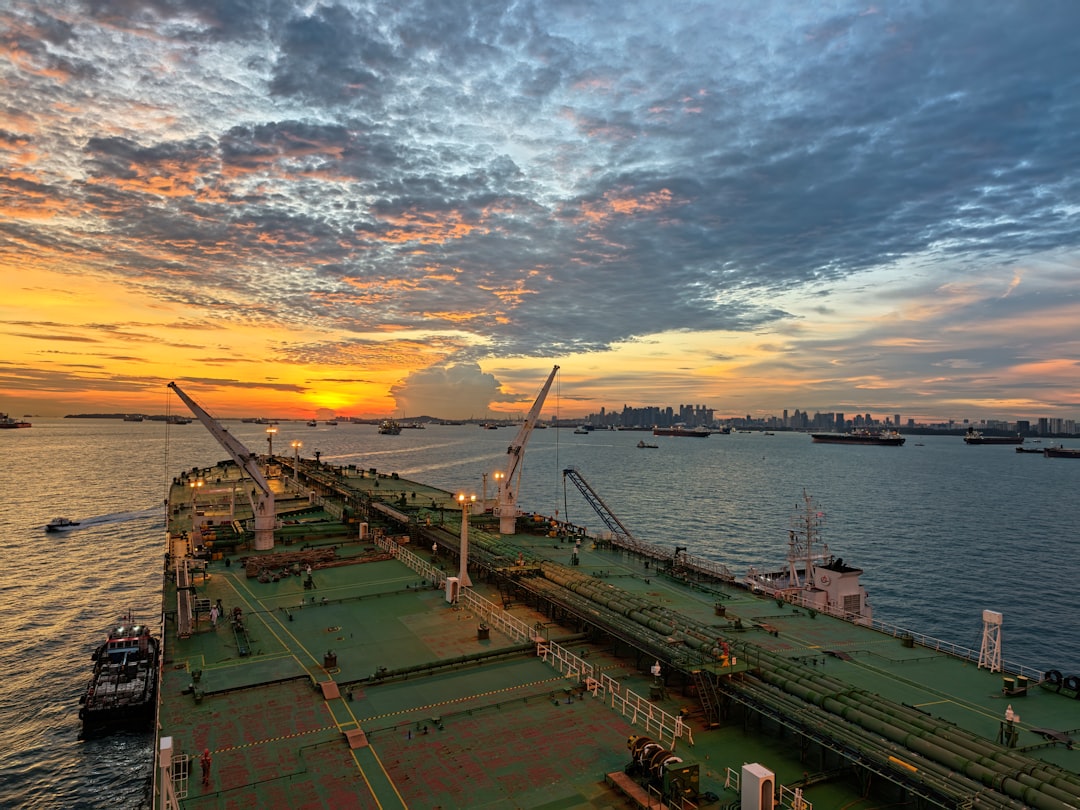
The IEA's most recent estimate put the output loss attributable to the Hormuz closure at between 6 and 8 million barrels per day, a range reflecting uncertainty about how many tankers were being quietly waived through versus fully blocked. At the low end of that range, the OPEC+ June increase covers about 3 percent of the gap. At the high end, closer to 2 percent. Neither figure does anything material to global oil balances. What the June quota decision actually communicates is something more institutional: OPEC+ is maintaining the procedural architecture of coordinated production management even as its ability to influence the market through that architecture has been temporarily suspended by geopolitical forces outside its control.
The UAE Departure and the Fracture It Exposed
The absence of the UAE from Sunday's video conference was not a procedural footnote. The Emirates had been OPEC's third-largest producer as recently as February, pumping approximately 2.37 million barrels per day against a sustainable production capacity of 4.3 million bpd. The gap between what the UAE was producing and what it could produce—roughly 1.9 million bpd of unused capacity—was itself a function of OPEC+ quota agreements that Abu Dhabi had long argued were unfair to a country with significant recent upstream investment. The Iran war accelerated what was already a latent tension.
Analysts at Kpler and energy consultancies tracking the exit noted that the UAE's departure is not without historical precedent. Qatar left OPEC in 2019, pivoting to a natural gas strategy that required long-term offtake contracts incompatible with production volatility imposed by cartel quotas. Ecuador suspended its membership twice, in 1992 and again in 2020, citing the economic cost of production caps during periods of fiscal stress. Angola departed in January 2024 after a dispute over quota allocations that the government in Luanda characterized as structurally disadvantageous to developing-country members. In each case, the exit was rational from the departing member's perspective and did not, by itself, destroy OPEC's cohesion.
The more consequential question is who might follow the UAE. Energy analysts flagged two names repeatedly in the days after the Abu Dhabi announcement: Kazakhstan and Nigeria. Kazakhstan's Tengiz and Kashagan fields have been producing at or near record levels under a long-term development agreement with Western oil majors including Chevron and Shell, and Astana has repeatedly chafed at OPEC+ quota discipline while publicly committing to it. Nigeria's situation is different in structure: the completion of the Dangote refinery in Lagos—the largest single-train refinery in the world, with a nameplate capacity of 650,000 bpd—has meaningfully reduced the country's dependence on crude export markets for foreign exchange, because domestically refined products can now substitute for the fuel imports that previously drained Nigeria's dollar reserves. That reduced export dependence arguably lowers the political cost for Abuja of departing a group whose quotas have historically constrained Nigerian production.
Trump's "Project Freedom" and the Peace Deal That May Not Happen
Against the backdrop of the OPEC+ meeting and the UAE exit, the more immediate oil price variable over the coming week is the trajectory of U.S.-Iran peace negotiations. On Sunday, Trump announced the launch of "Project Freedom," a U.S. Navy-led operation to begin escorting stranded commercial vessels through the Strait of Hormuz starting Monday morning. The announcement was framed in characteristically declarative terms: the strait would be open, ships would move, and Iran would face consequences if it interfered with the convoy operation.
By Sunday evening, the market reaction was muted. Iran's Foreign Ministry confirmed that it had received the U.S. response to Tehran's 14-point peace proposal, which had been transmitted through Pakistani mediators late last week. Iranian state media quoted Foreign Ministry spokesman Esmaeil Baghaei as saying that the nuclear file remained off the table until a ceasefire was in place and the naval blockade lifted on both sides. Trump, when asked about the Iranian proposal, said he was "told there's a deal" but had not reviewed the exact wording and was "likely" to reject the current terms because, in his assessment, Iran "has not paid a big enough price." The gap between those two positions—Iran demanding a ceasefire before nuclear talks, Trump demanding more pain before accepting a ceasefire framework—did not close over the weekend.
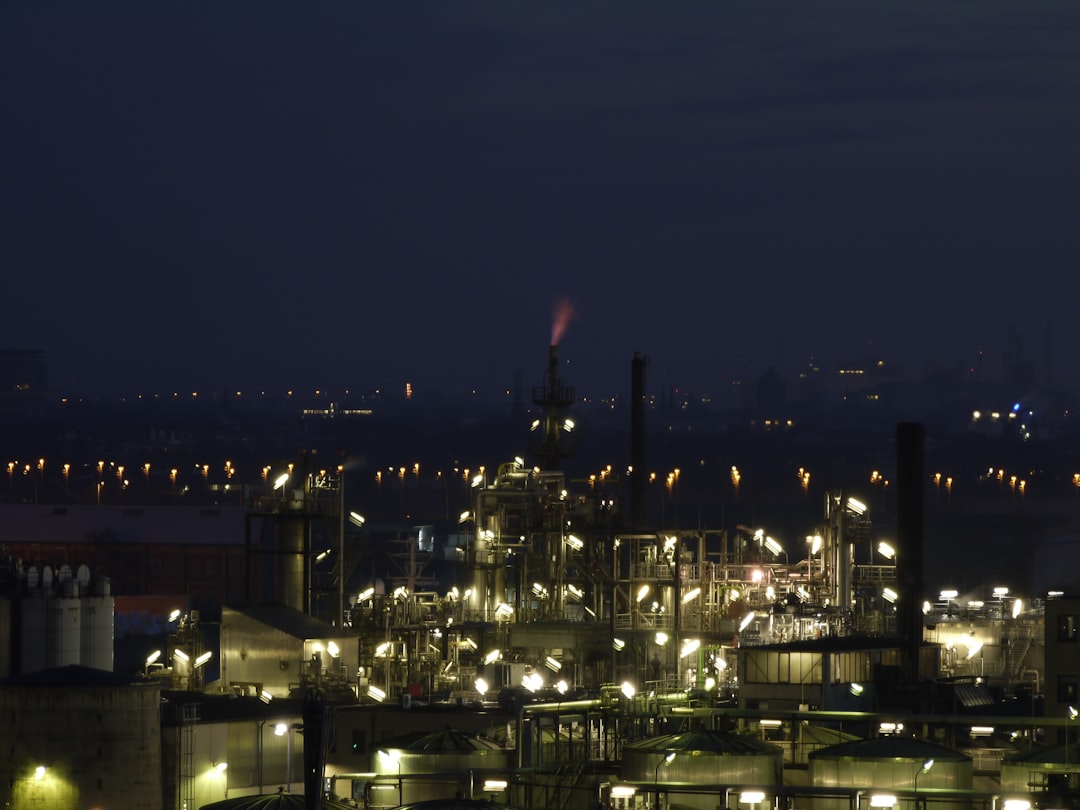
The result is a market that has, for now, priced in a stable stalemate rather than an imminent resolution or an imminent escalation. Brent fell less than 1 percent on Monday's early trading to approximately $107. WTI edged lower to around $101. Both moves were well within the daily volatility bands that energy traders have come to regard as normal during the Hormuz standoff. The "Project Freedom" announcement, which might have moved oil sharply lower six months ago on the expectation of a rapid logistics solution, landed with minimal impact—suggesting that market participants are skeptical that U.S. naval escorts can functionally substitute for an open strait given the density of traffic that once transited the waterway daily.
J.P. Morgan's $150 Warning and the Market's Fragile Calm
The current stability in oil prices around $100 to $110 reflects a very specific market equilibrium, one that is simultaneously fragile and self-reinforcing. It is fragile because it depends on the absence of further escalation: any significant confrontation in the strait between U.S. Navy convoys and Iranian forces, or any new interruption to non-Gulf supply routes, could push prices sharply higher very quickly. It is self-reinforcing because the high price environment has already triggered demand destruction in price-sensitive economies, while simultaneously incentivizing producers outside the Gulf to run their assets as hard as technically possible.
The $150 scenario J.P. Morgan describes is essentially a disruption persistence case. If the Hormuz closure continues through mid-May without meaningful progress on peace talks, strategic reserve buffers in OECD countries approach critical lows, and the demand destruction that has occurred so far proves insufficient to balance the market, then the marginal barrel of crude trades at a significantly higher clearing price. The bank's note estimated that the global economy could absorb oil at $120 per barrel with recession risk contained to a handful of vulnerable emerging markets. Above $130, developed-market recession risk rises materially. Above $150, the hit to global growth becomes severe enough to be self-correcting—demand destruction at that price point would be large enough to rebalance the market even without additional supply.
Who Leaves OPEC Next? Kazakhstan and Nigeria in Focus
The longer-term consequence of the UAE's departure may be less about short-term supply volumes and more about what it signals for OPEC+'s institutional coherence when the Iran conflict eventually ends and global oil markets normalize. For nearly six decades, OPEC functioned as the world's principal mechanism for coordinating production among major oil exporters, using collective output management to defend a price band that served the fiscal needs of member governments. That model has always required members to accept short-term production constraints for long-term price benefits. When the price benefit is guaranteed regardless of whether a member stays—because a geopolitical disruption has already pushed prices to record highs—the cost-benefit of cartel membership shifts.
Kazakhstan is the most likely next departure candidate. The country's oil ministry has repeatedly stated that its development agreements with foreign operators create contractual production obligations that cannot be overridden by OPEC+ quota decisions without triggering investor disputes. Those statements have been made before while Kazakhstan remained a member; the UAE's exit demonstrates that departure is feasible without triggering retaliation from Saudi Arabia or Russia. Nigeria's calculation is different. The Dangote refinery's 650,000 bpd processing capacity means Abuja can now convert domestic crude into refined products and sell them locally, capturing more value per barrel than raw export while simultaneously reducing the foreign exchange drain of fuel imports. That structural shift makes the country less dependent on the high crude export revenues that OPEC membership is supposed to protect, and therefore more willing to risk the quota flexibility that exits would provide.
Neither departure is imminent. Both are now more plausible than they were before May 1. OPEC+ remains a relevant institution with significant pricing influence when its members can actually deliver their quotas to market. Until the Strait of Hormuz reopens, those quotas are largely theoretical—and the decisions that will define the bloc's post-war structure are being made in the diplomatic channels between Washington and Tehran, not in the production adjustment meetings that consume so much market attention.
Sources
Reporting this article draws on. Bossblog summarises and analyses; the underlying reporting is theirs.
The BossBlog Daily
One email with the AI markets brief — the 13F moves, the Congressional trades, and what changed. No fixed schedule and no filler: it goes out when there is something worth sending.
Unsubscribe any time. We never sell or share the list.