
When Shell announced on April 27 that it had agreed to acquire Calgary-based ARC Resources for $16.4 billion, the move completed one of the most significant strategic pivots in the company's recent history. Less than a decade ago, Shell was systematically selling its Canadian oil sands holdings, writing down billions in stranded-asset risk and signaling that the energy transition would make heavy bitumen uncompetitive. That era is now officially over. In its place is a bet of the same scale??16.4 billion in enterprise value, or roughly $22 billion including all liabilities??n natural gas from the Montney shale formation of British Columbia and Alberta. The acquisition transforms Shell from a minor player in one of North America's most prolific basins into its second-largest producer, and it positions the London-listed supermajor directly adjacent to LNG Canada, the only large-scale liquefied natural gas export terminal operating on Canada's Pacific coast. The timing, strategy, and geopolitical backdrop all point in the same direction: Shell is making a long-duration bet that Asian gas demand, Western energy security concerns, and Canadian infrastructure investment will converge to make Montney gas among the most valuable molecules in global supply chains for the next two decades.
The Deal Structure: $16.4 Billion for Montney's Crown Jewel
The mechanics of the transaction give ARC shareholders $32.80 per share, representing a 27 percent premium to ARC's closing price on April 24, 2026. The consideration is structured as 75 percent Shell ordinary shares and 25 percent cash, with each ARC share converting into 8.20 Canadian dollars in cash and 0.40247 Shell shares. The equity component alone implies a market capitalization transfer of approximately $13.6 billion, with $2.8 billion in net debt and lease obligations bringing the total enterprise value to $16.4 billion. Depending on whether the Shell share price used in tabulation reflects the announcement-day level or the transaction closing price, some analysts have placed the all-in figure closer to $22 billion, which is the number BNN Bloomberg has used in its reporting.
Both boards unanimously approved the transaction. Regulatory reviews in Canada, the United States, and the European Union are expected to run through mid-2026, with closing targeted by year-end. The deal also effectively takes a major BP acquisition off Shell's near-term agenda: the capital commitment at this scale makes a parallel megadeal financially impractical, a fact that several analysts noted represents a significant signal about Shell's near-term M&A appetite.
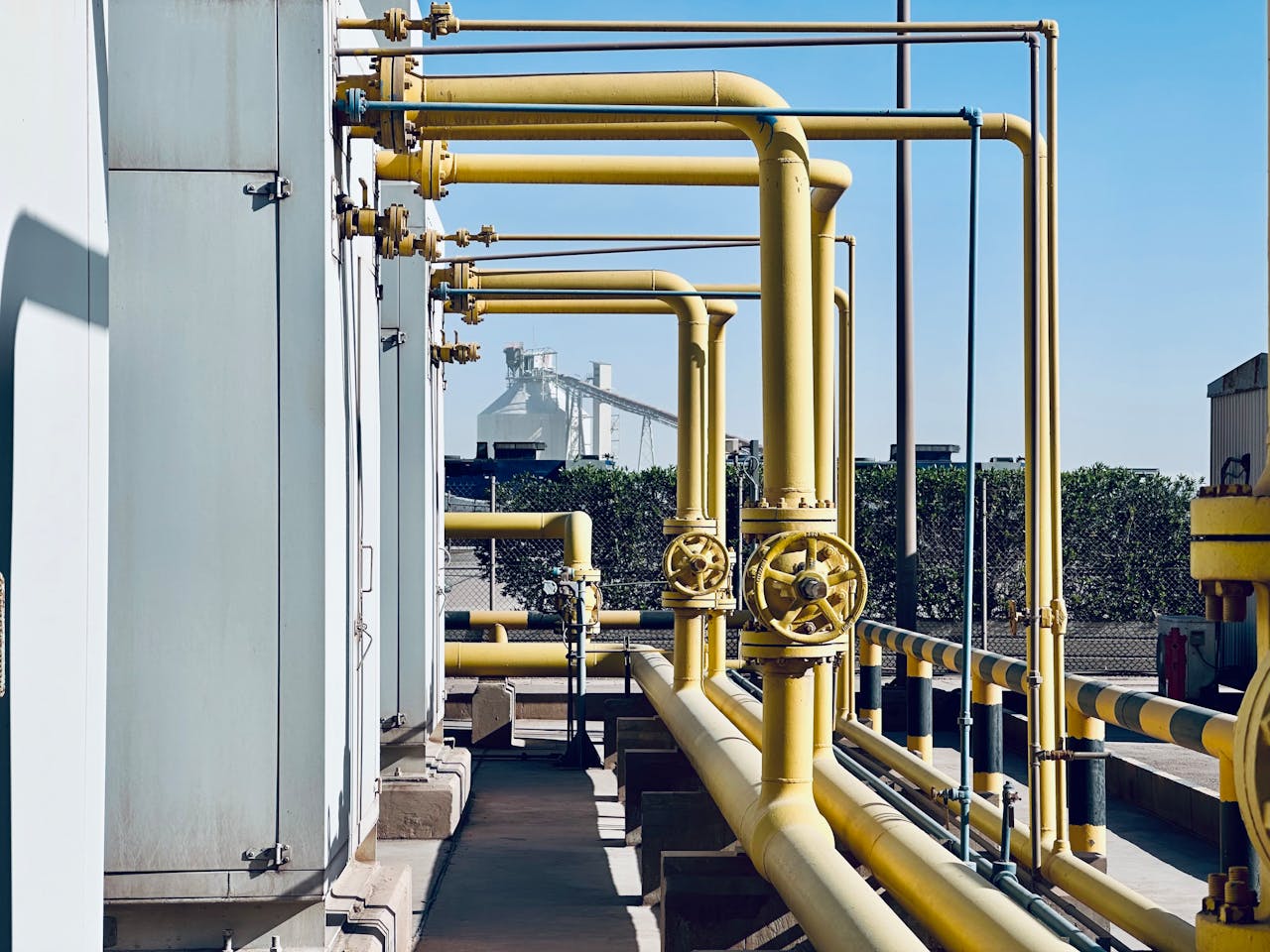
ARC Resources entered the transaction as the largest pure-play producer in the Montney, with production averaging 374,000 barrels of oil equivalent per day over the past year. That output is 58 percent natural gas and 42 percent crude oil and natural gas liquids, a mix that makes the asset base significantly more gas-weighted than the typical Canadian oil sands producer. ARC holds more than 1.5 million net acres in the formation, which will be combined with Shell's existing 440,000 net acres at the Groundbirch asset in British Columbia?? block that already supplies feedstock gas to LNG Canada's Phase 1 terminal. The combined Montney footprint of nearly 2 million acres creates the most extensive single-operator position in the basin.
Shell CEO Wael Sawan described ARC as a "high-quality, low-cost and top quartile low carbon intensity producer," language that reflects both the operational case and the ESG framing that matters to a supermajor managing investor scrutiny of fossil fuel exposure. The Montney's geology produces natural gas at relatively low cost and with lower flaring rates than many competing U.S. shale plays, a profile that fits Shell's stated objective of maintaining a lower-carbon-intensity upstream portfolio while still growing volumes.
From Oil Sands Exit to Gas-First Strategy: Shell's Decade-Long Pivot
The acquisition is best understood as the endpoint of a strategic repositioning that began in earnest around 2017, when Shell sold its Canadian oil sands operations to Canadian Natural Resources for roughly $8.5 billion. At the time, that transaction was read as Shell acknowledging that bitumen extraction??nergy-intensive, capital-heavy, and carbon-intensive??as poorly suited to the company's self-described "net zero" trajectory. The oil sands sale freed capital, reduced the emissions intensity of Shell's upstream book, and removed a chronic source of investor concern about stranded-asset risk.
What it did not do was eliminate Shell's exposure to Canadian energy markets. The company retained its 40 percent stake in the LNG Canada joint venture, a $40 billion megaproject near Kitimat, British Columbia, that shipped its first cargo in late 2025. That stake creates a long-term obligation??nd opportunity??o supply feedstock gas to the terminal. The Groundbirch asset was designed for exactly that function. As Phase 1 ramps toward full capacity, the question of feedstock supply for a potential Phase 2 expansion has grown increasingly urgent. ARC's Montney position answers that question with scale no internal organic program could have matched on the same timeline.
Shell's strategic logic is explicitly about LNG Canada's Phase 2 optionality, not simply about adding production barrels. The combined Montney position would give Shell the acreage to supply both phases of the terminal from a contiguous, internally controlled gas source rather than depending on third-party supply agreements. For an asset that will operate for 25 to 30 years, controlling the feedstock chain from wellhead to export berth is the kind of vertical integration that makes project financing and long-term offtake contracting significantly simpler.
LNG Canada Phase 2: The $33 Billion Prize Behind the Acquisition
LNG Canada Phase 1, operated by the Shell-led consortium at 60 percent design capacity, represents the first large-scale LNG export facility on Canada's Pacific coast. When it reaches full utilization, it will load approximately 14 million tonnes per annum of liquefied natural gas for shipment to Asian markets, principally Japan, South Korea, and China. Phase 2 would effectively double that capacity, making LNG Canada??f both phases operate simultaneously??he largest LNG export terminal in the world by nameplate capacity. The $33 billion in additional private-sector capital required for Phase 2 would represent one of the largest energy infrastructure investments in Canadian history.
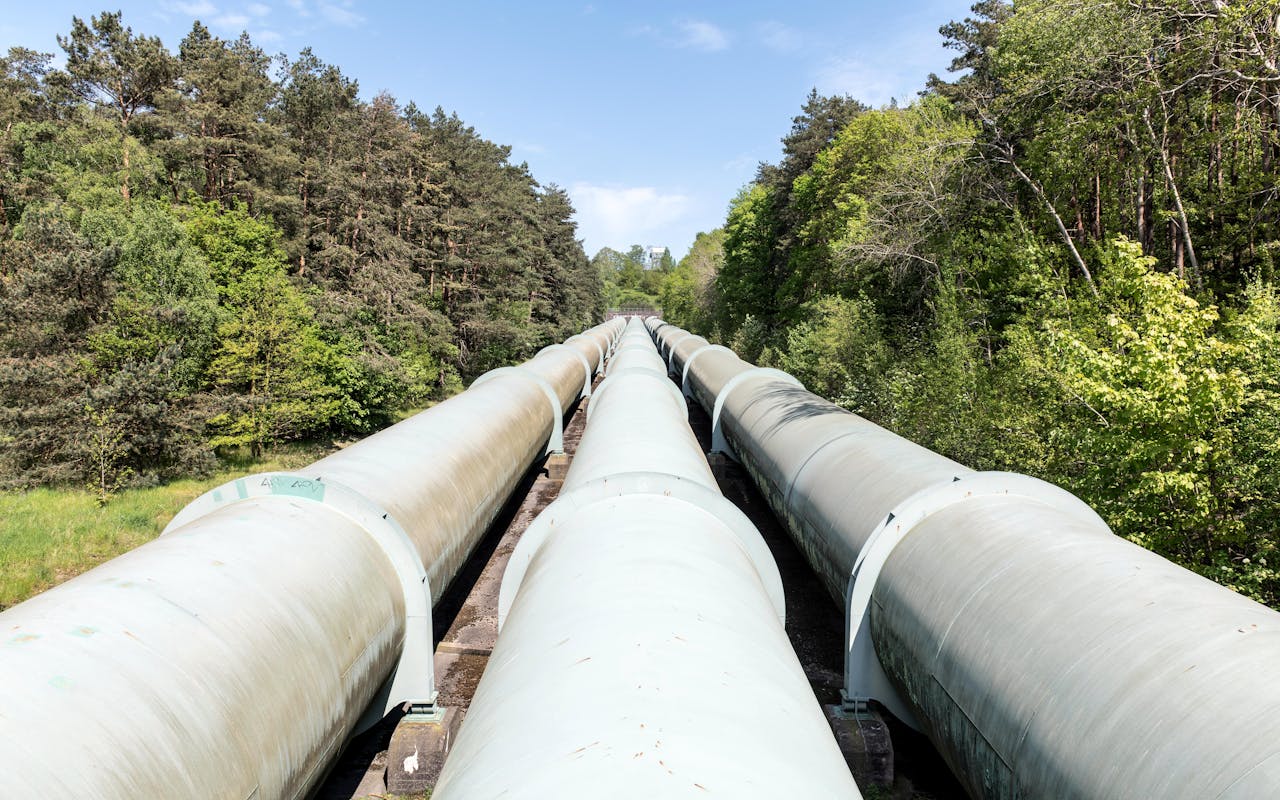
The Phase 2 decision has not been formally taken. The consortium, which in addition to Shell includes Malaysian national oil company Petronas, PetroChina, Mitsubishi Corporation, and Korea Gas Corporation, has been evaluating the economics for several years. Prior to the ARC acquisition, the most frequently cited obstacle to a Phase 2 go-ahead was feedstock supply security: the ability to guarantee long-duration gas volumes at competitive cost for a terminal that would operate through the 2050s. Shell's Groundbirch asset addressed a portion of that concern; the ARC acquisition addresses the rest.
Analysts at Enverus Intelligence Research and CIBC World Markets have both indicated in recent commentary that the ARC deal materially improves the Phase 2 business case. "The combination of Shell's Groundbirch position with ARC's Montney acreage gives the consortium a gas supply story that is genuinely credible at the volumes Phase 2 requires," Andrew Dittmar of Enverus noted in the days following the announcement. "That's not a guarantee of a final investment decision, but it removes what was probably the single biggest technical risk from the analysis."
Canadian Prime Minister Mark Carney added political support for that reading. Speaking from Ottawa the day of the announcement, Carney described the transaction as a "vote of confidence in Canada," and indicated that his government's Building Canada Act??nfrastructure legislation designed to accelerate major project permitting??ould be applied to facilitate Phase 2 review timelines. The Building Canada Act, which passed third reading in March 2026, compresses environmental assessment periods for nationally significant projects by requiring federal agencies to conduct reviews concurrently rather than sequentially. For an LNG expansion that would otherwise face a multi-year permitting process, concurrent review could save 18 to 24 months of pre-construction lead time.
The Montney Consolidation Wave: Shell Leaps to Second Behind Ovintiv
The Shell-ARC deal does not exist in isolation. The Montney basin has been the site of accelerating M&A activity since the LNG Canada Phase 1 commissioning confirmed that Pacific Coast LNG export is a commercially viable route for Alberta and British Columbia gas producers. Earlier in 2026, Ovintiv completed its $3.8 billion acquisition of NuVista Energy, consolidating its position as the dominant operator in the basin. The Shell-ARC combination, in one transaction, vaults Shell from seventh-largest Montney producer to second-largest, directly behind Ovintiv.
The consolidation dynamic reflects a structural feature of export-oriented resource development: the economics of pipeline takeaway capacity, LNG terminal slots, and gas processing infrastructure all favor large-scale operators who can commit to volumes that justify the fixed-cost investments. A fragmented basin of dozens of small producers cannot efficiently negotiate terminal offtake agreements or pipeline commitments at the volumes that make LNG Canada economics work. The pattern in Montney is toward fewer, larger operators with long-duration positions??xactly the structure that Shell is buying into with ARC.
Tom Pavic of Sayer Energy Advisers, speaking to BNN Bloomberg after the announcement, characterized the deal as reflecting the broader logic of the Montney's transition from a domestically focused basin to a globally integrated export play. "When you have LNG Canada up and running and the possibility of Phase 2, the value of Montney gas is no longer determined just by AECO hub prices," Pavic said. "It's connected to Asian spot markets, to the JKM benchmark. That changes the entire valuation framework for these assets, and it explains why you're seeing this level of corporate transaction activity."
Investor Reaction and the Long Road to Returns
The market's initial response was mixed in a way that reflects the inherent tension in large-scale acquisition announcements. ARC Resources surged on the announcement, as expected: a 27 percent premium is a premium, and ARC shareholders have an unambiguous near-term gain. Shell shares fell on the London Stock Exchange, dropping as the equity component of the deal created dilution and as investors weighed the lag between capital deployment and free cash flow generation from a basin that will require continued development spending before it reaches full productive capacity.
The long-duration nature of the return profile is the central investor debate. Shell will not extract full value from the ARC acquisition until LNG Canada Phase 2, if built, reaches stable operations?? timeline that almost certainly extends beyond 2030. In the interim, the company is spending $16.4 billion for assets that will generate cash at Montney gas prices, which are less attractive than the Asian LNG prices that Phase 2 would ultimately link to. The investment case depends on believing that Phase 2 will be built, that Asian LNG demand remains robust through the 2030s, and that the Canadian regulatory and political environment remains stable for a multi-decade infrastructure project.
Shell shares were up 19.2 percent year-to-date even before the acquisition announcement, reflecting a combination of elevated oil prices, improved downstream refining margins, and investor relief that Shell's prior capital allocation discipline appeared intact. The ARC acquisition tests whether that discipline extends to large, long-duration upstream bets in a period when energy transition uncertainty creates genuine questions about the terminal demand for the molecules Shell is buying the right to extract.
Canada's Energy Politics and the Building Canada Act Factor
The political backdrop for the deal is favorable in a way that would have seemed unlikely three years ago. Canada's federal government under Prime Minister Carney has shifted from a posture that was widely perceived as ambivalent toward fossil fuel infrastructure to one that explicitly frames energy export capacity as a national strategic interest??articularly in the context of a geopolitical environment where European allies and Pacific partners are willing to pay premiums for supply from politically stable, low-risk producers.
The Building Canada Act is the legislative expression of that shift. By compressing permitting timelines and requiring concurrent rather than sequential review of major project approvals, it addresses the single most common complaint from energy companies operating in Canada: that regulatory uncertainty and timeline unpredictability make long-duration capital commitments difficult to justify against U.S. projects that face faster approval processes. If the Act delivers on its objectives for LNG Canada Phase 2, it could mean a formal investment decision is possible within 18 months rather than the three-to-five-year timeline that previous regulatory frameworks implied.
For Shell, the combination of a favorable political environment, a Montney gas position large enough to supply both LNG Canada phases, and a partner group with long-duration Asian LNG demand commitments represents the most compelling case the company has had to make a major upstream bet in Canada since it first took a stake in the LNG Canada project in 2011. Whether the $16.4 billion the company is committing today translates into returns that justify the cost of capital over a 15-to-20-year development horizon is a question that will be answered by gas prices, LNG market structure, and the Phase 2 final investment decision??one of which are knowable with precision today. What the acquisition makes clear is that Shell has concluded the expected value of that bet is worth making, and that the Montney's combination of scale, quality, and export optionality makes it the right basin to make it in.
Sources: CNBC ? Fortune ? BNN Bloomberg ? The Globe and Mail
The BossBlog Daily
One email with the AI markets brief — the 13F moves, the Congressional trades, and what changed. No fixed schedule and no filler: it goes out when there is something worth sending.
Unsubscribe any time. We never sell or share the list.