
Greg Abel walked onto the Berkshire Hathaway stage in Omaha on Saturday without the man who had filled that space for six decades. Warren Buffett (95 years old, still sharp, still the company's largest individual shareholder) watched from a seat in the audience while his chosen successor ran what is almost certainly the most closely scrutinized first shareholders' meeting any newly minted Fortune 500 CEO has faced in years. The result was a careful, disciplined performance: no dramatic strategy pivots, no concessions to activist logic, and a firm insistence that a $397 billion cash hoard is not an embarrassing problem to be solved but an asset to be deployed at the right moment. What Abel demonstrated in four hours was that the transition of power at the world's most famous conglomerate will be evolutionary, not revolutionary, which is exactly what Buffett asked for and exactly what a nervous shareholder base needed to hear.
The stakes were high for a specific reason. Since Buffett signaled his intention to step down last year, Berkshire's Class A shares have trailed the S&P 500 by more than 30 percentage points. The company entered the 2026 meeting year-to-date down roughly 5%, while the broader index had posted gains. Analysts and shareholders arrived in Omaha asking a version of the same question: is Berkshire's conglomerate structure still the right model, or is it a relic the market is quietly punishing?
Abel Signals Continuity Over Disruption at Berkshire's First Post-Buffett Meeting
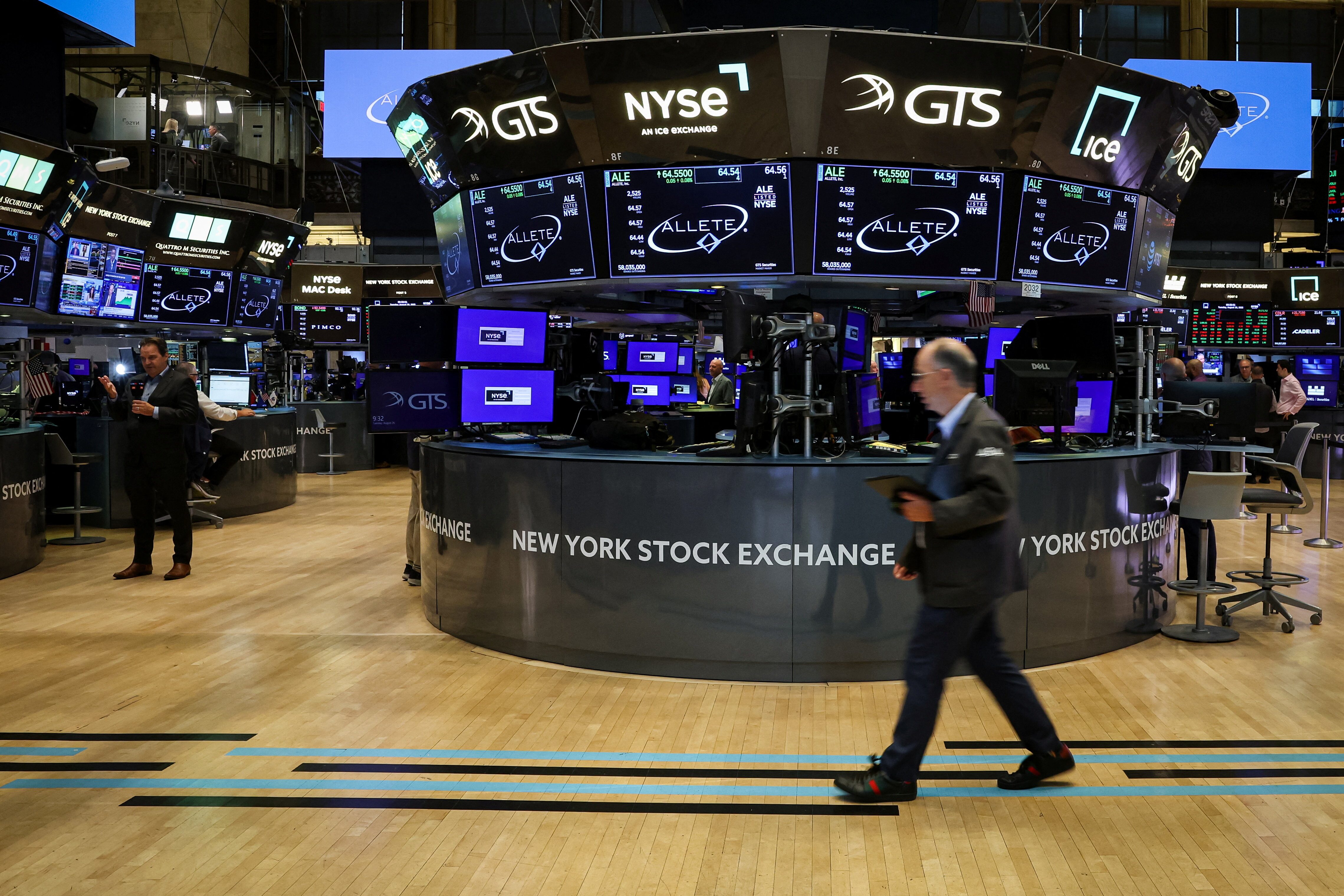
Abel's opening remarks set the tone immediately. When an investor asked whether breaking up Berkshire (spinning off its insurance operations from BNSF Railway, for example, or separating its consumer brands portfolio) would unlock value, Abel did not hesitate. "Absolutely not," he said. "We see our conglomerate structure working without the bureaucracy and bloated costs. We do not see ourselves divesting subsidiaries for that reason or ever breaking off a group."
The phrasing was deliberate. "Without the bureaucracy and bloated costs" is a pointed rebuttal to the standard activist case, which argues that sprawling conglomerates trade at a discount to the sum of their parts because headquarters overhead destroys value. Abel's counter-argument is that Berkshire's decentralized model, with subsidiaries run at near-total autonomy and a lean central office in Omaha, already captures most of the theoretical breakup premium without requiring a disruptive transaction that would trigger capital gains taxes on decades of compounding.
Buffett reinforced the message from his audience seat. He praised Abel's handling of operations since January, noting that the Apple investment, purchased at roughly $35 billion, had grown to approximately $185 billion at current prices, a 5.3x return that vindicates Berkshire's patient, concentrated-position approach. "That's been a hundred percent successful," Buffett said of Abel's start. "Greg is doing everything I did and then some, and he's doing it better in all cases." Coming from an 80-year track record, that endorsement carries more weight than a typical outgoing CEO's sign-off.
$397 Billion in Cash: The Strategic Logic Behind Berkshire's Record Dry Powder
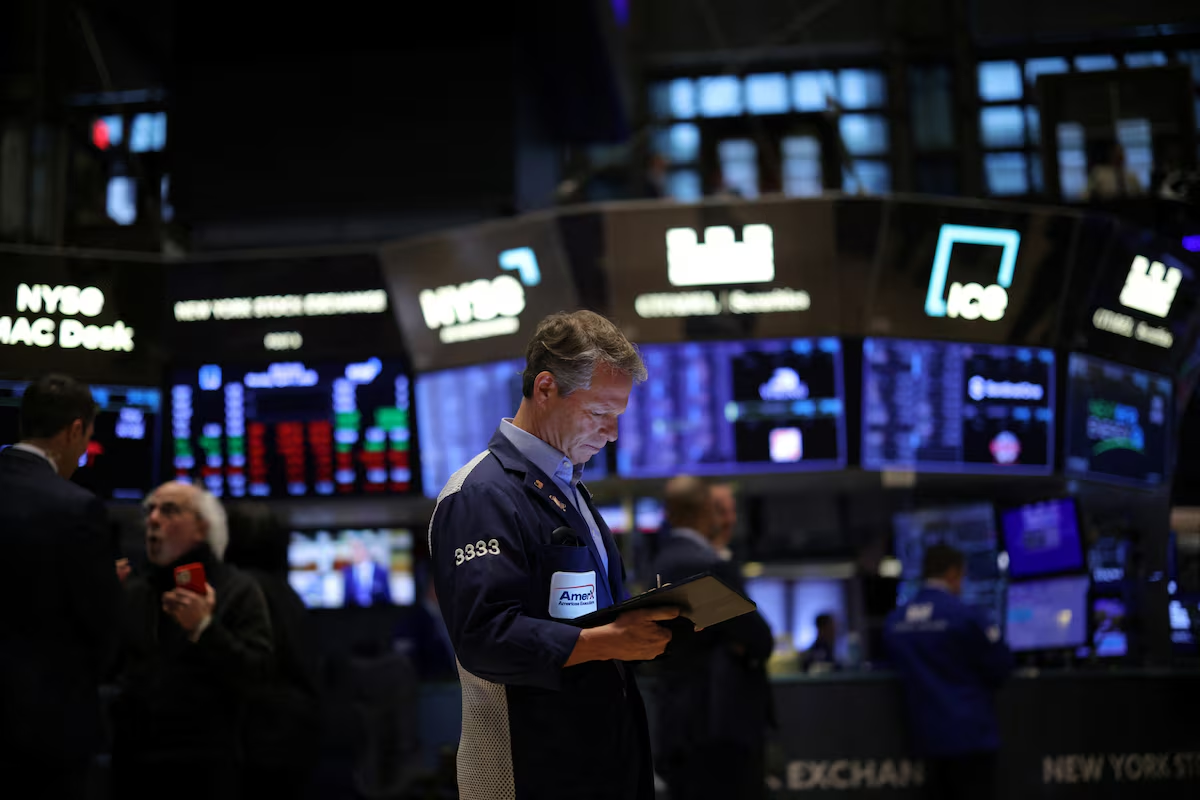
The cash pile is the number that dominates almost every Berkshire conversation, and Abel addressed it head-on. The company holds nearly $400 billion in cash and short-dated U.S. Treasuries, a record that reflects both a deliberate posture and a market environment Abel described as not "our ideal surrounding area or environment" for deploying capital.
The strategic logic is straightforward, if unfashionable in a bull market. At current short-term rates, Berkshire earns roughly $15 to $20 billion annually in interest on its Treasury position, a meaningful contribution to operating earnings that requires no risk, no leverage, and no management bandwidth. That cash also provides optionality: when a credit event, a sector dislocation, or a large-scale acquisition opportunity arrives, Berkshire can act at a scale that no private equity firm or corporate acquirer can match on a comparable timeline. Abel signaled that the company is "thinking critically" about deployment but will not chase deals simply because the balance sheet creates pressure to do so.
The tension, from a shareholder perspective, is that holding $397 billion in cash while the S&P 500 compounds at 15 to 20% annually represents an enormous opportunity cost if that capital remains idle for multi-year periods. Analysts at Gabelli Funds and Glenview Trust noted before the meeting that the cash position is simultaneously Berkshire's greatest source of financial flexibility and its most significant drag on return-on-equity metrics relative to the index. Abel did not dispute the math; he disputed the premise that maximizing short-term ROE is the right objective.
On buybacks (a more direct mechanism for returning cash to shareholders), Abel confirmed that Berkshire resumed repurchases in March after pausing them through the second half of 2025. The quantum was not disclosed, but the resumption signals that management views shares as attractively valued below whatever internal threshold they use, typically understood to be around 1.2 to 1.3x book value.
Thirty Percentage Points Behind the S&P 500: Why Berkshire's Underperformance Is Concentrated
The 30-plus percentage-point gap against the S&P 500 since last year is large enough to demand examination. It is not, however, evenly distributed: the bulk of the underperformance reflects a sentiment multiple compression on the "Buffett premium," the excess valuation investors had ascribed to Berkshire because of its association with a singular investor whose track record spanned eight decades, rather than a deterioration in underlying business performance.
When Buffett named Abel as successor, that premium began to erode. Markets were pricing out the possibility of Buffett personally identifying the next Apple or the next American Express, transactions that individually added tens of billions in value and required judgment that is, by definition, not replicable by committee. Abel is a proven operator who ran Berkshire Hathaway Energy for years and oversaw the utility's navigation of the U.S. energy transition, but he is not a capital allocator with Buffett's specific track record of spotting compounders early.
Abel's counter-narrative at the meeting was operational in nature: he emphasized the depth of the subsidiary management bench, naming Ajit Jain (insurance), Adam Johnson (investments), and Katie Farmer (BNSF) as key partners rather than positioning himself as a single decision-maker. "We don't need a single successor to Charlie Munger," Abel said, in a line that doubled as a comment on his own role. The message to institutional shareholders is that Berkshire's moat is structural, not personal — and that the moat's value should not depend on a single name above the door.
Insurance Underwriting Falls 54%, Operating Earnings Off 30% in Q4 2025
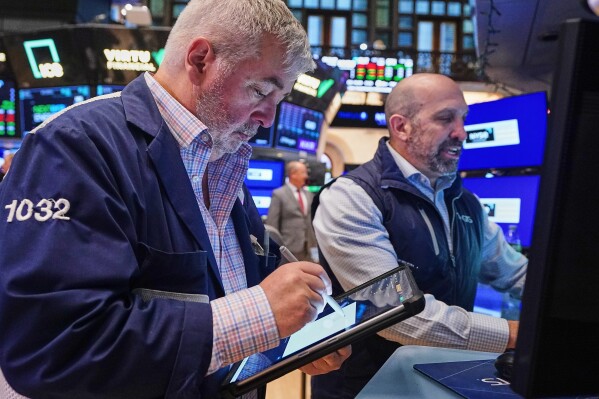
The financial backdrop for the meeting was not comfortable. Berkshire's Q4 2025 operating earnings fell nearly 30% from the prior year, dragged primarily by a 54% collapse in insurance underwriting profit. The culprit: an elevated hurricane and wildfire season that hit Berkshire's reinsurance and primary insurance books simultaneously, in combination with reserve development on older casualty lines where medical inflation has kept loss costs stubbornly above original estimates.
The insurance underwriting cycle matters disproportionately to Berkshire because the float (the pool of premiums collected but not yet paid out as claims) is the economic engine that funds investment activity at no cost. When underwriting turns unprofitable, that float effectively carries a positive cost, eroding the investment returns it was meant to amplify. Jain, who has run Berkshire's insurance operations for decades, acknowledged the challenging environment but argued that Berkshire's underwriting discipline of refusing business at prices that do not adequately compensate for risk positions it better than peers who chase market share at inadequate margins.
BNSF, the railroad, also contributed to the earnings pressure. Rail volumes remain below pre-tariff highs as reshoring supply chains shift traffic patterns and intermodal pricing stays compressed. Abel, who has specific expertise in regulated infrastructure, told shareholders that BNSF is investing in capacity and efficiency but that the volume recovery timeline depends on factors outside management's control, including the trajectory of U.S.-China trade flows and the pace of near-shoring completions.
The Efficient Conglomerate Thesis Against Activist Logic at $1.1 Trillion
Abel's "efficient conglomerate" framing is a direct philosophical challenge to the private equity and activist playbook of the past twenty years, which holds that sprawling multi-industry companies consistently destroy value and that forcing divestitures releases it. The evidence on that thesis is, in practice, mixed; several high-profile conglomerate breakups (GE, Honeywell, United Technologies) have produced outcomes ranging from modestly positive to actively destructive, but the logic remains influential in institutional investor circles, which is why Abel felt the need to address it directly rather than dismiss it.
What Berkshire has that most targets of activist breakup pressure do not is a combination of genuine diversification across uncorrelated cash flows, a balance sheet that requires no leverage to function, and a decentralized management structure that is already lean by large-company standards. The insurance float provides low-cost capital. BNSF provides regulated, volume-sensitive cash flows. The consumer brands and utilities provide inflation-linked pricing power. The equity portfolio provides concentrated exposure to long-duration compounders. Individually, each business is good. Together, with the float funding the equity book, they create a capital flywheel that has compounded at roughly 20% annually for six decades.
Abel's case is that breaking that flywheel to satisfy a short-term sum-of-parts argument would be a category error: trading a machine that generates structural alpha for a one-time transaction premium. The market is currently pricing in some skepticism that Abel can maintain the flywheel at the same rotational speed as Buffett did. That skepticism will be resolved not by annual meeting rhetoric but by capital allocation decisions over the next three to five years.
Investors who have owned Berkshire for its conglomerate characteristics (diversification, low correlation to the index, conservative balance sheet) are likely to remain patient. Investors who bought it as a Buffett vehicle and are now reassessing will likely continue to rotate out, which helps explain the continued underperformance relative to the index.
The 2026 annual meeting clarified one thing cleanly: Greg Abel knows exactly what kind of company he is running, and he is not changing it. Whether a $397 billion cash reserve earns its keep by enabling the next transformational acquisition or simply compounds in Treasuries while the S&P 500 grinds higher is the open question that will define the first chapter of the Abel era. The answer will take years to arrive, and it will be written in deal terms and operating margins, not in Omaha speeches. For a company that has always operated on Buffett's dictum that "our favorite holding period is forever," a few quarters of underperformance is not, by itself, evidence that anything is broken.
The BossBlog Daily
One email with the AI markets brief — the 13F moves, the Congressional trades, and what changed. No fixed schedule and no filler: it goes out when there is something worth sending.
Unsubscribe any time. We never sell or share the list.