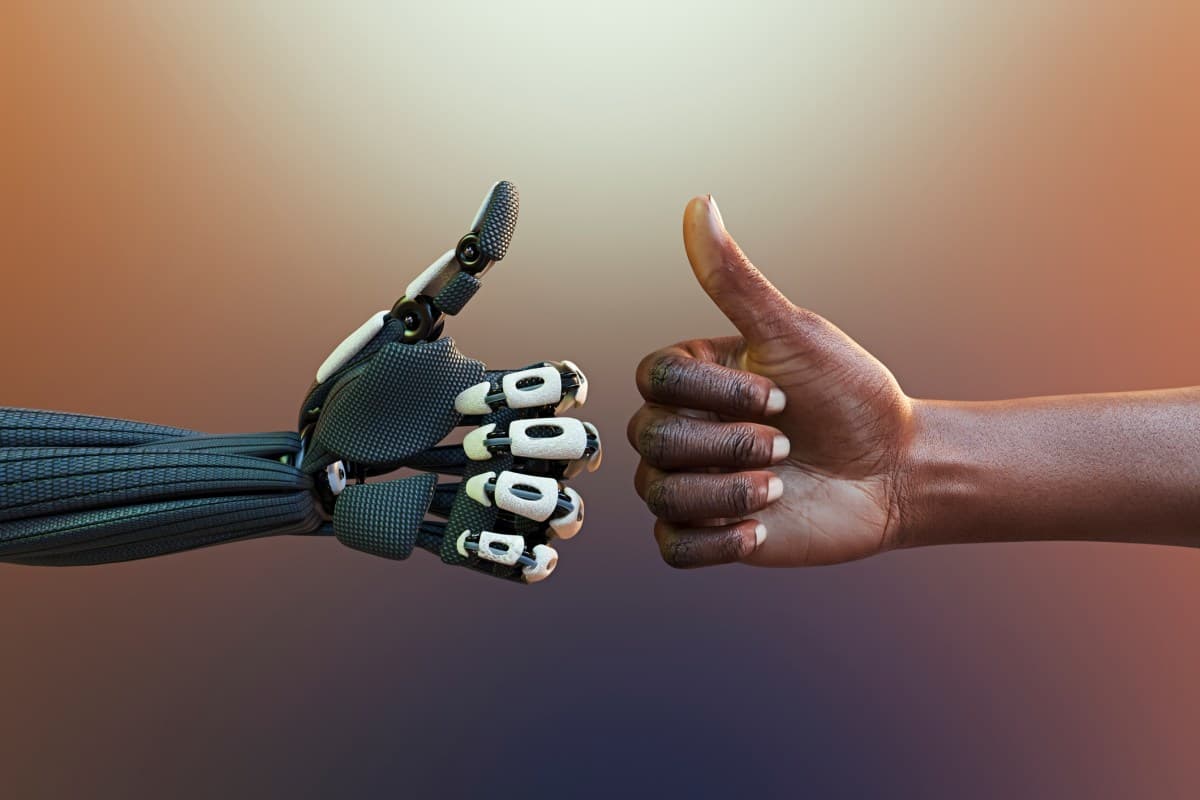
Meta has acquired Assured Robot Intelligence, a startup building foundation models for humanoid robots, adding the company's co-founders to its Superintelligence Labs research division. The deal, which closed on May 1, 2026, did not include financial terms, but it represents Meta's most direct move yet into a technology race that Goldman Sachs values at $38 billion by 2035 and Morgan Stanley prices as high as $5 trillion by 2050. Amazon, Tesla, Google, and Elon Musk's xAI are all pouring capital into humanoid platforms, and Meta's acquisition of a team that was explicitly pursuing what its founders described as "physical AGI" signals that the company intends to compete at the frontier rather than wait for the category to mature.
What Meta Acquired: Assured Robot Intelligence and the Physical AGI Mission
Assured Robot Intelligence was building foundation models designed to give robots the ability to understand, predict, and adapt to human behaviors across complex and unpredictable physical environments. That framing — understanding and prediction in unstructured settings — is the hard part of humanoid robotics. A robot that can perform a single repetitive factory task is a solved engineering problem; a robot that can navigate a household, interpret context, and adjust its behavior when a child runs into the room is not. ARI was betting that the breakthrough enabling the second category would look like a foundation model trained on embodied experience, much the way large language models were trained on text.

The company's founding team will join Meta Superintelligence Labs, the research division that Meta CEO Mark Zuckerberg restructured aggressively in early 2026 under the leadership of Alexandr Wang. Wang, who previously founded Scale AI and joined Meta to lead its AI research push, welcomed the ARI team publicly on X, describing the acquisition as part of Meta's commitment to building AI that operates in the physical world, not just digital contexts. The team will also work closely with Meta Robotics Studio, an internal group launched in 2025 to develop the underlying technology for humanoid hardware.
The Founders: Lerrel Pinto and Xiaolong Wang
The two co-founders Meta acquired are Lerrel Pinto and Xiaolong Wang, both of whom bring academic and industry pedigrees that make ARI a credible foundation model bet rather than a speculative hardware play. Xiaolong Wang is an associate professor at the University of California San Diego and spent time as a researcher at Nvidia, where he worked on embodied AI and robot learning systems. His academic work on locomotion and dexterous manipulation has been cited extensively in robotics research, and his Nvidia experience gave him direct exposure to the GPU-accelerated training infrastructure that large model training requires.
Lerrel Pinto has an even more concrete track record of building robotics companies that attract acquisition interest. Before ARI, he co-founded Fauna Robotics, a company developing general-purpose manipulation robots, which Amazon acquired in March 2026 for an undisclosed sum. Pinto's entry into Meta comes roughly six weeks after Amazon landed his previous company, which is an unusual sign of an entrepreneur who has built two acquirable robotics teams in succession. The fact that both Amazon and Meta moved quickly to acquire his startups within the same two-month window suggests that the talent market for researchers who can bridge foundation model training and physical robot deployment is tighter than the volume of press releases about humanoid robots might suggest.
Meta's Android Strategy: Licensing the Platform, Not Just Building Products
Meta's approach to humanoid robotics differs in a meaningful way from Tesla's or Amazon's vertical integration strategies. Zuckerberg and Alexandr Wang have both described Meta's intent as building the foundational technology layer for humanoids — the models, the sensors, the software infrastructure — and then licensing that stack to other manufacturers, in the same way that Google built Android and licensed it to hardware partners rather than competing head-to-head with every handset maker.
That platform strategy has implications for how Meta thinks about ARI's value. The acquisition is not primarily about any specific robot that ARI was building; it is about the foundation model expertise and the research approach the team brings. A platform-first strategy requires that the underlying models be general enough to run on hardware from multiple manufacturers with varying sensor configurations and actuator designs. The ARI team's work on adapting to unstructured environments and varied human behaviors is precisely the generalization research that a platform approach needs. Tesla's Optimus and Amazon's Atlas-derived systems are designed around specific hardware stacks; a Meta-licensed humanoid brain would need to work across many stacks.
This is a significant bet because the Android comparison, while strategically elegant, glosses over one structural difference: smartphone hardware was relatively commoditized by the time Android launched, whereas humanoid robot hardware in 2026 is still in its bespoke experimental phase. Meta is effectively betting that commoditization happens fast enough that a platform layer becomes valuable before any single vertical integrator locks up the market.
The Competitive Landscape: Tesla, Amazon, Google, and xAI
Meta is entering a field that is crowded with well-resourced competitors who have a head start. Tesla has been shipping early versions of Optimus in factory settings since 2025 and has the advantage of directly using its humanoids in its own production environments, which provides a feedback loop for training data that pure research labs cannot replicate. Elon Musk has described humanoid robots as potentially the most valuable product Tesla ever makes, projecting trillion-dollar revenues on the back of a labor market where a robot that can perform physical tasks at human-competitive cost would command extraordinary pricing power.
Amazon's acquisition of Fauna Robotics — which absorbed Pinto's previous company — signals that the logistics giant is building toward a future where warehouses and last-mile delivery are staffed by humanoid systems that can handle the unstructured environments that current fixed-arm robots cannot. Google's parent company Alphabet has made robotics investments through both DeepMind and its venture arms, and the search giant's access to the world's largest datasets of human behavior gives its foundation model approach structural advantages that newer entrants must compensate for.
xAI is the newest entrant but arguably the most aggressive. Musk has explicitly connected xAI's large model training capacity to Tesla's robotics program, suggesting that Grok-class models will eventually power Optimus units at scale. The integration of frontier LLM capability with physical robot hardware is exactly the bet that ARI was making, and exactly what Meta is now trying to accelerate.
Market Projections: Why $38B and $5T Can Both Be Right
The range between Goldman Sachs's $38 billion estimate for 2035 and Morgan Stanley's $5 trillion estimate for 2050 is not a sign that analysts disagree about the technology; it is a sign that humanoid robots have a binary outcome structure that makes conventional market sizing almost meaningless. If humanoid robots achieve human-competitive cost and capability in general-purpose physical tasks, the addressable market is effectively the entire global labor market for physical work, which dwarfs any category that has ever existed in consumer electronics or enterprise software. If they stall at specialized industrial applications, the market is real but bounded.
The $38 billion scenario assumes robots become productive but specialized tools, deployed in controlled manufacturing environments where their limitations are managed. The $5 trillion scenario assumes robots achieve sufficient generalization to replace labor in healthcare, construction, retail, logistics, and personal services — a transition that would represent the largest reallocation of economic output in modern history. Both scenarios are internally coherent; neither is obviously more likely given the state of the technology in early 2026.
What ARI's acquisition adds to Meta's position is not certainty about which scenario plays out, but optionality. A platform strategy is better positioned for the high-magnitude scenario than a product strategy, because if humanoids do achieve broad generalization and commoditized hardware, the company that controls the operating system collects rents across the entire market. If the high-magnitude scenario does not materialize, Meta still has a defensible robotics research position that can anchor enterprise sales of industrial humanoid tools — a smaller but still substantial outcome.
Capital Allocation and the $125 Billion Question
Meta's 2026 capital expenditure guidance of $125 to $145 billion — raised by $10 billion from its initial projection — establishes the financial context in which the ARI acquisition should be read. That spending covers AI data centers, compute infrastructure, and research programs including robotics, and it dwarfs the investment levels of any pure-play robotics competitor. Meta is not making a modest exploratory bet on humanoids; it is making the kind of structural infrastructure investment that signals a long-duration strategic commitment.
The acquisition of ARI is modest in absolute terms — the price was not disclosed, and ARI was a small research team rather than a late-stage company — but its strategic significance is disproportionate to its size. Foundation model research is talent-constrained, not capital-constrained, and acquiring two co-founders with Pinto's track record and Wang's academic depth at a moment when the humanoid race is beginning to heat up is the kind of move that looks inexpensive in the short run and essential in hindsight if the platform strategy succeeds.
For Meta, the integration of ARI into Superintelligence Labs rather than into a standalone robotics division signals that leadership views humanoid capability as a fundamental AI research problem, not a hardware product line. The distinction matters because AI research resources at Meta — compute, talent, and attention from senior leadership — flow toward problems that are treated as core to the company's identity. Placing humanoid AI inside Superintelligence Labs puts it adjacent to the models and researchers driving Meta's consumer and enterprise AI products, which creates cross-pollination opportunities that a siloed robotics division would not produce. Whether that integration advantage outweighs the focus benefits of dedicated teams remains to be seen, but the organizational bet is clear: Meta believes that the path to humanoid robots runs through the same foundation model research that is reshaping everything else it builds.
The BossBlog Daily
One email with the AI markets brief — the 13F moves, the Congressional trades, and what changed. No fixed schedule and no filler: it goes out when there is something worth sending.
Unsubscribe any time. We never sell or share the list.