
In a week defined by Q1 earnings from the world's largest technology companies, the market delivered its clearest verdict yet on who is winning the AI infrastructure trade: Alphabet. The parent company of Google posted $109.9 billion in revenue for the quarter, up 22% year-over-year, and watched its shares climb 10% as investors celebrated Google Cloud's record-breaking 63% revenue growth. A continent away in sentiment, Meta Platforms fell more than 8% on the same day, despite reporting its own strong quarterly results, as Wall Street balked at the speed and structure of the social media giant's AI spending. The divergence, which Bloomberg put at $566 billion in combined market capitalization across a single trading session, is the starkest measure yet of how differently investors are treating AI spend depending on whether a company can demonstrate that the capital is already converting into revenue.
The Magnificent Seven collectively posted Q1 earnings growth of roughly 57%, compared with 16% for the rest of the S&P 500, yet their stocks diverged sharply depending on a single variable: the visibility of the return on AI infrastructure. Alphabet emerged as the year's best performer among the group, up 23% year-to-date by Thursday's close. Microsoft extended its worst quarter since 2008 and remains down 12% for 2026. The spread is not about the AI investment thesis being right or wrong. It is about who can point to a contracted revenue line large enough to justify the forward commitment.
Google Cloud's $20 Billion Quarter Signals a Structural Shift in Enterprise AI
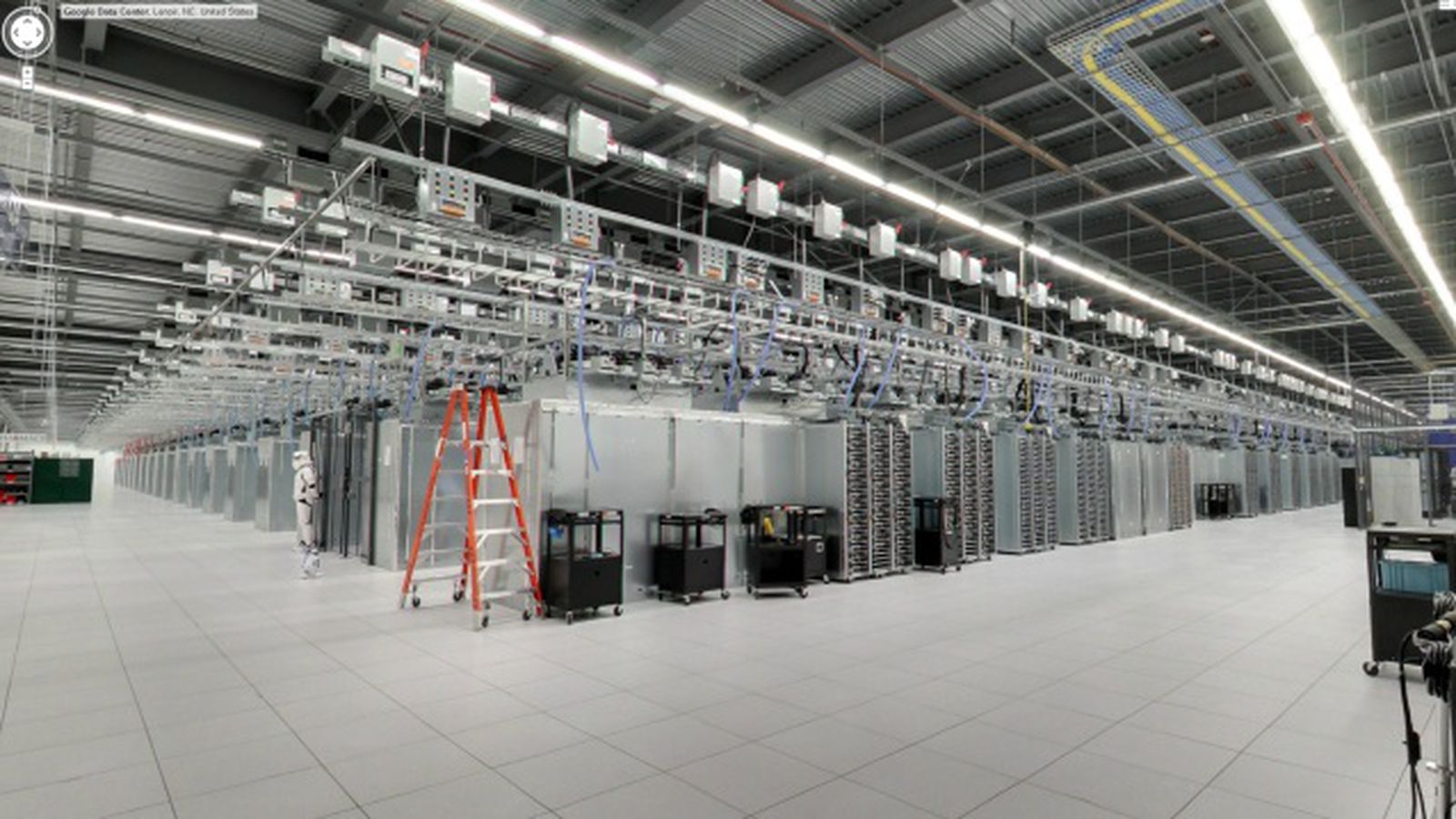
Google Cloud generated $20.03 billion in revenue in Q1 2026, up 63% year-over-year and nearly $2 billion above the $18.05 billion that Wall Street had forecast. The operating income figure was equally striking: $6.6 billion, compared with $2.2 billion in the prior-year period, a tripling of profitability on a 63% revenue increase. The margin expansion points to a business where the marginal cost of incremental cloud capacity is falling as Google's custom silicon and data center footprint matures, even as total spending accelerates.
CEO Sundar Pichai told analysts that AI solutions became the primary growth driver for cloud "for the first time in Q1," with products built on Google's generative AI models growing approximately 800% year-over-year. Gemini Enterprise's paid monthly active users rose 40% sequentially, reflecting an enterprise adoption curve that is accelerating rather than plateauing. The company ended Q1 with a cloud backlog of $460 billion, almost doubling quarter-on-quarter, an order book representing roughly five years of cloud revenue at the current run rate.
Alphabet also raised its 2026 capital expenditure guidance to $180 to $190 billion, up from the prior $175 to $185 billion range, with $35.7 billion deployed in Q1 alone. Pichai offered a rare acknowledgment that even this level of spending falls short of what the market demands: "We are compute constrained in the near term. Our cloud revenue would have been higher if we were able to meet the demand." That admission provides a justification for capex guidance that almost no other company can credibly make: Alphabet is not spending in anticipation of demand; it is spending to catch up with demand it has already contracted.
How the Q1 Numbers Translate Into P&L Separation
The breadth of Alphabet's Q1 results underscores why the stock reaction was so sharp. Google Services (encompassing Search, YouTube, and subscriptions) generated $89.6 billion in revenue, up 16%, with Search alone contributing $60.4 billion, a 19% increase, and YouTube advertising reaching $9.9 billion, up 11%. Total paid subscriptions across Google's products reached 350 million, and Waymo's autonomous vehicle unit completed 500,000 rides per week. Net income for the quarter was $62.6 billion, though that figure includes a $36.9 billion one-time equity gain from investment revaluation; the underlying operating performance was nonetheless the strongest in Alphabet's recent history.
Microsoft's numbers were strong in absolute terms but generated a different market reaction. Q3 fiscal 2026 revenue came in at $82.9 billion, up 18% year-over-year, and Azure cloud services grew 40% in constant currency, three points ahead of analyst consensus. Microsoft's AI revenue reached an annualized run rate of $37 billion, up 123% year-over-year, and the Intelligent Cloud segment posted $34.68 billion in revenue, a 30% gain. These are legitimate results by any historical standard. The problem was the forward capex commitment: $31.9 billion in Q3, up 49%, with full-year 2026 guidance pointing toward $190 billion, a 61% increase from 2025, with $25 billion of that attributed to higher component costs. Microsoft shares fell roughly 4% on Thursday and remain the worst performer among the Magnificent Seven in 2026.
The asymmetry in market reactions, with Alphabet up 10% on a day it raised capex guidance and Microsoft down 4% despite an earnings beat, is explained by the difference in visibility. Alphabet's $460 billion cloud backlog sits on the other side of the capex ledger, providing contracted revenue coverage for years of infrastructure spend. Microsoft's $37 billion AI run rate is growing rapidly but encompasses a complex mix of Azure workloads, Microsoft 365 Copilot subscriptions, and OpenAI-related activity, making the denominator of the return calculation harder to verify independently.
Alphabet Gains Cloud Share as Meta Bears the Cost of Untranslated Spending
The Q1 cloud comparison among the three hyperscalers is instructive. Amazon Web Services generated $37.6 billion in revenue, up 28% year-over-year. Azure grew 40%. Google Cloud grew 63%. Google is expanding at roughly twice the pace of AWS from a smaller base, and the momentum in enterprise AI contracts is structural rather than temporary. AWS Bedrock, Amazon's managed foundation model service, posted 170% quarter-on-quarter growth in customer spending, confirming that the market is large enough for all three to grow rapidly, but the share of incremental enterprise AI contract value moving toward Google is meaningfully higher than it was twelve months ago.
Meta's position is qualitatively different from all three hyperscalers, and the market treated it accordingly. The company's own Q1 results were not weak; Meta's core advertising business continues to generate strong cash flows. The problem, as Bloomberg reported on May 3, is that investors are becoming "more granular" in separating companies that can "draw a line from spending to revenue growth and those that cannot." Zuckerberg explicitly warned during a company town hall that "more cuts may follow" the already-announced 8,000-person, 10% workforce reduction, even as the company simultaneously increased AI infrastructure spending financed with debt. The $566 billion combined market cap divergence between Alphabet and Meta on Thursday is a precise quantification of how the market values contracted cloud revenue versus speculative AI product bets, representing more than Meta's entire market capitalization at its 2022 trough.
The $650 Billion Hyperscaler Capex Race and Its Second-Order Effects on Supply
Alphabet, Microsoft, Amazon, and Meta are collectively on track to spend between $635 billion and $665 billion in capital expenditures across 2026, according to estimates cited by CNBC. That aggregate figure makes the entire semiconductor supply chain, from GPU fabrication to high-bandwidth memory to advanced packaging, a structural beneficiary of sustained enterprise AI infrastructure demand, independent of which individual hyperscaler wins the enterprise AI market share battle.
Alphabet's compute constraint creates a specific dynamic in supply allocation. Google operates its own tensor processing units as an alternative to third-party GPU supply, giving it a procurement hedge that competitors relying exclusively on Nvidia cannot replicate. The $460 billion backlog signals demand that Google cannot yet fulfill; the capex guidance signals the rate at which it intends to close that gap. For Nvidia's near-term revenue trajectory, that gap is unambiguously positive — demand is being rationed by supply, not the reverse.
Microsoft's Azure dependency on Nvidia GPU supply for AI inference workloads creates a different cost structure. Part of the $25 billion component-cost increase embedded in Microsoft's 2026 capex guidance reflects GPU pricing at current market rates. If Nvidia GPU pricing softens as additional supply comes online in the second half of 2026, Microsoft's capex trajectory would improve and the current stock discount would narrow. Until then, the market is treating Microsoft's $190 billion commitment as front-loaded risk relative to Alphabet's backlog-backed equivalent.
Amazon's 170% quarter-on-quarter growth in AWS Bedrock spending confirms that enterprise AI procurement is distributing across all three clouds rather than consolidating. That multi-cloud adoption pattern limits any single provider's ability to extract monopoly pricing premiums on AI inference, but it also ensures that the aggregate revenue pool continues to expand without requiring enterprises to make binary platform commitments.
The Investor Instruction Embedded in a $566 Billion Single-Day Swing
Thursday's trading session produced one of the clearest strategic signals the technology industry has received from capital markets in years: raise capex guidance only when you can point to a contracted revenue line that credibly absorbs the spend. Google Cloud's $460 billion backlog is that line. Microsoft's $37 billion AI run rate is growing fast enough to aspire to that line. Meta's AI infrastructure spending, tied to consumer product bets rather than enterprise contracts, does not yet have one.
Pichai told analysts that enterprise AI solutions have become "the primary growth driver for cloud for the first time in Q1." That framing marks a structural transition in the competitive position of a company that has spent five years and hundreds of billions of dollars building cloud infrastructure that the market consistently undervalued relative to AWS and Azure. The 63% growth rate and $460 billion backlog are evidence that the transition has arrived, not that it is approaching.
Satya Nadella's challenge is sharper than the stock reaction indicates. Azure's 40% growth and Microsoft's 123% AI run rate expansion are genuine. But the company is simultaneously absorbing a $190 billion capex commitment, a complex OpenAI partnership with circular revenue implications, and a stock that has not recovered from its worst quarterly performance since 2008. The path forward requires Microsoft to do what Alphabet accomplished this quarter: produce a cloud backlog large enough, and a revenue line growing fast enough, to make the capex guidance feel self-financing rather than speculative.
The $566 billion divergence between Alphabet and Meta on a single Thursday afternoon is not just a story about one quarter's earnings. It is the market's quantitative instruction to every technology company preparing a 2027 capital expenditure plan. Show the backlog first. Then raise the number.
The BossBlog Daily
One email with the AI markets brief — the 13F moves, the Congressional trades, and what changed. No fixed schedule and no filler: it goes out when there is something worth sending.
Unsubscribe any time. We never sell or share the list.