
The three largest cloud platforms reported first-quarter 2026 earnings within 24 hours of each other, and all three beat revenue estimates on the same driver: enterprise AI workloads consuming more compute than even the hyperscalers' most optimistic internal forecasts had assumed. Google Cloud grew 63% year-on-year to $20.03 billion, AWS grew 28% to $37.6 billion ??its fastest pace in fifteen quarters ??and Microsoft Azure accelerated 40%. Synergy Research estimated total cloud infrastructure spending reached $129 billion in the quarter alone, across all providers. The combined quarterly run rate across the three dominant players now sits above $235 billion annualized, a figure that exceeds what the entire global cloud market generated in revenue as recently as 2022. The message from all three sets of results is identical: the AI infrastructure buildout is not a bubble waiting to deflate; it is a compounding demand cycle that each quarter's numbers keep corroborating.
Google Cloud's Enterprise AI Shift Drives a $2 Billion Beat Over Consensus
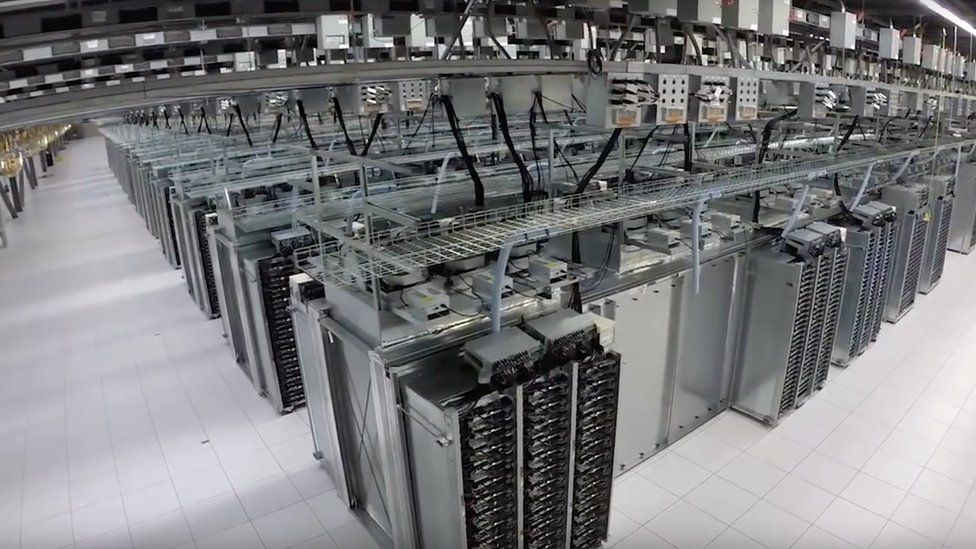
The most structurally significant result in the Q1 earnings season belongs to Alphabet. Google Cloud came in at $20.03 billion against a Wall Street consensus of $18.05 billion, a $2 billion beat driven by what CEO Sundar Pichai described as the first quarter in Google Cloud's history where enterprise AI solutions ??not legacy database migrations or productivity suite expansions ??became the primary growth engine. Revenue from Google's generative AI models inside Cloud jumped 800% year-on-year, a figure that invites skepticism until you read the methodology: Alphabet's CFO confirmed this refers to booked, recognised revenue from enterprises running Gemini-based applications in production, not early-stage commitments or pilot contracts.
Thomas Kurian, Google Cloud's CEO, specified that enterprise customers are deploying Gemini across supply chain forecasting, legal document review, and contact centre automation ??use cases that require sustained TPU and GPU capacity rather than the episodic training clusters that dominated 2024 conversations. The critical inflection is that Google is no longer selling AI infrastructure exclusively to AI companies; it is selling AI capability to every industry vertical. That diversification of the customer base insulates the revenue trajectory from concentration risk in any single hyperscaler relationship. For the first three years of the generative AI era, Google Cloud's beats were heavily dependent on a handful of large foundation-model companies spinning up training runs. The Q1 2026 data suggests that era is giving way to something broader and more durable.
Alphabet's net income climbed 81% to $62.58 billion for the quarter, and total advertising revenue was $77.25 billion, up 15.5%. The cloud unit is still a fraction of the group's earnings, but at a sustained 63% growth rate it will become the dominant profit centre within two fiscal years. Analysts at Evercore ISI noted after the call that Google Cloud's operating margin expanded even as it beat on revenue, suggesting the cost structure is maturing alongside scale ??a pattern that signals pricing power rather than subsidy-driven growth.
AWS Reaches $37.6 Billion and Its Fastest Growth Rate Since Late 2022
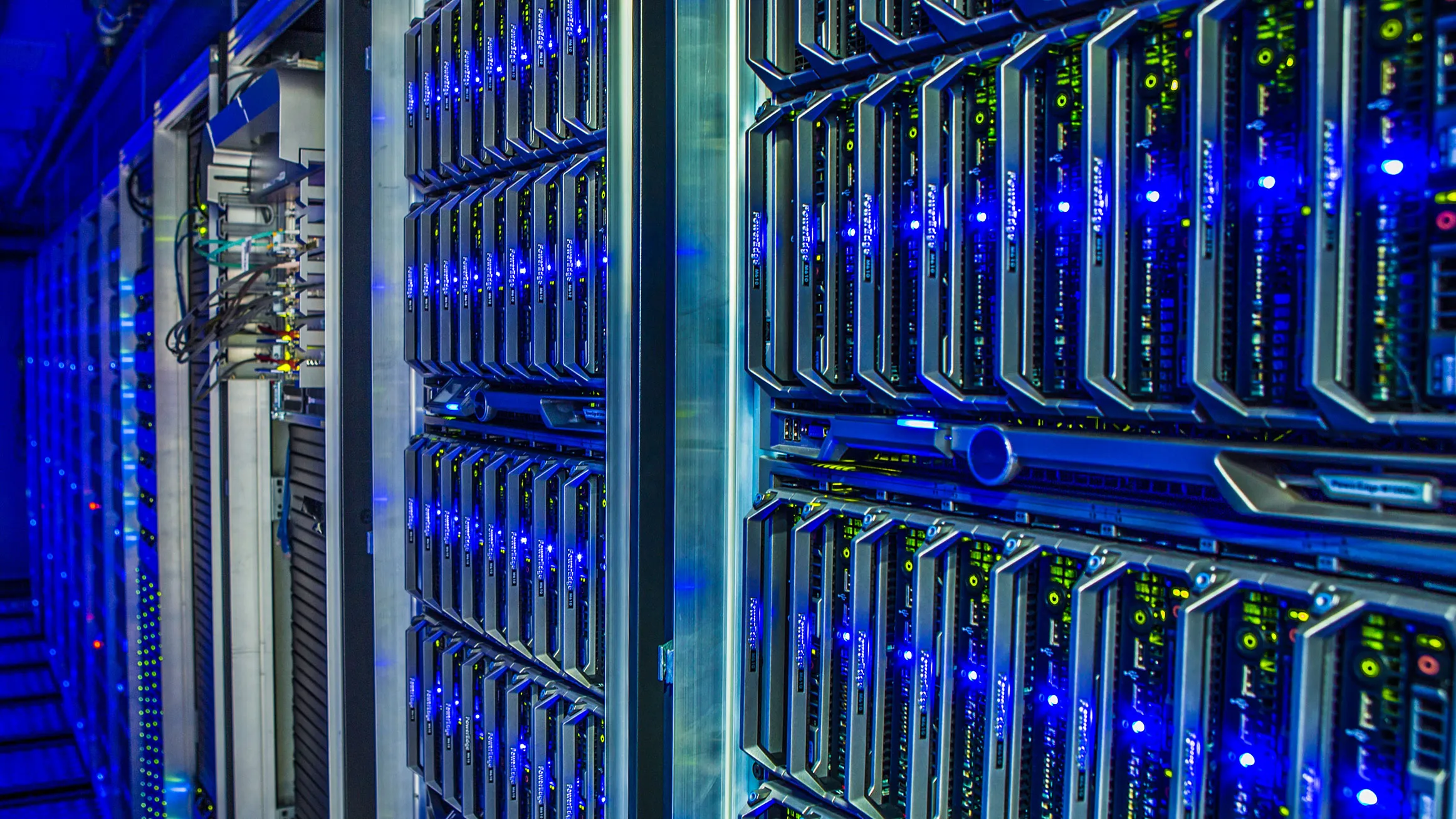
Amazon Web Services grew 28% year-on-year to $37.59 billion in Q1, beating analyst estimates of $36.64 billion and recording its strongest quarterly expansion in fifteen quarters. The acceleration matters because AWS is already the largest single cloud revenue line in the industry; growing faster at greater absolute scale requires either enormous new demand or significant share gains from rivals, and the Q1 data reflects both. CEO Andy Jassy attributed the reacceleration to three concurrent dynamics: long-queued enterprise workloads finally completing their migration from on-premises data centres, existing cloud customers substantially expanding capacity for AI inference, and a cohort of AI-native companies selecting AWS as their primary platform based on custom silicon economics.
The AI signal inside AWS is the clearest it has been since generative AI became a commercial product. Customer spending on the Bedrock service ??which lets developers access foundation models from Anthropic, Meta, Amazon, and third parties through a single API ??jumped 170% from Q4 to Q1, consuming more tokens in a single quarter than in Bedrock's entire operational history from 2023 through the end of 2025. AWS AI revenue, defined as revenue attributable to Bedrock, SageMaker AI inference, and custom Trainium-based training clusters, reached a run rate above $15 billion. Context from TechCrunch is useful here: an equivalent metric three years after Bedrock's launch stood at $58 million. The growth curve is not linear.
Amazon's cloud backlog jumped to $364 billion in Q1, representing contracted future revenue the company has already sold but not yet recognised. Backlog is the leading indicator that revenue growth models care about most: a $364 billion figure implies the 28% growth rate has structural support even if new bookings softened materially from current levels. Amazon's overall revenue rose 17% to $181.5 billion, with EPS of $2.78 against the $1.64 expected. Advertising contributed $17.24 billion, up 24% year-on-year, but the cloud unit's operating leverage is where the market focused.
Azure's 40% Growth and 20 Million Copilot Seats Test Microsoft's Margin Tolerance
Microsoft reported fiscal third-quarter revenue of $82.89 billion against a consensus of $81.39 billion, with Azure growing 40% year-on-year in constant currency. Satya Nadella confirmed the company's AI business crossed $37 billion in annualized recurring revenue, up 123% year-on-year. That figure encompasses Azure OpenAI Service, GitHub Copilot, and Microsoft 365 Copilot. The commercial milestone drawing the most analyst attention was the 20-million paid-seat figure for Microsoft 365 Copilot, up from 12 million reported the prior quarter ??a trajectory that implies corporate AI adoption has exited the pilot phase and entered systematic deployment.
CFO Amy Hood introduced the complication that balanced the revenue beat: gross margin narrowed to 67.6%, the lowest since 2022, as the cost of serving AI workloads ??GPUs, power, and inference compute ??grew faster than the price Microsoft currently charges. Hood characterised the compression as temporary, a consequence of capacity being deployed ahead of full utilisation as data centre builds complete and more racks come online. Analysts at Citi and Jefferies flagged the margin squeeze as the primary variable to monitor through Q2 and Q3, arguing that if utilisation does not recover on schedule the pressure becomes structural rather than transient.
Microsoft guided fiscal Q4 revenue to $86.7 billion to $87.8 billion, a midpoint that came in below the $87.53 billion consensus, partly because management indicated Azure growth would moderate to 39%-40% in Q4 as newly built capacity finishes commissioning and reaches billable utilisation. The guidance was conservative by Microsoft standards, but the company has a consistent pattern of guiding low and beating. Q3 capex and finance leases reached $31.9 billion, up 49% year-on-year but below the $34.9 billion consensus ??suggesting Microsoft is managing its build programme more carefully than headline capex guidance implies.
A $390 Billion Combined Capex Commitment Stakes the Entire Sector's Future
The most consequential numbers from the Q1 earnings season are not quarterly revenue figures ??they are the forward capital expenditure commitments that will determine whether the AI infrastructure thesis resolves into genuine economic productivity or stranded assets. Amazon guided 2026 capex to $200 billion and spent $44.2 billion on property and equipment in Q1 alone, a quarterly rate that drove free cash flow down 95% to $1.2 billion. Microsoft guided 2026 capex to $190 billion, up 61% from 2025, with an explicit $25 billion headwind from higher DRAM and advanced packaging component prices. Alphabet's capex trajectory, while not disclosed with equivalent precision, is consistent with aggregate cloud infrastructure spending that Synergy Research's John Dinsdale estimated reached $129 billion in Q1 across all providers.
Jassy addressed the ROI question in his shareholder letter with a long-horizon argument: data centres have useful operational lives exceeding 30 years, while the chips and networking gear inside them depreciate over five to six years. The implication is that the cash outflow in any single year looks alarming on a conventional DCF but creates long-lived competitive infrastructure that competitors would need a decade to replicate. The counter-argument pressed by some Jefferies analysts is that if enterprise AI adoption stalls before these facilities reach target utilisation ??perhaps 80% of rack capacity or higher ??the write-down exposure across the sector becomes material and correlated.
Neither the bullish nor the cautious interpretation is resolvable on one quarter of data. What Q1 establishes is that all three hyperscalers made the same capital allocation call ??keep building, accept near-term free-cash-flow compression ??and that their enterprise customers are booking capacity at rates that give the thesis structural credibility. Amazon's $364 billion backlog and Google Cloud's $2 billion revenue beat over consensus are the empirical counterarguments to the stranded-asset concern.
Custom Silicon Deals With OpenAI, Anthropic, and Meta Lock In Multi-Year Demand
Behind AWS's headline growth numbers sits a deal architecture that may matter more to the long-term competitive outcome than any single quarterly revenue figure. Amazon disclosed three AI infrastructure commitments from strategically significant counterparties: OpenAI committed to consume approximately 2 gigawatts of Trainium capacity through AWS starting in 2027; Anthropic secured up to 5 gigawatts of current and future Trainium chips; and Meta signed an agreement to deploy tens of millions of AWS Graviton cores for large-scale model inference. These are not standard cloud contracts metered by compute-hours ??they are custom-silicon dependency relationships that create switching costs at the hardware level.
Trainium and Graviton are Amazon's proprietary accelerator lines, designed to run inference workloads at lower cost per token than Nvidia's GPU architecture for specific model families. Once a company has optimised and profiled its models to run efficiently on Trainium ??a process that requires weeks of engineering work and model re-validation ??migrating to another chip architecture means repeating that entire optimisation cycle. The friction is not insurmountable, but it is material, and it operates at a lower layer of the stack than API-level switching costs. OpenAI agreeing to consume 2 gigawatts of Trainium from 2027 forward is a multi-year backlog entry that does not require re-selling. Google has executed an analogous strategy with its Tensor Processing Units, which now underpin a growing share of the enterprise AI inference revenue that drove the 63% Cloud growth rate. Microsoft's lock-in mechanism operates at the application layer ??Azure OpenAI Service and Copilot integrations embedded in enterprise workflows ??but the switching-cost logic is structurally similar.
What Q1 2026 confirmed is that the race for cloud AI supremacy is being decided not at the large-language-model API layer ??where OpenAI, Anthropic, Google DeepMind, and Meta are all roughly cost-competitive ??but at the custom accelerator layer beneath it. The companies that designed and deployed proprietary silicon early enough to attract multi-gigawatt commitments from the most compute-hungry AI companies in the world have built moats that pricing strategies alone cannot erode. The next several quarters will show whether Google's accelerating enterprise AI revenues can sustain at current growth rates as the comparison base rises, whether Microsoft can recover its gross margin before the compression becomes a persistent narrative, and whether Amazon's free cash flow rebounds as its capex cycle crests. All three companies have made the same wager: build the infrastructure now, let the revenue follow. The Q1 numbers suggest the revenue is following.
The remaining open variable is not whether demand exists. It is whether the pace of enterprise adoption can keep up with the pace of the build.
The BossBlog Daily
One email with the AI markets brief — the 13F moves, the Congressional trades, and what changed. No fixed schedule and no filler: it goes out when there is something worth sending.
Unsubscribe any time. We never sell or share the list.