
Anthropic is asking investors to submit funding allocations within 48 hours for a round that would value the company at more than $900 billion, according to sources cited by TechCrunch and CNBC — a figure that would make it the most valuable AI startup on the planet, eclipsing OpenAI's $852 billion post-money valuation established in March. The round is expected to total roughly $50 billion and close within two weeks. If it closes at the target price, a company that was worth $380 billion as recently as February will have more than doubled its valuation in approximately ninety days. The speed of the repricing is less a reflection of a discrete product event than of the arithmetic of concentrated compute bets: when Amazon and Google together commit $65 billion to a single AI developer and that developer's annualized revenue crosses $30 billion, the venture mechanics of "what is a fair multiple" stop applying the same way they do to ordinary software companies.
From $380B to $900B: How Three Months Reshaped Anthropic's Capital Stack
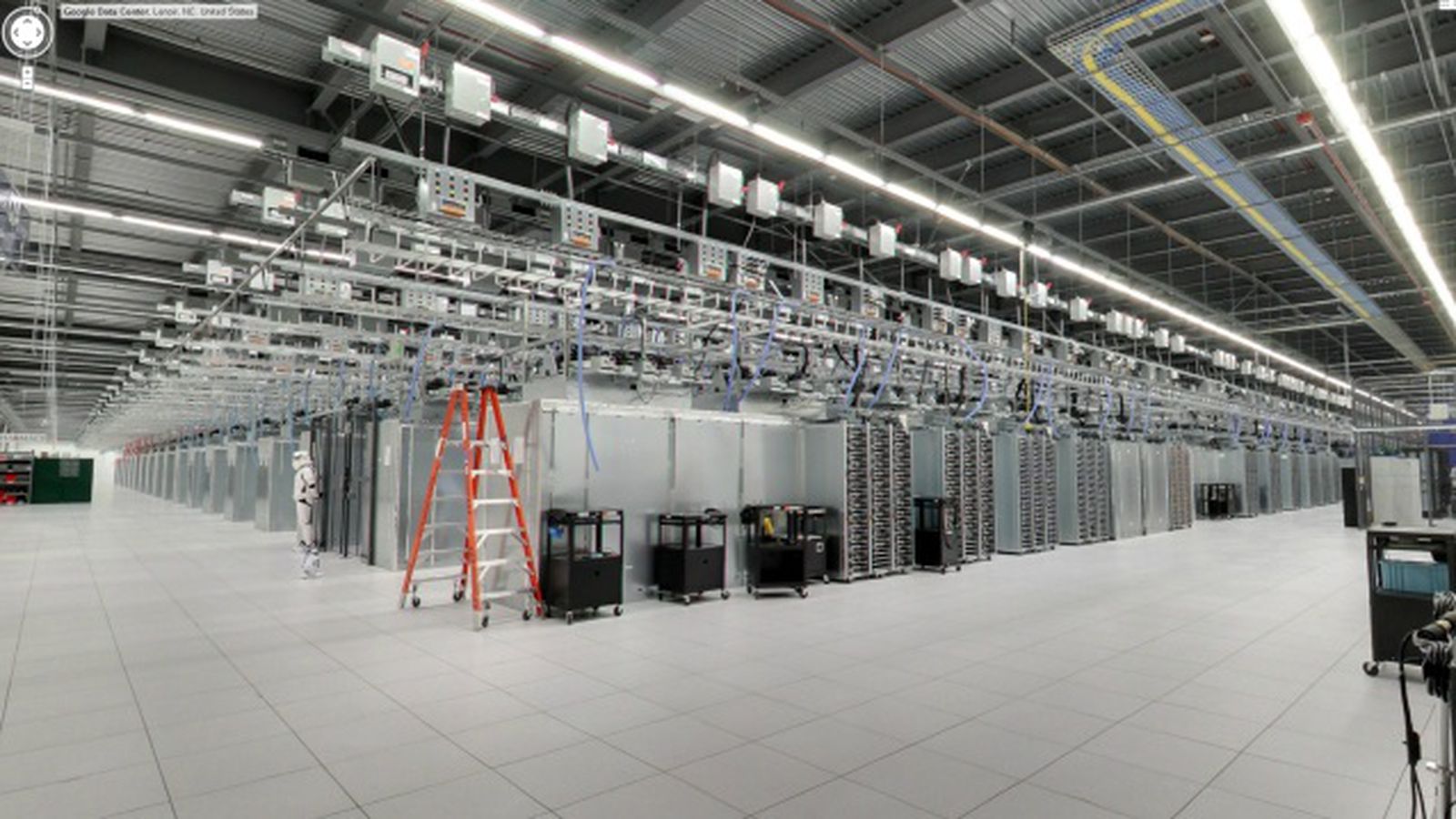
The February round at $380 billion was itself a dramatic step up from Anthropic's prior valuations, but the market was still triangulating the company's revenue trajectory and model quality against OpenAI's dominant distribution. What changed between February and late April was a series of infrastructure commitments that effectively pre-bought Anthropic's compute capacity for the next decade. Amazon agreed to invest up to $25 billion in Anthropic and in the same transaction secured for the company up to 5 gigawatts of compute capacity using Amazon's Trainium chips — a figure that would rank among the largest data center reservations ever made. Google followed separately with a commitment of up to $40 billion, again bundling an additional 5 gigawatts of capacity this time built on Google's Tensor Processing Units and Broadcom-designed silicon.
The combined infrastructure reservation — 10 GW across two hyperscalers — is not a rounding error. A single gigawatt of AI compute capacity, fully built out and operational, typically represents several billion dollars in capital expenditure. By securing these commitments, Anthropic has effectively backstopped its ability to train and serve models at the frontier scale for years without competing in the spot market for GPUs or fighting for power allocation. For investors evaluating the $900 billion ask, the compute story is as important as the revenue story: the question is not whether Anthropic will be able to afford the next generation of training runs, but whether it will use that compute to stay ahead of OpenAI, Google DeepMind, and Meta.
Revenue Trajectory and the Claude Code Effect
Anthropic's publicly cited annualized revenue run rate is $30 billion, but sources familiar with the company's books told TechCrunch that the true figure is closer to $40 billion. Either number represents a staggering inflection from the approximately $10 billion the company generated across all of 2025. The acceleration maps almost exactly onto the commercial trajectory of Claude Code, Anthropic's AI coding assistant, which has become the product category's reference implementation in enterprise developer tooling. Approximately 80 percent of Anthropic's revenue comes from enterprise contracts rather than consumer subscriptions, and Claude Code's penetration in software engineering teams has created large, sticky deployment footprints that are expensive to rip out.
The Claude product portfolio has also matured in ways that justify premium pricing. Claude Opus 4.7, released in April, is the most capable generally available model in the Claude lineup. More significantly, Anthropic unveiled Claude Mythos Preview — a model with advanced cybersecurity capabilities that remains available only to a select group of verified partners. Mythos has generated substantial interest from defense contractors, financial institutions, and critical infrastructure operators, categories of buyer where a $900 billion valuation is credible if Anthropic can capture even modest market share. The model's restricted availability is both a safety posture and a pricing signal: scarcity validates the claim that these capabilities require serious operational safeguards.
How Anthropic's Capital Raise Restructures the Frontier Pecking Order
The competitive implications extend beyond the headline number. OpenAI closed a $122 billion round in late March at an $852 billion post-money valuation, with contributions from Amazon ($50 billion), Nvidia ($30 billion), and SoftBank ($30 billion). At the time, that round established OpenAI as the clear valuation leader among AI labs and gave it a capital cushion that would be difficult for any rival to match quickly. Anthropic's pending $900 billion round, if completed, does not just close that gap — it asserts market leadership on a timeline that will unsettle OpenAI's investor relations narrative before its widely anticipated IPO.
The investor dynamics within Anthropic's own cap table add a further wrinkle. TechCrunch reported that some of Anthropic's early backers are deliberately sitting out this round, preferring to wait for an IPO expected later in 2026. This behavior is unusual and signals two things simultaneously: that the IPO pathway is concrete enough for sophisticated investors to act on it, and that the secondary pricing of Anthropic's shares may already be at levels that make the $900 billion primary round look fair rather than aspirational. When insiders choose to wait for public market liquidity rather than participate in what would otherwise be a late-stage discount window, it implies they expect the IPO valuation to exceed the current primary round price.
Compute Arithmetic and the Second-Order Capex Wave
The 10 GW infrastructure commitment from Amazon and Google is consequential beyond Anthropic's own operations. Each gigawatt of hyperscaler AI compute deployment creates demand for networking equipment, advanced packaging, high-bandwidth memory, and power infrastructure. At realistic utilization rates, 10 GW of AI compute would require several thousand Trainium or TPU accelerators per month at full buildout — demand that flows directly into supply chains for TSMC's advanced packaging lines, SK Hynix and Samsung's HBM3E and HBM4 allocations, and Broadcom's custom silicon engagements. The deal also tightens Amazon's strategic exposure to Anthropic, making it harder for AWS to pursue a neutral multi-model platform strategy as the Claude and AWS brands become more intertwined in enterprise accounts.
For Google, the $40 billion commitment serves a dual purpose. It ensures Alphabet retains a strategic equity position in the frontier lab most likely to challenge Google's own Gemini franchise, and it creates a managed outlet for TPU and Broadcom capacity that Google would otherwise need to provision for internal use or sell into the spot market. Google Cloud's ability to bundle Anthropic access with its cloud services is already a competitive differentiator against AWS, and the deeper investment reinforces that positioning. The supply chain effect ripples outward: demand for Google-Broadcom custom AI silicon and the associated optical interconnect infrastructure will grow in direct proportion to how aggressively Anthropic deploys on Google's compute stack.
Safety Premium: How Anthropic Converts Regulatory Scrutiny Into Brand Equity
The funding valuation also encodes a regulatory bet that investors rarely make explicit but that shapes the investment thesis directly. As governments across the United States, European Union, and United Kingdom move to establish licensing, auditing, or mandatory safety evaluation requirements for frontier AI models, Anthropic is uniquely positioned to benefit from regulatory complexity rather than suffer under it. The company's Constitutional AI approach and its published Responsible Scaling Policy create a compliance paper trail that enterprise procurement teams, government agencies, and regulated-industry buyers can reference during vendor selection. The Mythos Preview model's restricted availability to vetted partners is explicitly this strategy in product form: Anthropic is not releasing Mythos broadly because it believes some capabilities require controlled access, and that restraint is simultaneously a safety decision and a differentiation decision.
The Senate AI Safety Caucus published draft framework language in late April that would require frontier AI developers to document compute thresholds, model capability evaluations, and incident disclosure protocols — requirements that map closely onto the processes Anthropic already operates. OpenAI, Google DeepMind, and Meta each have safety programs, but Anthropic's entire founding narrative is built around this positioning. In a market where regulatory uncertainty is increasing rather than decreasing, investors backing Anthropic at $900 billion are in part paying for the option value of a company that starts ahead on the compliance curve.
What $900 Billion Tells You About the Next Twelve Months
A $900 billion valuation is not sustainable on a DCF basis unless Anthropic sustains revenue growth that compounds toward the scale of cloud infrastructure itself — in other words, unless the AI-as-infrastructure thesis becomes the dominant enterprise software architecture within the next five years. The bet that investors are making is precisely that one: that companies integrating Claude into their workflows are not buying software licenses in the traditional sense but are wiring a foundational capability into their operating model in a way that is as hard to displace as the hyperscaler commitments themselves. That thesis is either correct, in which case $900 billion is cheap, or it is wrong, in which case the correction will be severe.
The board is expected to make a final decision on the round in May. The outcome will set the tone for how the remainder of the 2026 AI funding market prices itself. If Anthropic closes above $900 billion, it will likely trigger a revaluation of stakes in every major frontier lab. If the round is delayed or restructured, it will be the first signal that the capital markets are beginning to ask harder questions about when the revenue growth normalizes.
Anthropic has spent three years building the case that safety and capability are complementary rather than competing priorities. It is now making the parallel argument to capital markets: that a $900 billion valuation is the appropriate price for the infrastructure layer of the next computing era. Whether that argument holds up under the scrutiny of a public market — expected before the end of 2026 — is the real test waiting on the other side of this round.
The BossBlog Daily
One email with the AI markets brief — the 13F moves, the Congressional trades, and what changed. No fixed schedule and no filler: it goes out when there is something worth sending.
Unsubscribe any time. We never sell or share the list.