
The Federal Reserve will announce its first interest-rate decision under new Chair Kevin Warsh at the conclusion of the June 16-17 Federal Open Market Committee meeting, with the central bank widely expected to leave the federal funds rate unchanged at 3.75%. Warsh, who succeeded Jerome Powell after the former chair served eight years at the helm, inherits an economy that is sending mixed signals. Consumer inflation last month accelerated at the fastest pace in three years, driven in part by an energy price spike following the outbreak of a US-Israel war with Iran in late February. That geopolitical shock has complicated the inflation fight for central banks globally, with the European Central Bank raising rates for the first time in nearly three years and the Bank of England also holding at 3.75% as it balances rising fuel costs against a fragile growth outlook. Warsh has signaled an intent to pare the Fed's $6.7 trillion balance sheet, a process that will tighten financial conditions even if the FOMC keeps the policy rate steady. Markets are now pricing in a rate hike by year-end, according to fed fund futures, making this first meeting a critical test of Warsh's communication strategy. The decision matters because the new chair must navigate a rocky equity market, persistent inflation, and a geopolitical energy shock without spooking investors or undermining the Fed's credibility.
The Calibration Behind the 3.75% Hold
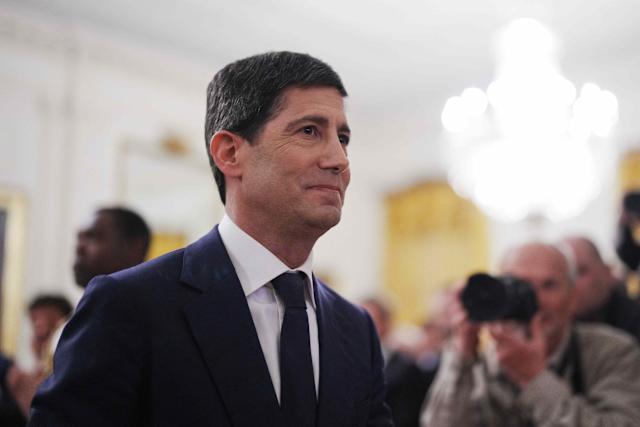
The FOMC's decision to hold rates at 3.75% is the product of a deliberate calibration between two competing risks. On one side, the prior-month inflation print showed consumer prices rising at their fastest clip in three years, a direct consequence of the late-February energy shock that sent fuel prices and household bills surging. The US-Israel war with Iran disrupted crude supply routes, and the pass-through to core inflation has been faster than Fed staff models predicted. On the other side, the U.S. stock market has been rocky, with the S&P 500 and Nasdaq both posting choppy sessions in the weeks leading up to the meeting. Jim Baird, chief investment officer at Plante Moran Financial Advisors, noted that investors are worried a rate hike stands to dampen equities further, which have already repriced sharply this year. The Fed's own dual mandate (maximum employment and stable prices) is pulling in opposite directions. The labor market remains tight, but the energy-driven inflation spike is transitory in nature, at least according to the central bank's preferred narrative. Warsh, who spent his first weeks in office conducting listening sessions with regional bank presidents and market participants, has emphasized data dependence. The hold at 3.75% buys the committee time to assess whether the inflation spike is broadening beyond energy into services and wages. Sanjay Raja, chief U.S. economist at Deutsche Bank, argued that the FOMC will need to see at least two more months of data before it can determine whether that acceleration is a blip or a trend.
How the $6.7 Trillion Balance Sheet Drives Policy
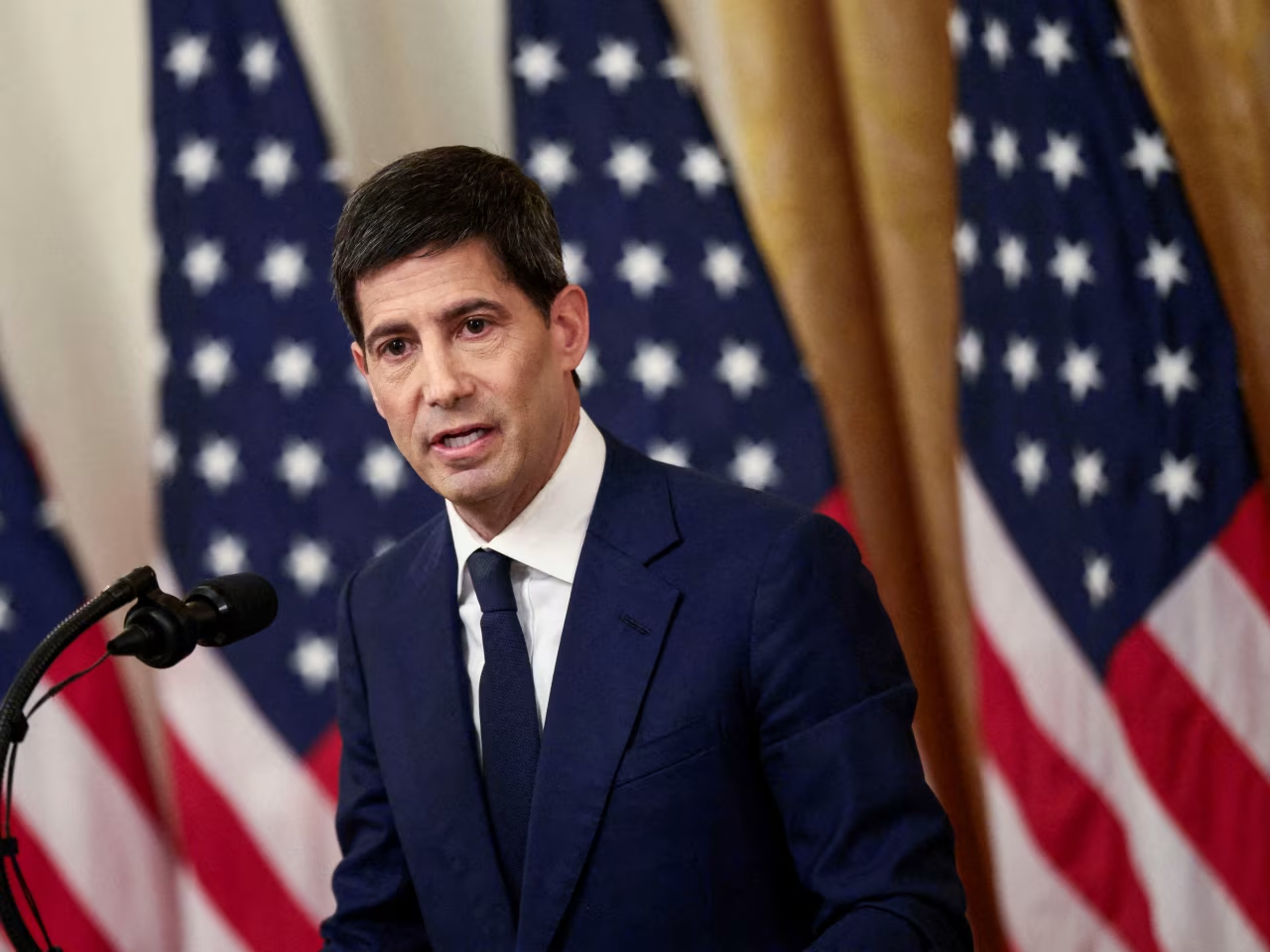
Warsh's commitment to shrinking the Fed's $6.7 trillion balance sheet creates a second channel of monetary tightening that operates independently of the federal funds rate. The quantitative tightening program, which allows a capped amount of Treasury and mortgage-backed securities to roll off the Fed's portfolio each month, effectively drains reserves from the banking system. This process raises term premiums on longer-dated Treasury yields, tightening financial conditions without an explicit rate hike. The balance sheet reduction is a signature priority for Warsh, who criticized the scale of asset purchases during the pandemic era. The $6.7 trillion figure represents more than double the pre-pandemic level of roughly $3 trillion, and Warsh has indicated he wants to bring it down to a level consistent with "ample reserves" — a target that remains undefined but is likely closer to $4 trillion. The runoff is already creating friction in the repo market, where overnight lending rates have shown intermittent spikes. Marvin Loh, senior global macro strategist at State Street, pointed out that the balance sheet reduction acts as a stealth tightening mechanism, one that the new chair can use to signal hawkish intent without moving the policy rate. The combination of a steady funds rate and a shrinking balance sheet creates a hybrid stance: accommodative in the short end, restrictive in the long end. This dynamic forces market participants to price in a higher probability of a rate hike later in 2026, as the balance sheet alone cannot fully offset the inflation impulse from the energy shock.
Plante Moran, State Street, and Deutsche Bank Read the Room
The three firms most closely watching the Warsh-led FOMC (Plante Moran Financial Advisors, State Street, and Deutsche Bank) each offer a distinct lens on what the hold-and-signal strategy means for markets. Jim Baird at Plante Moran focuses on the equity market implications, arguing that a hawkish hold is the worst outcome for stocks because it leaves the door open to a hike without providing the certainty of a cut. The S&P 500 has already repriced lower this year, and Baird warned that any hint of a September move would trigger another leg down. Marvin Loh at State Street concentrates on the balance sheet channel, noting that the $6.7 trillion runoff is already tightening conditions in the repo and Treasury markets. He sees the hold as a tactical pause that allows Warsh to calibrate the pace of quantitative tightening before committing to a rate path. Sanjay Raja at Deutsche Bank takes the most granular view, modeling the pass-through of the energy shock into core PCE inflation. Raja estimates that the late-February war added 0.3 to 0.4 percentage points to headline inflation, and he expects the FOMC to revise up its 2026 inflation forecast at the June meeting. The divergence among these three analysts reflects the broader uncertainty in the market. Fed fund futures still price a rate hike by year-end, but the probability has oscillated between 55% and 70% over the past month as oil prices have been volatile. Warsh's first post-meeting press conference will be parsed for any shift in the so-called dot plot, the anonymous projections of individual FOMC members. If the median dot moves higher, it will confirm that the committee is leaning toward tightening.
Downstream Shockwaves for Hyperscalers, Fabs, and Enterprise Buyers
The Fed's decision to hold at 3.75% while signaling a potential hike later in 2026 creates a specific set of downstream effects for capital-intensive industries. Hyperscalers, the cloud computing giants spending tens of billions on data center construction, face a financing environment where long-term borrowing costs remain elevated due to the balance sheet runoff. The $6.7 trillion reduction drives up term premiums on 10-year and 30-year Treasuries, which serve as the benchmark for corporate bond issuance. Data center operators that rely on debt financing for new builds will see their cost of capital rise by an estimated 50 to 75 basis points compared to a scenario where the Fed had paused quantitative tightening. Semiconductor fabs, which require $10 billion to $20 billion per facility and have construction timelines of three to five years, are particularly exposed to the duration risk embedded in long-term rates. The geopolitical energy shock compounds this by raising electricity costs, which represent a significant operating expense for both fabs and data centers. Enterprise buyers of IT hardware and software face a different constraint: the hold at 3.75% keeps the dollar strong, which pressures multinational technology companies that generate a large share of revenue overseas. The strong dollar reduces the dollar value of foreign earnings and makes U.S. exports less competitive. For the broader economy, the combination of steady rates, a shrinking balance sheet, and an energy-driven inflation spike creates a stagflationary undertow that corporate finance chiefs will need to navigate in their 2027 budgeting cycles.
Warsh's Strategic Ambiguity and the Fed's Trajectory
Warsh's decision to hold rates at 3.75% while maintaining the balance sheet runoff sends a clear signal about the new chair's operating philosophy: he will move deliberately, communicate hawkishly, and avoid the kind of forward guidance that locked his predecessor into a specific path. Jerome Powell, who remains on the FOMC as an ordinary governor, favored a more transparent approach that sometimes boxed the committee into corners. Warsh, by contrast, is reverting to a Greenspan-era style of strategic ambiguity, where the chair retains maximum flexibility by refusing to pre-commit. The hold at the June meeting is a tactical pause, not a policy pivot. That inflation print, the energy shock, and the rocky equity market all argue for caution, but Warsh's own statements about the balance sheet suggest he views the current level of reserves as excessive and inflationary. The market's reaction will depend on the tone of the post-meeting statement and the press conference. If Warsh emphasizes the transitory nature of the energy-driven inflation, the hold will be read as dovish. If he highlights the risk of second-round effects through wages and services, the hold will be read as a prelude to a hike. The fed fund futures market is betting on the latter, pricing in a 60% probability of a rate increase at the September or November meeting. The geopolitical wildcard remains the trajectory of the US-Israel conflict with Iran, which will either escalate further, driving oil prices higher, or de-escalate, relieving the inflation pressure.
The first Warsh-led FOMC meeting is a masterclass in signaling without committing. By holding rates steady while shrinking the balance sheet and leaving the door open to a hike, the new chair has given himself the maximum number of policy options for the second half of 2026. The market will now watch the July and August inflation prints, the path of oil prices, and the tone of the next FOMC statement for clues about whether the hold becomes a pivot or a prelude to tightening. For investors, the key takeaway is that the era of predictable forward guidance is over, replaced by a regime of data-dependent discretion that rewards nimble positioning and punishes complacency.
The BossBlog Daily
One email with the AI markets brief — the 13F moves, the Congressional trades, and what changed. No fixed schedule and no filler: it goes out when there is something worth sending.
Unsubscribe any time. We never sell or share the list.