
World Liberty Financial, the crypto venture backed by President Donald Trump and his sons, will pay $250,000 in its proprietary USD1 stablecoin as fight-night bonuses for UFC Freedom 250, a mixed-martial-arts event scheduled for the South Lawn of the White House on President Trump's 80th birthday. The payment marks the first time a stablecoin has been used as athlete compensation at a White House-sanctioned event, and it comes as World Liberty Trust Company, a newly formed subsidiary, has filed a de novo application with the Office of the Comptroller of the Currency to establish a national trust bank for stablecoin issuance, custody, and conversion. The OCC filing represents a direct bid for federal oversight of the firm's stablecoin operations, a regulatory milestone that would transform World Liberty from a token issuer into a federally chartered financial institution. The White House event, the OCC application, and the Trump family's outsized financial stake in the venture (Reuters estimates the family has earned at least $2.3 billion in profit from crypto ventures since the start of Trump's second term) create an unprecedented concentration of presidential power, personal profit, and regulatory ambition. Why this matters now: the USD1 payout at a presidential birthday party is not a publicity stunt; it is a live demonstration of stablecoins crossing from speculative digital assets into the core infrastructure of government-adjacent payments, and it forces regulators and competitors to reckon with a crypto project that has the White House as its marketing department and the OCC as its next landlord.
Where the $250,000 came from and where it goes
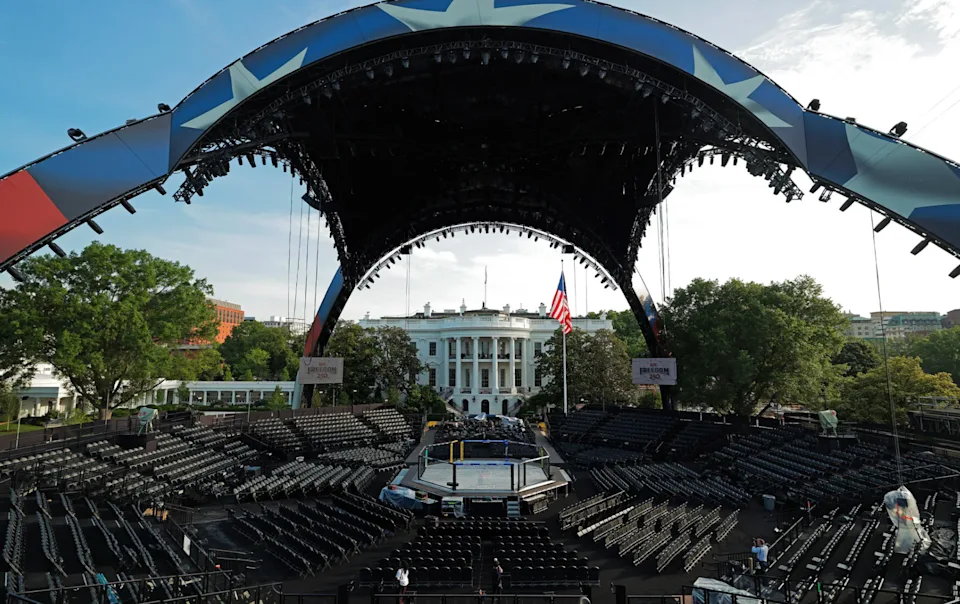
The $250,000 in USD1 stablecoin that UFC fighters will receive as Freedom 250 bonuses originates from the same token sale mechanism that has already funneled billions of dollars to Trump-controlled entities. World Liberty Financial raised capital through the sale of its WLFI token, and 75% of all WLFI token sale proceeds flow directly to DT Marks DEFI LLC, an entity controlled by President Trump. That means the stablecoins now being handed out at a White House event were effectively funded by outside investors (over a million of them, according to Reuters) who collectively recorded net losses of roughly the same amount that the Trump family booked as profit. The structure is simple: retail buyers of WLFI tokens provided the cash; 75 cents of every dollar went to Trump's LLC; and a fraction of that cash now backs the USD1 stablecoin being used as athlete prize money. The arrangement transforms what looks like a corporate sponsorship into a circular flow of capital from retail speculators to the president's personal balance sheet, then back into a promotional expense at a presidential event. For the fighters, the USD1 payment is functionally equivalent to a dollar (the stablecoin is pegged 1:1 to the U.S. dollar and redeemable through World Liberty Trust Company's planned banking infrastructure). But the source of those dollars, and the political context in which they are being distributed, makes the $250,000 payment a powerful symbol of how deeply the Trump family's crypto interests have become entangled with the machinery of the presidency.
How the OCC application rewrites stablecoin banking
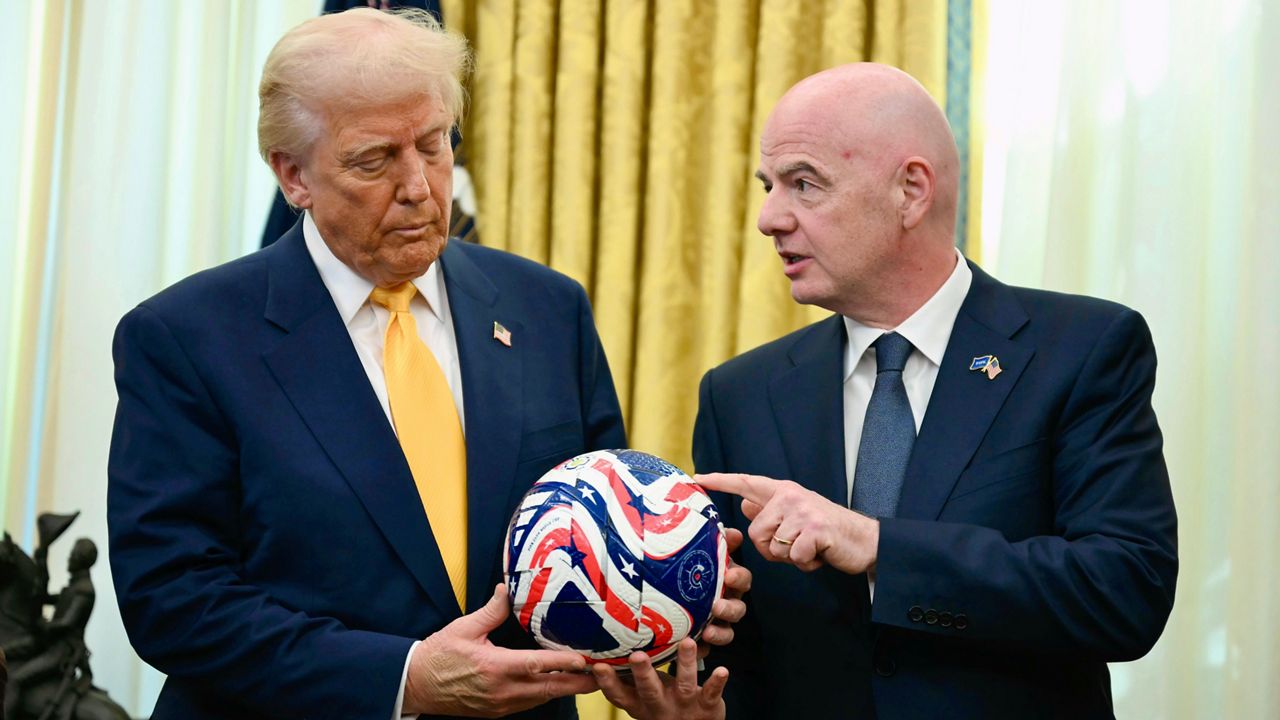
World Liberty Trust Company's de novo application with the OCC to establish a national trust bank is the most consequential regulatory move by any Trump-linked crypto entity to date. A national trust bank charter would permit World Liberty to issue stablecoins, custody digital assets, and convert between fiat and crypto under federal supervision, effectively granting the firm the same legal standing as traditional trust companies that manage trillions of dollars in assets. The application signals that World Liberty intends to operate not as a fringe token issuer but as a regulated financial institution competing directly with banks like JPMorgan Chase for stablecoin-related business lines. The timing is critical: the GENIUS Act and the CLARITY Act, both advancing through Congress, are shaping the legal framework for stablecoin issuance and interest-bearing stablecoin products. JPMorgan CEO Jamie Dimon has publicly criticized CLARITY Act provisions that would allow stablecoin issuers to offer interest-like rewards without submitting to full bank regulation. World Liberty's OCC application preempts that debate by voluntarily submitting to federal oversight, a move that strengthens its hand in Washington while putting pressure on competitors who have resisted bank-level compliance. If the OCC approves the charter, World Liberty will become one of the first crypto-native firms to hold a national trust bank license, a development that would force every major stablecoin issuer (Circle, Paxos, Gemini) to reconsider their regulatory strategies. The application also raises conflict-of-interest questions that no previous OCC filing has confronted: the applicant is controlled by the sitting president, and the regulator reports to the Treasury secretary, who serves at the president's pleasure.
Who gains and who loses in the stablecoin payment shift
The USD1 payout at the White House UFC event reshuffles competitive dynamics across three distinct markets: stablecoin issuance, event sponsorship, and political-financial crossover products. World Liberty gains immediate brand recognition and a proof-of-use case that no other stablecoin issuer can replicate: a direct association with a presidential event and a major sports league. Circle's USDC and Tether's USDT have dominated stablecoin payments for years, but neither has ever been used as athlete prize money at the White House. That first-mover advantage in the political-payments niche is not easily copied: no competitor can offer a stablecoin payment at a White House event because no competitor has a president as its controlling shareholder. UFC gains a novel payment mechanism that generates media coverage far beyond the value of the bonuses themselves, and the league deepens its relationship with the Trump administration, which has hosted multiple UFC events at the White House during Trump's second term. The losers include traditional payment processors like Visa and Mastercard, which lose transaction fees when stablecoins replace card-based athlete payments, and JPMorgan Chase, whose CEO Dimon has positioned the bank as a stablecoin skeptic even as the bank develops its own blockchain-based payment systems. Retail investors in WLFI tokens are also losers in this dynamic: the $250,000 paid to fighters is money that could have been used to support the token's liquidity or buyback program, but instead flows to athletes as a promotional expense. Over a million outside investors who bought WLFI tokens have already recorded collective net losses of roughly $2.3 billion, according to Reuters estimates, while the Trump family booked equivalent profits, a distributional outcome that the USD1 payment underscores rather than obscures.
Downstream effects on hyperscalers, fabs, and enterprise buyers
The downstream implications of World Liberty's stablecoin push extend far beyond Washington and into the real economy of cloud computing, chip fabrication, and enterprise treasury management. If World Liberty Trust Company receives its OCC charter and begins issuing USD1 at scale, the firm will need to contract with cloud infrastructure providers (Amazon Web Services, Microsoft Azure, or Google Cloud) to host its transaction processing and wallet infrastructure. Stablecoin issuance at the scale of tens of billions of dollars requires significant compute and storage capacity, and the hyperscalers are already competing aggressively for crypto-native clients. AWS has hosted Circle's USDC infrastructure for years; a World Liberty contract would represent a direct competitive win for whichever cloud provider lands it. On the hardware side, stablecoin validators and transaction processors require specialized chips (ASICs and high-performance GPUs) that are manufactured by TSMC and Samsung. Any material increase in stablecoin transaction volume driven by World Liberty's entry would add to the already intense demand for advanced packaging capacity at TSMC's CoWoS facilities, which are also serving Nvidia's AI chip orders. Enterprise buyers of stablecoin services (treasury departments at publicly traded companies that want to hold dollar-pegged digital assets) will watch the OCC decision closely. A federally chartered stablecoin issuer offers a level of regulatory certainty that unlicensed issuers cannot match, and that certainty could shift corporate treasury allocations away from money-market funds and toward yield-bearing stablecoin products if the CLARITY Act passes. The idle cash problem that CoinDesk identified (hundreds of billions of dollars in stablecoins sitting as non-productive capital) becomes a competitive opportunity for World Liberty if its national trust bank can offer interest-like returns on USD1 deposits without triggering securities registration. The firm's OCC application is a bet that regulated stablecoin banking will unlock enterprise demand that unregulated stablecoins have failed to capture.
The policy signal: stablecoins as presidential policy instruments
World Liberty's White House UFC event and OCC application together send a clear policy signal: the Trump administration views stablecoins not as a regulatory problem to be managed but as a presidential policy instrument to be deployed. The decision to pay UFC fighters in USD1 at a White House event transforms a private token into a quasi-official payment mechanism, blurring the line between commercial promotion and government endorsement. The OCC application, if approved, would create a federally chartered stablecoin bank controlled by the president's family, a structure that has no precedent in American financial regulation. The GENIUS Act and CLARITY Act, both of which the administration supports, would further legitimize stablecoins as a parallel banking system, and World Liberty is positioning itself to be the primary beneficiary of that legislative framework. The conflict-of-interest concerns are structural and unavoidable: the president's family controls a stablecoin issuer that is seeking federal charter, the president's administration is advancing legislation that benefits stablecoin issuers, and the president's birthday party is being used as a marketing event for the stablecoin. No amount of recusal or ethics screening can fully separate those overlapping interests. The policy signal to the market is equally clear: stablecoins are no longer a fringe experiment but a core component of the administration's financial modernization agenda, and the fastest path to regulatory approval runs through political alignment with the White House. For competitors like Circle and Paxos, the message is that regulatory strategy must now account for the political economy of stablecoins, not just the technical and legal dimensions. For regulators at the OCC, the message is that the application before them carries implications far beyond banking law.
The BossBlog Daily
One email with the AI markets brief — the 13F moves, the Congressional trades, and what changed. No fixed schedule and no filler: it goes out when there is something worth sending.
Unsubscribe any time. We never sell or share the list.