
President Donald Trump has nominated Kevin Warsh as the next chair of the Federal Reserve, pending Senate confirmation, setting up a leadership transition that will reshape U.S. monetary policy just as inflation accelerates at its fastest pace in three years. Jerome Powell will lead two more Federal Open Market Committee meetings before his term expires in May 2026, giving the central bank a brief window of continuity before Warsh takes the helm. The Fed holds rates steady at the upcoming meeting while market participants price in a rate hike before year-end, according to LSEG data from fed fund futures. The 12-person FOMC, composed of seven governors, the New York Fed president, and four rotating regional bank presidents, will vote on policy direction, and the composition of that committee in 2026 will be critical. The leadership change introduces a wildcard for equity markets already rattled by persistent inflation and geopolitical uncertainty. State Street's head of macro strategy, Marvin Loh, has flagged that the newly led Fed poses a wildcard for rockier U.S. indexes. This matters now because the Warsh nomination, combined with the May inflation print showing the fastest consumer price increase in three years, forces investors to recalibrate their entire rate outlook for the second half of 2026.
FOMC Leadership Transition Mechanics
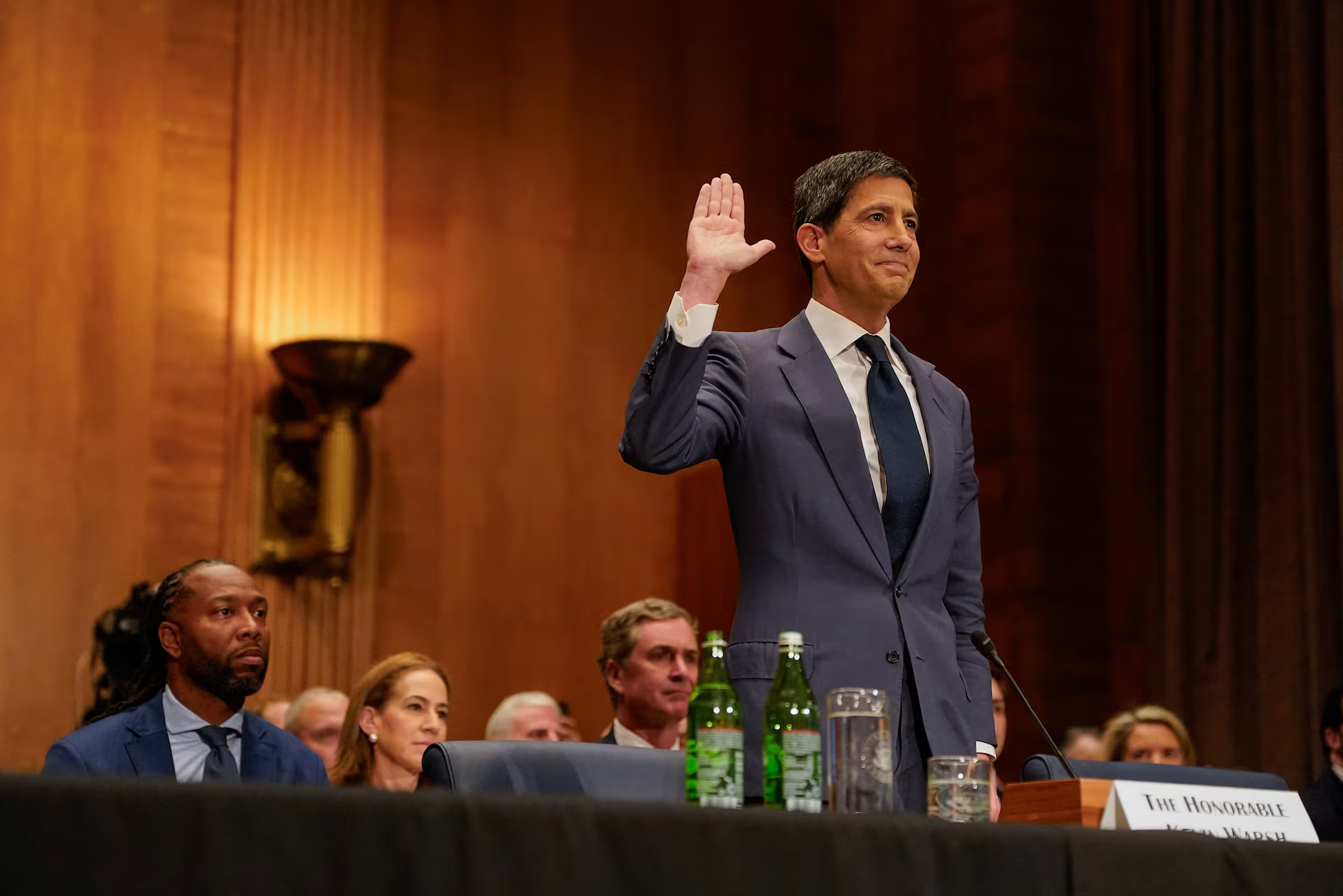
The Federal Reserve's policy-setting body, the FOMC, operates on a fixed calendar of eight meetings per year, with decisions made by majority vote of its 12 members. The committee includes seven Fed governors based in Washington, the president of the New York Fed, and four of the 11 regional bank presidents who rotate annually. Powell, as chair, controls the agenda and the tone of forward guidance, but he does not command a majority by fiat. The 2026 rotation brings in a fresh cohort of regional bank presidents with voting rights, and the composition of those voices will shape whether the new chair can build a durable majority for tighter policy. Warsh's Senate confirmation timeline places his earliest participation as chair at the July or September FOMC gathering, giving Powell two final meetings to set the tone before handing over authority. The confirmation hearings will themselves function as a policy signal: Warsh's stated views on inflation, balance sheet normalization, and forward guidance will be parsed by traders before he casts a single official vote. Once confirmed, Warsh inherits Powell's final rate decision and immediately sets his own course for the remainder of the year. The transition period creates a window where Powell leads but markets price in Warsh's hawkish tilt. This structural handoff introduces uncertainty into every rate-sensitive asset class, from short-dated Treasuries to growth-dependent equities like Joby Aviation.
Rate Hike Expectations Anchored in Inflation Data
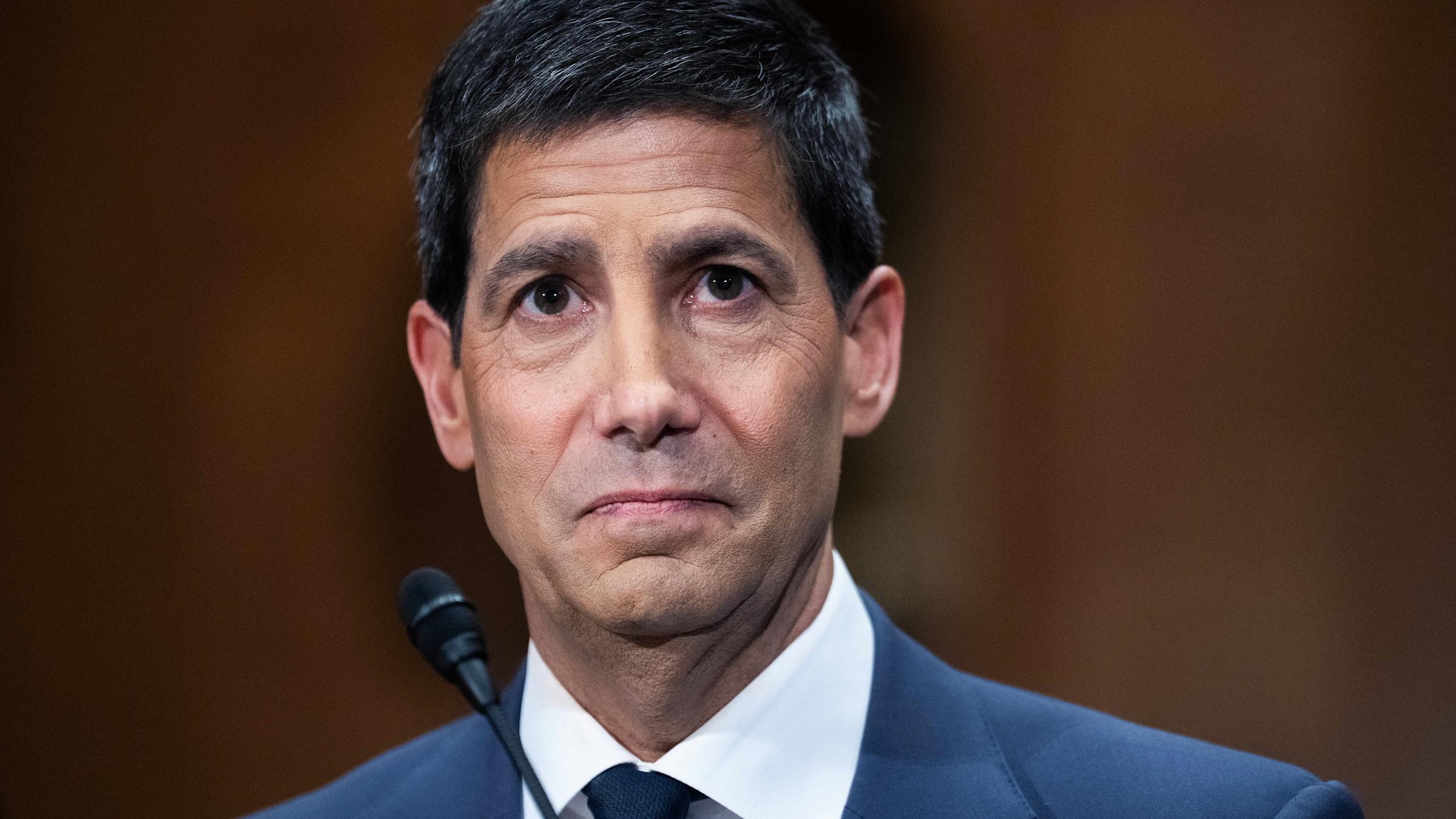
The market's repricing of rate hike probabilities for late 2026 traces directly to the May inflation report, which showed U.S. consumer prices rising at the fastest pace in three years. Fed fund futures, as tracked by LSEG, now imply a greater than 50% probability of at least one quarter-point increase by the December meeting. That marks a sharp reversal from the start of the year, when markets had penciled in rate cuts for the second half of 2026. The two-year Treasury yield has risen 40 basis points since the May CPI release, repricing the entire short end of the curve and compressing multiples across rate-sensitive equities. Services inflation, which the Fed monitors as the stickiest component of the CPI basket, came in at an annualized 4.7% in May, well above the 2% target. Housing costs contributed 60 basis points to the monthly print, a figure that the Fed's preferred shelter inflation methodology will keep elevated for at least another six months. For companies like Joby Aviation, which depend on cheap capital to fund long-duration R&D and manufacturing scale-up, higher rates directly compress valuation multiples and increase the cost of debt financing. State Street's Marvin Loh has noted that the combination of a new Fed chair and sticky inflation creates a "rockier" environment for U.S. equity indexes, as investors struggle to handicap the pace and magnitude of tightening. Fed fund futures are the most liquid and transparent signal of institutional positioning, and they are pricing in a hawkish outcome regardless of what any individual FOMC member says at the next press conference.
Sector Winners and Losers Under a Hawkish Fed
A Warsh-led Fed will adopt a more hawkish posture than Powell, creating clear winners and losers across the equity landscape. Regional banks like State Street benefit from a steeper yield curve, as higher short-term rates expand net interest margins and reduce the risk of deposit flight. Conversely, high-growth, pre-profit companies like Joby Aviation face the most acute headwinds. Joby's business model, electric vertical takeoff and landing aircraft for urban air mobility, requires years of negative free cash flow before commercialization, making its stock price highly sensitive to the discount rate applied to future earnings. A 50-basis-point increase in the risk-free rate can shave 10-15% off the present value of Joby's terminal value. The broader technology sector, particularly the unprofitable cohort of the Nasdaq, will underperform value and financials during a Warsh-led tightening cycle. The rotation is already visible in factor performance: the S&P 500 Value index has outperformed the Growth index by 300 basis points since the Warsh nomination was announced. LSEG data shows that institutional flows into financial sector ETFs have accelerated, while growth-oriented funds have seen net redemptions. The competitive reshuffle is not just about sector allocation. It is a bet on which companies can self-fund their growth and which remain dependent on cheap central bank liquidity.
Downstream Effects on Capital Markets and Corporate Borrowing
The downstream consequences of a hawkish Fed under Warsh extend well beyond equity valuations into corporate bond markets, leveraged lending, and venture capital. Investment-grade bond yields have already risen 25 basis points since the May inflation print, increasing borrowing costs for companies that need to refinance maturing debt. The high-yield market is pricing in a 150-basis-point spread widening, pushing default rates higher among the most indebted issuers. Refinancing risk is concentrated in the 2026-2027 maturity wall, where an estimated $1.3 trillion in leveraged loans comes due, a cohort that borrowed at floating rates during the zero-rate era and now faces a higher base rate at renewal. Private equity sponsors that loaded portfolio companies with debt during the 2020-2021 vintage are the most exposed, and distressed debt funds are already positioning for the resulting wave of corporate restructurings. For venture capital, the Fed's rate trajectory determines the opportunity cost of holding illiquid private company stakes. A 5% risk-free rate makes it harder for VCs to justify the risk premium demanded by their limited partners, particularly in capital-intensive sectors like eVTOL manufacturing. Joby Aviation, which has raised over $2 billion in equity and debt since its SPAC merger, will face higher costs for any future capital raises. The Fed's policy also affects the dollar, which has strengthened 4% against a basket of major currencies since the Warsh nomination, pressuring multinational earnings and commodity prices. LSEG data indicates that currency-hedged returns for U.S. equity investors in European and Asian markets have turned negative. The transmission mechanism is clear: higher rates strengthen the dollar, which tightens financial conditions globally, which reduces corporate earnings and capital expenditure plans.
Policy Direction Signal from the Warsh Nomination
The nomination of Kevin Warsh is not just a personnel change. It is a policy signal from the Trump administration about the direction of monetary policy. Warsh, a former Fed governor and Stanford University lecturer, has publicly argued that the Fed began tightening too late in the current cycle and has criticized the central bank's forward guidance framework as too accommodative. His appointment tells the market that the White House wants a chair who will prioritize inflation control over maximum employment, a break from Powell's dual-mandate balancing act. The timing of the nomination, coming just after the May inflation report, reinforces the message that the administration views price stability as the overriding objective. For markets, the signal is unambiguous: the Fed under Warsh will be more responsive to inflation data and less tolerant of above-target price growth. This means the bar for rate cuts will be higher, and the threshold for rate hikes will be lower. The FOMC's 2026 dot plot, which will be released at the September meeting, will be the first formal expression of the new chair's preferences. Investors face a higher terminal rate and a steeper path of tightening than the Powell baseline offered. The Warsh nomination effectively resets the policy baseline, and every asset class must reprice accordingly.
The market's focus now shifts to the Senate confirmation hearings, where Warsh will face questions about his inflation framework, his views on financial stability, and his independence from political pressure. His confirmation is not in doubt; the Republican-controlled Senate has signaled broad and prompt support. Once confirmed, his first FOMC meeting becomes the most closely watched policy event of 2026, with every word of the statement and every dot on the projection chart scrutinized for the pace and magnitude of tightening. The transition from Powell to Warsh represents a generational shift in Fed leadership, from a chair who prioritized crisis management and forward guidance to one who favors rules-based policy and preemptive tightening. For investors, the key question is not whether rates will rise, but how fast and how far. The May inflation data has answered the first part; the Warsh nomination answers the second. The next six months will determine whether the Fed engineers a soft landing or tips the economy into recession under the weight of higher borrowing costs. Either outcome will create significant dispersion across sectors, geographies, and asset classes, rewarding those who positioned early for a hawkish regime change.
The BossBlog Daily
One email with the AI markets brief — the 13F moves, the Congressional trades, and what changed. No fixed schedule and no filler: it goes out when there is something worth sending.
Unsubscribe any time. We never sell or share the list.