
The probability of a Federal Reserve rate hike this year has surged to 52% on prediction market Kalshi, up from 25.3% just one week ago, after Friday's jobs report blew past expectations with 172,000 nonfarm payrolls added in May against a consensus forecast of just 80,000. The report, released June 6, 2026, was the strongest since November 2024. The labor market's resilience, paired with an annual core inflation rate stuck at 3.3% in April, has upended the narrative that the Fed's next move would be a cut. The CME FedWatch tool now reflects a 50% chance of a hike this year, while rate futures markets have priced a 68.4% probability of tightening specifically in December. Two Federal Reserve officials have publicly warned that the next rate move will be upward, citing the steady labor market and still-high inflation. New Fed Chair Kevin Warsh, who has called for a "regime change" and wants to shrink the central bank's $6.7 trillion balance sheet, now has the data tailwind to make that case. This marks the most aggressive repricing of Fed expectations since the 2023 tightening cycle, and it forces every portfolio manager to reassess the core assumption that rates have peaked.
Where the 68.4% December Hike Probability Comes From
The rate futures market is now the most aggressive in pricing a December hike, with a 68.4% probability baked into December 2026 fed funds futures contracts, up sharply from 52% before the jobs data. This repricing reflects a specific mechanism: the headline payrolls number of 172,000 was more than double the 85,000 that economists had forecast, and the prior month was upwardly revised to 179,000. The two-month average of roughly 175,000 jobs per month is well above the 100,000–120,000 range that Fed officials have informally signaled as consistent with a neutral labor market. The current fed funds rate sits at 3.50%–3.75%, and the market now expects the Fed to hold steady at its June meeting before reassessing tighter policy at its December meeting. The Kalshi prediction market, which allows retail and institutional traders to bet directly on binary outcomes, recorded the 52% probability, while the CME FedWatch tool, which uses fed funds futures pricing, shows a 50% chance. The divergence between Kalshi and CME FedWatch is minor, but the rate futures market's 68.4% December figure is the most striking, as it implies traders see a near-certainty that any hike will come in the final meeting of the year rather than sooner. This timeline gives the Fed months of additional data to confirm the trend, but the direction of travel is now unmistakable. The next two data releases, the June CPI print and the June payrolls report, will determine whether the December probability holds above 60% or retreats. If core inflation ticks up to 3.5% or payrolls again surprise to the upside, the market will reprice even the November meeting as a live possibility. Fed officials have been explicit: 172,000 jobs per month is not a cooling labor market, and 3.3% core inflation is not price stability.
How $103 Billion in Bank Interest Income Hangs in the Balance
JPMorgan Chase is projected to generate $103 billion in interest income this year, making it the single largest beneficiary among banks of a higher-for-longer rate environment. A rate hike would extend the period during which banks can earn wide net interest margins on their loan books without having to raise deposit rates proportionally. Berkshire Hathaway, with its $334 billion cash pile largely invested in short-term Treasury bills, would see its interest income rise in lockstep with any Fed tightening. UnitedHealth Group, which earns float on its massive premium collections before paying claims, also benefits from higher short-term rates. For these three stocks specifically identified by analysts as potential winners under a Warsh-led Fed, the rate hike odds surge is a direct tailwind to earnings. The mechanism is straightforward: higher rates increase the spread between what banks earn on loans and what they pay on deposits, and for cash-rich non-banks, the yield on cash equivalents rises mechanically. Goldman Sachs Asset Management and Janus Henderson Investors are now rebalancing client portfolios to overweight financials and underweight rate-sensitive sectors like real estate and utilities. The $103 billion interest income figure for JPMorgan underscores the scale of the stakes — a single 25-basis-point hike would add roughly $2.5 billion to annual net interest income across the big four U.S. banks, based on standard sensitivity models. The repricing has already shifted portfolio allocations: institutional investors are rotating out of long-duration bonds and into floating-rate debt to capture the rising yield environment.
The Competitive Reshuffle: Winners and Losers in a Tightening Cycle
The repricing of rate hike odds creates a clear competitive divide across sectors. Financials, led by JPMorgan Chase, Berkshire Hathaway, and UnitedHealth Group, gain pricing power and earnings visibility as rates rise. These companies have business models that either benefit from wider spreads or generate significant float income. On the losing side, highly leveraged sectors such as real estate investment trusts, utilities, and speculative-growth technology companies face immediate compression. Regional banks with large commercial real estate exposure are particularly vulnerable, as higher rates increase loan-loss provisions and reduce the value of their fixed-rate asset portfolios. The competitive dynamic also extends to asset managers: Goldman Sachs Asset Management can market money-market funds yielding 4%+ to retail clients, while Janus Henderson Investors pushes fixed-income strategies that capture rising yields. The bifurcation between companies that can pass through higher rates and those that cannot is now the dominant theme in sector rotation. The $6.7 trillion balance sheet that Warsh wants to shrink adds another layer: quantitative tightening reduces bank reserves, which tightens financial conditions beyond the rate signal itself. This means the competitive advantage accrues to firms with strong liquidity positions and low leverage, while marginal players face a funding squeeze.
Downstream Effects on Hyperscalers, Fabs, and Enterprise Buyers
The downstream implications of a rate hike extend deep into capital-intensive industries. Hyperscalers like Amazon Web Services, Microsoft Azure, and Google Cloud, which collectively plan to spend over $200 billion on data center capex this year, face higher financing costs for their debt-funded expansion. A 25-basis-point hike adds roughly $500 million in annual interest expense across the three major cloud providers, based on their current debt profiles. Semiconductor fabs, including TSMC's Arizona facility and Intel's Ohio project, rely on a mix of corporate debt and government subsidies; higher rates increase the cost of the private portion of that funding, slowing the pace of new fab construction as project economics worsen. Enterprise buyers of cloud services and hardware face a dual squeeze: higher rates increase their own cost of capital, reducing IT budget growth, while the hyperscalers face direct pressure to raise prices to maintain margins. The bond market is already repricing corporate credit spreads wider, with investment-grade spreads moving out 5–7 basis points since the jobs data. For the Fed's quantitative tightening program, which Warsh wants to accelerate, the downstream effect is a reduction in bank reserves that directly tightens the availability of credit for small and medium enterprises. The 3.3% core inflation print means the Fed cannot rely on inflation cooling to offset the tightening: the downstream pressure on real economy borrowing costs will be unambiguously higher.
Kevin Warsh's Regime Change: A Policy Signal That Reshapes Market Expectations
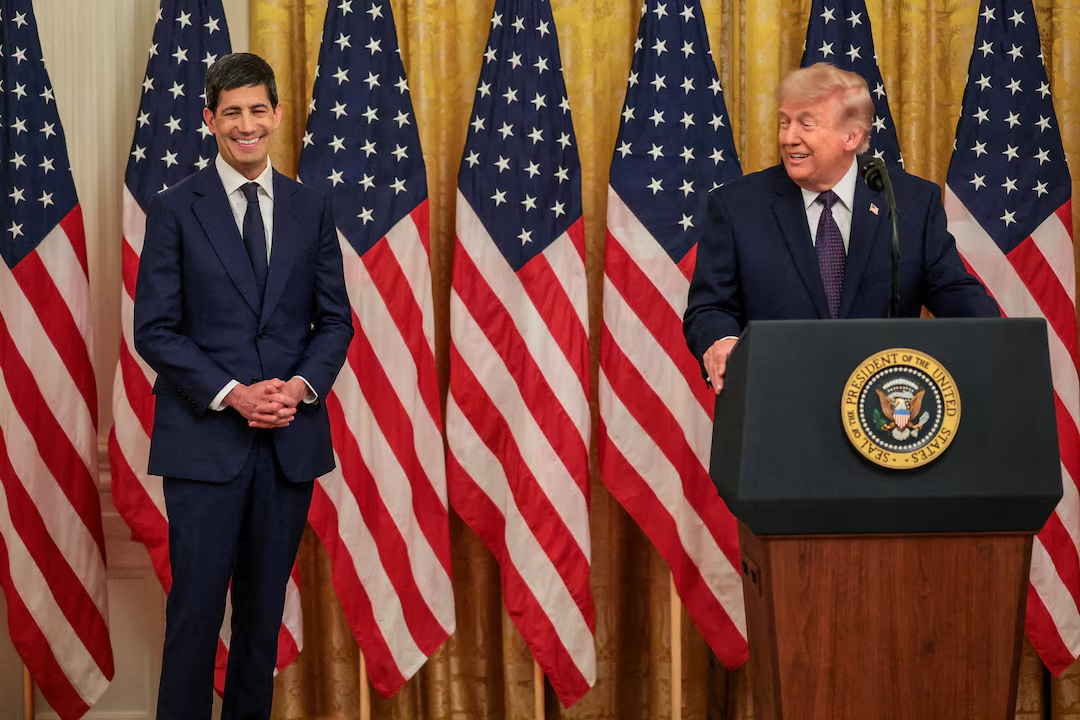
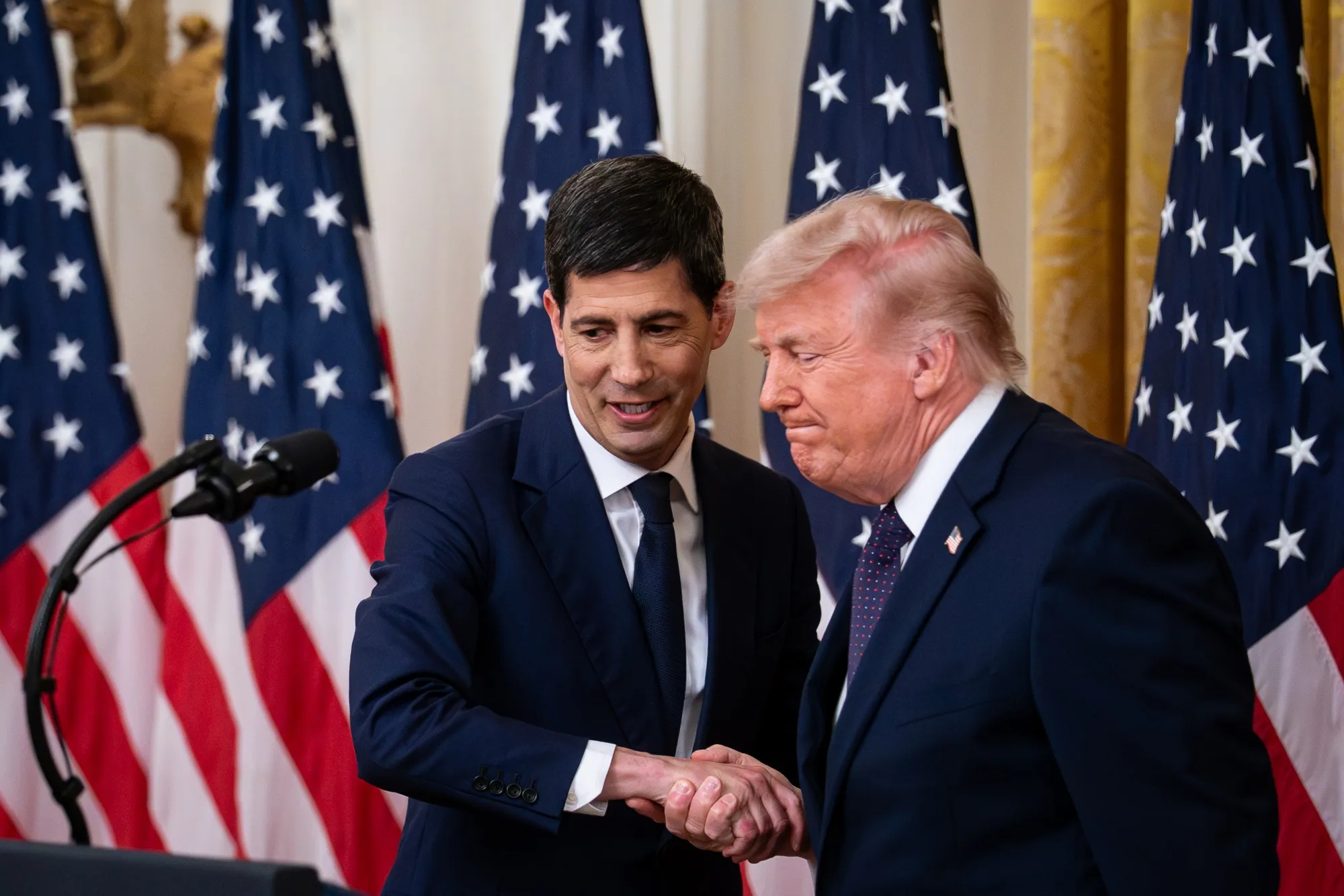
New Fed Chair Kevin Warsh has explicitly called for a "regime change" at the central bank, arguing that the era of easy money must end and that the Fed's $6.7 trillion balance sheet must be shrunk. The May jobs report gives him the empirical foundation to execute that vision. Two Fed officials have already signaled that the next rate move will be up, and Warsh's public statements suggest he will not resist that shift. The policy signal here is profound: the Fed is no longer fighting the last war against inflation, but is proactively tightening to prevent the labor market from generating second-round inflationary effects. Roger Ferguson, a former Fed vice chair, has noted that the labor market strength removes the primary justification for the 2024–2025 rate cuts, which were driven by concerns about employment. Lindsay Rosner of Goldman Sachs Asset Management has described the market repricing as "a necessary correction to overly dovish expectations." The regime change narrative is now embedded in market pricing, and it creates a self-reinforcing dynamic: as rate hike odds rise, financial conditions tighten, which reduces the need for actual rate moves but also increases the risk of a policy error. Bradford Smith of Janus Henderson Investors has warned that the Fed risks overtightening if it reacts too aggressively to one strong jobs report, but the 3.3% core inflation figure leaves little room for patience.
The market now faces a second half of 2026 where the dominant risk is not a recession but a tightening cycle that no one had priced in six weeks ago. The 52% probability on Kalshi will rise further if the June jobs report confirms the trend, and the rate futures market's 68.4% December figure reflects traders already positioning for a year-end hike. For portfolio managers, the key question is whether Warsh will deliver a single 25-basis-point hike as a signaling move or whether he will initiate a sustained tightening campaign. The balance sheet reduction program adds another dimension: quantitative tightening at an accelerated pace would drain liquidity from the banking system, allowing the Fed to achieve the same restrictive effect with a smaller policy rate move. The base case, now priced by futures markets, is a December hike to 3.75%–4.00%, followed by a pause to assess the cumulative impact on the labor market and inflation. But if core inflation remains above 3% through the third quarter, the odds of a second consecutive hike in early 2027 will rise above 50%, and the tightening cycle will have materially repriced. The regime change is real, and the market is only just beginning to price its full implications.
The BossBlog Daily
One email with the AI markets brief — the 13F moves, the Congressional trades, and what changed. No fixed schedule and no filler: it goes out when there is something worth sending.
Unsubscribe any time. We never sell or share the list.