
Three distinct signals from the past week confirm that the artificial intelligence investment cycle is accelerating across government contracting, hyperscale infrastructure, and consumer technology. Parsons Corporation disclosed that eight of its last ten contract wins valued at over $100 million each included a critical AI differentiator, underscoring how machine learning has become a non-negotiable component of national security and infrastructure bids. Alphabet Inc. announced plans to raise $80 billion in equity offerings to fund AI infrastructure expansion, with Berkshire Hathaway committing $10 billion of that total. This is Warren Buffett’s largest bet on the technology to date. And Airbnb CEO Brian Chesky is quietly starting a new AI lab focused on user interaction and design, signaling that even the most product-obsessed leaders in consumer tech see foundational model development as the next frontier. Taken together, these moves reveal a market where capital, talent, and contract revenue are all converging on AI as the primary driver of enterprise value creation. Why this matters now: the breadth of the investment, spanning defense primes, Big Tech balance sheets, and founder-led startups, shows that the window for establishing a competitive AI moat is closing fast.
Where the $570M in New AI Capital Is Going
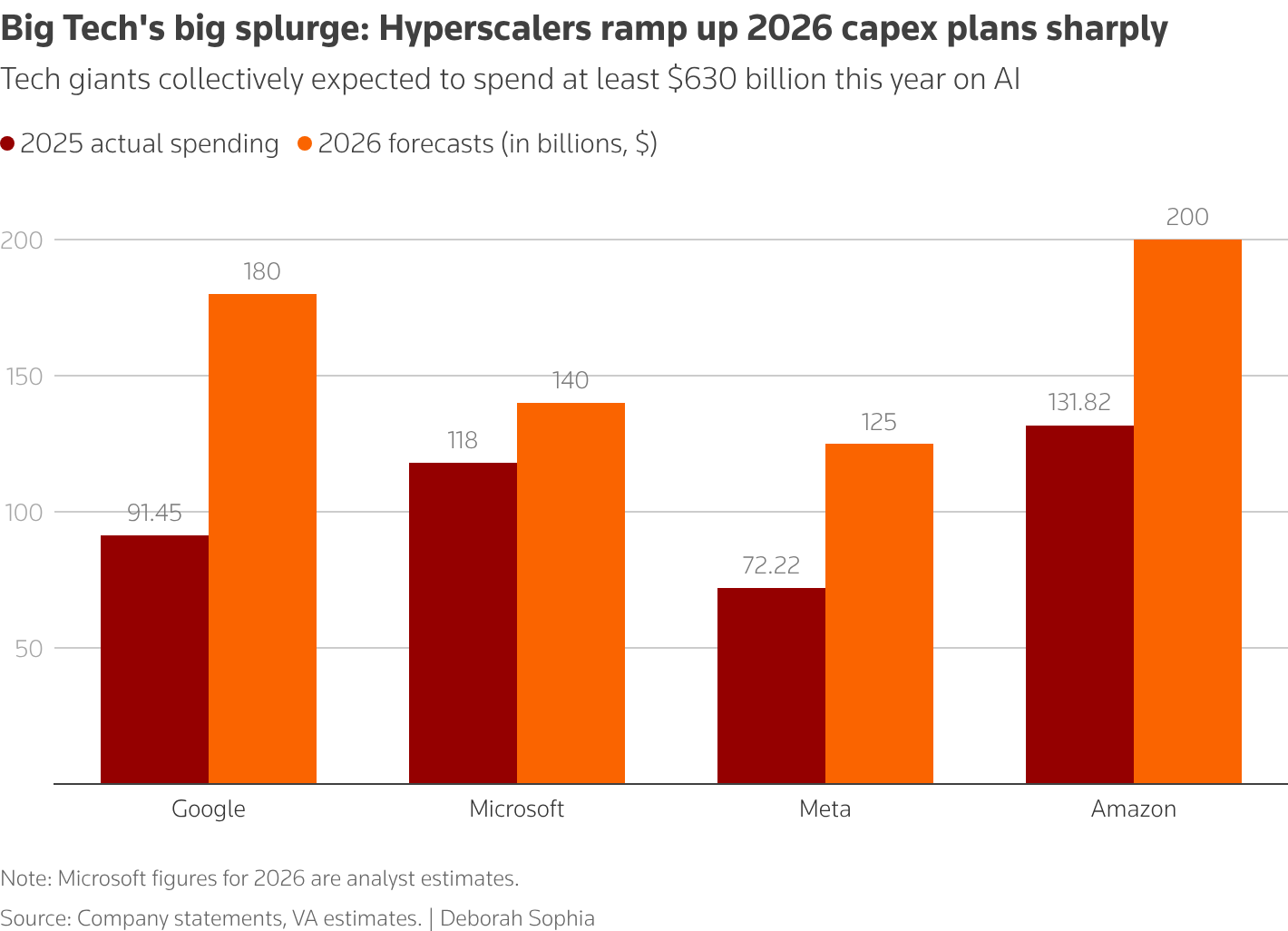
Parsons Corporation’s disclosure that eight of its last ten $100M+ wins included an AI differentiator provides a direct window into how the U.S. federal contracting apparatus now evaluates technology proposals. The company spotlighted its expanding AI capabilities across its Federal Solutions and Critical Infrastructure segments, integrating machine learning into autonomous cyber defense, counter-unmanned aircraft system detection, predictive modeling for transportation networks, and large-scale infrastructure programs. The AI-enabled iNET smart mobility platform has been deployed more than 40 times globally, and the company’s AI-powered site intelligence systems are active on the Abu Dhabi Bridge Inspection Program. These are not speculative R&D projects. They are revenue-generating contracts where AI serves as the decisive factor in competitive bids. For Parsons, the pattern is clear: any major contract pursuit that lacks an AI component now starts at a structural disadvantage. The $80 billion Alphabet raise, meanwhile, will fund data center construction, GPU procurement, and network infrastructure at a scale that dwarfs any single government contract. Berkshire Hathaway’s $10 billion participation validates the thesis that AI infrastructure spending will generate long-term returns comparable to railroads or utilities. Brian Chesky’s new AI lab, though still in early funding stages, represents a third capital deployment model: founder-led, design-centric, and aimed at building foundational models rather than layering AI onto an existing platform.
How AI Differentiators Reshape the P&L
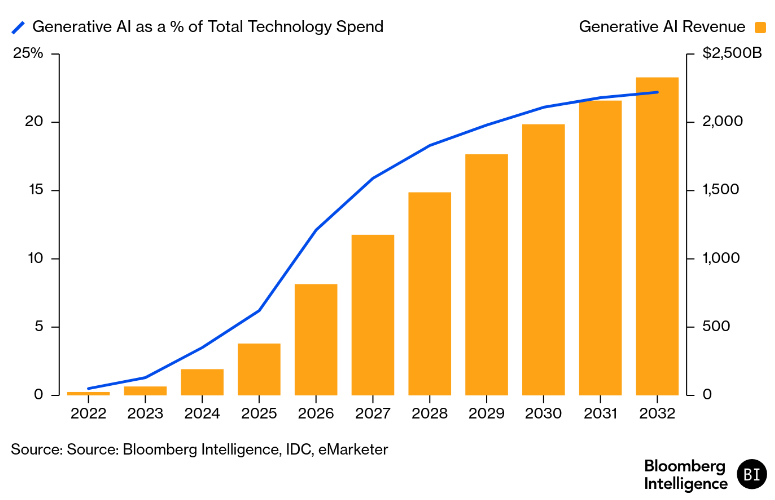
For Parsons, the AI differentiator directly affects revenue growth and margin structure. Winning eight of ten $100M+ contracts with AI as a critical component means that the company is capturing larger deal sizes and locking in multi-year service agreements that carry higher margins than traditional IT or engineering services. The iNET platform’s 40-plus global deployments create a recurring software revenue stream layered on top of project-based fees, shifting Parsons’ revenue mix toward higher-margin intellectual property. On the hyperscale side, Alphabet’s $80 billion raise will be deployed into capital expenditures that depress near-term free cash flow but expand the company’s capacity to train and serve next-generation models. Berkshire Hathaway’s $10 billion investment provides a stamp of approval that lowers Alphabet’s cost of capital. Buffett’s patient capital signals to the broader market that these infrastructure investments will compound over decades, not quarters. For Chesky’s new lab, the economics are more speculative but no less consequential. By starting a new AI company rather than building within Airbnb, Chesky avoids the organizational friction of retrofitting a hospitality platform with foundational model research. The lab’s focus on user interaction and design points to a business model built on licensing or API access rather than direct consumer subscription, which would generate high-margin software revenue if the models achieve product-market fit.
The Competitive Reshuffle: Who Gains and Who Loses
Parsons’ AI-driven contract wins put direct pressure on defense and infrastructure incumbents that have been slower to embed machine learning into their core offerings. Companies like Leidos, Booz Allen Hamilton, and Jacobs Engineering now face a competitive landscape where AI differentiation determines whether a bid lands in the winner’s circle or the also-ran pile. Parsons’ ability to claim eight of ten recent $100M+ wins with an AI component creates a powerful marketing narrative that will compound with each subsequent award. Government procurement officers will increasingly expect AI capabilities as table stakes, not differentiators. On the hyperscale side, Alphabet’s $80 billion raise and Berkshire Hathaway’s $10 billion commitment widen the gap between the top-tier cloud providers and their challengers. Microsoft and Amazon will need to match or exceed this capital deployment pace to maintain parity in AI infrastructure, while smaller players like CoreWeave or Oracle face an increasingly daunting capital requirements game. Chesky’s new AI lab introduces a wildcard into the consumer AI race. As a founder who built Airbnb into a global platform, Chesky brings product design instincts that pure research labs lack. The lab’s focus on user interaction positions it to compete with companies like Anthropic and Inflection AI, which have also emphasized conversational design as a differentiator. Chesky’s competitive advantage is not compute but distribution instinct: he built Airbnb’s growth engine from a trust-deficit product into a $90 billion platform by obsessing over the end-to-end user experience. If he can apply that same design discipline to AI interfaces, the lab could carve out a meaningful wedge in enterprise productivity tools, even without matching Alphabet’s infrastructure spend. For Parsons’ competitors in the defense space, the more immediate threat is contract exclusion. Once a government program office classifies AI as a required capability rather than an optional enhancement, incumbents without credible AI practices face disqualification on future bids regardless of their past performance record.
Downstream Effects on Hyperscalers, Fabs, and Enterprise Buyers
The $80 billion Alphabet raise will cascade through the AI supply chain with predictable force. TSMC, Samsung, and SK hynix will see sustained demand for advanced packaging and high-bandwidth memory as Alphabet’s data center buildout accelerates. NVIDIA and AMD will compete for the GPU procurement contracts that this capital deployment funds, with Alphabet’s scale giving it significant pricing leverage. The Berkshire Hathaway endorsement adds a layer of financial credibility that may encourage other institutional investors to fund AI infrastructure through direct stakes or special-purpose vehicles, potentially creating a new asset class. For enterprise buyers, Parsons’ disclosure signals that AI is no longer a future capability but a present-day procurement requirement. Companies bidding on government contracts must now invest in AI engineering talent and model deployment pipelines or risk being locked out of the $100M+ contract tier. This dynamic will drive demand for AI infrastructure services from cloud providers and for AI consulting from firms like Accenture and McKinsey. The Abu Dhabi Bridge Inspection Program deployment demonstrates that AI-powered site intelligence is becoming standard practice in infrastructure monitoring, creating a template that municipal and national governments worldwide will replicate. For Airbnb, Chesky’s departure to start a new AI lab creates a leadership vacuum that the company must fill, but it also signals to the market that the most ambitious AI talent is still flowing into new ventures rather than staying within established consumer platforms.
What the Berkshire Hathaway Bet Says About AI’s Regulatory Future
Warren Buffett’s decision to invest $10 billion in Alphabet’s AI infrastructure raise is the most significant policy signal in this week’s news cycle. Berkshire Hathaway has historically avoided technology companies with unproven capital expenditure profiles, preferring regulated utilities, consumer staples, and insurance. By backing Alphabet’s AI buildout, Buffett is effectively endorsing the view that AI infrastructure will become a regulated utility-like asset class. It is essential, capital-intensive, and capable of generating stable returns over decades. This regulatory framing matters because it shapes how governments will approach AI oversight. If the largest institutional investor in the world treats AI data centers as akin to power plants or railroads, regulators in Washington, Brussels, and Beijing will follow suit with frameworks that emphasize reliability, access, and national security rather than antitrust breakup. Parsons’ AI integration into counter-UAS detection and autonomous cyber defense reinforces this national security dimension. AI is becoming critical infrastructure, not just a consumer product. For Chesky’s new lab, the regulatory environment will determine whether a founder-led AI company can compete with the hyperscalers or whether compliance costs create an insurmountable barrier to entry. The Berkshire Hathaway bet shows that the regulatory trajectory favors large, well-capitalized incumbents, making Chesky’s design-focused approach a high-risk, high-reward bet on the proposition that user experience will matter more than compute scale.
The convergence of these three investment signals points to a market where AI capital deployment is no longer experimental but structural. Parsons will continue to win $100M+ contracts as long as its AI differentiator remains credible, but the company must invest continuously to maintain that edge as competitors catch up. Alphabet’s $80 billion raise, backed by Berkshire Hathaway, creates a capital moat that will take years for rivals to match, but it also locks the company into a high fixed-cost model that demands ever-larger revenue from AI services. Chesky’s new lab represents the most speculative bet. It is a founder-led attempt to build foundational models with a design sensibility that the hyperscalers have deprioritized in favor of raw scale. The next twelve months will test whether the AI market can sustain all three models simultaneously: government-contract AI, hyperscale infrastructure AI, and design-first foundational AI. If the capital keeps flowing at this pace, the answer is likely yes, but the margin for error narrows with every billion dollars deployed.
The BossBlog Daily
One email with the AI markets brief — the 13F moves, the Congressional trades, and what changed. No fixed schedule and no filler: it goes out when there is something worth sending.
Unsubscribe any time. We never sell or share the list.