
The Federal Reserve’s pivot from rate cuts to potential rate hikes became official on Thursday, as Richmond Fed President Thomas Barkin warned that raising the federal funds rate is necessary if supply shocks persist. His remarks came as the April Consumer Price Index hit 3.8%, well above the Fed’s 2% target, and as the 10-year Treasury yield climbed to 4.48% from 3.97% before the Iran conflict. The FOMC’s latest vote (8-4 to maintain the baseline rate at 3.5%-3.75% for the third straight meeting) masks a deepening internal divide. Futures markets now price in an 80% probability of a 25-basis-point rate hike by December, with a full hike by January 2027. This marks a complete reversal from the rate-cut narrative that dominated markets just six months ago, and it forces every asset class from regional bank stocks to commercial real estate debt to recalibrate for a higher-for-longer regime.
The 8-4 Vote Signals a Deepening Internal Divide
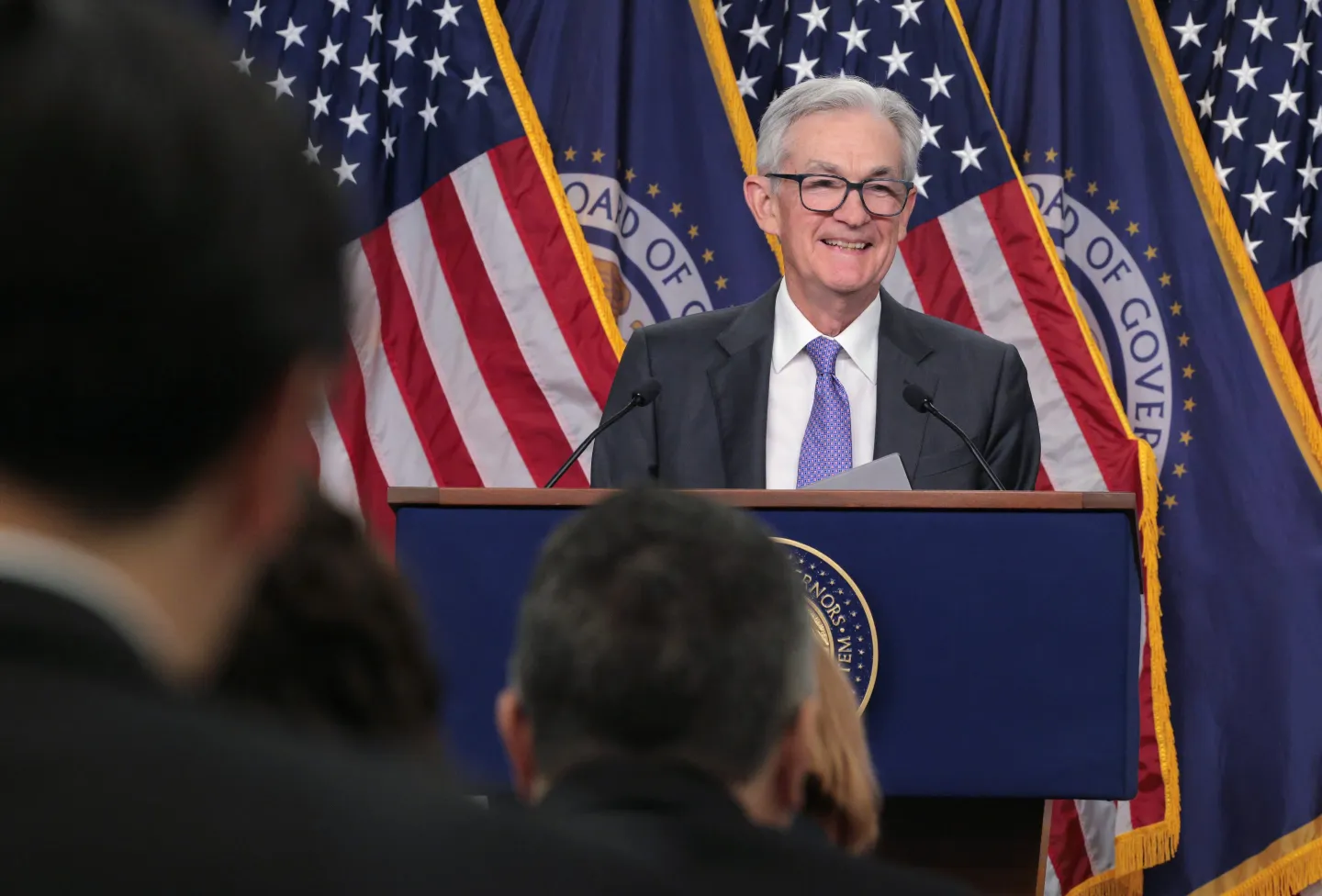
The FOMC’s 8-4 vote to hold rates at 3.5%-3.75% represents the widest dissent in a single meeting since the early days of the tightening cycle. The four dissenting members (whose identities the Fed has not disclosed) voted for a rate increase, signaling that the internal pressure for tighter policy is building. Barkin’s public commentary is particularly significant because he is a centrist who typically aligns with the consensus. His statement that “raising rates doesn’t address supply-shock-driven inflation but is necessary if shocks persist” effectively gives the market permission to price in hikes.
The 10-year Treasury yield’s jump to 4.48% reflects this repricing. For context, the yield was at 3.97% before the Iran conflict triggered a fresh round of oil-driven inflation. The yield curve remains inverted, but the inversion is narrowing as short-term rate expectations rise faster than long-term inflation expectations. The FOMC’s next meeting in July will be a live event, with the 80% probability of a December hike suggesting that at least two more dissents could flip the vote.
Beyond the vote count itself, the asymmetry of risk is shifting. A Fed that held through four consecutive meetings of above-target inflation has now reached the point where holding further risks entrenching inflation expectations. Fed funds futures, as reported by the WSJ, show markets pricing a 25-basis-point hike by January 2027 at better than even odds. That re-anchoring of forward expectations is itself a form of monetary tightening, even before the first official hike arrives.
How Higher-for-Longer Rates Squeeze Regional Bank Margins
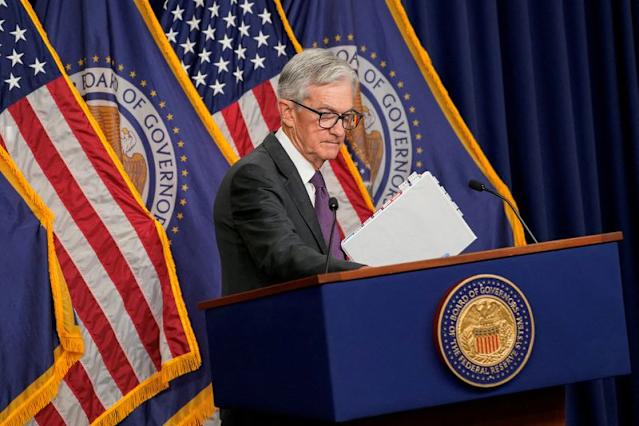
The immediate casualties of the rate-hike repricing are regional banks, which rely on net interest margins that narrow when the yield curve flattens and funding costs rise. The Bancorp (TBBK) and Live Oak Bancshares (LOB) each fell 3.8% on the day, tracking the broader Russell 2000’s 0.9% decline. The math is straightforward: regional banks fund long-duration assets like commercial real estate loans with short-term deposits that are now repricing upward. When the Fed holds rates steady but markets price in future hikes, deposit costs rise immediately while loan yields lag.
The divergence from January’s conditions is stark. The 10-year Treasury yield was at 3.97% before the Iran conflict escalated oil prices and reignited supply-side inflation. Since then it has climbed 51 basis points to 4.48%, a move that reprices the entire loan book of any bank holding fixed-rate assets at par. Regional lenders lack the trading revenue and fee income that let their larger peers absorb such mark-to-market losses. The Bank of England’s Megan Greene, who told Reuters that "the case for a rate rise is growing," underscores that this is not a uniquely American pressure. The Bancorp’s net interest margin, which stood at 4.2% in Q1, faces compression as wholesale funding costs rise. Live Oak Bancshares, which specializes in SBA lending, is particularly exposed to the small-business segment that is most sensitive to higher borrowing costs. Commercial real estate loan books face additional pressure as cap rates rise and property values decline. The 10-year Treasury at 4.48% means the risk-free rate is now higher than the cap rates on many office and retail properties, forcing banks to increase loan-loss provisions. Regional banks fund long-duration assets like commercial real estate loans with short-term deposits that are now repricing upward, and when the Fed holds rates steady but markets price in future hikes, deposit costs rise immediately while loan yields lag.
Big Banks Win, Regionals Lose in the Competitive Reshuffle
The rate-hike regime creates a clear winner-loser dynamic in U.S. banking. Large money-center banks like JPMorgan Chase and Bank of America benefit from higher net interest income on their massive securities portfolios and floating-rate loan books. Their diversified revenue streams (investment banking, trading, asset management) provide a buffer that regional banks lack. The Bancorp and Live Oak Bancshares, by contrast, are pure-play lenders with no trading desks or wealth management arms to offset margin compression. The divergence is visible in the stock performance: the KBW Bank Index fell 1.2% on the day, but the decline was concentrated in regional names. Big banks actually rose slightly as investors rotated into safety. The competitive dynamic extends to lending: big banks can afford to offer lower deposit rates and higher loan rates, squeezing regionals out of the middle market. The FOMC’s 8-4 vote signals that this regime will persist for at least another six months, giving big banks time to capture market share from struggling regionals. Large money-center banks like JPMorgan Chase and Bank of America benefit from higher net interest income on their massive securities portfolios and floating-rate loan books, while their diversified revenue streams provide a buffer that regional banks lack.
The macro backdrop reinforces the divergence. With futures markets pricing an 80% probability of a December rate hike and the Bank of Canada’s next increase now expected by March 2027, the rate-cycle peak that markets once assumed was behind them has moved further out on the curve. Every month that duration risk stays elevated is a month that money-center deposit franchises compound their competitive advantage over smaller rivals.
Downstream Effects on CRE, Small Business, and the Bond Market
The second-order effects of the rate-hike repricing cascade through the economy. Commercial real estate, already under stress from remote work and rising vacancies, faces a refinancing wall in 2027. With the 10-year Treasury at 4.48%, the all-in cost of a five-year fixed-rate CRE loan now exceeds 7%, up from 5.5% a year ago. This pushes more properties into distress, which in turn pressures regional bank balance sheets. Small businesses, which rely on regional banks for credit, face higher borrowing costs at a time when input prices are rising due to supply shocks. The Russell 2000’s 0.9% decline reflects this small-cap sensitivity. In the bond market, the repricing is creating dislocations: investment-grade corporate bond yields are rising, but high-yield spreads are widening faster as investors demand compensation for default risk. The Bank of Canada’s next rate increase, now expected by March 2027, signals that the tightening cycle is global. The Bank of Japan’s Junko Koeda has signaled that underlying inflation is around 2% and a rate hike is approaching, while the ECB and BoE are both open to further increases. Commercial real estate faces a refinancing wall in 2027, and with the 10-year Treasury at 4.48%, the all-in cost of a five-year fixed-rate CRE loan now exceeds 7%, up from 5.5% a year ago, pushing more properties into distress.
Kevin Warsh’s Communication Overhaul and Political Pressure
The Fed’s communication strategy is undergoing a major revamp under Kevin Warsh, who is set to redesign how the central bank signals its intentions to Wall Street. The Financial Times reported that Warsh’s overhaul aims to reduce the volatility caused by individual Fed speakers, streamlining the cadence of public remarks to prevent the kind of market whiplash that followed Barkin’s statement this week. That volatility is not academic: the gap between the most hawkish and most dovish FOMC members’ public statements has widened to the point where traders cannot price a single forward path.
Meanwhile, political pressure is mounting. Peter Navarro, senior adviser to President Trump, publicly warned the Fed: “Don’t even think about rate hikes.” This intervention echoes the Trump administration’s previous criticism of Fed tightening and creates a new layer of institutional uncertainty. The FOMC must now navigate between market expectations for hikes, internal dissent, and direct political opposition from the White House.
Barkin’s framing provides a potential off-ramp: rate hikes are a tool for persistent supply shocks rather than demand-driven inflation. If oil prices stabilize and supply chains normalize, the Fed can hold steady through year-end without losing credibility. But with the April CPI at 3.8% and futures markets pricing an 80% probability of a December hike, the burden of proof has shifted. The FOMC will need to see a decisive reversal in inflation data before the four dissenting votes stop recruiting allies.
The next six months will determine whether the Fed’s 8-4 vote was a pause or a prelude. If the April CPI reading of 3.8% proves to be a plateau rather than a peak, the FOMC will hold rates through year-end. But if oil-driven inflation pushes CPI above 4%, the four dissenting votes will become five, and a December hike will become a certainty. For regional banks, the clock is ticking: every month of higher-for-longer rates erodes net interest margins and increases CRE loan losses. For the bond market, the 10-year Treasury at 4.48% is the new floor, not the ceiling. And for the Fed’s credibility, the Warsh communication revamp cannot come soon enough (the market needs a clear signal on whether the Fed is willing to hike into a slowing economy or whether it will accept above-target inflation as the cost of avoiding a recession). The answer will define the macro landscape for the next two years.
The BossBlog Daily
Essential insights on AI, Finance, and Tech. Delivered every morning at 06:00 Asia/Shanghai. No noise.
Unsubscribe anytime. No spam.