
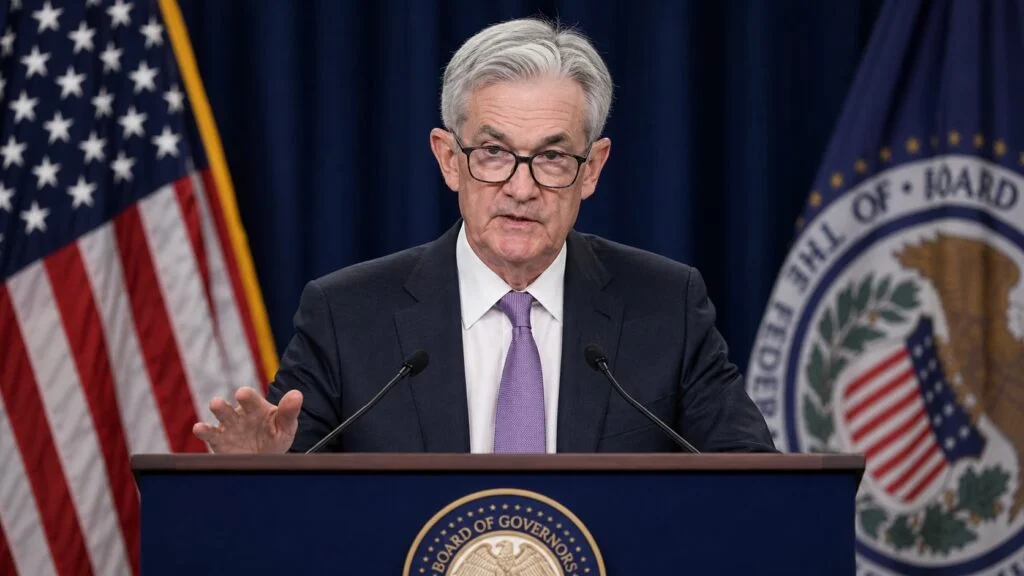
Jerome Powell presided over his final Federal Open Market Committee meeting in April 2026, and the outcome was a study in continuity: the Fed held rates steady, with the personal consumption expenditures price index still running at 3.8% in April. Markets now price virtually no chance of rate cuts through at least 2027, and some analysts expect rate hikes in early 2027 if inflation remains elevated. The decision caps a tenure defined by the pandemic, the biggest inflation surge in decades, the highest import tariffs in over 90 years, and sustained pressure on the central bank's independence. For investors, the message is clear: the era of cheap money is not returning soon, and the bond market is already repricing for a higher-for-longer regime that will reshape everything from corporate borrowing costs to household savings rates.
The 3.8% PCE Print and the Fed's Pivot to Patience
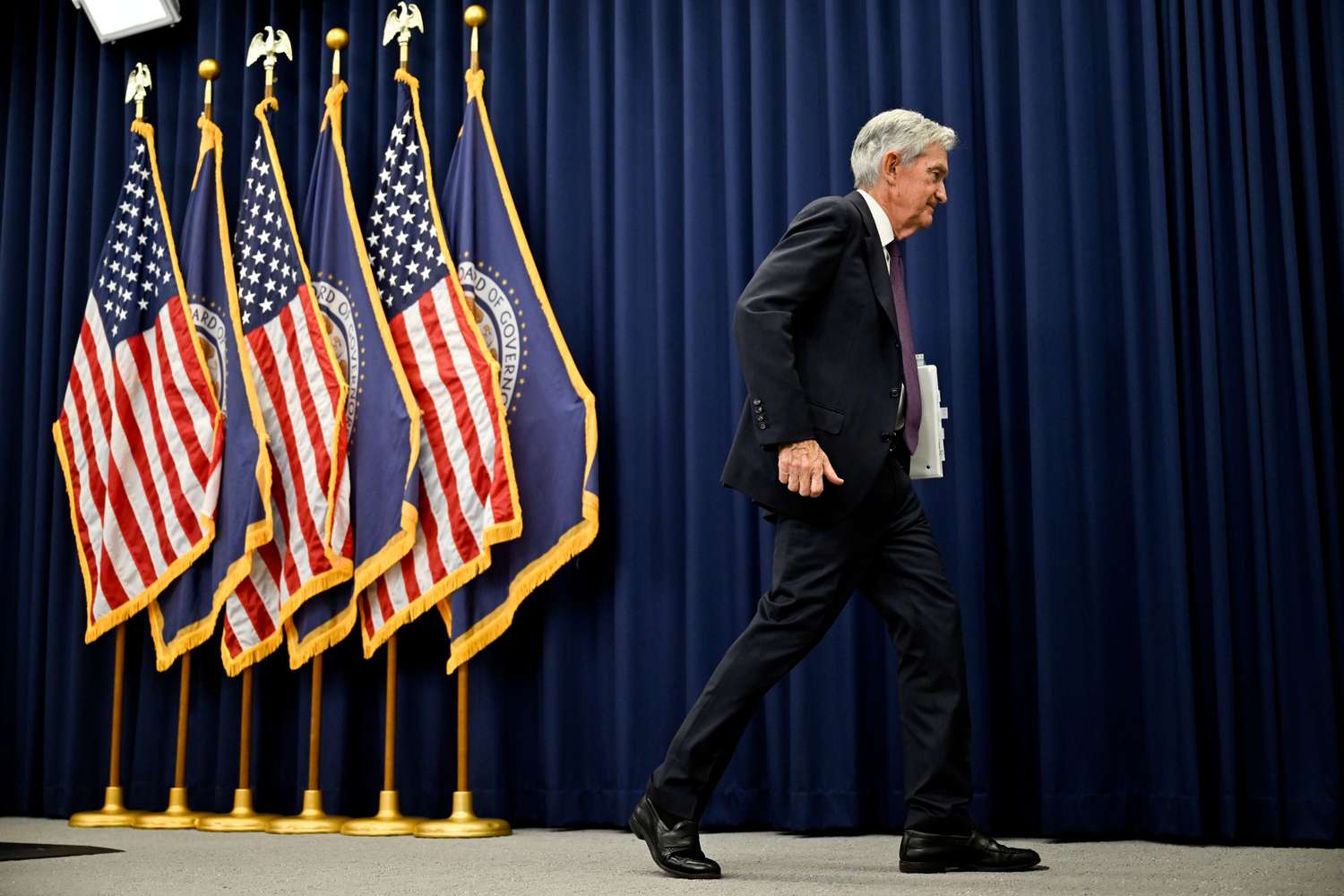
The April PCE print of 3.8% remains well above the Fed's 2% target, and the central bank's decision to hold rates steady signals that officials see no urgency to act. The Fed cut rates by 75 basis points total in 2025, but the April meeting marked a pivot to patience. Fed Governor Michelle Bowman cautioned against raising rates in response to temporary energy price inflation, suggesting the committee is split between hawks who want to tighten further and doves who see the current stance as sufficiently restrictive. The market is pricing no cuts through at least 2027, a dramatic shift from the rate-cutting consensus that prevailed in early 2025. Some analysts now pencil in rate hikes in early 2027 if the PCE does not decelerate, a scenario that would make Powell's final meeting the calm before a storm. The 3.8% reading is the third consecutive month above 3.5%, confirming that the disinflation trend stalled in early 2026.
Bowman's caution is notable because she was one of the first Fed governors to flag the risk of persistent tariff-driven inflation. Her view that energy price spikes are temporary is contested by hawks who point to services inflation, which strips out food and energy, as the stickier problem. Services PCE has been running above 4% for six consecutive months, and it is this component, not energy, that worries those pushing for another rate hike. The April hold was unanimous, but the internal debate at the FOMC is sharpening as the next chair's confirmation hearings approach and the political calendar creates new pressure points on monetary policy independence.
How High-Yield Savings Rates Hit 5.00% and Why They Plateau
High-yield savings accounts now offer up to 5.00% APY, a direct consequence of the Fed's rate hikes and the 75 basis points of cuts in 2025 that kept rates elevated relative to pre-pandemic norms. The top 1% average savings account rate stands at 3.87% APY, according to DepositAccounts.com, while the average savings account pays just 0.38% per the FDIC. The gap between top-tier and average rates has widened to nearly 350 basis points, creating a powerful incentive for depositors to switch banks. However, these rates are highly dependent on the Fed's policy rate, and with the central bank on hold, the plateau is already visible. If the Fed does not cut through 2027, high-yield savings rates will likely remain near current levels, but any rate hike in early 2027 would push them higher. For banks, the cost of deposits is rising, compressing net interest margins and forcing a reckoning in retail funding strategies. The 5.00% APY ceiling has held since March 2026, with no online bank breaking through that threshold despite continued deposit competition.
For individual savers, the calculus remains favorable relative to the pre-2022 era, but the opportunity cost of sitting in cash is real when equity markets are pricing in a soft landing. The 350 basis point gap between the top 1% of savings products and the average account underscores that inertia is expensive: consumers who have not moved deposits to high-yield accounts since 2022 have foregone substantial compounding returns on what are effectively risk-free instruments.
Bond Markets Signal Divergence Across Regions and Credit Tiers
Bloomberg fixed income indices reveal a fractured global bond market. The U.S. Aggregate index sits at 2,355.96, down 1.74 on the day, with a 52-week return of +5.33% that masks recent weakness. The Global Aggregate is at 501.85, down 1.92, with a 52-week return of just +2.62%. The standout performer is the Asian-Pacific Aggregate, up 0.54 on the day and returning +8.48% over 52 weeks, reflecting relative monetary stability in the region. The Pan-Euro Aggregate is down 1.16 with a meager 0.87% annual return, while the EM USD Aggregate, despite a daily decline of 0.59, has returned +9.56% over 52 weeks, driven by yield-seeking flows.
Ten-year government bond yields tell a similar story: Germany at 2.97%, UK at 4.86%, France at 3.59%, Italy at 3.69%, Spain at 3.39%, Netherlands at 3.08%, Portugal at 3.33%, Greece at 3.63%, and Switzerland at a mere 0.35%. The UK's 4.86% yield, up 19 basis points year-over-year, reflects persistent inflation and fiscal concerns that make it the outlier among developed markets. Germany's 10-year yield is up 45 basis points year-over-year, one of the sharpest moves in the eurozone, driven by fiscal expansion and the European Central Bank's own pause. France's 41 basis point annual rise and Greece's 39 basis points underscore that peripheral spreads are compressing even as absolute yields climb, a dynamic that tests the ECB's willingness to deploy its Transmission Protection Instrument.
The month-to-date moves also deserve attention. Italy's 10-year yield is down 17 basis points month-to-date, Spain's down 11 basis points, and Greece's down 17 basis points, while Germany has only fallen 6 basis points over the same period. This spread tightening in peripherals versus core is consistent with a risk-on rotation inside European fixed income, even as the U.S. and global aggregates show daily losses. The EM USD Aggregate's 9.56% annual return is the strongest of the group, a reminder that emerging market issuers benefited disproportionately from the 2025 Fed cuts, and any resumption of U.S. rate hikes in 2027 could reverse those flows sharply.
Who Gains and Who Loses in a Higher-for-Longer Regime
The winners in this environment are banks with large deposit franchises that can attract savers with high-yield products. The top 1% average savings account rate of 3.87% APY, reported by DepositAccounts.com, is more than ten times the FDIC's stated average of 0.38%, meaning the gap between the best and worst deposit offers has widened to nearly 350 basis points. That spread rewards consumers who actively shop for yield and punishes those who leave money in legacy accounts. Regional banks that rely on low-cost deposits face margin compression as depositors migrate toward online banks offering 5.00% APY products. For the banking sector as a whole, the April 2026 hold extends a period where deposit costs are rising faster than loan yields for many mid-tier institutions.
The losers extend beyond banks to the broader credit ecosystem. Highly leveraged companies that borrowed at floating rates during the low-rate era, particularly in commercial real estate and private equity-backed buyouts, face a sustained period of elevated debt service. The 75 basis points of Fed cuts in 2025 provided some relief, but the hold at April 2026 means those cuts are now fully priced in with no further easing in sight. For the U.S. Treasury, the higher-for-longer regime increases the cost of rolling over short-duration debt at each auction. With Treasury yields elevated across the curve, the interest expense on the national debt is consuming a larger share of federal revenue, a structural pressure that fiscal policy will have to address regardless of which party controls the White House in 2028.
What Powell's Final Meeting Signals About Fed Independence
Powell's last meeting came amid sustained political pressure on the Fed's independence, with the highest import tariffs in over 90 years creating a supply-side inflation shock that the central bank cannot easily address with monetary policy. The decision to hold rates steady, rather than cut in response to political pressure, reinforces the institution's commitment to its dual mandate. Powell spent the better part of 2025 and 2026 defending the Fed's independence against calls from the executive branch for aggressive rate cuts, and his final act as chair was to do precisely what the data required rather than what political pressure demanded.
The legacy question is complicated. Powell guided the Fed through the pandemic emergency cuts to near-zero, the subsequent 525 basis points of hikes from March 2022 through 2023, and then 75 basis points of cuts in 2025 as inflation appeared to be subsiding. The PCE's rebound to 3.8% in April 2026 is the awkward footnote to that narrative: disinflation proved incomplete, and the next chair inherits an economy where tariff-driven price pressures are structural rather than transitory. The Barron's analysis frames this as the Fed needing to "rein in inflation," but the Bowman school argues that raising rates into a tariff shock risks choking growth without addressing a supply-side problem that monetary policy cannot fix. Both arguments will shape the debate that the incoming chair faces within weeks of taking office.
The market's pricing of no cuts through 2027 and potential hikes in early 2027 suggests that the next Fed chair will inherit an economy where inflation is sticky, tariffs are persistent, and the political climate is hostile to rate hikes. The Powell era ends with the Fed having navigated a pandemic, a 40-year inflation spike, and a trade war, but the next phase will test whether the institution's credibility survives the transition.
The next Fed chair will take the helm at a moment when the bond market has already priced in a higher-for-longer regime, but the real test will come if inflation accelerates again. If the PCE pushes above 4%, the new chair will face pressure to hike rates into an economy that is already slowing under the weight of tariffs and elevated borrowing costs. The 75 basis points of cuts in 2025 bought time, but they did not solve the underlying inflation problem. For investors, the playbook is clear: overweight cash and short-duration bonds, underweight long-duration fixed income, and watch for the first sign of a rate hike in early 2027 as the signal to rotate back into risk assets.
The BossBlog Daily
Essential insights on AI, Finance, and Tech. Delivered every morning at 06:00 Asia/Shanghai. No noise.
Unsubscribe anytime. No spam.