
A UK House of Lords committee has formally called on the Bank of England to reconsider proposed stablecoin restrictions, arguing the current regulatory framework risks stifling innovation and driving issuers offshore. The committee’s intervention lands as Coinbase invests in ProShares’ GENIUS Money Market ETF, the first money market ETF designed to comply with the US GENIUS Act, signaling a transatlantic divergence in how the two largest financial markets approach digital dollar substitutes. The GENIUS Act, which sets reserve and disclosure requirements for stablecoin issuers, has already attracted $22 billion in assets under management to the ProShares vehicle. Coinbase did not disclose the size of its investment, but the move marks the first major exchange-led endorsement of a GENIUS Act-compliant product. Meanwhile, the UK committee’s letter warns that overly prescriptive rules could fragment liquidity and push stablecoin activity to jurisdictions with clearer or more permissive regimes. This matters now because stablecoins are the settlement layer for the majority of crypto trading volume and a growing share of cross-border payments, meaning regulatory friction in London or Washington will directly impact the cost and speed of moving value globally.
Lords Committee Challenges Bank of England on Stablecoin Capital Rules
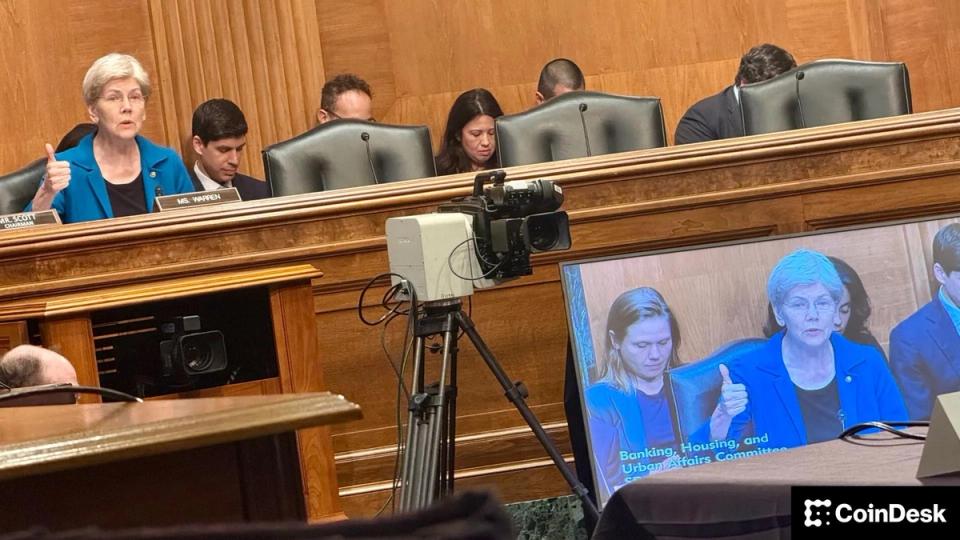
The UK House of Lords Financial Services Regulation Committee published its letter to the Bank of England on June 2, urging a rethink of the Bank’s proposed restrictions on stablecoin issuance and custody. The committee specifically flagged concerns about capital requirements for non-bank stablecoin issuers, arguing they are set so high that only incumbent banks can participate. The Bank of England’s discussion paper, released in November 2025, proposed that systemic stablecoin issuers hold capital equivalent to at least 1% of the value of their outstanding tokens, plus additional buffers for operational risk. The Lords committee counters that this approach ignores the asset-backed nature of fiat-referenced stablecoins, where the primary risk is reserve mismanagement rather than credit or market risk. The committee also warned that the Bank’s insistence on ring-fencing stablecoin reserves from other business activities, while prudent, creates operational inefficiencies that make UK-based issuance uncompetitive against US or EU regimes. The letter explicitly references the EU’s Markets in Crypto-Assets Regulation, which came into full effect in 2024, and the US GENIUS Act as benchmarks that offer clearer pathways for non-bank issuers. The Bank of England has not yet responded publicly, but the committee’s intervention carries weight because the Lords Financial Services Regulation Committee was established in 2023 specifically to scrutinize post-Brexit financial rulemaking. The committee’s letter also notes that the Bank’s proposed capital buffers are disproportionate to the actual risks of asset-backed stablecoins, which hold reserves in cash and government securities rather than extending loans or taking speculative positions. The Bank’s November 2025 discussion paper set a 1% capital floor for systemic issuers, a figure the Lords argue is arbitrary given that asset-backed stablecoins do not underwrite loans or trade derivatives.
Coinbase Bets on GENIUS Act-Compliant Reserve Infrastructure
Coinbase’s investment in the ProShares GENIUS Money Market ETF is a direct bet on the commercial viability of GENIUS Act-compliant stablecoin infrastructure. The fund, which holds $22 billion in assets under management, invests primarily in US Treasury bills, repurchase agreements, and other cash-equivalent instruments that meet the GENIUS Act’s reserve requirements for stablecoin issuers. For Coinbase, the investment serves multiple financial functions. First, it provides a yield-bearing home for corporate treasury cash that would otherwise sit idle or earn near-zero returns in bank deposits. Second, it positions Coinbase as a first-mover customer of a product that could become the de facto reserve vehicle for US-dollar stablecoins, creating a potential revenue stream if Coinbase later offers the ETF as a custody option for its institutional clients. Third, the move signals to regulators that Coinbase is willing to put its own balance sheet behind compliant products, which strengthens its lobbying position as Congress debates stablecoin legislation. The GENIUS Act, introduced in February 2025, requires stablecoin issuers to hold reserves in highly liquid assets with daily NAV reporting. ProShares structured the ETF to meet these requirements, effectively creating a turnkey reserve portfolio that any stablecoin issuer can use. Coinbase’s undisclosed investment amount is less important than the signal it sends: the largest US exchange sees GENIUS Act compliance as a competitive advantage, not a regulatory burden. The ETF’s $22 billion AUM already makes it one of the largest money market funds in the crypto ecosystem, and Coinbase’s endorsement is likely to attract additional institutional capital. The fund’s daily NAV reporting requirement, mandated by the GENIUS Act, provides transparency that legacy stablecoin reserve disclosures have historically lacked.
The Competitive Reshuffle: Coinbase vs. Binance vs. Tether
Coinbase’s move into GENIUS Act-compliant stablecoin reserves directly challenges Tether, which has faced persistent questions about the composition and transparency of its $120 billion reserve portfolio. Tether’s reserves include corporate bonds, secured loans, and Bitcoin, assets that would not qualify under the GENIUS Act’s strict liquidity requirements. If US regulators enforce the GENIUS Act aggressively, Tether’s USDT could face delisting from American exchanges or restrictions on its use in domestic payments. Coinbase, by contrast, is building infrastructure that aligns with the new rules, potentially making its stablecoin partners, including USDC issuer Circle, the default choice for US-based institutions. Binance, which has its own stablecoin BUSD and a complex relationship with US regulators, sits in an awkward middle position. The exchange has not publicly endorsed the GENIUS Act and continues to list USDT as its primary trading pair. The UK committee’s pushback against the Bank of England adds another layer of complexity: if the UK adopts a more permissive stablecoin regime than the US, issuers might choose London over New York for non-dollar stablecoins. This would fragment liquidity across jurisdictions, forcing exchanges to maintain separate pools of stablecoin reserves for different regulatory zones. The result is a multi-front competitive battle where the winners will be exchanges and issuers that can navigate three distinct regimes, US, UK, and EU, while maintaining deep liquidity across all of them.
Downstream Effects on Hyperscalers, Fabs, and Enterprise Buyers
Stablecoin regulation directly impacts the demand for blockchain infrastructure, which in turn drives capital expenditure at hyperscalers and chip manufacturers. Every stablecoin transaction settles on a blockchain, primarily Ethereum, but increasingly Solana, Sui, and other high-throughput networks. The GENIUS Act’s requirement for daily NAV reporting and real-time reserve verification creates demand for blockchain analytics tools, oracle networks, and data storage. This benefits companies like Chainlink and The Graph, but also hyperscalers like Amazon Web Services and Google Cloud, which host the majority of blockchain node infrastructure. For chipmakers, the link is more indirect but real: higher stablecoin transaction volumes mean more validator nodes, more staking activity, and more demand for high-performance computing. Sui’s three mainnet halts in 48 hours, traced to an upgrade bug, underscore the reliability challenges that stablecoin issuers will face if they choose newer blockchains for settlement. A stablecoin issuer processing billions in daily volume cannot tolerate network outages, which means the blockchain selection process will favor proven, battle-tested networks. This creates a competitive dynamic where Ethereum and Bitcoin, despite their higher transaction costs, benefit from their track record of uptime, while newer chains like Sui must prove they can maintain 99.99% availability before they attract institutional stablecoin volume. Enterprise buyers of stablecoin services, including payment processors and remittance firms like Movement, which targets the $685 billion remittance market, will prioritize networks that offer both regulatory compliance and operational reliability.
Policy Signal: The UK vs. US Stablecoin Race
The UK House of Lords committee’s letter and Coinbase’s GENIUS Act investment represent two sides of the same policy coin: the global race to define the rules for digital dollars. The US, through the GENIUS Act, is pursuing a federal framework that preempts state-level regulation and creates a clear pathway for non-bank issuers. The UK, through the Bank of England, is pursuing a more cautious approach that prioritizes financial stability over innovation. The Lords committee’s intervention suggests that this caution is misplaced. The committee explicitly warned that overly restrictive UK rules could push stablecoin issuance to the US or EU, reducing London’s competitiveness as a fintech hub. This is not a hypothetical concern: Circle, the issuer of USDC, has already established a base in the EU under MiCA, and Tether has signaled interest in moving some operations to jurisdictions with clearer rules. The policy signal from the Coinbase investment is equally important. By putting money into a GENIUS Act-compliant product, Coinbase is effectively voting with its balance sheet for the US regulatory approach. This creates a feedback loop: the more capital flows into compliant products, the harder it becomes for regulators in other jurisdictions to justify restrictive rules that would fragment that liquidity. The Bank of England now faces a choice: align with the US approach, differentiate with a more permissive regime, or double down on restrictions. Each path carries risks, but the Lords committee has made clear that inaction is not an option.
The next six months will determine whether stablecoins become a globally integrated payment layer or a fragmented set of jurisdiction-specific instruments. The UK committee’s call for reconsideration opens the door for a more competitive British regime, but the Bank of England must act before the US GENIUS Act creates a de facto global standard. Coinbase’s investment in the ProShares ETF provides a template for how compliant stablecoin reserves can work in practice, and other exchanges will likely follow. The real test will come when a major stablecoin issuer, Tether, Circle, or a new entrant, chooses its primary regulatory domicile based on these rules. That decision will lock in billions of dollars in reserves, transaction fees, and network effects for the winning jurisdiction. The UK still has time to compete, but the window is closing.
The BossBlog Daily
Essential insights on AI, Finance, and Tech. Delivered every morning at 06:00 Asia/Shanghai. No noise.
Unsubscribe anytime. No spam.
Tools mentioned
AffiliateSelected partner tools related to this topic.
AI Copilot Suite
Content drafting, summarization, and workflow automation.
Try AI Copilot →
AI Model Monitoring
Track model quality, latency, and drift with alerts.
View Monitoring Tool →
Low-fee Global Broker
Multi-market access with transparent pricing.
Open Broker Account →
Some links above are affiliate links. We earn a commission if you sign up through them, at no extra cost to you. Affiliate revenue does not influence editorial coverage. See methodology.
The BossBlog Daily
Essential insights on AI, Finance, and Tech. Delivered every morning at 06:00 Asia/Shanghai. No noise.
Unsubscribe anytime. No spam.
Tools mentioned
AffiliateSelected partner tools related to this topic.
AI Copilot Suite
Content drafting, summarization, and workflow automation.
Try AI Copilot →
AI Model Monitoring
Track model quality, latency, and drift with alerts.
View Monitoring Tool →
Low-fee Global Broker
Multi-market access with transparent pricing.
Open Broker Account →
Some links above are affiliate links. We earn a commission if you sign up through them, at no extra cost to you. Affiliate revenue does not influence editorial coverage. See methodology.