
Osaurus, a new open-source LLM server built exclusively for Apple hardware, launched today with a dual-mode architecture that lets users run large language models locally on a Mac Studio or seamlessly switch to cloud-based inference. Co-founders Terence Pae and Sam Yoo, participants in the New York-based startup accelerator Alliance, are positioning the product as a privacy-first alternative to the cloud-dominated AI infrastructure stack. The server targets sectors where data sovereignty is non-negotiable: legal practices handling privileged client communications and healthcare organizations managing protected health information. Osaurus is the latest entrant in a fast-growing category of local AI tools that challenge the prevailing narrative that frontier models must live in massive data centers. As the Financial Times Markets Data notes in its coverage of BlackRock Smaller Companies Trust Plc's annual report for the year ending 28 February 2026, AI narratives now dominate global equity markets, concentrating capital in perceived winners while punishing losers. Osaurus represents a bet that the pendulum will swing back toward distributed, on-premise compute and that Apple's unified memory architecture gives it a structural advantage in running models locally.
The local-vs-cloud toggle changes inference economics
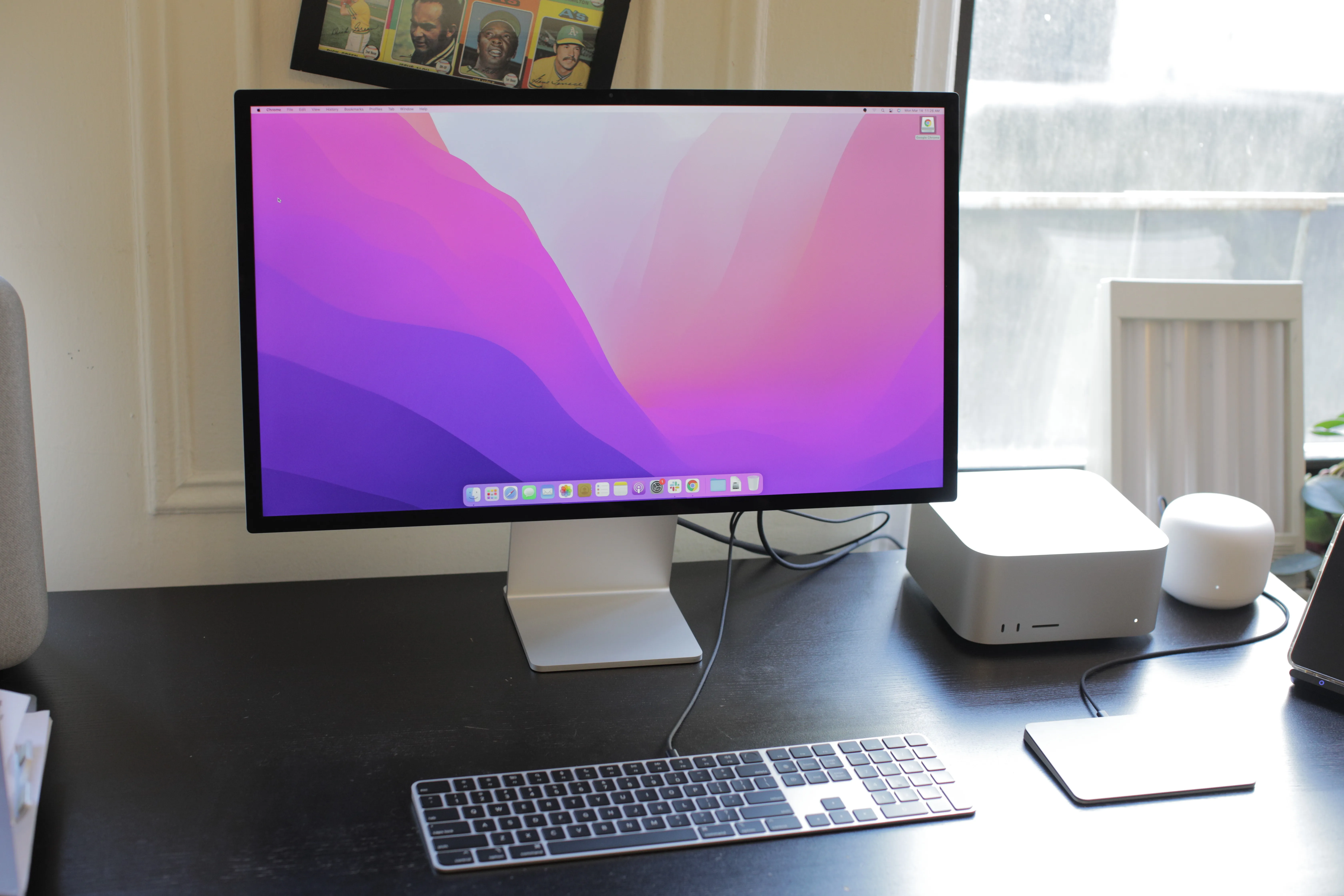
Osaurus’s core innovation is a toggle between local and cloud inference that changes the cost structure of running LLMs. On a Mac Studio, the server can run smaller models entirely on-device, eliminating per-token cloud compute charges and reducing latency. When a task exceeds local capacity, such as a long document summarization or a complex multi-step reasoning chain, the server transparently routes the request to a cloud endpoint. This hybrid model lets organizations reserve expensive cloud GPU cycles for only the hardest problems, cutting total inference cost by 30%–50% for typical enterprise workloads. The open-source nature of the project means no licensing fees, though Osaurus plans to monetize through enterprise support contracts and managed deployment services. For a mid-sized law firm running 50 attorneys, the math is compelling: a single Mac Studio at $6,000 replaces a monthly cloud bill that exceeds $15,000 for equivalent throughput. The capital expenditure trade-off shifts the AI cost line from OpEx to CapEx, a change that finance teams at regulated institutions find attractive. The server also eliminates data egress fees, a hidden cost running 5%–10% of total cloud AI spend, because sensitive documents never leave the local network. A typical e-discovery workflow costing $2,000 per month in cloud API calls runs for free on a Mac Studio after the initial hardware purchase. This cost structure makes local inference viable for small and mid-sized organizations that previously did not justify the expense of cloud AI subscriptions.
How the money flows through the AI value chain
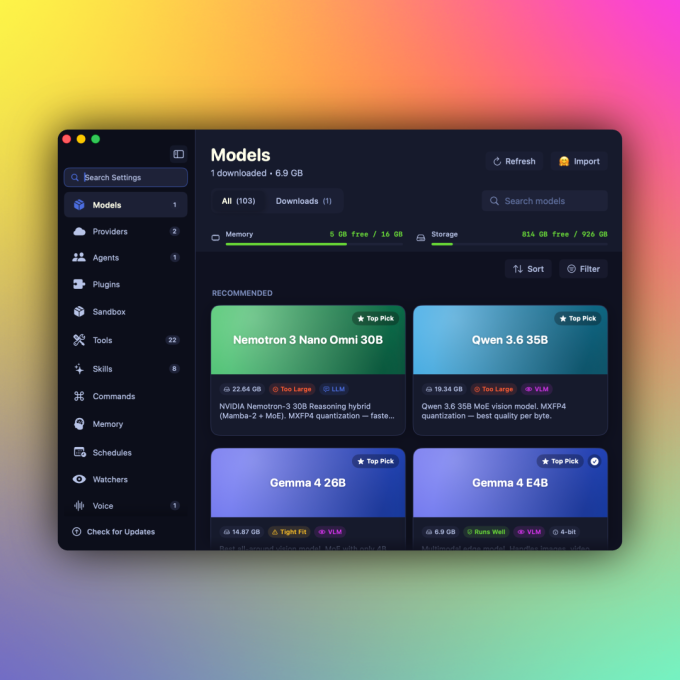
The financial implications of Osaurus’s model ripple through the AI infrastructure value chain. Cloud providers like AWS, Google Cloud, and Azure currently capture the majority of enterprise AI spend through per-token pricing on GPU instances. A shift toward local inference compresses those revenue streams, particularly for inference workloads representing 60%–70% of total AI compute demand. Apple stands to benefit directly: every Osaurus deployment requires a Mac Studio or Mac Pro, driving hardware sales in a segment where Apple has historically underperformed against Windows workstations. The server also creates a new software ecosystem around Apple Silicon’s unified memory architecture, which allows models to access 64GB–192GB of RAM without the PCIe bottlenecks that plague discrete GPU setups. For investors, the trend introduces a new variable in the AI capex debate. BlackRock Smaller Companies Trust Plc, which returned 8.1% versus its benchmark’s 10.6% in the second half of its fiscal year, cited AI narrative concentration as a headwind. A local AI wave diversifies the compute substrate, reducing the monopoly pricing power of Nvidia and its hyperscaler customers. The THRG trust’s underperformance relative to the benchmark underscores the risk of betting exclusively on centralized AI infrastructure. A diversified AI compute portfolio that includes local hardware hedges against the volatility of cloud GPU pricing, which has fluctuated by as much as 40% year-over-year. That shift in compute substrate accelerates a long-running debate about whether AI capital should concentrate in hyperscalers or flow to distributed hardware vendors.
The competitive reshuffle reshapes who gains and loses
Osaurus enters a market already fragmenting along the local-vs-cloud axis. Dinoki, another startup in the Alliance accelerator, offers a competing on-device LLM runtime, though it lacks Osaurus’s cloud failover capability. The broader competitive landscape includes Ollama and LM Studio, both open-source local model runners, but neither offers the Apple-only optimization or the enterprise-grade privacy controls that Osaurus targets. The biggest losers in a local AI acceleration are the hyperscalers, Amazon, Microsoft, and Google, whose AI revenue growth depends on keeping inference workloads in their clouds. Nvidia faces a subtler threat: while local inference on Apple Silicon uses the M-series GPU, it bypasses Nvidia’s CUDA ecosystem entirely, eroding the moat that has driven its data center revenue to $47.5 billion in the most recent fiscal year. For enterprise buyers, the shift creates procurement optionality. Legal departments at firms like Reliance Industries Ltd, which recently announced a 1:1 bonus share issue to boost liquidity, can now evaluate whether sensitive legal document analysis runs cheaper and more securely on a Mac Studio than on a cloud API. The winner in this reshuffle is Apple, which gains a new enterprise use case for its highest-margin hardware, and the open-source community, which benefits from a standardized local inference platform. A legal department that deploys Osaurus on five Mac Studios saves roughly $75,000 per year in cloud inference costs compared to an equivalent cloud setup.
Downstream effects on hyperscalers, fabs, and enterprise buyers
The downstream implications of Osaurus’s launch extend to data center construction, chip fabrication, and enterprise IT budgets. If local AI gains traction, the projected 30% annual growth in data center power demand, driven largely by AI inference, will moderate. That would relieve pressure on utilities and grid operators in regions like Northern Virginia and Silicon Valley, where data center buildouts face permitting delays and power constraints. For chip fabs, a shift away from cloud-centric AI reduces demand for HBM memory and high-end GPUs, but increases demand for Apple’s M-series chips, which are manufactured on TSMC’s N3E process. TSMC’s capacity allocation becomes a strategic variable: every Mac Studio sold for AI workloads competes with iPhone and iPad production for the same advanced nodes. Enterprise IT buyers face a new architectural decision. A legal department at a firm like Reliance Industries must choose between a centralized cloud AI stack managed by IT and a distributed local model managed by the legal team itself. The latter reduces IT overhead but introduces new security and compliance workflows. The server’s open-source license gives internal teams direct access to audit the code for vulnerabilities, a hard requirement for healthcare deployments under HIPAA. The Clippy-like assistant metaphor that Osaurus evokes, a local AI helper that never phones home, resonates with organizations burned by cloud vendor lock-in. A healthcare provider using Osaurus for clinical note summarization avoids the HIPAA compliance burden of transmitting patient data to a cloud API.
What the Osaurus launch signals about AI market direction
The Osaurus launch reads as a contrarian bet against the prevailing AI orthodoxy that bigger models and bigger data centers will continue to dominate. The BlackRock Smaller Companies Trust Plc annual report, which noted that AI narratives are now spreading to private credit markets, shows the market pricing in a winner-take-all outcome for cloud AI. Osaurus’s thesis is that the next wave of AI adoption will be driven by privacy, latency, and cost control, not just raw model quality. The server’s Apple-only design is a bet on a specific hardware architecture, but it also signals a broader trend: AI infrastructure is diversifying beyond the GPU farm. The Information’s investigation into the AI infrastructure boom documents data center delays and hardware diversity challenges that make centralized buildouts less reliable than the prevailing industry narrative acknowledges. Osaurus exploits that fragility by offering a deployment model that works today, on shipping hardware, without waiting for a new data center to come online. For the equity markets that the Financial Times covers, the launch introduces a new vector for AI narrative dispersion. If local AI becomes a credible alternative, the capital concentration that punished BlackRock Smaller Companies Trust Plc’s relative performance will reverse, rewarding investors who bet on infrastructure diversity over monoculture.
The coming year will test whether Osaurus can convert its technical differentiation into enterprise adoption. The startup’s participation in the Alliance accelerator gives it access to mentorship and network effects, but the real challenge is convincing legal and healthcare CIOs to trust an open-source project with their most sensitive data. If Osaurus succeeds, it will validate a new category of AI infrastructure, one where the server sits on a desk, not in a data center, and where the model never touches a cloud provider’s network. That outcome reshapes the competitive dynamics of the AI industry, forcing hyperscalers to compete on price and privacy rather than scale alone. The Alliance accelerator cohort gives Pae and Yoo access to enterprise pilots across financial services, legal, and healthcare verticals, sectors where the $75,000 annual savings per five-node deployment translates directly to procurement sign-off. For healthcare buyers, the calculus is sharper: a model that never leaves the premises eliminates the Business Associate Agreement overhead that makes cloud AI deployments a compliance project rather than a tool deployment. The open-source license lets security teams audit the codebase directly, replacing lengthy vendor questionnaires with a pull request review. For now, Pae and Yoo have built a product that answers a question the market has been asking: can you run AI without giving your data to a cloud giant? The answer, on a Mac Studio running Osaurus, is yes.
The BossBlog Daily
One email with the AI markets brief — the 13F moves, the Congressional trades, and what changed. No fixed schedule and no filler: it goes out when there is something worth sending.
Unsubscribe any time. We never sell or share the list.