
Anthropic has committed a staggering $200 billion to Google Cloud for AI services and TPU chips, and separately struck a deal with SpaceX to access 300 megawatts of computing power from xAI's Colossus 1 data centre, according to reports from CNBC and Wired. The Google commitment locks in the search giant as Anthropic's primary cloud provider for the foreseeable future, while the SpaceX arrangement gives the AI company access to approximately 220,000 Nvidia GPUs housed in Colossus 1, the supercomputer built by Elon Musk's xAI. Anthropic is simultaneously in talks to raise fresh capital at a valuation of $900 billion, underscoring the immense financial scale required to compete in frontier AI development. The company plans to use the new compute capacity to improve its Claude Pro and Claude Max subscription products, as well as its Claude Code developer tool. Why this matters now: the deals reveal that even the most well-funded AI labs are being forced into unconventional partnerships with direct competitors to secure the physical infrastructure needed to train and run next-generation models, a dynamic that is reshaping the entire AI supply chain.
The $200B Google commitment and Anthropic's balance sheet
The $200 billion commitment to Google Cloud is not a single payment but a multi-year spending pledge for AI cloud services and custom TPU chips, structured as a capital commitment that will flow through Anthropic's operating expenses over the contract's duration. For context, Anthropic's current annualized revenue run rate is estimated at roughly $2 billion from its Claude product line, meaning the Google commitment represents approximately 100 years of current revenue. The deal functions as both a supply guarantee and a strategic alignment: Google's TPU chips are purpose-built for AI workloads, and the commitment ensures Anthropic has guaranteed access to them at a time when Nvidia's GPUs remain supply-constrained. The $900 billion valuation that Anthropic is seeking in its current fundraising round reflects investor belief that the company can eventually monetize its AI models at a scale that justifies this level of infrastructure spending. The Google deal also deepens a relationship that already saw Google invest hundreds of millions into Anthropic, creating a complex web where Google is simultaneously Anthropic's largest investor, primary cloud provider, and a competitor in the AI model market through its own Gemini models. Anthropic's operating expenses will absorb the commitment over several years, and the company's existing cash reserves from prior fundraising rounds provide a buffer against near-term liquidity pressure.
Google's TPU v5e and v5p chips, which form the backbone of this deal, offer distinct advantages for transformer-based model training. Unlike Nvidia's GPUs, which are general-purpose accelerators, TPUs are matrix multiply units optimized for the specific linear algebra operations that dominate large language model training. This specialization delivers higher throughput per dollar on certain workloads, particularly during the pre-training phase where Anthropic invests the most compute. The commitment also gives Google valuable training data about real-world frontier model workloads, which feeds directly back into TPU chip design for future generations. Anthropic's engineers will work directly with Google's chip team, creating a feedback loop that benefits both parties. The arrangement is structured so that Anthropic retains ownership of its model weights and training data, with Google providing only the compute fabric. This distinction matters for regulatory purposes and for Anthropic's ability to negotiate future chip deals with other providers.
How the SpaceX compute deal breaks the AI infrastructure logjam
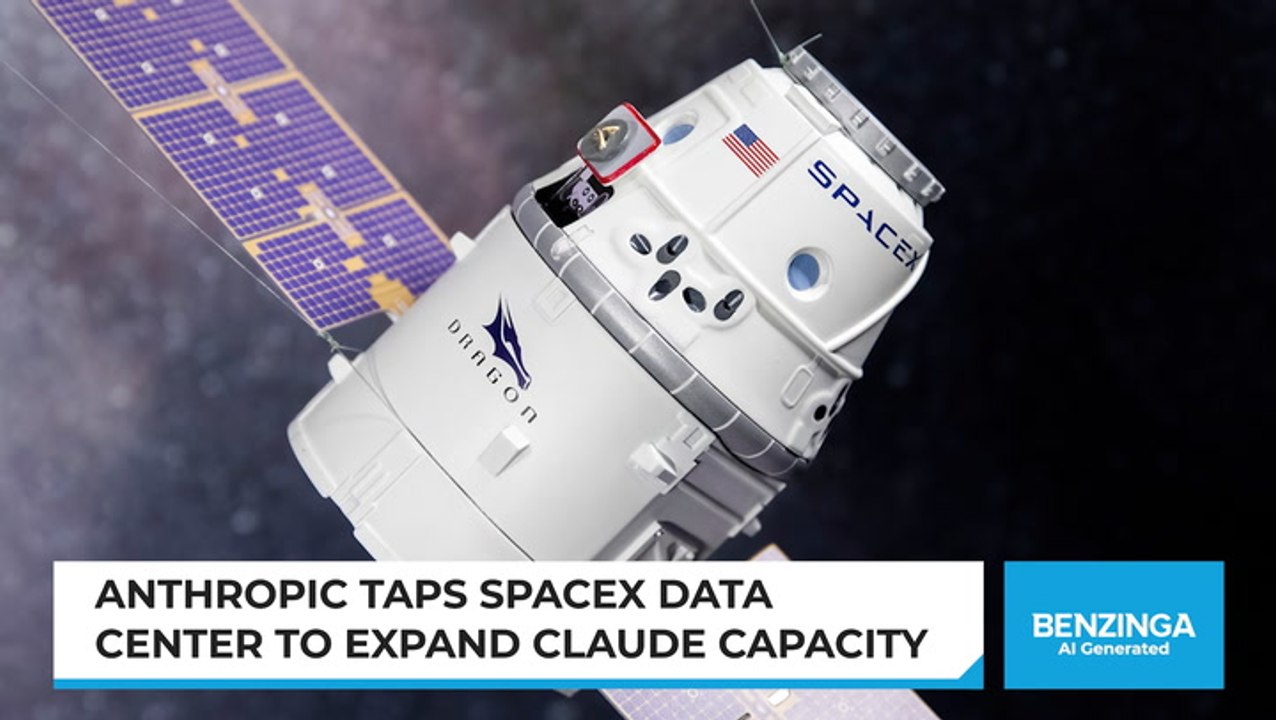
The SpaceX arrangement gives Anthropic access to more than 300 megawatts of new capacity at xAI's Colossus 1 data centre, which houses approximately 220,000 Nvidia GPUs. This is a remarkable deal because it places Anthropic's workloads on infrastructure built by Elon Musk's xAI, the company behind the Grok chatbot that competes directly with Anthropic's Claude. The deal structure likely involves SpaceX providing the physical data centre space and power infrastructure, with xAI managing the GPU cluster and allocating compute cycles to Anthropic under a wholesale agreement. For Anthropic, the deal solves an immediate capacity problem: building new data centres takes 18-24 months, and the company needs compute now to train its next-generation models. For xAI, the deal monetizes spare capacity on Colossus 1, which was built at breakneck speed in Memphis, Tennessee, and represents one of the largest single GPU clusters in existence. The arrangement also gives Anthropic geographic diversity in its compute footprint, reducing dependency on any single data centre region. The 300 megawatts of capacity will support training runs for models that require thousands of GPUs operating in parallel for weeks at a time.
The competitive reshuffle: Google gains, Nvidia and AWS lose share
The $200 billion Google commitment is a direct blow to Amazon Web Services and Microsoft Azure, both of which have been competing aggressively for Anthropic's cloud business. AWS had positioned itself as a natural home for Anthropic given Amazon's $4 billion investment in the company, but the Google deal confirms that TPU chip access, which only Google can provide at scale, outweighed any cloud-provider relationship considerations. Nvidia also faces a subtle competitive threat from this deal: every dollar Anthropic spends on Google TPUs is a dollar not spent on Nvidia GPUs, and the commitment signals that at least one major AI lab is willing to bet on custom silicon over Nvidia's dominant H100 and B200 architectures. For Google, the deal locks in a marquee customer for its TPU roadmap, providing the kind of demand visibility that justifies continued investment in custom chip development. The SpaceX deal, meanwhile, creates an awkward dynamic where xAI is both competitor and infrastructure provider to Anthropic, a relationship that will require careful governance around data isolation and model security. Google's TPU roadmap now has a guaranteed anchor tenant, which strengthens its position against Nvidia in the custom silicon market.
Downstream effects on hyperscalers, hardware makers, and enterprise buyers
The Verda-Compal partnership, announced separately, illustrates how the AI infrastructure buildout is cascading through the hardware supply chain. Compal Electronics, a major Taiwanese laptop and server manufacturer, will supply next-generation GPU server systems to Verda, a European AI cloud provider headquartered in Helsinki. This partnership aims to accelerate AI infrastructure build-out across Europe and APAC, regions that have lagged behind the US in data centre capacity. For Compal, the deal represents a pivot from consumer electronics into high-margin AI server systems, a market currently dominated by Super Micro Computer and Wistron. For Verda, the partnership provides access to Compal's manufacturing scale and supply chain relationships, enabling the company to compete with larger cloud providers. The broader implication for enterprise buyers is that AI compute costs are likely to remain elevated as the industry builds out capacity, but the emergence of alternative hardware suppliers like Compal could eventually create pricing pressure on Nvidia's GPU margins. Enterprise customers will face higher costs in the short term as hyperscalers pass through infrastructure investments, but the diversification of hardware suppliers will moderate those increases over time.
Verda's Helsinki base positions the company to serve European enterprises that face data sovereignty requirements under the EU AI Act and GDPR, regulations that restrict cross-border data transfers. This regulatory tailwind gives Verda a structural advantage over US hyperscalers for certain European workloads, and the Compal GPU server supply deal directly addresses the company's need to scale capacity quickly. Alan Chang and Jorge Santos, the executives driving the Verda-Compal partnership, are betting that enterprise AI adoption in Europe and APAC will follow a similar trajectory to North America with an 18-24 month lag, giving them time to build capacity ahead of peak demand. The supply chain implications extend further: Compal's entry into AI servers creates a new buyer for high-bandwidth memory chips and networking components, diversifying the customer base for those suppliers beyond the current oligopoly of Meta, Google, Microsoft, and Amazon.
What the deals signal about AI market structure and regulatory risk
The Anthropic-Google-SpaceX triangle reveals a market where the largest AI labs are becoming increasingly dependent on a small number of infrastructure providers, creating concentration risk that regulators are likely to scrutinize. Google now holds an extraordinary position as Anthropic's largest investor, primary cloud provider, and chip supplier, a vertical integration that rivals what Microsoft achieved with OpenAI. The SpaceX deal adds another layer of complexity, as it involves a company whose CEO, Elon Musk, has publicly feuded with Anthropic's leadership and is pursuing his own AI ambitions through xAI. The $900 billion valuation that Anthropic is seeking implies that investors believe the company can achieve revenue growth that justifies this infrastructure spending, but it also creates a moral hazard: if Anthropic fails, the $200 billion Google commitment evaporates, leaving Google with stranded TPU capacity. Regulators in the US and Europe are already examining AI infrastructure deals for anti-competitive effects, and the Anthropic-Google commitment is likely to attract particular scrutiny given Google's dominant position in cloud and AI chips. The vertical integration between Google and Anthropic mirrors the Microsoft-OpenAI relationship, which has already drawn antitrust inquiries in multiple jurisdictions.
The next 12 months will test whether Anthropic's infrastructure strategy delivers the model improvements needed to justify its $900 billion valuation. The company must convert its Google TPU access and SpaceX compute capacity into demonstrably superior versions of Claude Pro, Claude Max, and Claude Code that can win market share from OpenAI's GPT-5, Google's Gemini, and xAI's Grok. If the models improve as promised, the deals will be remembered as visionary bets that locked in critical infrastructure before competitors could. If they do not, the $200 billion Google commitment and the SpaceX arrangement will become cautionary tales about the dangers of signing long-term infrastructure contracts in a market where the technology changes every six months. The broader lesson for the industry is that AI infrastructure has become the single most important strategic asset, and companies are now willing to partner with anyone, even direct competitors, to secure it.
The BossBlog Daily
One email with the AI markets brief — the 13F moves, the Congressional trades, and what changed. No fixed schedule and no filler: it goes out when there is something worth sending.
Unsubscribe any time. We never sell or share the list.