
Tetra Trust, a Canadian regulated custodian backed by Shopify and National Bank of Canada, launched CADD, the country's first regulated stablecoin pegged to the Canadian dollar. Approved by the Alberta Treasury Board and Finance, the token is live on Base, Ethereum, and Tempo, with Solana support planned. CADD targets institutional use cases including 24/7 cross-border settlement, real-time corporate treasury management, and direct fintech transfers. The product directly challenges the dominance of USD-pegged stablecoins like USDC and USDT, which command the lion's share of the $320 billion stablecoin market cap, according to DeFiLlama. Canada clears roughly $424 billion per business day on legacy batch infrastructure from the 1980s, creating a massive addressable market for a modernized settlement rail. Global stablecoin transaction volume surpassed $27 trillion in 2025, exceeding Visa's annual payment volume, signaling that the infrastructure shift is already underway. CADD enters a market where Loon's CADC stablecoin has processed over $200 million in volume since 2021, and where incumbents like Paytrie and Stablecorp's QCAD and CADC tokens have established early footholds. Tetra Trust's institutional backing and regulatory approval position CADD as a credible alternative for corporate treasurers and financial institutions seeking to reduce reliance on USD-denominated stablecoins for Canadian-dollar transactions.
How CADD's regulatory approval changes the stablecoin landscape in Canada
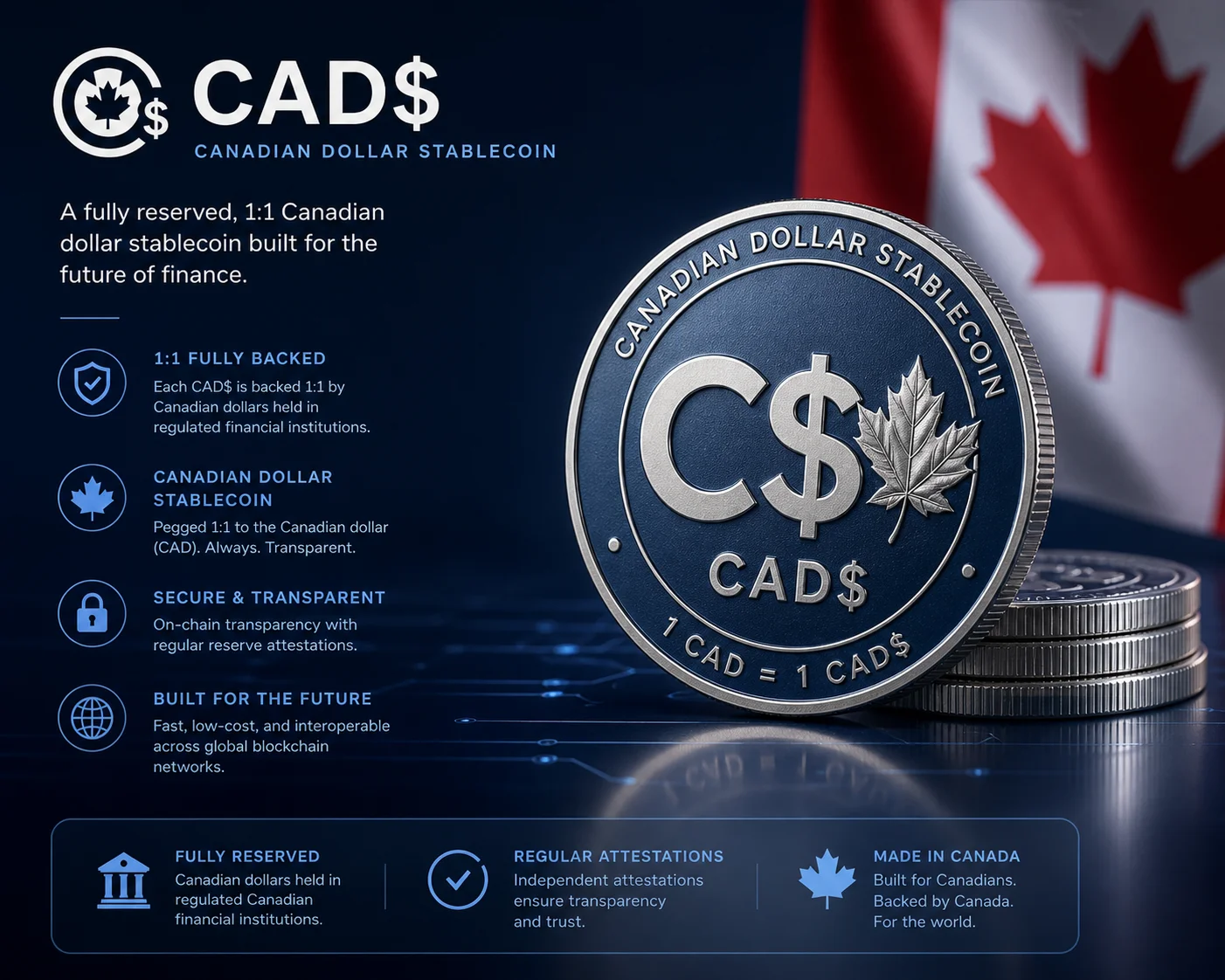
CADD is the first stablecoin issued by a regulated Canadian financial institution, receiving explicit approval from the Alberta Treasury Board and Finance. This regulatory milestone distinguishes CADD from earlier Canadian stablecoins such as QCAD, CADC, and Stablecorp's offerings, which operated in a more ambiguous regulatory environment. Tetra Trust is a qualified custodian under Canadian securities law, providing institutional-grade governance and compliance infrastructure. The token's launch on Base, Ethereum, and Tempo ensures broad accessibility across major blockchain ecosystems, with Solana integration planned to capture lower-cost, higher-throughput settlement demand. The approval creates a template for other Canadian financial institutions seeking to issue regulated stablecoins, potentially accelerating the shift from USD-pegged tokens to domestic currency-pegged alternatives. For corporate treasurers, CADD eliminates the FX conversion step required when using USD stablecoins for Canadian-dollar obligations, reducing settlement risk and operational complexity. The regulatory clarity also opens the door for Canadian pension funds, insurance companies, and asset managers to allocate to stablecoin-based treasury products, a segment that has been largely inaccessible due to compliance concerns. Tetra Trust's consortium structure, which includes Shopify and National Bank of Canada, signals that both the technology and traditional finance sectors see strategic value in a regulated Canadian stablecoin.
Where the $424 billion opportunity comes from
Canada's payment infrastructure processes roughly $424 billion per business day using batch settlement systems designed in the 1980s. This legacy architecture introduces T+1 or longer settlement delays, counterparty risk, and operational friction for cross-border payments and corporate treasury operations. CADD enables real-time, 24/7 settlement on blockchain rails, compressing settlement cycles from days to seconds. For a corporate treasurer managing multi-currency cash positions, the ability to move Canadian dollars instantly between counterparties reduces working capital requirements and eliminates the need for prefunding accounts. The cross-border settlement use case is particularly compelling: Canadian businesses conducting trade with US partners currently rely on USD stablecoins or traditional wire transfers, both of which introduce FX conversion costs and settlement delays. CADD allows direct CAD-to-CAD settlement, bypassing the USD intermediary. The total addressable market extends beyond Canada's domestic payment volume to include the $27 trillion in global stablecoin transaction volume recorded in 2025, a figure that already exceeds Visa's annual payment volume. As stablecoins become the default settlement layer for institutional transactions, the demand for non-USD stablecoins will grow in proportion to the currency composition of global trade. Canada's position as a G7 economy with deep trade linkages to the United States makes CADD a natural candidate for cross-border settlement corridors.
Competitive reshuffle: who gains and who loses from CADD's entry
CADD's entry reshapes the Canadian stablecoin market, which has been dominated by Loon's CADC, Stablecorp's QCAD, and Paytrie's CADC token. Loon, which raised $3 million pre-seed and has processed over $200 million in volume since 2021, now faces a well-capitalized competitor with institutional backing from Shopify and National Bank of Canada. Tetra Trust's regulatory approval and consortium structure provide distribution advantages that smaller issuers cannot match. National Bank of Canada's involvement gives CADD direct access to corporate banking clients, while Shopify's merchant network creates a built-in use case for e-commerce settlement. For USD stablecoin issuers like Circle and Coinbase, CADD represents a strategic challenge: as non-USD stablecoins gain traction, the network effects that have entrenched USD stablecoins as the default settlement asset are weakening. Circle's USDC and Tether's USDT currently dominate the $320 billion stablecoin market, but the emergence of regulated, domestically-pegged alternatives will fragment liquidity across currency-specific pools. Western Union's "Stable" product and other remittance-focused stablecoins face competitive pressure from CADD's institutional-grade settlement capabilities. The broader competitive dynamic mirrors the tokenization trend exemplified by DTCC's upcoming service, which will bring $114 trillion in custodied assets onto blockchain rails with participation from BlackRock, Goldman Sachs, Bank of America, and Citadel Securities. As both stablecoins and tokenized securities converge on the same blockchain infrastructure, the issuers with the strongest regulatory and distribution relationships will capture the most volume.
Downstream effects on hyperscalers, payment networks, and enterprise buyers
CADD's launch creates second-order effects across the Canadian financial technology stack. Payment networks like Western Union and traditional remittance providers face pressure to adopt stablecoin rails or risk disintermediation. For enterprise buyers, CADD enables real-time treasury management without the FX friction inherent in USD stablecoin usage. Shopify, as both an investor and potential user, can integrate CADD for merchant settlement, reducing payment processing costs and settlement delays for Canadian merchants. The token's multi-chain deployment on Base, Ethereum, and Tempo, with Solana planned, creates demand for blockchain infrastructure providers and validator services. For Canadian banks and credit unions, CADD offers a regulated on-ramp to stablecoin-based services without the compliance burden of issuing their own tokens. The Alberta Treasury Board and Finance approval also signals that provincial regulators are willing to authorize stablecoin products, potentially encouraging other provinces to establish their own frameworks. On the custody side, Anchorage Digital and other qualified custodians will need to support CADD to serve institutional clients holding the token. The tokenization trend, exemplified by DTCC's service covering Russell 1000 constituents and US Treasury securities, will intersect directly with stablecoin markets as tokenized assets require stablecoin-based settlement. DTCC's limited production launch in July 2026 and full rollout in October 2026, backed by a working group of over 50 firms including BlackRock, Goldman Sachs, and Kraken, signals that tokenized settlement is moving from pilot to production. For Canadian institutions participating in cross-border tokenized securities transactions, CADD provides a native CAD settlement option that eliminates the FX conversion required when using USD stablecoins. CADD positions Tetra Trust to capture settlement volume from both traditional payment flows and the emerging tokenized securities market, with the DTCC timeline creating a concrete near-term demand catalyst for regulated non-USD stablecoins.
What CADD's launch signals about the future of stablecoin regulation and market structure
CADD's regulatory approval under Alberta Treasury Board and Finance establishes a precedent for provincial-level stablecoin regulation in Canada, potentially creating a patchwork of frameworks that could complicate national interoperability. The consortium structure, with Shopify and National Bank of Canada as backers, demonstrates that stablecoin issuance is evolving from a crypto-native activity to a mainstream financial service. This mirrors the trajectory of tokenization, where DTCC's service has attracted over 50 financial firms including BlackRock, Goldman Sachs, and Bank of America. The strategic signal is clear: regulated stablecoins are becoming the settlement layer for institutional blockchain adoption, and non-USD stablecoins will proliferate as central banks and financial institutions seek to maintain monetary sovereignty in digital markets. For the US, Canada's move creates pressure to accelerate its own stablecoin regulatory framework, as USD stablecoins currently dominate the market but face competition from domestically-pegged alternatives. The $27 trillion in global stablecoin transaction volume in 2025, a figure that exceeded Visa's annual payment volume, demonstrates that the market is large enough to support multiple currency-pegged products across major G7 currencies. Canada is now the first G7 nation to have a regulated, non-USD stablecoin issued by a mainstream financial institution, giving it a structural first-mover advantage as other central banks and financial regulators assess their own frameworks. Liquidity fragmentation across CAD, EUR, and GBP stablecoin pools is a known risk, but the settlement efficiency gains for domestic transactions outweigh the cost of maintaining separate liquidity for each currency corridor. Tetra Trust's launch signals that the next phase of stablecoin adoption will be driven by institutional use cases rather than retail speculation, with regulatory approval serving as the primary competitive differentiator.
The trajectory for CADD depends on adoption velocity among Canadian financial institutions and corporate treasurers. If National Bank of Canada integrates CADD into its corporate banking platform, the token could achieve critical mass within the Canadian payment ecosystem within 12 to 18 months. The broader implication for global stablecoin markets is that domestically-pegged, regulated stablecoins will proliferate as central banks and financial institutions seek to maintain monetary sovereignty in digital markets. Canada's move creates pressure on the US to accelerate its own stablecoin regulatory framework, as USD stablecoins currently dominate but face competition from alternatives that eliminate FX friction for local-currency transactions. The convergence of stablecoin settlement with tokenized securities trading, as demonstrated by DTCC's upcoming service, will create a unified blockchain-based capital market infrastructure where CADD and similar tokens serve as the native settlement asset. Tetra Trust's consortium model, combining a regulated custodian with corporate and banking partners, provides a template for stablecoin issuance in other G7 economies. The success of CADD will ultimately depend on whether Canadian institutions prioritize domestic-currency settlement over the network effects of USD stablecoins, a calculation that will determine the pace of stablecoin market fragmentation.
The BossBlog Daily
One email with the AI markets brief — the 13F moves, the Congressional trades, and what changed. No fixed schedule and no filler: it goes out when there is something worth sending.
Unsubscribe any time. We never sell or share the list.